






Offered by:
Solomon Treasure
1050 Second Ave
New York City, NY 10022 , United States
Call Seller
917.686.9732
Showrooms
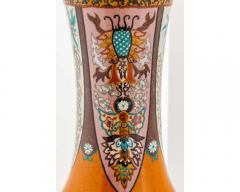
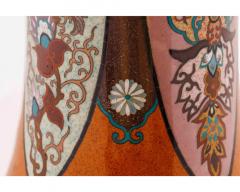
Large Pair of Japanese Cloisonne Enamel Vases Attributed to Honda Yasaburo
-
Description
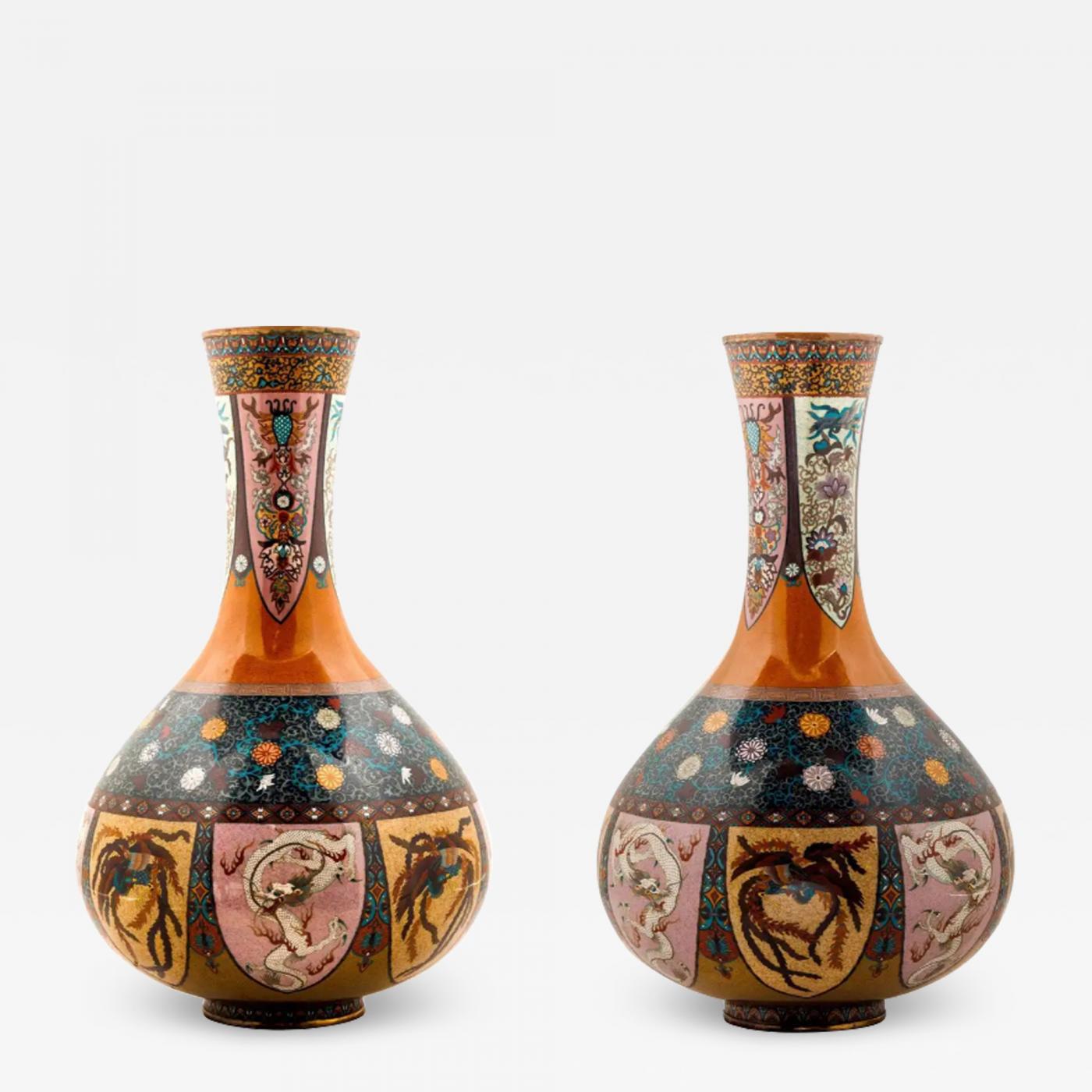
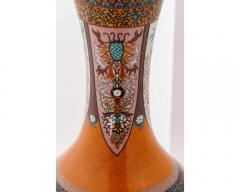
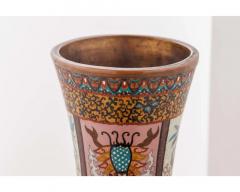
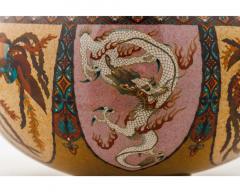
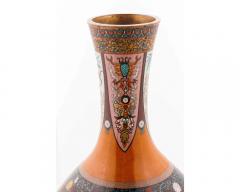
A large pair of Japanese Cloisonne Enamel vases attributed to Honda Yasaburo, 19th century.
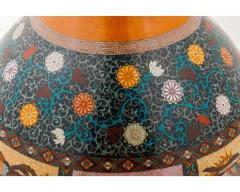
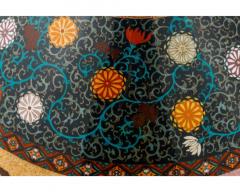
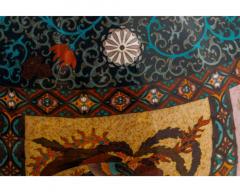
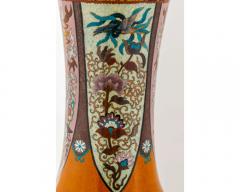
Finley decorated with the rich enamel colors of orange and green, these vases are designed with birds, phoenix, dragons, lotus and paulownia flowers and the traditional Japanese Karakusa pattern.
Karakusa is a decorative motif commonly used in traditional Japanese art and design. The word "karakusa" refers to a type of plant, often translated as "Arabesque" in English, which features a twisting and curling vine-like stem with leaves and flowers.
The karakusa pattern is created by repeating this vine-like stem in a continuous pattern, often with various other elements such as flowers, fruits, and leaves. The pattern can be found in a variety of mediums, including textiles, ceramics, and lacquerware.
The karakusa pattern has a long history in Japanese art and design, dating back to the Heian period. It was often used as a decorative element in clothing, such as the kimono, and in architecture, such as in the decorative elements of temples and shrines.
Today, the karakusa pattern is still a popular decorative element in Japanese art and design. It is often used in modern designs for textiles, stationery, and other decorative items. The pattern has also been adapted and incorporated into contemporary Western designs, often used in fashion, home decor, and graphic design.
Honda Yasaburo was a renowned Japanese cloisonne artist who lived and worked during the Meiji period (1868-1912) in Japan. He was born in 1845 in Nagoya, Japan, and studied under the famous cloisonne artist Namikawa Yasuyuki.
He was known for his exceptional skill and attention to detail in cloisonne enamel work, and his pieces are highly sought after by collectors today. His works often featured intricate designs with bold colors and gold accents, and he was particularly skilled at creating realistic depictions of animals, birds, and flowers.
Honda Yasaburo's works were exhibited in international expositions, including the Paris Exposition Universelle in 1900, where he won a gold medal for his cloisonne enamel vase. He was also awarded the prestigious title of "Teishitsu Gigei-in" (Imperial Household Artist in 1910 by Emperor Meiji.) in 1910 by Emperor Meiji.
Today, Honda Yasaburo's works can be found in major museums and private collections around the world. They represent not only exceptional artistry but also the cultural and historical significance of the Meiji period in Japan.
Measures: 19.5" high x 12" wide.
In overall very good condition, no damages noted. -
More Information
Origin: Japan Period: 19th Century Materials: Copper, Enamel Condition: Good. Number of Pieces: 2-3 Styles / Movements: Asian, Traditional Patterns: Asian/Oriental Incollect Reference #: 633986 -
Dimensions
H. 19.5 in; Diam. 12 in; H. 49.53 cm; Diam. 30.48 cm;
Message from Seller:
For four generations, Solomon Treasure has built a distinguished reputation for offering rare and important 18th-19th century antiques and fine art, serving museums, collectors, and designers worldwide. Located in the heart of Manhattan, we specialize in exceptional pieces ranging from Napoleon Neoclassical to Art Deco and Middle Eastern Islamic treasures. Contact: Mory Talasazan, Director | mory@solomontreasureny.com | 917.686.9732 |
More Listings from Solomon Treasure View all 195 listings
-
The Duke and Duchess of Windsor - An Exquisite Ormolu and Églomisé Bureau Plat

-
Magnificent Pair of Ormolu-Mounted Pink Chinese Porcelain Vases
-
A Grand Meiji Cloisonné Enamel Tray Featuring Cherry Blossoms and Birds
-
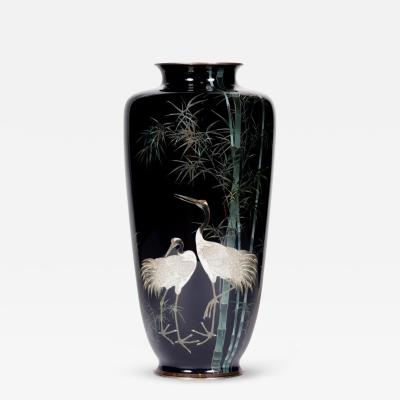
A Fine, Large Japanese Cloisonne Enamel Cobalt Blue Vase with Cranes, Hayashi
-
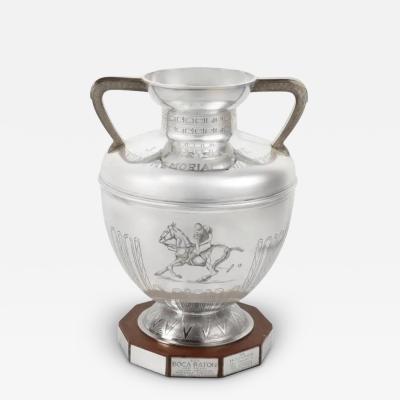
Rare One-of-a-Kind Buccellati Sterling Silver Polo Trophy for Boca Raton Polo
-
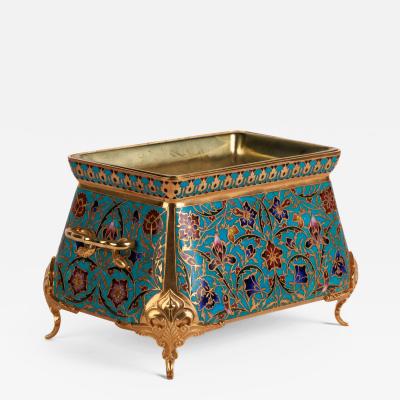
Ferdinand Barbedienne, A French Ormolu and Champleve Enamel Jardiniere, C. 1870
-
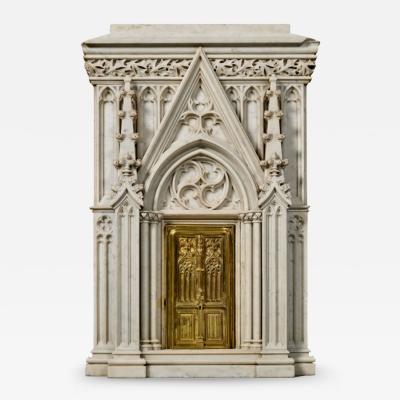
A Rare Monumental Italian Carved Carrara Marble Model of A Cathedral
-
A Monumental Meiji Period Japanese Turned Wood Vase with Silver Spider Okimonos
-
A Rare Alexis Falize Antique Gold and Cloisonné Enamel Locket, Circa 1867
-
State of Qatar and Grant Macdonald, a Rare Silver Humidor Box
-
An Exceptional Edward I. Farmer Jade and Coral Clock Garniture with Lamps
-
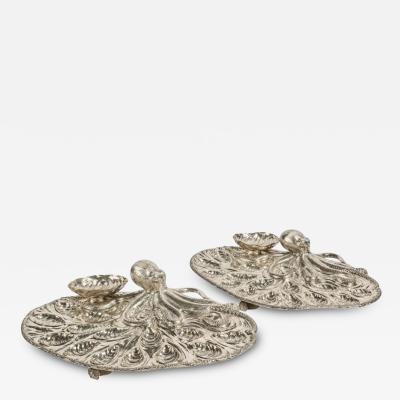
Rare Pair of Mario Buccellati Italian Silver Marine-Themed Oyster Platters
-
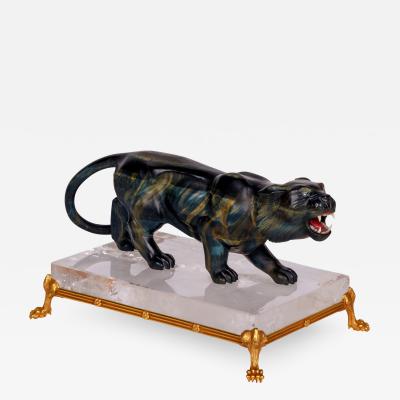
Rare Carved Hawk's Eye Agate Tiger on a 14K Gold Mounted Rock Crystal Base
-
Magnificent, Large Chinese Carved Coral Figural Group, Seven Figures with Fish