




Offered by:
Jim's of Lambertville
6 Bridge Street
Lambertville, NJ 08530 , United States
Call Seller
609.397.7700
Showrooms
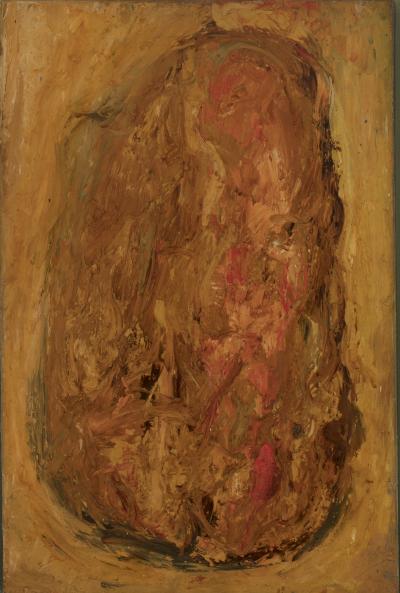
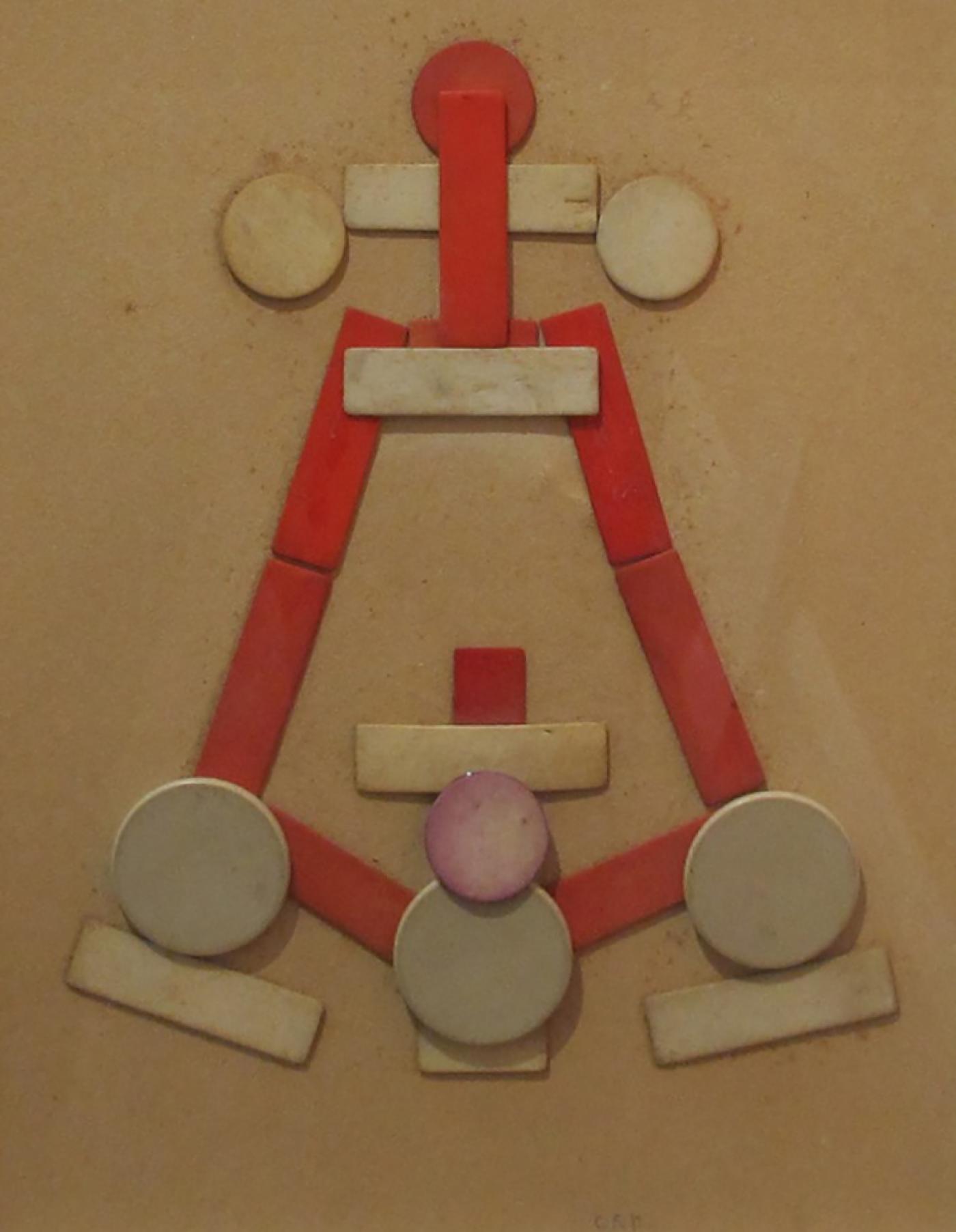
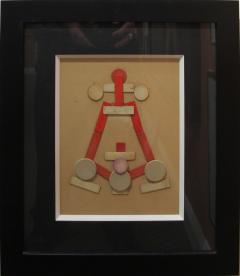
Poker Chip Construction
-
Description
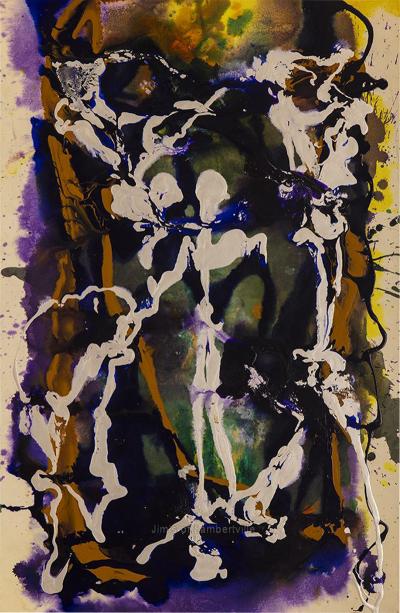
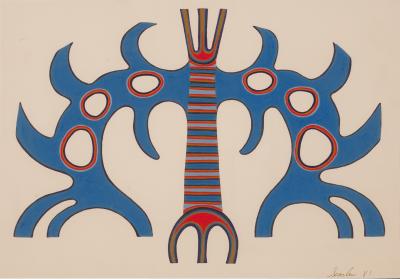
Signed lower right.
Charles Frederick Ramsey (1875 - 1951)
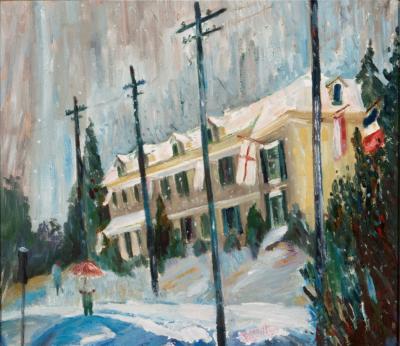
Charles Frederick Ramsey is considered as important a leader among the New Hope Modernists, as Lathrop among the New Hope Impressionists. Ramsey, the son of prominent Philadelphia artist, Milne Ramsey, was born in Pont-Aven, France. He began his art studies at the Pennsylvania Museum School of Industrial Art in 1893. From 1896 to 1898, he studied in Paris at the Academie Julian with Laurens, Benjamin-Constant, Ferrier, and Bouguereau. He then enrolled at the Pennsylvania Academy of the Fine Arts with William Merritt Chase, Cecilia Beaux, and Henry McCarter. The Academy awarded him the Cresson Traveling Scholarship in 1904.
In 1903, Ramsey made his first visit to New Hope and was soon spending summers there. He became particularly friendly with artists William Lathrop and Charles Rosen. From 1909 until 1912, he shared studio space in New Hope with Robert Spencer at the old Huffnagle Mansion. At this time, Ramsey was curator of schools for the Pennsylvania Academy. He temporarily moved to Pittsburgh in 1912, where he had been appointed curator at the Carnegie Institute, a position he held until 1916. The same year he accepted a position as director and lecturer at the Minneapolis School of Art. However, this position would be short-lived as he was fired after admitting that he was a socialist and a member of the I.W.W. (Industrial Workers of the World or “Wobblies”). In 1917, he and his family moved to New Hope permanently.
In his early years, Ramsey exhibited at the Pennsylvania Academy of the Fine Arts (1902-03, 1910-12), although he preferred not to participate in competitive salons. He made rare exceptions however, such as the Philadelphia Art Alliance (1940) and the Phillips Mill near New Hope. Ramsey exhibited regularly in New Hope with the Modernists groups, New Group and the Independents.
Ramsey’s early style owed much to the traditional impressionists working in New Hope. However, after the First World War, Ramsey became intrigued by contemporary stylistic innovations and turned increasingly to abstract forms of expression. At this time, he was sharing a studio with Arthur Carles. By 1919, Ramsey had created the first two abstracts painted in New Hope--"“The New Hope-Lambertville Bridge” and “The Cloud”. In the 1920s, Ramsey opened New Hope’s first art gallery, the Blue Mask. Ramsey also began to teach at the nearby Solebury School, and organized a summer art school. During this period, Ramsey collaborated with Ethel Wallace, designing batiks and textile wall hangings.
After fellow modernist Lloyd Ney was rejected from entry to the Phillips Mill Annual Exhibition, it became apparent that artists with a more modernist outlook needed a venue where they could exhibit their work and attract customers. Ramsey founded the New Group in 1930, where artists could exhibit artwork of their own choosing in a non-judgmental environment. By 1932 the New Group had reorganized as The Independents.
In the late 1930s, Ramsey became close friends with Charles Evans and Louis Stone. He persuaded them to join him teaching summer classes in non-objective painting. Soon a history-making collaboration began. In 1937, meeting in Evans’ studio at the rear of Cryer’s Hardware Store on Main Street, a decision was made to establish the Cooperative Painting Project. They were intrigued by the cooperative “ad-lib” process by which jazz musicians created music. Believing this to be the quintessential American contribution to music, Ramsey theorized that a similar result might be obtainable with art, a visual “jam session”. The objective was to jointly collaborate in the creation of a painting as well as apply collective criticism during its creation. By creating forward movement by general consent, they believed they could produce a higher level of beauty. By consensus it was decided that the subject matter would be non-objective. Up to eight people would participate and stop when the painting “felt” finished by common agreement. These paintings were signed with the name “RAMSTONEV”. Ramsey continued to paint on his own, creating Modernist works even as the movement lost momentum in New Hope. He passed away in 1951 at the age of seventy-six.
Sources:
-New Hope for American Art by James M. Alterman
-Charles F. Ramsey Father of New Hope Modernism, Dr. Thomas C. Folk, Allentown, PA: Allentown Art Museum, 2003
-New Hope Modernists, Roy Pedersen and Barbara Wolanin, New Hope, PA: New Hope Modernist Project, 1991 -
More Information
Documentation: Signed Notes: signed lower right Origin: United States, New Jersey Period: 1920-1949 Materials: Ivory and Hard Plastic: Collage Condition: Excellent. Creation Date: c. 1950 Styles / Movements: Abstract Expressionism, Modernism, New Hope School Dealer Reference #: JOL76201601 Incollect Reference #: 198106 -
Dimensions
W. 8 in; H. 11 in; W. 20.32 cm; H. 27.94 cm;
Message from Seller:
Welcome to Jim's of Lambertville Fine Art Gallery, located in the heart of Lambertville, NJ. Specializing in Pennsylvania Impressionist and Modernist paintings, antiques, and custom framing, we invite you to visit us or contact us at 609.397.7700 or via email at info@jimsoflambertville.com.