













Offered by:
Arader Galleries
1016 Madison Avenue
New York City, NY 10075 , United States
Call Seller
215.735.8811
Showrooms
McCall’s Ferry on the Susquehanna
-
Description
Paper size 13-1/2 x 18-3/4”
Framed size 26-1/2 x 31-1/2”
A Rare Watercolor by one of George Washington’s Most Admired Artists.
George Jacob Beck completed his magnificent watercolor of the historic McCall’s Ferry and the Susquhanna River in Pennsylvania at approximately the same time as his paintings of the Potomac River that were commissioned by President George Washington in 1796 for his home in Mount Vernon. Washington was impressed by the artist’s ability to capture his boyhood home and the site of his many land surveys, and purchased two companion views of Beck's Great Falls of the Potomac, now part of the Mount Vernon Ladies’ Association of the Union Collection. Beck executed each of these paintings with a careful attention to light playing on the surface of the water, creating a luminous quality that contrasts with the darkness of the foliage on the bank.
Lauded as one of the greatest predecessors of the Hudson River School and a favorite artist of President Washington, George Jacob Beck’s artwork continues to be highly sought after today. Though listed in the 1806 Lexington directory as a "Portrait Painter," George Beck is most famous for his landscape work which unquestionably contributed to the popularity of American views during the late eighteenth and nineteenth century. He was the most experienced, if not the first, of the early landscape painters to work in the United States. Six of his American views, engraved and published by T. Cartwright of London, have been collector's items for some time. This quote, taken from Virgil Barker of American Painting in 1950, demonstrates Beck’s enduring influence within the art world:
"Among all the foreign-trained who came here in the Federal era, George Beck had the most substantial and the best mastered landscape style...Beck's superiority in craft enabled him to render the rocks with a strength sufficient to withstand the turbulent rush and falling weight of water...[and] to construct the forms of rock and tree, to give the solidity of earth, and even...to modulate values toward a distant horizon."
Beck’s early philosophy is accessible in the captions he wrote for two of his views published in the European Magazine and London Review in 1785. In these captions he expressed his lifelong interest in science and mathematics. “Portraits of men, things and places,” according to Beck, serve the same purpose in the mimetic arts as experiments do in science. He added that the usefulness of drawing is linked to its ability to provide insight into nature’s secrets.
A transitional figure, Beck was caught between eighteenth-century rational thought and nineteenth-century Romanticism. With his pioneering depictions of the American wilderness, he formed a stylistic bridge to Cole’s romantic landscapes. He leaned toward the aesthetic of the picturesque, sacrificing accuracy for pleasing effects and celebrating ruggedness over smoothness.
The Susquehanna River is located in the northeastern United States. At approximately 444 miles long, it is the longest river on the American east coast and the 16th longest in the United States. In late colonial times, the river became an increasingly important transportation corridor with the discovery of anthracite coal by Necho Allen in its upper reaches in the mountains. In the 19th century, the Susquehanna became the scene of the growth of industrial centers. During the 18th century, ferry boats were a popular means of transversing rivers. The ferries charged for the trip which connected the shores of the river, usually at the closest points.
McCallsFerry crossed the Susquehannah near Lancaster in Pennsylvania. Beck painted this view standing slightly upstream from the ferry, looking toward the opposite shore and the rocky channel that the boat passed through with both people and cattle. The rocks compose small islands that slow the current of the river, providing a calm section for travel.
Born at Ellford, England, the youngest son of a Staffordshire farmer in modest circumstances, Beck had to leave school at nine years of age. As an ambitious youth he continued his self-education, and at sixteen secured a teaching position at nearby Tamworth.
Several years later Beck was appointed to the English Corps of Engineers, assigned to draw military plans and maps at the Tower of London. During this time his interest in rendering topographical views was reignited, and he also took up painting. Beck and his wife Mary both exhibited pictures at the Royal Academy of London, he from 1780 to 1793.
Beck immigrated to the US in about 1795, landing in Norfolk and spending several years in Baltimore, Maryland. Following President Washington’s commission of the Potomac River paintings, William Hamilton, the well-known patron of English and American artists commissioned Beck to paint a view of the Woodlands, Hamilton’s elaborately landscaped estate in Philadelphia. It was at Hamilton’s insistence that Beck and his wife relocated to Pennsylvania in the late 1790s, where they both continued to teach. The couple again moved to Cincinnati, Ohio, followed by Lexington, Kentucky, where the artist opened a boys’ school and remained until his death in 1812.
'Reality, Romanticism, Realism', The Kennedy Quarterly, December 1967, page 242, number 254. 'George Beck, An Eighteenth Century Painter' by Edna Talbott Whitley, The Register, Kentucky Historical Society, January 1969, page 36, footnote 58. Provenance: Private collection, Philadelphia, PA, Kennedy Galleries, New York, NYC -
More Information
Documentation: Period: 19th Century Creation Date: c. 1801 Styles / Movements: Other Incollect Reference #: 116843 -
Dimensions
W. 18.75 in; H. 13.5 in; W. 47.63 cm; H. 34.29 cm;
Message from Seller:
Founded in 1971, Arader Galleries is the leading dealer of rare maps, prints, books, and watercolors from the 16th to 19th centuries. Visit us at 1016 Madison Avenue, NYC, or contact us at 215.735.8811 | loricohen@aradergalleries.com |
More Listings from Arader Galleries View all 1350 listings
-
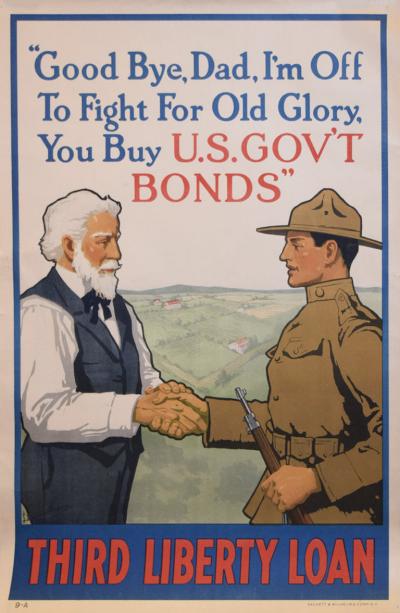
"GOOD BYE, DAD, I'M OFF TO FIGHT FOR OLD GLORY, YOU BUY U.S. GOV'T BONDS"
-
PAIR OF SIDE CHAIRS (INV. 0303)

-
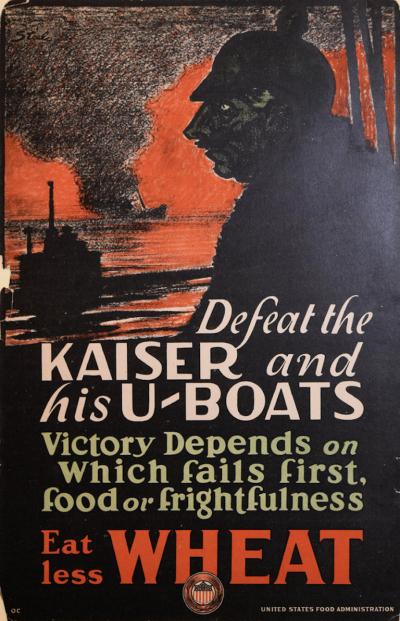
UNITED STATES FOOD ADMINISTRATION, DEFEAT THE KAISER AND HIS U-BOATS...
-
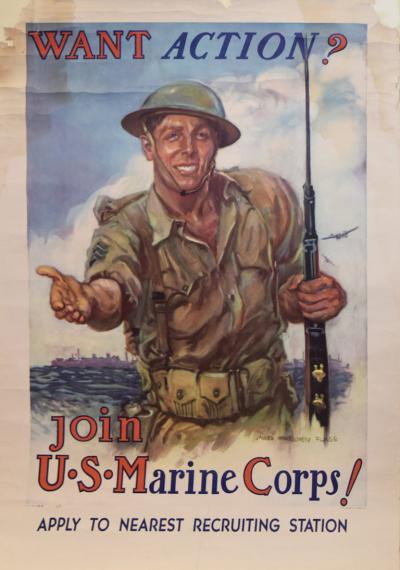
JAMES MONTGOMERY FLAGG (1877-1960), WANT ACTION? JOIN THE US MARINE CORPS!
-
PHILADELPHIA SIDE CHAIR (INV. 0033)

-
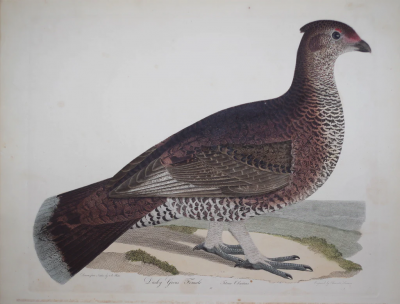
ALEXANDER WILSON (1766-1813), DUSKY GROUS, FEMALE
-
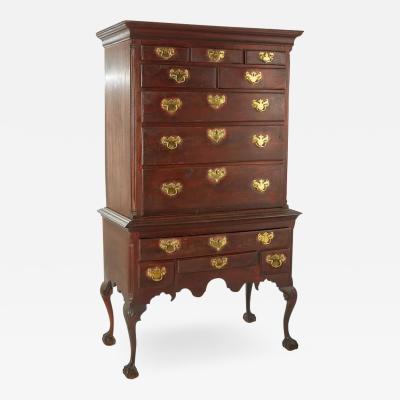
NORTHERN DELAWARE OR SOUTHEASTERN PENNSYLVANIA HIGH CHEST OF DRAWERS
-
MASSACRE OF THE AMERICAN PRISONERS OF WAR AT DARTMOOR PRISON

-
ENGLISH NEOCLASSICAL SIDE CHAIR (INV. 0026)
-
UNKNOWN ARTIST, IF YOU MUST TALK TELL IT TO THE MARINES
-
WLADYSLAW THEODORE BENDA (1873-1948), WHEN THE BOYS COME HOME
-
MARK CATESBY (1683-1749), LE COQ DU BOIS D'AMERIQUE (PARTRIDGE), T1

-
MEMBER OF THE US FOOD ADMINISTRATION, FOOD WILL WIN THE WAR...
-
PHILADELPHIA DRESSING TABLE (INV. 0327)

