








George Bellows
American, 1882 - 1925
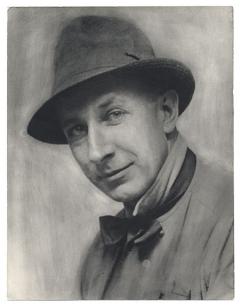
George Bellows was born in Ohio in 1882. He was a Realist painter whose bold, gestural style is noted in his dynamic interpretation of urban life. Bellows studied at Ohio State University and with William Merritt Chase at the New York School of Art, NYC. His most popular paintings were scenes of prizefights, athletic events and crowded streets. These paintings were meant to display the physical stress and quality of life of everyday people. He would often complete two or three canvases in a day, attempting to capture the moment's glimpse of such scenes. Although Bellows was associated with members of "The Eight", he did not exhibit in their 1908 show and therefore gained more popularity with critics and patrons for not challenging academic authority. His work often showed more qualities of the Ashcan School. He also taught at the Art Students League. In 1916 Bellows turned to lithography and during WWI he produced a series portraying the atrocities of war. Near the end of his career, Bellows began to experiment with geometric compositions based on the mathematical theories of Jay Hambridged. Bellows died at the age of 42 from a ruptured appendix. Biography courtesy of The Caldwell Gallery, www.antiquesandfineart.com/caldwell
George Bellows Paintings
George Bellows Paintings
American painter and lithographer a painter of portraits, lanscapes and urban life. He studied under Robert Henri (1865-1929). His work provided a comment on contemporary U.S. life, from which he drew his subjects with uncompromising realism. His series of 6 prize-fighting paintings (1909) demonstrates his natural dashing style, which later subjected to the theory of dynamic symmetry to give a formal balance to his compositions.
He turned with great success to lithography. He was the son of George Bellows, an architect and building contractor. He displayed a talent for drawing and for athletics at an early age. In 1901 he entered Ohio State University, where he contributed drawings to the school yearbook and played on both the basketball and baseball teams. In spring of his third year he withdrew from university to play semi-professional baseball until the end of summer 1904; this, and the sale of several of his drawings, earned him sufficient money to leave Columbus in September to pursue his career as an artist.
Biography courtesy of Roughton Galleries, www.antiquesandfineart.com/roughton
He turned with great success to lithography. He was the son of George Bellows, an architect and building contractor. He displayed a talent for drawing and for athletics at an early age. In 1901 he entered Ohio State University, where he contributed drawings to the school yearbook and played on both the basketball and baseball teams. In spring of his third year he withdrew from university to play semi-professional baseball until the end of summer 1904; this, and the sale of several of his drawings, earned him sufficient money to leave Columbus in September to pursue his career as an artist.
Biography courtesy of Roughton Galleries, www.antiquesandfineart.com/roughton

 Loading...
