

Northern Lights: Lighting the Scandinavian Way
.jpg) |
Ceiling Lamp by Hans Bergström for ASEA, Sweden, mid 20th century. Courtesy H Gallery. |
 |
Finnish designer Paavo Tynell is among the world’s most famous and admired mid-century modern creators of lighting fixtures and lamps. His stunning ‘Snowflake’ chandeliers sell for half a million dollars at auction and even higher prices on the gallery market. But there is more to Scandinavian Modern lighting design, with dozens of designers and outstanding designs to know. Incollect’s dealers share their expertise on important designers and some of their most beautiful and iconic works.
by Benjamin Genocchio
 |
Left: Pair of Svend Aage Holm-Sørensen "E1296" Table Lamps for ASEA, Sweden, 1950s. Courtesy H Gallery. Right: Model "EA1288" Brass and Wood Table Lamp for ASEA, Sweden ca. 1940s. Courtesy H Gallery. |
 |
“During the 1950s, ASEA was not only an industrial powerhouse in Sweden but a major commissioner of modern domestic lighting, collaborating with designers who understood how to bring softness and elegance into functional objects,” says Jelmar Hufen, owner of H Gallery in Utrecht. “Through these collaborations, the company has had a huge impact on the design history, especially in the area of lighting.”
Hufen points to the way ASEA combined innovative design with their technical and production prowess, a quality that can be observed in pieces such as a set of unique and inventive (and extremely rare) table lamps by the Danish lighting designer Svend Aage Holm-Sørensen, model E1296, from the 1950s, characterised by a creative yet functional use of materials “featuring a cone-shaped base crafted from solid wood and a highly distinctive, artistically formed opaline glass shade secured by a brass cylinder.” Overall, Hufen says, “the impression of the design is at the same time futuristic and quintessentially mid-century modern.”
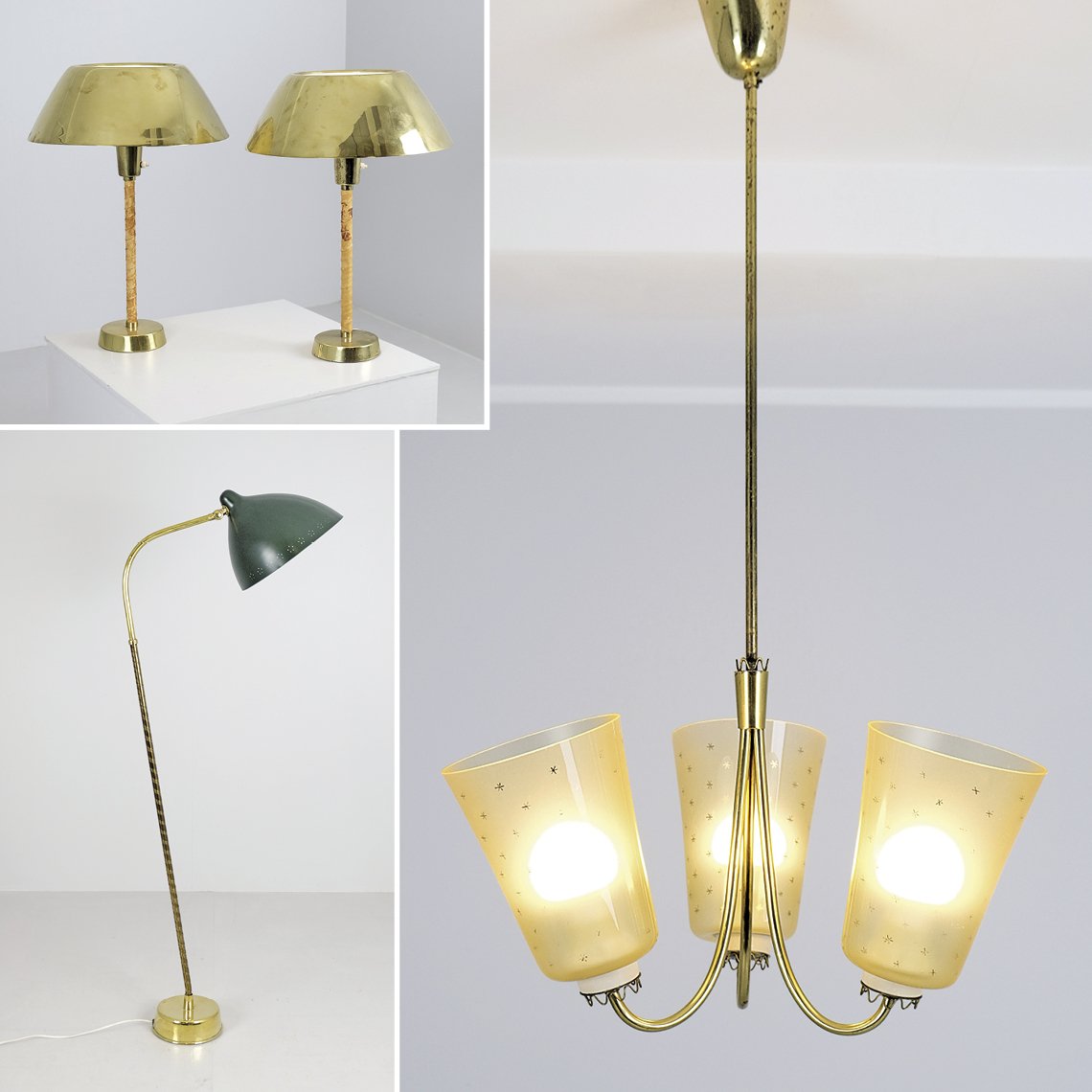 |
Top left: Lisa Johansson-Pape, Ihanne Table Lamps in brass and leather, Orno, 1950s. Courtesy Haddadin Design. Left: Lisa Johansson-Pape, Floor Lamp Model 30-062 in green lacquer and brass, Orno 1950s. Courtesy Haddadin Design. Right: Lisa Johansson-Pape, Ceiling pendant with mouth-blown glass shades with handpainted stars and brass spring decorations, circa 1950s. Courtesy Haddadin Design. |
 |
“Lisa Johansson-Pape stands among the most influential Finnish lighting designers of the 20th century,” says Faris Haddadin of Haddadin Design. “Her guiding belief was simple yet profound: a lamp’s purpose is to serve the light itself. Form, material, and structure existed only to honor illumination. This philosophy resulted in lighting pieces that are architectural yet gentle, functional yet lyrical. Her lamps do not merely illuminate rooms: they shape emotion, rhythm, and space. This is why her work continues to resonate so strongly today.”
“Johansson-Pape’s ability to unite atmosphere, clarity, and timeless proportion ensures that her designs feel at home in modern interiors and historical spaces,” Haddadin explains. Exceptional pieces on Incollect from Haddadin Design include a pair of Johansson-Pape’s 'Ihanne' table lamps in brass and leather, made by Orno with variations in the stems, materials and shades; a floor lamp, model 30-062 from the 1950s with a repainted green lampshade, also manufactured by Orno; and finally a ceiling pendant “with mouth-blown glass shades with handpainted stars and brass spring decorations,” says Haddadin. “Her lighting continues to be highly sought after today for its obvious beauty and enduring practicality.”
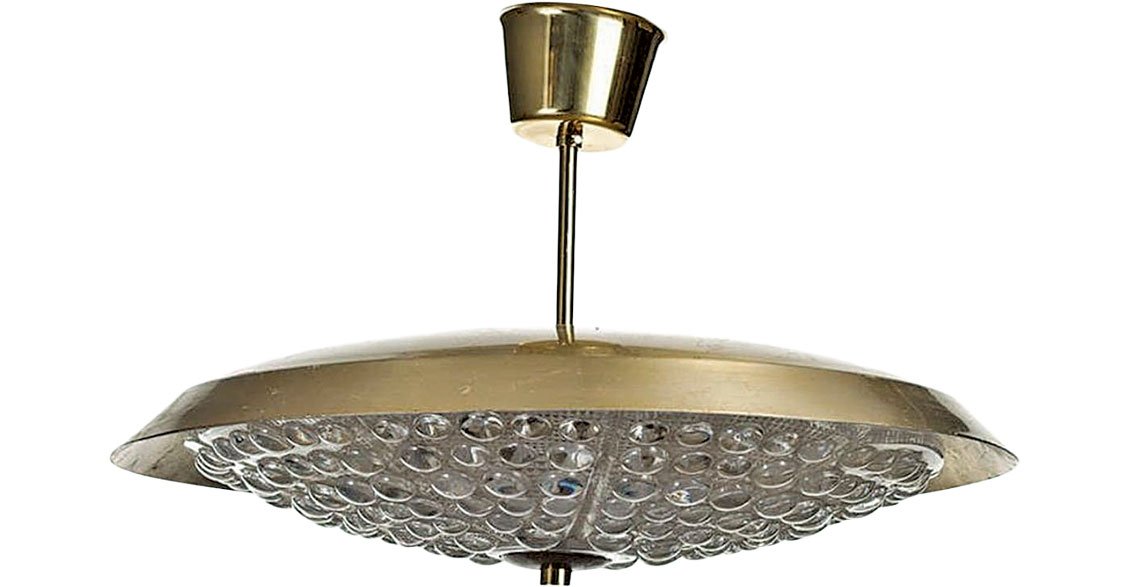 |
A vintage chandelier by Carl Fagerlund for Orrefors, Sweden, circa 1960. Courtesy VN Vintage & Modern. |
 |
 | |
Drum ceiling pendant by Carl Fagerlund for Orrefors. |
Carl Fagerlund was a Swedish designer who joined the Orrefors Glassworks in 1946 and went on to become one of the firm’s most celebrated lighting designers, though he also worked for other firms and designed a range of glassware. His designs are minimalist, often with patterned and textured glass, which he put to great effect in wonderfully sculptural lamps, pendants, and sconces that continue to be prized by designers and collectors today.
“What makes Fagerlund’s lamps so coveted by today’s leading designers is more than their Scandinavian pedigree — it is their ability to both anchor and uplift a room,” says Val Nikitin from VN Vintage & Modern. “Rich in history and minimal in their form, they become the quiet protagonists in any design narrative — vessels for both nostalgia and modernity.” Among his most popular designs is a round drum ceiling pendant light created with a semicircular element of vertical tightly ribbed crystal. “These pendant lights, though born in the 1960s, slip seamlessly into today’s contemporary interiors,” Nikitin says. “It’s a testament to the timelessness woven through Fagerlund’s vision.”
Nikitin’s collection also includes a 1960s clear textured glass and brass domed ceiling chandelier for Orrefors, sculpted from a pressed, textured glass bowl. “It remains as fashionable today as the day it emerged from Orrefors kilns,” he says. “Its simplicity belies its many practical uses and versatility: it can be used as a pendant, double pendant, brass-topped pendant, or even flush mount. The form is pure, almost elemental, its clarity coming not from ornament but from the glass itself, crafted with a finesse that makes each piece gleam like a jewel,” Nikitin explains.
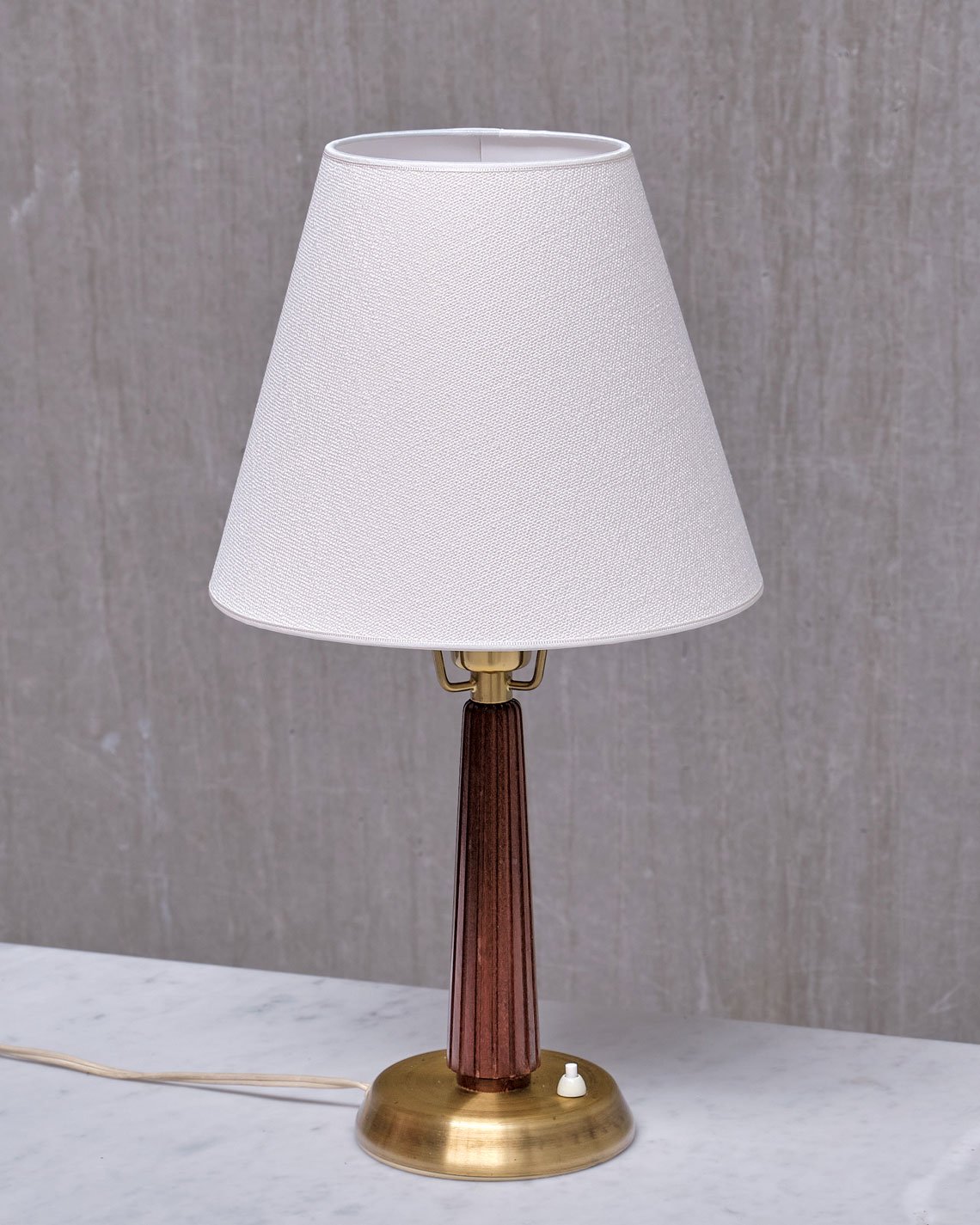 | 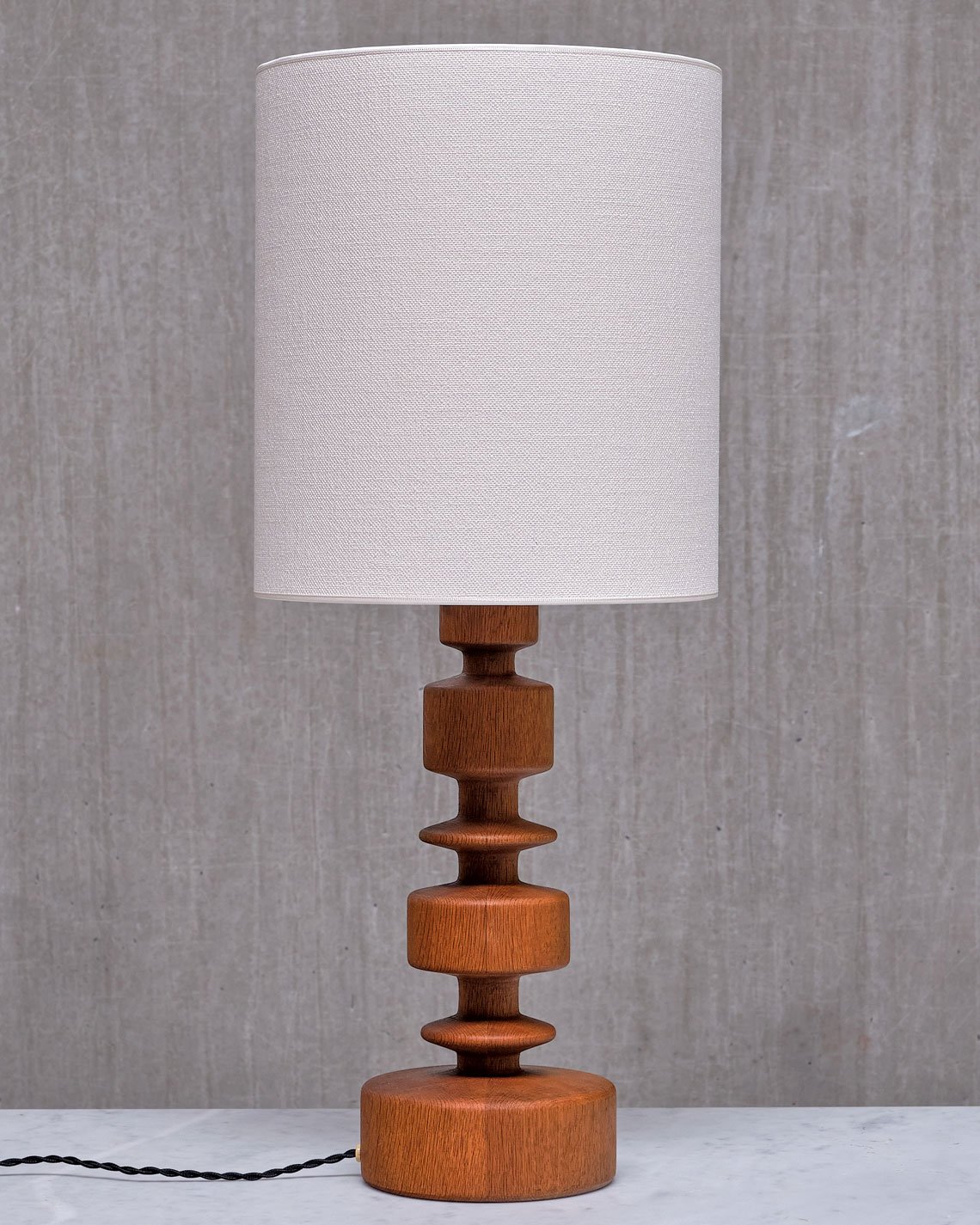 | |
Left: Hans Bergström, Table Lamp, Model E1149, brass and elm, ASEA, Sweden, 1940s. Courtesy Kabinet Hubert. Right: Sculptural Hans Bergström Oak Table Lamp, Model 762, Ateljé Lyktan, Sweden, 1960s. Courtesy Kabinet Hubert. | ||
 |
“Hans Bergström remains relevant today because he understood light as something to shape, not simply to emit,” says Jan-Clemens Hoek at Kabinet Hubert. “He explored indirect illumination, multiple light levels, and materials that allowed light to move naturally through a space, giving his fixtures a calm, architectural presence. At his company Ateljé Lyktan, as well as a designer for other lighting firms, he paired a sculptor’s sensitivity with a craftsman’s precision, relying on favored materials like brass, glass, and wood to shape the character of the light itself.”
Bergström’s sculptural lamps, beautifully made and expressive, bring a harmonious quality to interiors. Among Hoek’s favorite pieces is a sculptural oak table lamp, Model 762, created for Ateljé Lyktan in the 1960s. “This exceptionally rare table lamp from the 1960s is one of the few designs in which Bergström worked entirely in solid wood. Carved in oak, its sculptural form reflects both his Konstfack training and his early interest in sculpture. It stands apart from his brass and glass pieces, a distinctive moment in his exploration of form.”
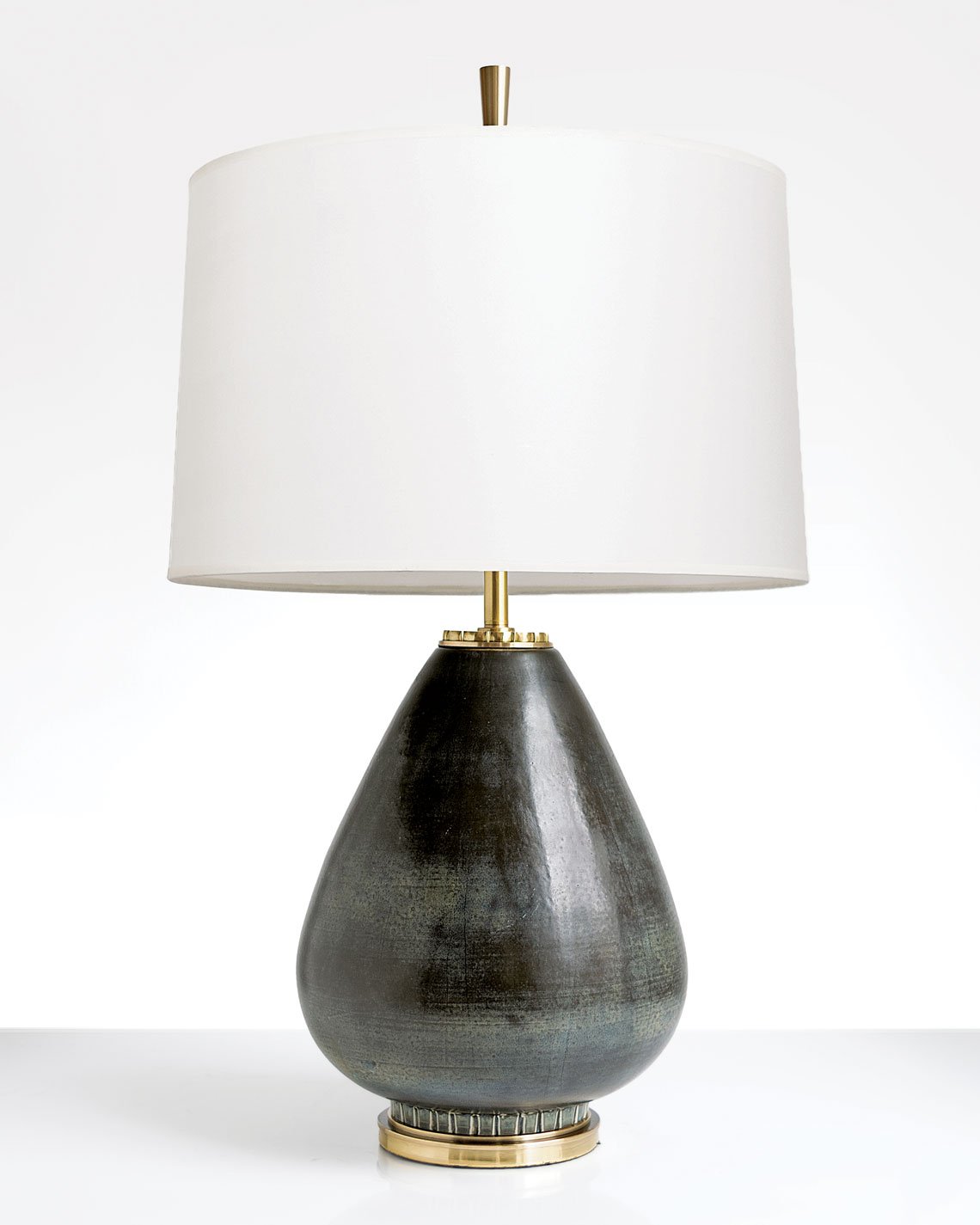 | 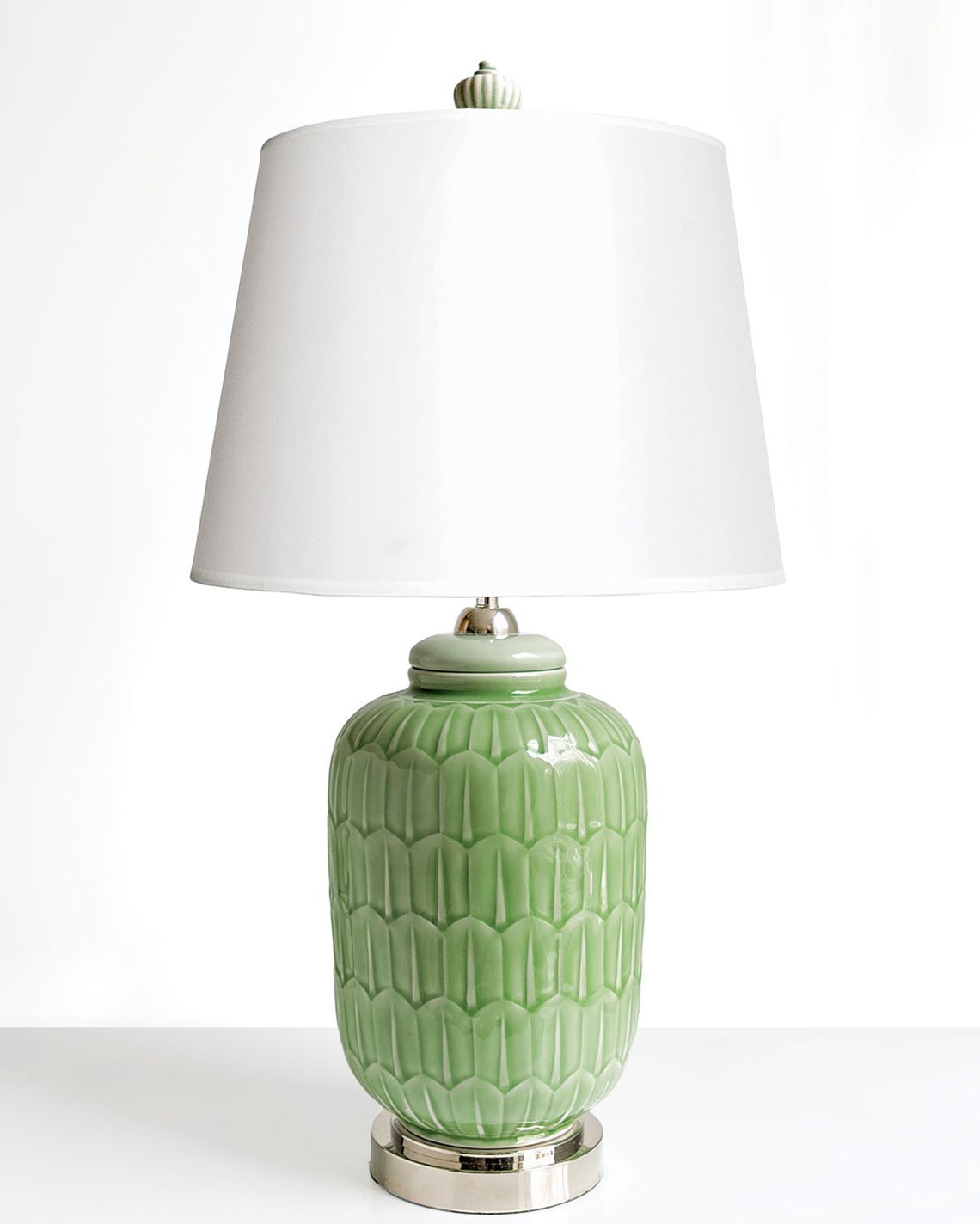 | |
Left: Gunnar Nylund, Swedish Modern lamp with hand thrown ceramic body for Rorstrand Studio, circa 1920-1949. Courtesy B4 Decor. Right: Gunnar Nylund, Swedish Art Deco lamp with jade glaze over a raised surface pattern, Rorstrand, 1940. Courtesy B4 Decor. | ||
 |
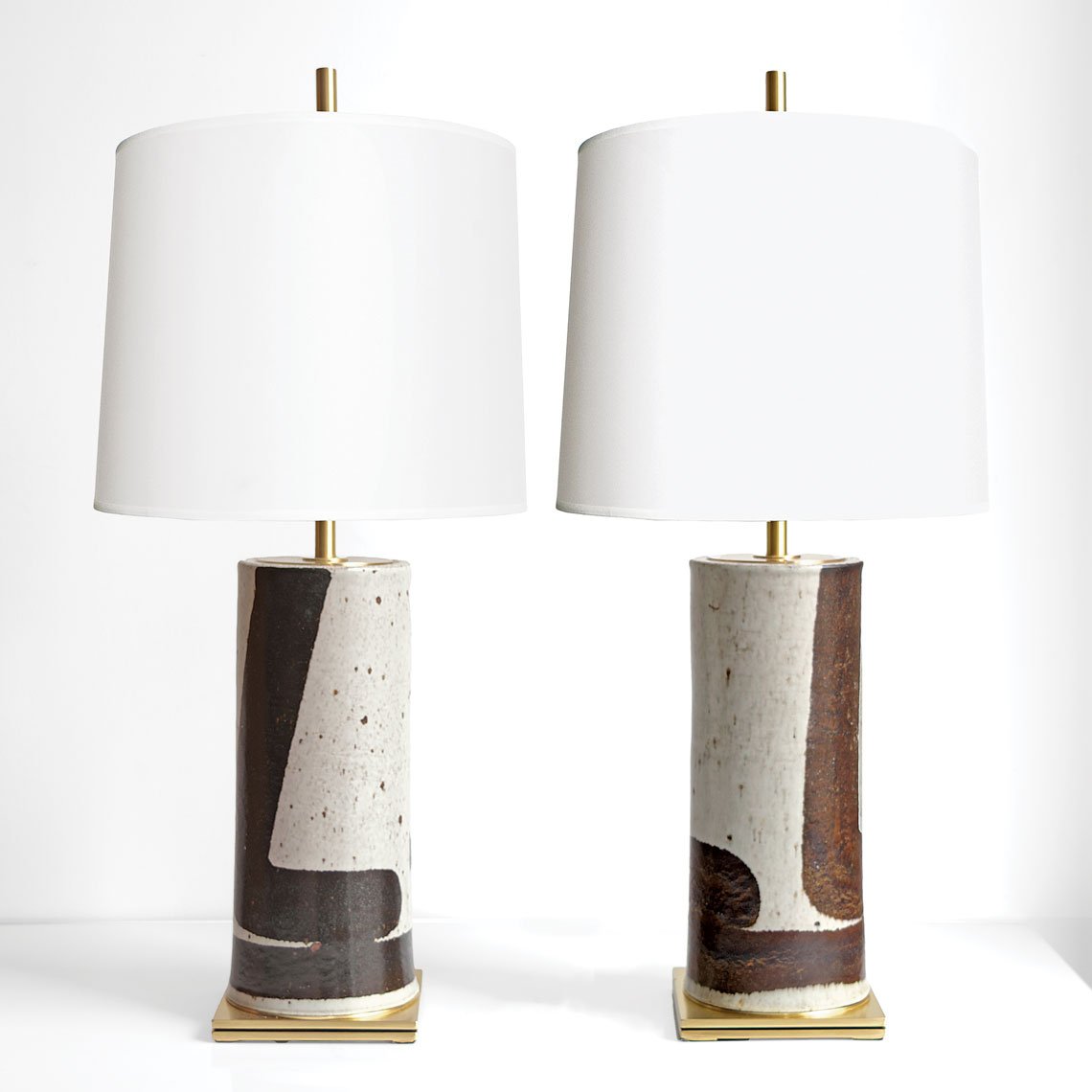 | |
Inger Persson for Rorstrand Studio, Sweden, circa 1960. Pair of hand-thrown vases, glazed and decorated with bold painterly strokes in the spirit of Abstract Expressionism. Courtesy B4 Decor. |
“Rörstrand happens to be one of my favorite sources for lamp bases, due to the skill and artistry of the designers working for them, such as Gunnar Nylund and Carl-Harry Stålhane, among others,” says Kerry Beauchemin, owner of B4 in New York. “But Rörstrand did not, for the most part, produce lamp bodies; they are a renowned Swedish maker of porcelain and artist studio vases and did not have their own line of electric lamps until the 1950s, as lamps in Sweden were for the most part made by lighting companies. Rörstrand’s vases, because of their quality, were often adapted to lamps later by vintage design dealers. I have done this myself many times.”
Among Beauchemin’s Rörstrand vase-to-lamp conversions using Swedish ceramics is a lamp base “with jade colored glaze over a raised surface pattern, newly fitted with a nickel-plated stem and double light cluster mounted on a nickel-plated base,” by Gunnar Nylund for Rörstrand, circa 1940s. “It is a very rare example,” Beauchemin says. He also has another lamp with a rare hand-thrown ceramic body, also designed by Gunnar Nylund for Rörstrand Studio, circa 1960s, fitted with a new brass base, mount, and double cluster sockets. “Nylund studied European classical art and design, however over time his work moved toward more abstracted forms. This lamp has a smoky gray-blue atmospheric surface quality which is in stark contrast to the polished brass lamp hardware.”
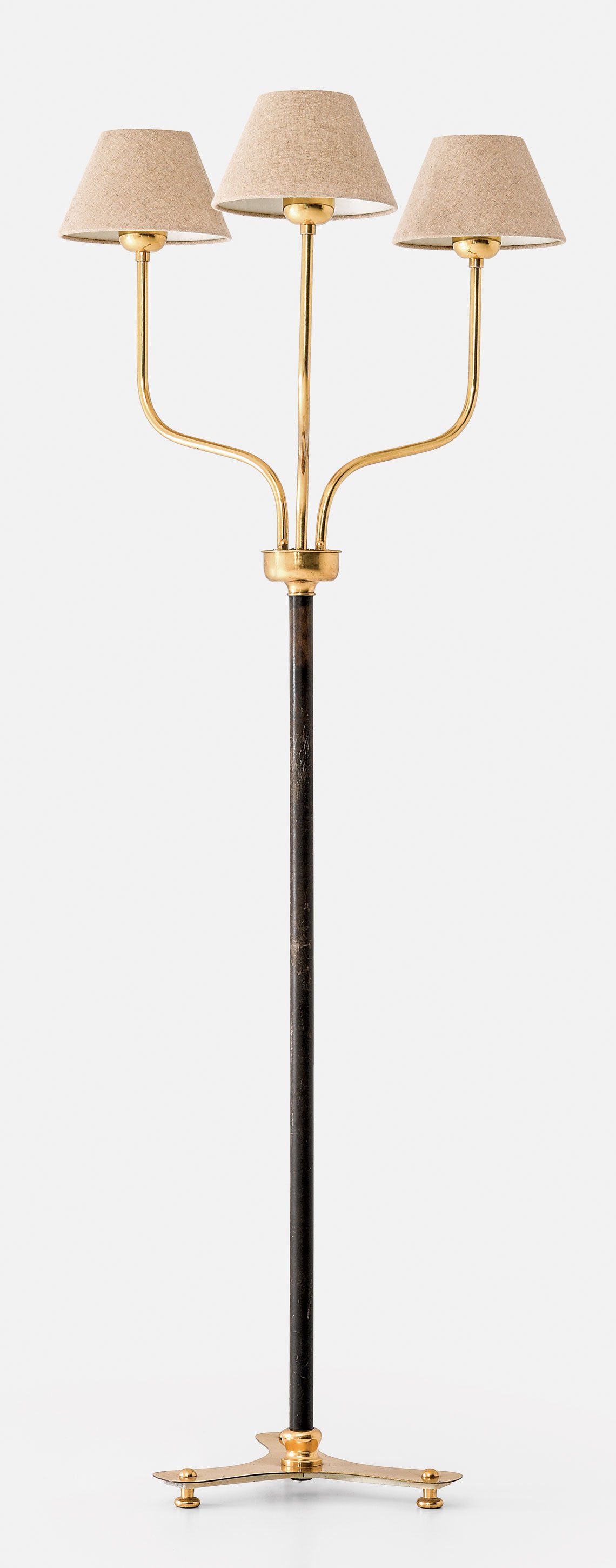 |  | |
Left: Model 2426 by Josef Frank produced by Svenskt Tenn in the 1950s, and made entirely of polished brass. Courtesy Studio Schalling. Right: Pair of lamps, Model 2349 by Josef Frank for Svenskt Tenn, with hand-stitched silk shades and brass tripod bases. No date. Courtesy Studio Schalling. | ||
 |
“Josef Frank’s lighting for Svenskt Tenn stands among the most poetic expressions of Scandinavian modernism. His lamps were never conceived merely as sources of light, but as sculptural presences that shape mood and space,” says Louise Larsen from Studio Schalling. “Using brass, parchment, and textiles, Frank brought warmth and softness to modern interiors, countering the harder lines of functionalism with something more humane. He believed beauty had a purpose beyond decoration — it could make daily life feel lighter and more alive.”
Notable pieces from Studio Schalling’s collection of lighting on Incollect are a rare floor lamp, model 2426, designed by Frank and produced by Svenskt Tenn in the 1950s. “It’s a striking example of his ability to combine function and emotion. Made entirely of polished brass, its three curved arms rise from a slender central stem, each carrying a fabric shade that emits a soft, ambient glow. The composition feels both deliberate and effortless — light in gesture yet substantial in presence,” says Larsen. Also by Frank for Svenskt Tenn are a pair of table lamps, model 2349, with hand-stitched silk shades with brass tripod bases. “Their lantern-like silhouettes and gentle, diffused light capture Frank’s belief that design should comfort as much as it impresses. Together, these pieces reflect the humane modernism that defined his work — precise, warm, and quietly joyful,” Larsen explains.
 | 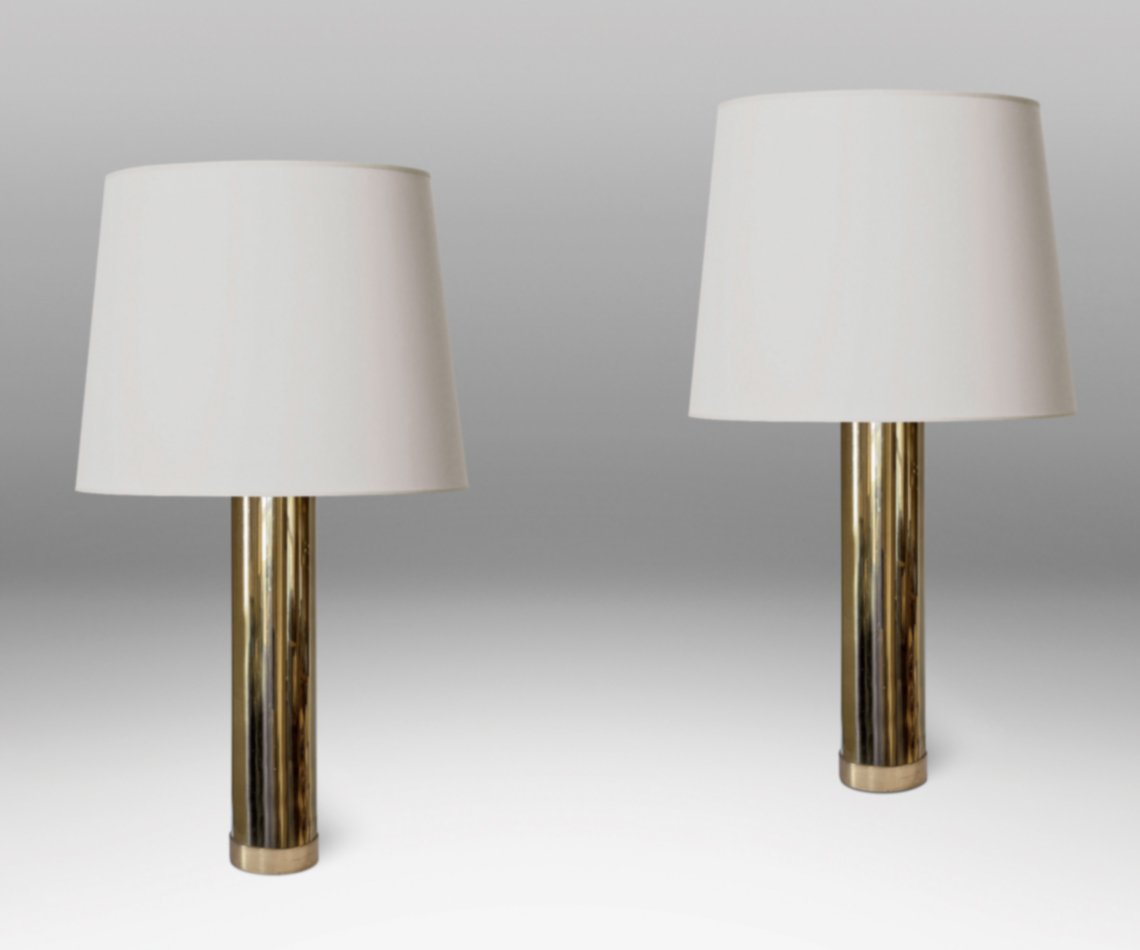 | |
Left: Pair of table lamps by Bergboms, made of brass and leather, Sweden, 1960s. Courtesy BAC. Right: Pair of table lamps by Bergboms, with tall, slim cylindrical forms in polished brass, made in Sweden, 1960s. Courtesy BAC. | ||
 |
 | |
Pair of table lamps by Bergboms, with slender cylindrical forms in white and gray marble, crafted in Italy for retail in Sweden, 1960s. Courtesy BAC. |
“Swedish Modernist lighting manufacturer Bergboms & Co. AB was founded in 1940 by businessman Efraim Ljung, who had previously launched DUX Furniture. The full breadth of the firm’s production in the early years is unclear, but it did include a number of lyrical mid-century designs, such as Greta Magnussen-Grossman’s G33 Gräshoppa lamp and sleek metal models by creative director Alf Svensson,” explains James Buresh, gallery director at BAC. “By the 1960s, the firm’s aesthetic represented the best of Swedish minimalism in design, with simple but elegant lamps and other furniture in brass, steel, teak, glass and earthenware. Bergboms also distributed lighting by other manufacturers, most notably Italian firm Bitossi Ceramiche, including many of Aldo Londi’s now classic lamp designs in glazed earthenware.
Bergboms & Co’s own designs currently available through BAC on Incollect include a sleek, modern pair of table lamps with slender stands “wrapped in a whiskey-tinted leather, with flaring bases in brass, and cast iron weights for stability, dating from the 1960s,” Buresh explains. Other striking designs by the maker include several pairs of columnar modern minimalist table lamps, one in white-gray marble with carved rings at the base, and a chic pair in polished brass with satin brass base caps.
 |
Top left: Hammered copper table lamp by Harald Notini, Model 6839, Böhlmarks, Sweden, 1920s. Courtesy Kabinet Hubert. Bottom left: Hammered tin table lamp by Harald Notini, Model 6891, Böhlmarks, Sweden, 1920s. Courtesy Kabinet Hubert. Right: Chandelier in brass and marbled glass by Harald Notini, Böhlmarks, Sweden, circa 1927. Courtesy Kabinet Hubert. |
 |
“Harald Notini was a sculptor, interior architect, and one of Sweden’s most influential lighting designers of the early twentieth century,” says Jan-Clemens Hoek, co-founder and gallery director at Kabinet Hubert. “As the artistic director for Arvid Böhlmarks Lampfabrik and Pukebergs Glasbruk for more than four decades, he guided both companies into a modern, design-driven era. Today, Notini’s lighting is especially admired for its sophisticated metalwork in copper, tin, brass, and wrought iron, combined with beautiful glass details.”
Among Hoek’s favorite pieces are Notini’s 1920s table lamp designs, notable, Hoek says, “for their daring, decorative, and expressive forms that balance the elegance of Swedish Grace with subtle references to European Art Nouveau.” Among the many fine pieces by him available on Incollect are two 1920s table lamps, produced by Arvid Böhlmarks Lampfabrik, “and entirely executed in hand-hammered metal — tin for Model 6891 and copper for Model 6839 — with sculptural twist stems, flared disk bases, and finely detailed collars topped with decorative caps and sculpted sphere finials,” Hoek explains. Pleated shades with silk fringes enhance their appeal.
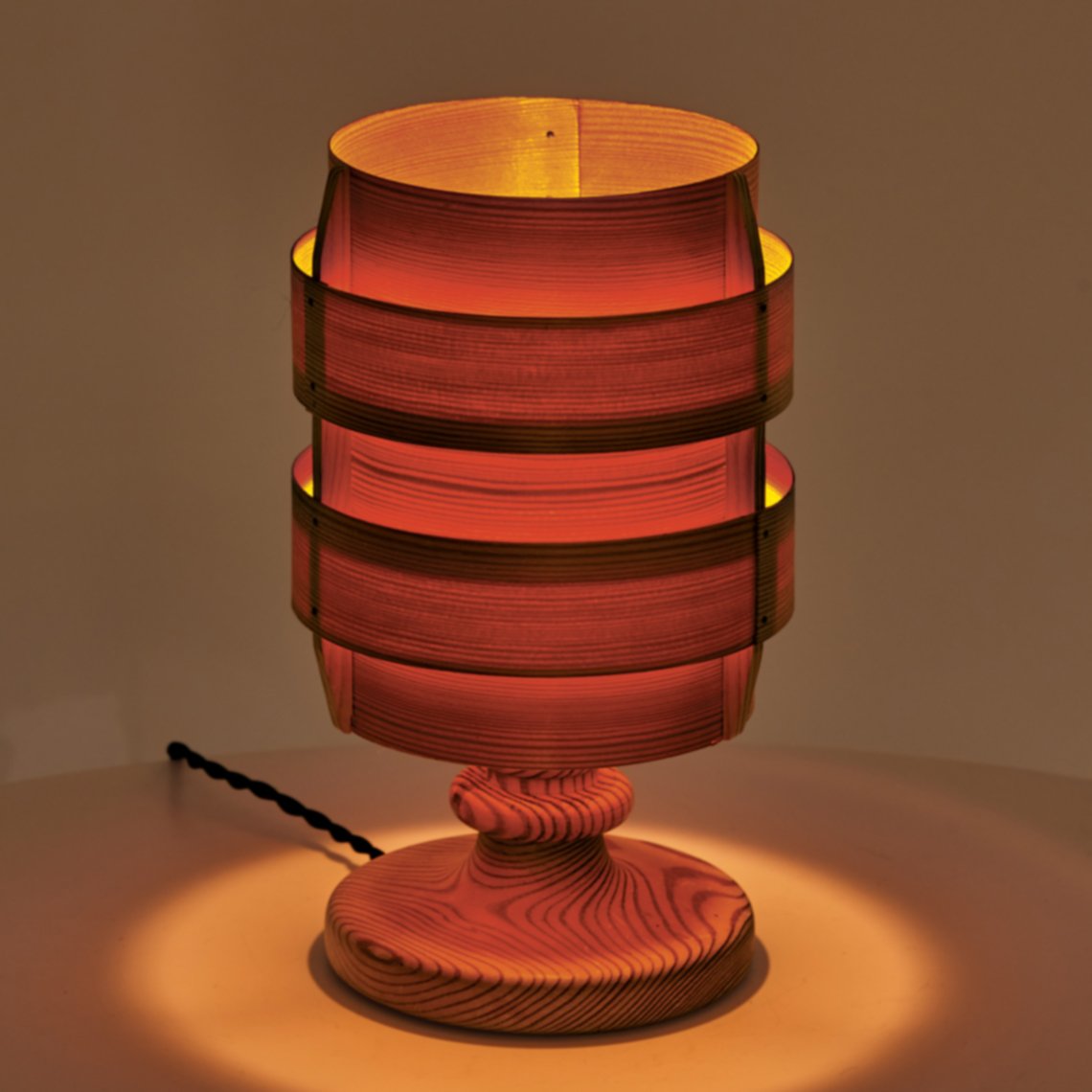 |  | |
Left: Hans-Agne Jakobsson, Model B148 wood table lamp for AB Ellysett, 1960s. Courtesy Two Enlighten. Right: Hans-Agne Jakobsson Opaline Perspex and Chrome Table Lamp for Markaryd, 1960s. Courtesy Two Enlighten. | ||
 |
“Hans-Agne Jakobsson was a true pioneer of midcentury Scandinavian Modern design,” says John Ballon, co-owner of Two Enlighten. “Jakobsson showed an early interest in architecture and design, becoming a cabinetmaker at 18. In 1951, he founded two iconic lighting companies, Hans-Agne Jakobsson AB and AB Ellysett, in Markaryd, Sweden. His innovative approach of producing lamps in bent pinewood and later, opaline perspex, to shape light in a soft, glowing, way gained him immediate distinction as a lighting designer.”
 | |
Hans-Agne Jakobsson, Model C627/110 'Rulle' black patinated outdoor sconce. Courtesy Two Enlighten. |
Jakobsson went on to create more than 2,000 lighting models throughout his long career. Many fine examples of his modern lighting are available on Incollect.com, including, at Two Enlighten, the 1960s Model #V157 cylindrical wall lamps for AB Ellysett in white painted metal and opaline lucite. His series of bentwood table lamps, such as the model B148 table lamp for AB Ellysett, or the opaline perspex and chrome table lamp for AB Ellysett are also highly prized.
“Ever-increasing in rarity due to the fragile nature of his materials of choice, many of the pieces which he produced during these early years are highly sought after by discerning collectors,” Ballon says.
Two Enlighten is the exclusive North American distributor of two of Jakobsson’s re-editioned classic lighting designs, the Tratten and the Rulle. They also make them in a variety of patinas and paint colors. “They are our best-selling Jakobsson design,” Ballon says.