








Mark Rothko
American, 1903 - 1970
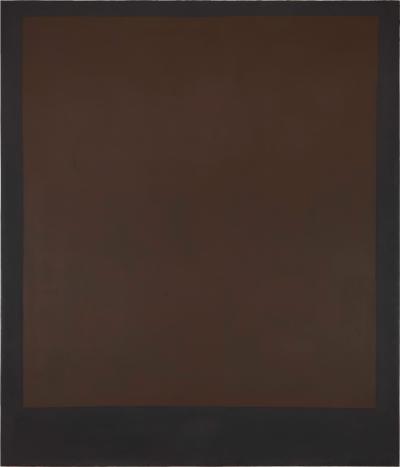
Mark Rothko (/ˈrɒθkoʊ/), originally Markus Yakovlevich Rothkowitz (Russian: Ма́ркус Я́ковлевич Ротко́вич, Latvian: Markuss Rotkovičs; name not Anglicized until 1940; September 25, 1903 – February 25, 1970), stands as a prominent Latvian-born American abstract painter renowned for his profound impact on the modern art scene. His legacy is epitomized by his iconic color field paintings, characterized by irregular and painterly rectangular regions of color, a style he masterfully crafted from 1949 to 1970.
While Rothko didn't align with a specific artistic school, he is inseparably linked to the American Abstract Expressionist movement. Initially arriving in Portland, Oregon, after emigrating from the Russian Empire (Latvia), Rothko later settled in New York City. His early artistic endeavors centered around urban landscapes, reflecting the influence of his surroundings.
Responding to the tumultuous era of World War II, Rothko's art underwent a transformative phase in the 1940s. Experimenting with mythological themes and Surrealism, he sought to convey the profound sense of tragedy enveloping the world. As the decade concluded, Rothko transitioned to painting canvases dominated by pure color regions, eventually abstracted into the distinctive rectangular forms that would define his artistic language.
In his later career, Rothko undertook significant mural projects. The Seagram murals, originally intended for the Four Seasons Restaurant in the Seagram Building, took an unexpected turn when Rothko rejected the idea of his paintings serving as mere decorations for wealthy diners. Instead, he refunded the commission and donated the works to museums, including the Tate Modern. Another notable contribution was the Harvard Mural series, displayed in Harvard's Holyoke Center, which faced color fading issues over time. Fortunately, the series underwent restoration, utilizing a special lighting technique. Additionally, Rothko's profound impact is reflected in the Rothko Chapel, a non-denominational space in Houston, Texas, adorned with 14 of his canvases.
Despite living modestly, Rothko's paintings experienced a remarkable surge in resale value following his tragic suicide in 1970. In 2021, one of his masterpieces fetched a staggering $82.5 million at auction, underscoring the enduring allure and significance of Rothko's contributions to the art world.
While Rothko didn't align with a specific artistic school, he is inseparably linked to the American Abstract Expressionist movement. Initially arriving in Portland, Oregon, after emigrating from the Russian Empire (Latvia), Rothko later settled in New York City. His early artistic endeavors centered around urban landscapes, reflecting the influence of his surroundings.
Responding to the tumultuous era of World War II, Rothko's art underwent a transformative phase in the 1940s. Experimenting with mythological themes and Surrealism, he sought to convey the profound sense of tragedy enveloping the world. As the decade concluded, Rothko transitioned to painting canvases dominated by pure color regions, eventually abstracted into the distinctive rectangular forms that would define his artistic language.
In his later career, Rothko undertook significant mural projects. The Seagram murals, originally intended for the Four Seasons Restaurant in the Seagram Building, took an unexpected turn when Rothko rejected the idea of his paintings serving as mere decorations for wealthy diners. Instead, he refunded the commission and donated the works to museums, including the Tate Modern. Another notable contribution was the Harvard Mural series, displayed in Harvard's Holyoke Center, which faced color fading issues over time. Fortunately, the series underwent restoration, utilizing a special lighting technique. Additionally, Rothko's profound impact is reflected in the Rothko Chapel, a non-denominational space in Houston, Texas, adorned with 14 of his canvases.
Despite living modestly, Rothko's paintings experienced a remarkable surge in resale value following his tragic suicide in 1970. In 2021, one of his masterpieces fetched a staggering $82.5 million at auction, underscoring the enduring allure and significance of Rothko's contributions to the art world.




 Loading...
