








Mary Abbott
American, 1921 - 2019
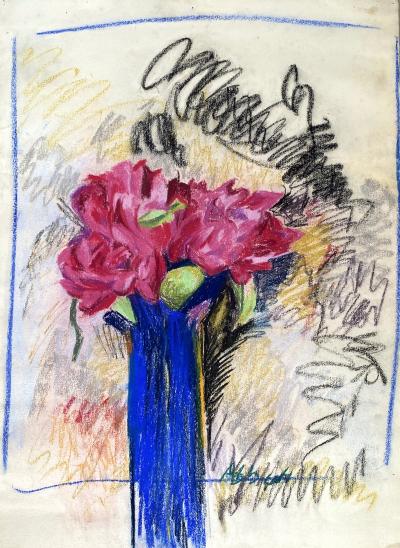
Mary Abbott, a native of New York City, stands as one of the early pioneers of Abstract Expressionism, crafting compelling oil paintings that seamlessly blend spontaneous, gestural brushwork with a masterful command of color. Renowned for infusing her work with energy and an immediate, visceral quality, Abbott's art serves as a translation of sensations into vibrant paint.
In the early 1940s, Abbott's burgeoning interest in art led her to the Art Students League, where she collaborated with influential painters like George Grosz. While primarily residing in New York, she also ventured to Washington, studying under Eugene Weiss at the Corcoran Museum School. During this period, Abbott's multifaceted pursuits included modeling, featuring on the covers of esteemed publications like Vogue and Harper's Bazaar.
A pivotal encounter with sculptor David Hare in 1948 introduced Abbott to The Subject of the Artist, an experimental school that immersed her in the heart of the New York avant-garde. In the early 1950s, she, alongside her second husband Tom Clyde, spent time in the Virgin Islands, producing a substantial body of work. The couple later established their residence in Southampton, New York, where Mary Abbott continued to reside.
In New York City, Abbott became a notable member of the Artist's Club, alongside fellow female artists Perle Fine and Elaine de Kooning. Inspired by luminaries like Newman and Rothko, Abbott shifted her focus from recognizable subject matter to abstraction, embracing the principles of intuitive painting. Her artistic evolution continued with a significant encounter with Abstract Expressionist Willem de Kooning in 1948 or 1949, fostering a lasting personal and professional relationship.
The 1970s saw Abbott sharing her artistic insights as a teacher at the University of Minnesota in Minneapolis. Eventually, she returned to her beloved New York, maintaining homes in both the city and the Hamptons. Still passionate about painting, Abbott's artistic ethos revolves around capturing the intensity of living nature, utilizing the medium of paint, color, and line to define the poetry of living space. She passed away at the age of 98 on August 23, 2019, succumbing to heart failure while leaving behind a profound legacy in the world of Abstract Expressionism.
 Loading...
