





Wilhelm Wagenfeld
German, 1900 - 1990
Wilhelm Wagenfeld was a German industrial designer who is widely known for his work in glass and metal, as well as his contributions to the Bauhaus movement.
Wagenfeld was born in Bremen, Germany in 1900 and trained as a silversmith before attending the Bauhaus school in Weimar, where he studied under renowned artists such as László Moholy-Nagy and Marcel Breuer. During his time at the Bauhaus, Wagenfeld designed a number of iconic pieces, including a table lamp known as the "Wagenfeld Lamp" which is still in production today.
After leaving the Bauhaus in 1928, Wagenfeld went on to work for a number of design firms and manufacturers, including Jenaer Glaswerk Schott & Gen., where he designed glass products such as coffee and tea sets, and WMF, where he designed cutlery and other household objects.
Throughout his career, Wagenfeld remained committed to the principles of functionalism and simplicity, and his designs were often characterized by their clean lines, minimalism, and use of high-quality materials. He passed away in 1990, but his work remains an important influence on modern design.
Wagenfeld was born in Bremen, Germany in 1900 and trained as a silversmith before attending the Bauhaus school in Weimar, where he studied under renowned artists such as László Moholy-Nagy and Marcel Breuer. During his time at the Bauhaus, Wagenfeld designed a number of iconic pieces, including a table lamp known as the "Wagenfeld Lamp" which is still in production today.
After leaving the Bauhaus in 1928, Wagenfeld went on to work for a number of design firms and manufacturers, including Jenaer Glaswerk Schott & Gen., where he designed glass products such as coffee and tea sets, and WMF, where he designed cutlery and other household objects.
Throughout his career, Wagenfeld remained committed to the principles of functionalism and simplicity, and his designs were often characterized by their clean lines, minimalism, and use of high-quality materials. He passed away in 1990, but his work remains an important influence on modern design.
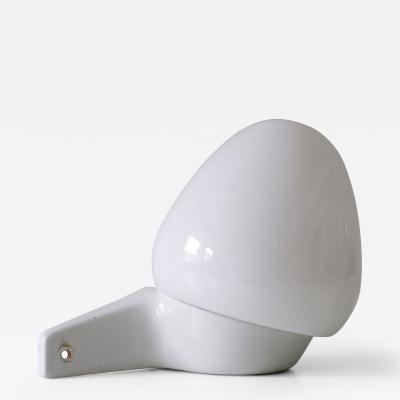
Wilhelm Wagenfeld
Mid-Century Modern Wall Lamp or Sconce by Wilhelm Wagenfeld for Lindner 1950s
H 6.69 in W 5.91 in D 9.84 in
$ 975

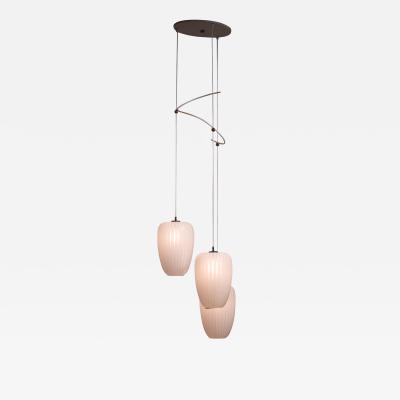
Wilhelm Wagenfeld
Wilhelm Wagenfeld three shade 'Diana' chandelier
H 61.42 in DIA 28.35 in
Request Price

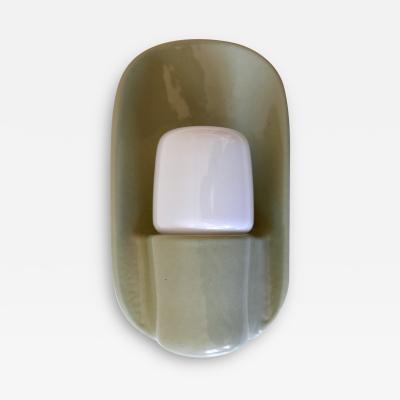
Sold
Wilhelm Wagenfeld
Ceramic Systral Wall Lamp or Sconce 6458 by Wilhelm Wagenfeld for Lindner 1970
H 7.48 in W 7.09 in D 3.15 in


 Loading...
