

Listings / Decorative Arts / Objects / Other


Offered by:
WR Harvey & Co (Antiques) Ltd.
86 Corn Street, Witney
Oxfordshire OX28 6BU , England
Call Seller
44.199.370.6501
Showrooms
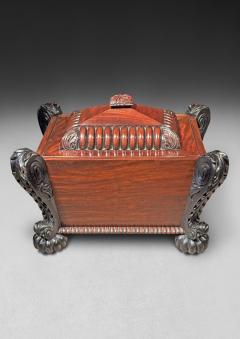
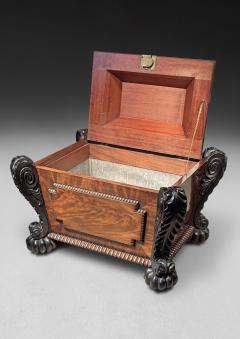
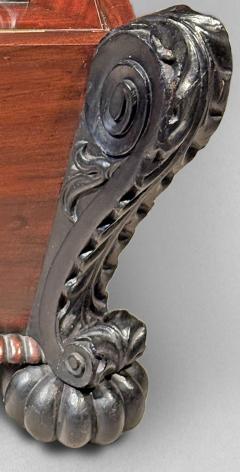
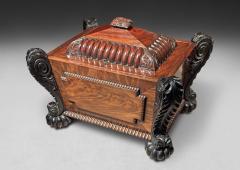
Regency Carved Mahogany and Ebonised Cellarette after Thomas Hope
-
Description
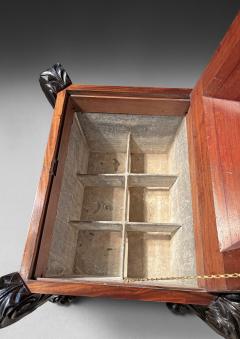
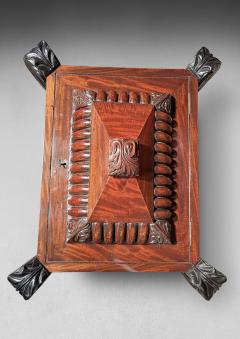
A Regency Carved Mahogany and Ebonised cellarette in the manner of Thomas Hope of sarcophagus form, the carved inset lid opening to reveal a lead-lined interior for six bottles, the body with ebonised scrolling brackets to the corners, and standing on gadrooned bun feet. This example is of outstanding quality.
Circa: 1815 Price: £7,250-00p.
Height:23 ½”, (60cm) Width:29” (74cm) Depth:23 ½”, (60cm).
Note: From the V & A “Thomas Hope and the Regency Style”
Thomas Hope (1769 – 1831) was an influential designer, design reformer and collector. A Dutchman, born in Amsterdam, Hope inherited from his family a tradition of collecting as well as vast wealth from the family bank. He was a collector on a grand scale and also an innovative designer who helped define what we understand as the Regency style (1800 – 30).
Hope’s extensive Grand Tour travels in Europe, Greece, Turkey and Egypt inspired his interest in antiquities as a source of designs for Regency interiors, furniture and metalwork. He was determined to reform contemporary taste by returning architecture and the arts, including interior design and furniture, to what he conceived as the spirit of classical purity.
Evolving from the Neo-classical style of the 18th century, Regency Classicism was characterised by forms and motifs from ancient Greece and Rome. To these were added elements taken from nature, from the arts of ancient Egypt and from French design of the mid-18th century – a revival of this Rococo style is seen in the use of curved forms and decoration in the shape of rocks and shells. The combination of different patterns and colours made Regency Classicism a visually rich style.
Duchess Street
In 1799, Hope bought a house designed by the celebrated architect and designer Robert Adam (1728 – 92) in Duchess Street, Portland Place, London, which he remodelled with a series of themed interiors. He recorded this work in his book, Household Furniture & Interior Decoration executed from Designs by Thomas Hope (1807), which became a major source for designers and introduced for the first time into the English language the term ‘interior decoration’.
Hope’s book was accompanied by an impassioned text setting out his reforming manifesto on design and craftsmanship. He stated that by promoting craftsmanship, avoiding the excesses of the division of labour and by employing “the talent of the professor of the more liberal arts; the draughtsman, the modeller, the painter, and the sculptor”, it would be possible to give not only “new food to the industry of the poor, but a new decorum to the expenditure of the rich”. The resulting rise in design standards would lead “not only towards ultimately increasing the welfare and the commerce of the nation but refining the intellectual and sensible enjoyments of the individual”.
The interiors created by Hope at his London house in Duchess Street were the fullest expression of his mission to transform modern British taste. He opened the house in 1802, with a grand party attended by George Augustus Frederick, Prince of Wales. To the surprise of his contemporaries, he then issued admission tickets in 1804 to members of the Royal Academy. Subsequently, there were numerous other visitors to the house, including leaders of society, artists, scholars and designers.
Hope’s startling juxtaposition of styles included Egyptian, Greek, Roman and Indian elements, as well as his own version of the French Empire style (1804 – 18). Classical sculpture and vases were displayed alongside modern paintings and sculpture. Most striking of all was the inventive and exotic furniture that Hope designed specifically for the house.
The Egyptian Room at Duchess Street was one of the most inventive interiors in Europe at the time. Here, Hope displayed his belief in the importance of the ancient Egyptians to the origins of western culture. Mixing genuine pieces of Egyptian sculpture with exotic furniture designed by himself in an Egyptian manner, he also exploited his novel colour theories. The walls and furniture, he explained, were in the ‘pale yellow and bluish green of the Egyptian pigments, relieved by masses of black and of gold.’
In the Statue Gallery, Hope placed his finest pieces of antique sculpture. The design was austere, with top-lighting, a coffered ceiling and yellow-painted walls. To avoid ‘interfering’ with the contour and purity of the white marble statues, Hope left the walls ‘perfectly plain’.
The Aurora Room was another inventive and colourful creation at Duchess Street. Mirrors were used to reflect the central feature – the statue of Aurora, goddess of dawn. The walls were hung with ‘satin curtains … of the fiery hue which fringes the clouds just before sunrise’, below ‘a ceiling of cooler sky blue.’
The Deepdene
In 1807, the year after his marriage, Hope bought The Deepdene, a large house set in a hilly wooded landscape of great natural beauty near Dorking in Surrey. Just as he had challenged conventional urban taste with his novel interiors at Duchess Street, he now rethought what a modern country house should look like.
The Deepdene was a red-brick Georgian mansion, dominating not adapting to the scenery of the valley in which it stood. Hope remodelled it with a loggia-topped Italianate tower on which to pivot the whole composition and added a wing shooting out at an angle of 45 degrees on a sloping site. This asymmetrical grouping blended the house into its irregular landscape as recommended by recent theorists of the Picturesque.
Legacy
Hope’s influence continued long after his death in 1831. His designs appeared in trade journals and books on interior design, and though the house at Duchess Street was demolished in 1851, its contents were taken to The Deepdene where they remained accessible to the public. -
More Information
Origin: England Period: 19th Century Materials: mahogany Condition: Good. Creation Date: 1815 Styles / Movements: Other, Traditional, Regency Dealer Reference #: 11210 Incollect Reference #: 832279 -
Dimensions
W. 29.13 in; H. 23.62 in; D. 23.62 in; W. 74 cm; H. 60 cm; D. 60 cm;
Message from Seller:
W. R. Harvey & Co. (Antiques) Ltd., established in 1950, is renowned for its fine collection of English antique furniture, serving collectors, dealers, museums, and designers worldwide. For more information, please contact us at info@wrharvey.com or call +44.199.370.6501
Sold
More Listings from WR Harvey & Co (Antiques) Ltd. View all 86 listings
-
George III Period Satinwood and Rosewood Crossbanded oval Pembroke table
-
A set of 12 Regency Mahogany Dining Chairs
-
Pair of George III Period Mahogany Card and Tea Tables
-
Regency Rosewood Brass Inlaid Simulated Rosewood
-
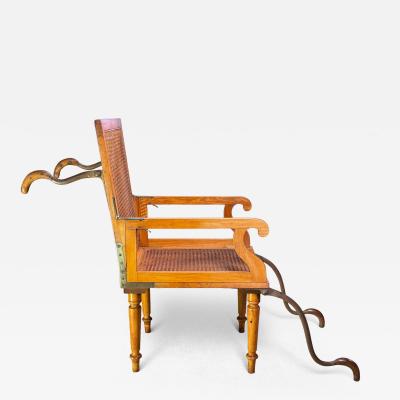
Mid 19th Century Campaign Armchair
-
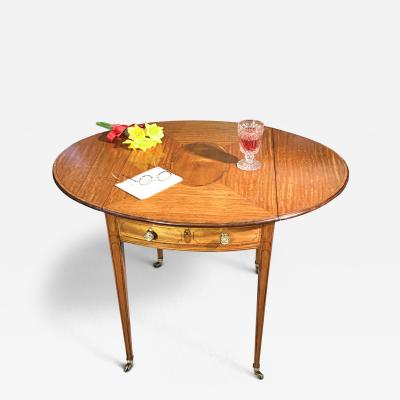
Sheraton Period Satinwood and Kingwood Pembroke Table
-
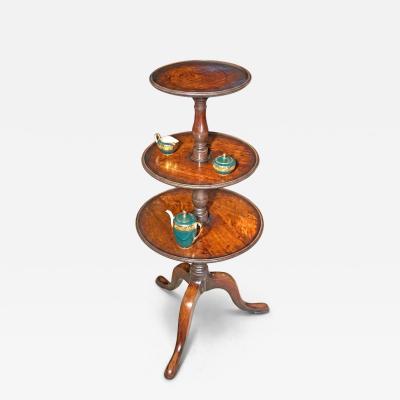
George III Period Mahogany three tier Dumb Waiter
-
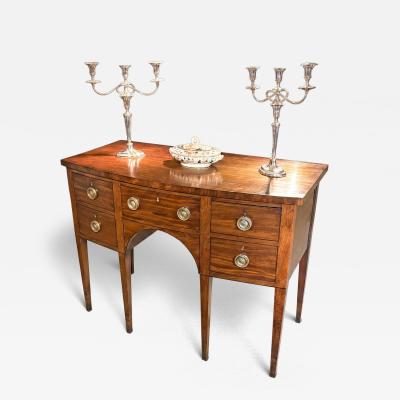
George III Period Mahogany Bowfronted Small Sideboard
-
Queen Anne Period Mahogany Gate-legged Table

-
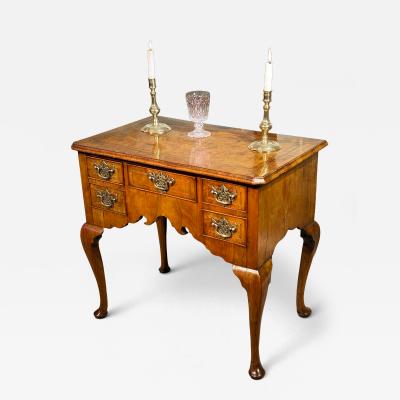
George II Burr Walnut Lowboy
-
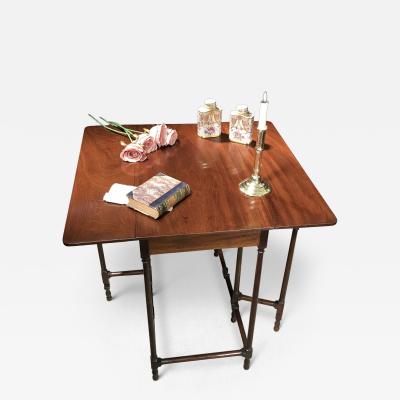
Chippendale Period Mahogany Spider-legged Table
-
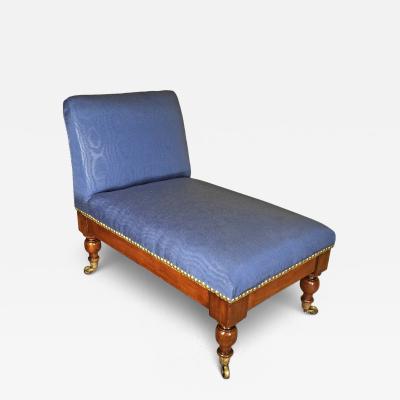
Mid 19th Century Walnut Gout Stool
-
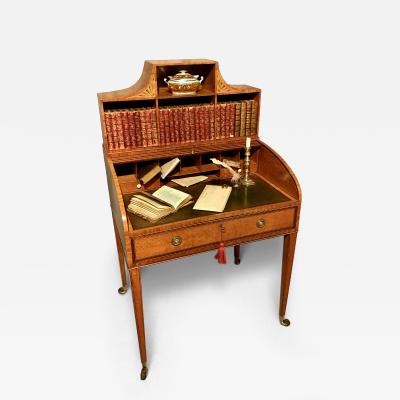
George III Satinwood Bonheur du Jour
-
Pair of George I Period Walnut Chairs