













Offered by:
Thomsen Gallery
8 East 67th Street
New York City, NY 10065 , United States
Call Seller
212.288.2588
Showrooms
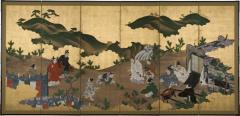
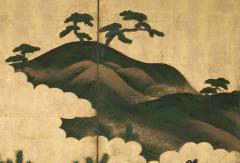
Kano School New Year's Pine Saplings, ca 1800
-
Description
Kano School
New Year's Pine Saplings, ca 1800
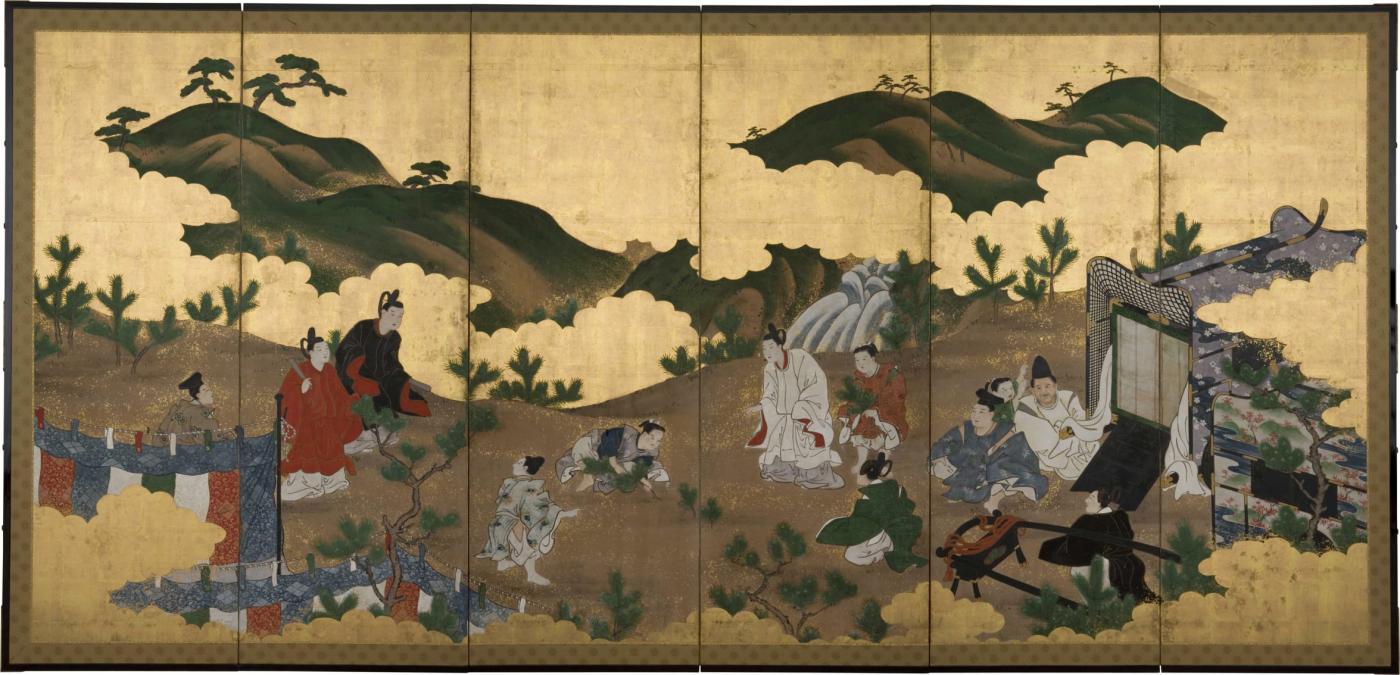
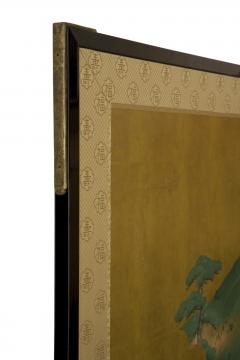
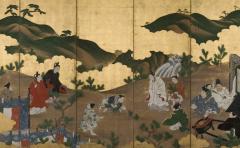
Six-panel folding screen; ink, mineral colors, gofun, gold and gold leaf on paper, mounted over a wooden lattice with a silk brocade border within a lacquered wood frame bearing the original chased gilt copper hardware.
Size 65½ x 136¼ in. (166.5 x 346 cm)
T-3029
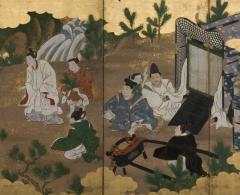
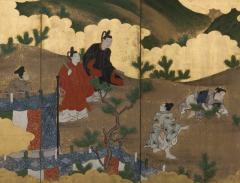
The screen illustrates the annual custom of pulling up pine saplings in the beginning of the New Year, as it might have been practiced at the apogee of Japanese courtly culture in the mid-Heian period (794–1185). Pines, which thrive in the harshest conditions, were an emblem of long life and the little seedlings were especially auspicious because of their potential for future growth.
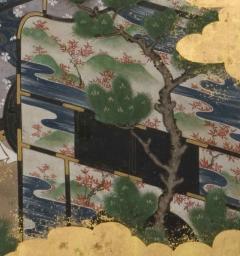
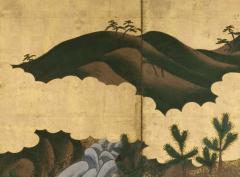
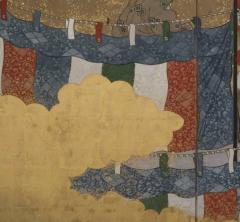
The custom was immortalized in Chapter 23 of the great novel The Tale of Genji. Pictorial depictions of the chapter generally depict young court ladies elegantly gathering sprigs of pine in the garden of an imperial villa. The author of the present screen has reimagined it as taking place with males in a more rural hill setting, perhaps a couple hours’ slow journey outside Kyoto. A group of courtiers accompanied by a child, probably a girl, have made their way there by two gissha (ox-drawn carts) and now look on approvingly as their subordinates—identifiable by simpler clothing and lack of eboshi court caps—busy themselves with digging up pine saplings. The gissha can be seen drawn up to the right, one with its rear entrance (protected by a bamboo blind) and steps visible, the other with its long poles resting upon a stand; to provide a degree privacy from prying commoner eyes, a set of nomaku (outdoor curtains) has been set up to the left. The oxen are not shown. The artist uses time-honored gold clouds to frame the scene and—in common with virtually all pre-modern Japanese painting—shadows are not depicted. -
More Information
Period: 19th Century Creation Date: 1800 Styles / Movements: Asian, Traditional Incollect Reference #: 557333 -
Dimensions
W. 136.25 in; H. 65.5 in; W. 346.08 cm; H. 166.37 cm;
Message from Seller:
Thomsen Gallery, now located at 8 East 67th Street, New York City, NY 10065, specializes in important Japanese paintings, folding screens, hanging scrolls, ceramics, ikebana bamboo baskets, lacquerware, and contemporary works by select artists. Owned and directed by Erik and Cornelia Thomsen, the gallery brings decades of expertise in Japanese art to a global clientele, including private collectors and major museums. For inquiries, contact them at 212-288-2588 or info@thomsengallery.com.
More Listings from Thomsen Gallery View all 198 listings
-
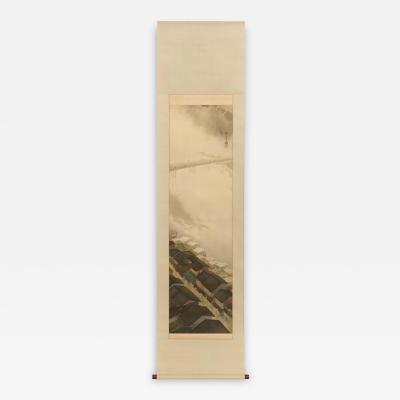
Enjoying a Cool Evening on Ponto-chō, Kyoto (T-4852)
-
Three-Seat Sofa

-
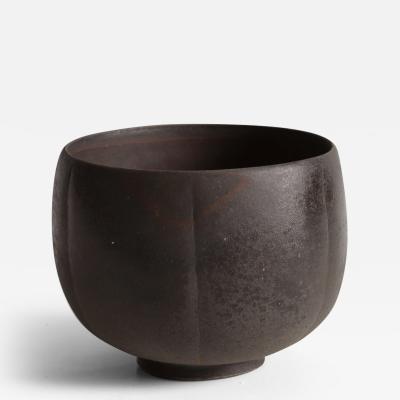
Tea Bowl (T-4838)
-
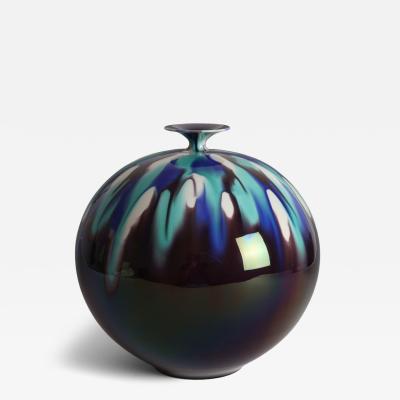
Vase with Brilliant Glaze (T-5161)
-
"Ki no toki" (Resolute Spirit), 2002
-
Vase with Marbleized Clay (T-5157)
-
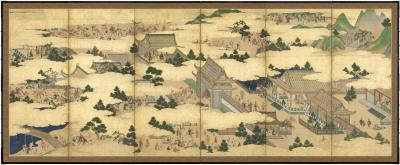
Scenes from Life at the Chinese Imperial Court, early 17th century
-
Oncoming Rain in a Mountain Valley, 1920s
-
Scenes of the Twelve Months, circa 1915-25
-
Blooming Plum and Cherry Trees along Stream, ca 1800
-
Bronze as Bronze II, 2025
-
Flask with Maple Glaze, 1993
-
View of the Yabakei Gorge, 1920
-
Vase with Slip Decor (T-5158)