












Offered by:
Kristan Hauge Japanese Art
2-32 Saishoji-cho, Okazaki, Sakyo-ku,
Kyoto 606-8342 , Japan
Call Seller
81757515070
Showrooms
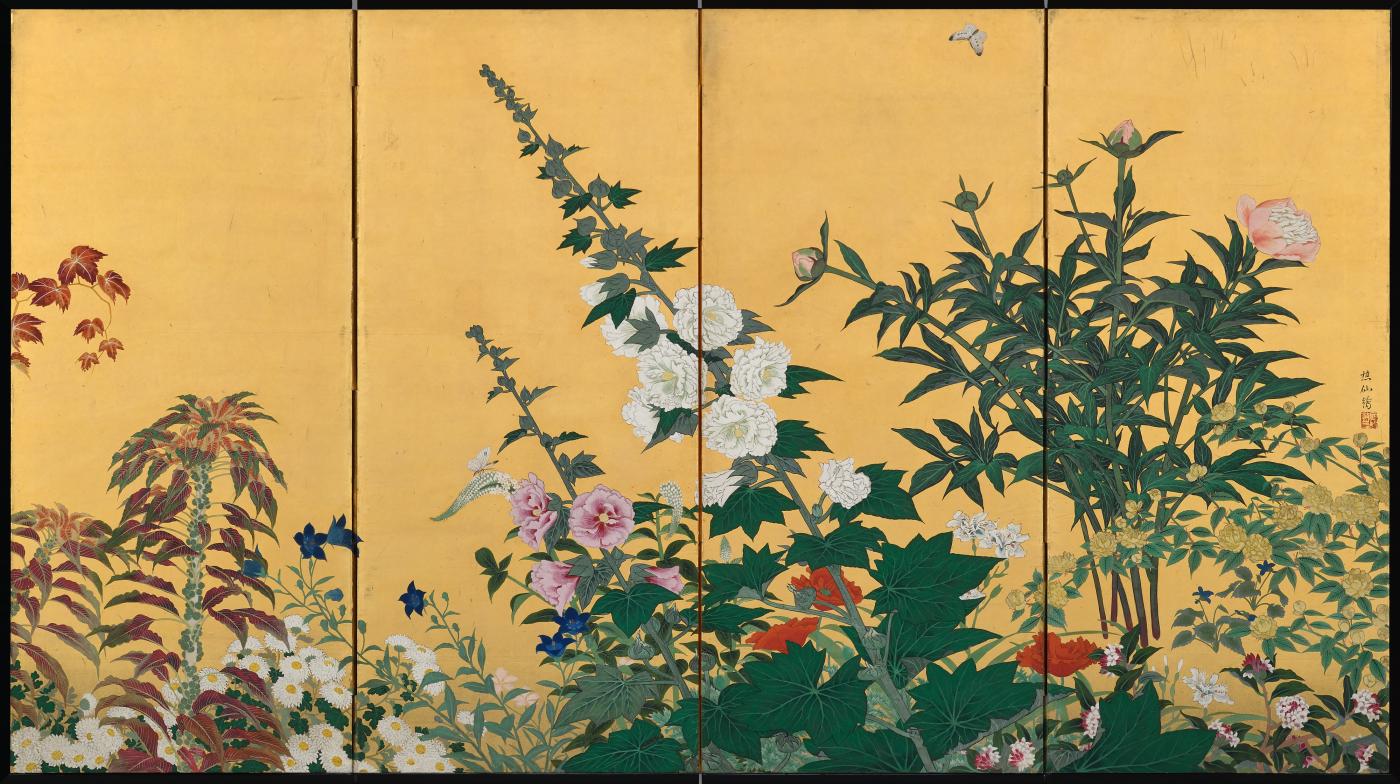
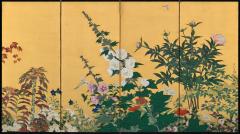
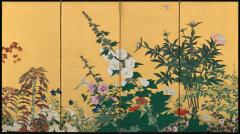
Early 20th Century Japanese Screen. Flowers of the Four Seasons
-
Description
Anonymous
Flowers of the Four Seasons
Early 20th Century
A four-panel Japanese screen. Ink, gofun and pigments on gold leaf.
Dimensions: H. 105 cm x W. 186 cm (41.5” x 73”)
Price: USD 18,500
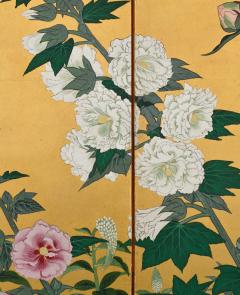
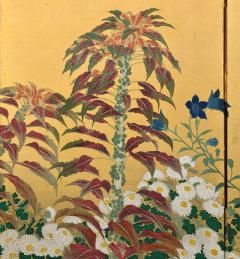
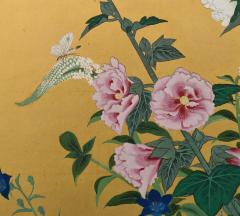
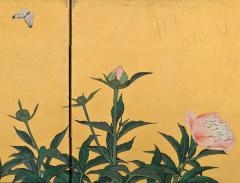
This Japanese screen is a rich visual celebration of the flowers of the four seasons, a theme deeply rooted in Japanese aesthetics and poetry. Painted on a luminous gold leaf background, it dates to the early 20th century, during a time when traditional Japanese art continued to thrive alongside growing modern influences. The screen is executed in a nihonga style—a term for Japanese-style painting developed in the Meiji period to distinguish traditional techniques from Western ones.
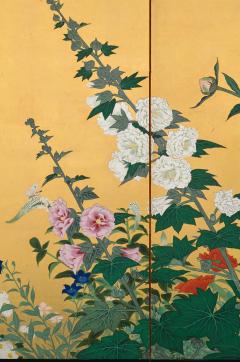
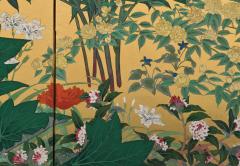
The screen unfolds right to left. A lush pink peony bloom at the top right suggests early spring, symbolizing wealth, honor, and feminine beauty. Japanese kerria with its bright yellow blossoms symbolize elegance and are often associated with classical Japanese poetry. Oversized red poppies and delicate irises lead us from spring into summer. Pink and white hibiscus flowers dominate the center, blooming in full summer. Hibiscus symbolize delicate beauty and the fleeting nature of life. Chinese Bellflowers with their deep blue, star-shaped blooms represent late summer and are often associated with unchanging love and honesty. Chrysanthemums, central motifs in autumnal Japanese imagery. are symbolic of longevity and rejuvenation. The tall, rust-red plumes represent amaranth and they introduce a shift in tone as the seasons cool. The rich red hues of the maple leaves signify the end of autumn and the approach of winter, creating a poignant seasonal close. Two butterflies subtly enhancing the scene’s sense of life and natural movement. Their presence reinforces the sense of seasonality and transience.
The composition reflects the Yamato-e tradition, which emphasizes lyrical naturalism and seasonal themes. The flowers are rendered with meticulous botanical precision, yet stylized enough to maintain painterly rhythm. Each plant is carefully positioned to allow overlap and layering, creating a sense of depth without violating the screen’s decorative flatness. The gold leaf background sets a timeless, luxurious backdrop. It flattens space while simultaneously radiating warmth, drawing the eye to the vibrant natural forms.
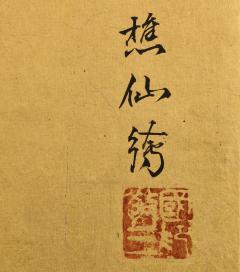
The signature reads Shosen. A number of artists of the era used this name though we remain unsure of the artist’s identity.
The screen has just been fully remounted. -
More Information
Period: 1900-1919 Creation Date: Early 20th Century Styles / Movements: Asian Art Incollect Reference #: 814337 -
Dimensions
W. 73 in; H. 41.5 in; W. 185.42 cm; H. 105.41 cm;
Message from Seller:
Kristan Hauge Japanese Art, based in Kyoto's museum district since 1999, specializes in important Japanese screens and paintings for collectors, decorators, and museums worldwide. Contact us at khauge@mx.bw.dream.jp or +81 75-751-5070 for exceptional access to Japanese art and history.
More Listings from Kristan Hauge Japanese Art View all 69 listings
-
Amaranth & Rooster | Circa 1930 | Japanese scroll painting

-
urtledoves in a Peach Tree | Nakamura Daizaburo

-
19th Century Japanese Tiger Painting Pair by Kokuho Shimei (1789–1859)
-
Japanese Screen. 19th Century. Reflections of the Moon
-
Mid 19th Century Japanese Screen Pair. Flowers & Birds of the Four Seasons
-
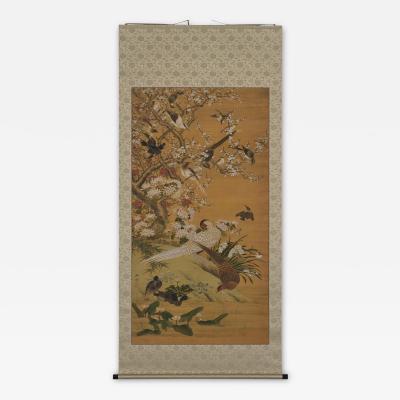
19th Century Japanese Scroll Painting, Birds & Flowers of the Four Seasons.
-
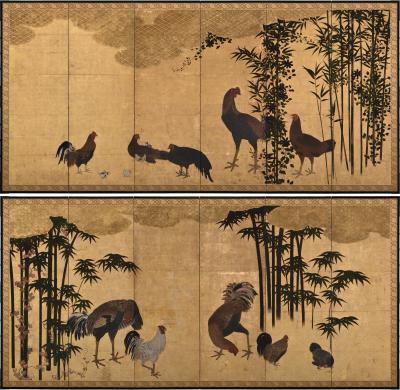
17th Century Japanese Screen Pair. Roosters and Chickens in a Bamboo Grove
-
Playful Cat | Hirose Toho (1875-1930) | Japanese scroll painting

-
Early 20th Century Japanese Nihonga Screen. Bamboo Forest
-
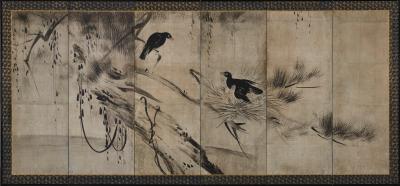
17th Century Momoyama era. Crows on Pine. Studio of Hasegawa Tohaku
-
18th Century Japanese framed painting. Tiger and Cub
-
Early 20th Century Japanese Nihonga Scroll. Crow & Persimmon.

-
1838 Japanese Screen Pair. Flowers & Grasses of the Four Seasons
-
Korean grapevine painting. 17th century.

