







Offered by:
Kristan Hauge Japanese Art
2-32 Saishoji-cho, Okazaki, Sakyo-ku,
Kyoto 606-8342 , Japan
Call Seller
81757515070
Showrooms
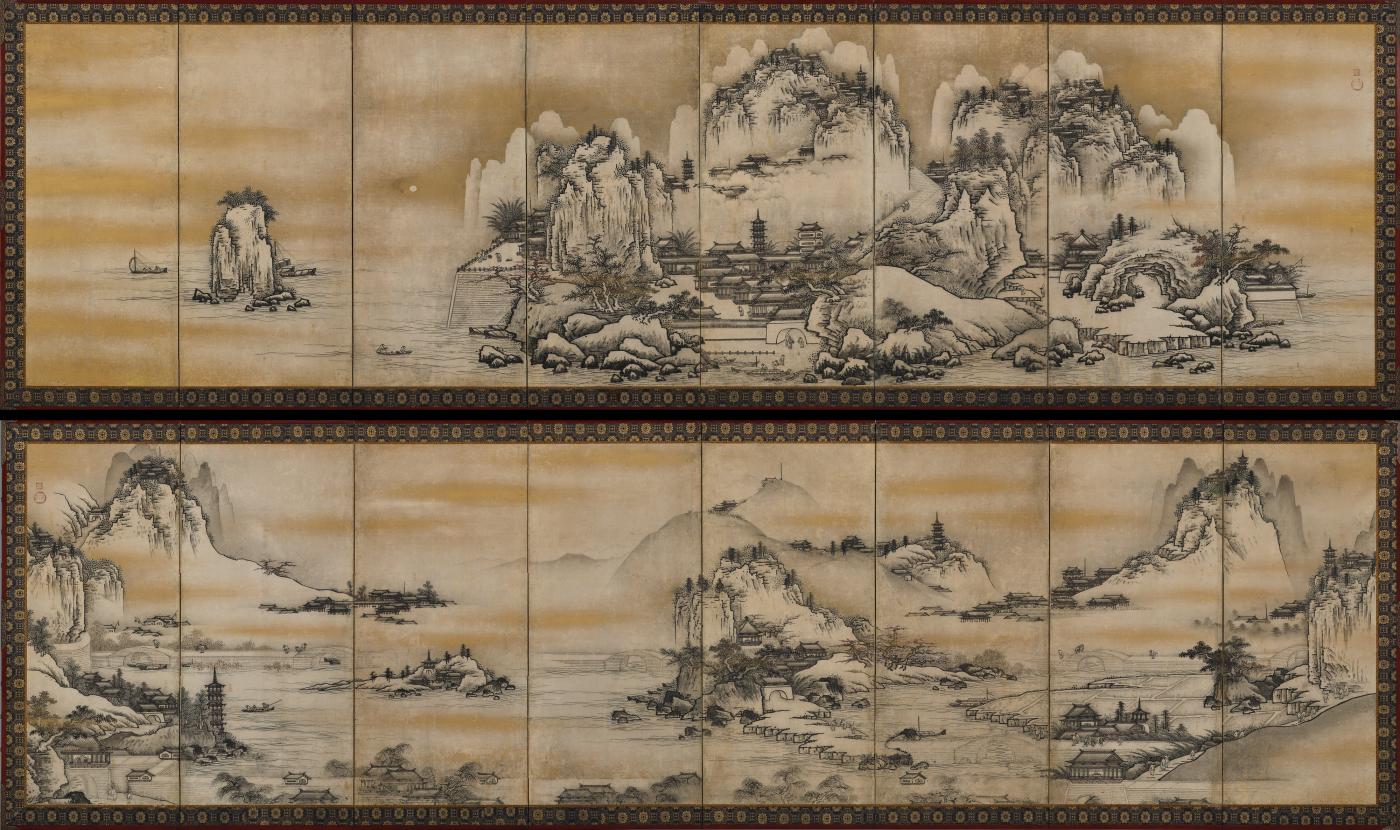
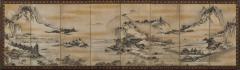
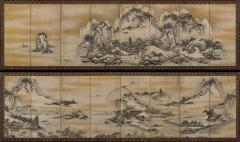
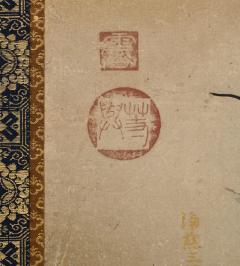
17th Century Japanese Screen. View of West Lake by Unkoku Toyo
-
Description
Unkoku Toyo (1612-1668)
View of West Lake
17th Century
Pair of eight-panel Japanese Screens. Ink and gold wash on paper.
Dimensions: Each screen: H. 110 cm x W. 372 cm (43” x 147”)
Price: USD 85,000
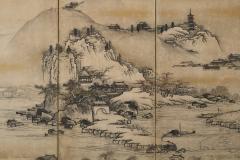
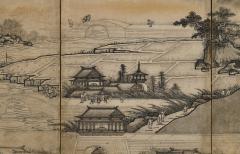
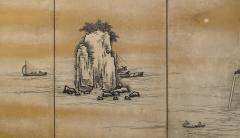
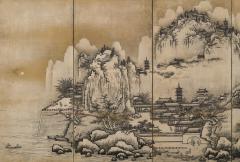
This pair of Japanese landscape screens, by Unkoku Tōyō (1612–1668), presents a striking interpretation of the famous West Lake in Hangzhou. Rooted in the Sesshū Tōyō tradition, the screens capture the spirit of Chinese landscape painting through the lens of Japanese artistic sensibilities.
The two screens together create a continuous, wide-angle landscape, segmented across folding panels. This format encourages the viewer to “travel” visually through the scene, almost like a hand-scroll painting. Despite the large scale, there’s meticulous detail in the architecture, boats, and foliage. Subtle ink gradations suggest mist, atmosphere, and spatial recession. The painting idealizes a legendary Chinese landscape, stirring feelings of admiration and longing for a cultural “golden age.” The serene water, mist-veiled mountains, and distant temples evoke a deep sense of peace and reflection. The painting employs ink wash on paper with an atmosphere of antiquity and subtlety. Gold wash in the background adds warmth and elegance.
The Unkoku family began when the feudal lord Mori Terumoto installed the painter Togan in Sesshu’s atelier Unkokuan, with Togan subsequently adopting the family name ‘Unkoku.’ The members of the Unkoku school were retainers of the Mori clan, so art historians assume its painters were based around the Yamaguchi area, though some were also active in Kyoto. For example Unkoku Toyo produced sliding door paintings for the Hekigyoku-an sub temple of Daitokuji in Kyoto. Together with his younger brother Toji and others, Toyo also participated in decorating the Imperial Palace after its reconstruction in 1655. He also left behind works at Manpukuji, the head temple of the Obaku zen school.
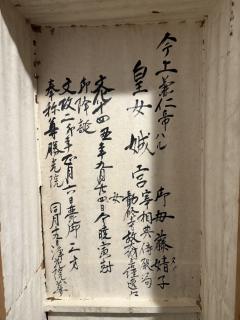
The screens are magnificently mounted and presented to the highest level. They are preserved in an old wooden storage box. The inscription pasted on the inside of the box lid is written by Kanda Nobuhisa (d.1862). The upper section of the inscription details that this pair of ink landscape screens were presented to Emperor Kokaku (1771-1840) and concubine Kanshuji Tadako (1780-1843) in honor of their daughter, Princess Haru (1817-1819). Princess Haru was the fourth daughter of Emperor Kokaku. The lower section of the inscription details that this pair of screens were gifted to the Kyoto Sento Imperial Palace in the year Tenpo 4, 1833. The screens were given in honor of Emperor Kokaku’s fourth daughter, Princess Haru (1817-1819). The Kanda family were a very powerful aristocratic family with a documented connection to the Kanshuji family. The Kyoto Sento Imperial Palace was ravaged by fire in 1854 and no longer stands in its original form.
Also accompanying the pair of screens are three photographs. Two of them depict the screens displayed in an early 20th century Japanese interior. The other is a family photograph with an inscription on the reverse reading: “Taisho 7 (1918), 29 years old, donation”. Presumably the screens were donated to the daughter of this aristocratic family in 1918. -
More Information
Documentation: Signed Period: Pre 18th Century Creation Date: 17th Century Styles / Movements: Asian Art Incollect Reference #: 814335 -
Dimensions
W. 147 in; H. 43 in; W. 373.38 cm; H. 109.22 cm;
Message from Seller:
Kristan Hauge Japanese Art, based in Kyoto's museum district since 1999, specializes in important Japanese screens and paintings for collectors, decorators, and museums worldwide. Contact us at khauge@mx.bw.dream.jp or +81 75-751-5070 for exceptional access to Japanese art and history.
More Listings from Kristan Hauge Japanese Art View all 63 listings
-
17th Century Japanese Screen Pair| Hawks on Plum & Pine | Soga Nichokuan

-
Korean Grapevine & Squirrel Scroll Painting | 17th Century, Joseon period.

-
Circa 1700 Japanese Sliding Door (Fusuma) Set. Pine Trees on the Seashore.
-
Mid 19th Century Framed Japanese Painting. Longhorn Beetle & Poppies.
-
Tsunetake Yotei (18 c.) | Phoenix & Peacocks | Japanese folding screen pair
-
19th Century Japanese Tiger Painting Pair by Kokuho Shimei (1789–1859)

-
19th Century Japanese Silk Painting by Kano Chikanobu. Cats & Butterflies.
-
Mother’s Breast (Chichi) 1844. Japanese scroll painting.

-
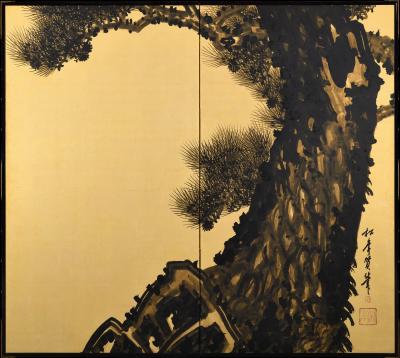
Two-panel Japanese Screen – Aged Pines by Suzuki Shonen. Meiji period.
-
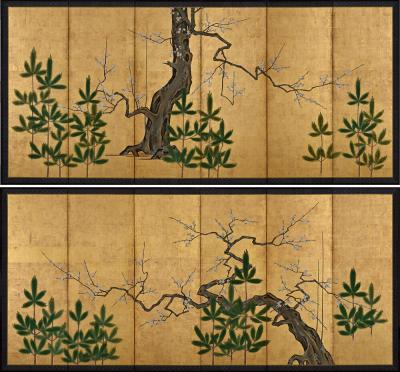
18th Century Japanese Screen Pair. Plum & Young Pines. Kano School.
-
Early 19th Century Japanese Screen. Cherry Blossom & Pheasants by Mori Tetsuzan

-
Ogata Tomin (1839 -1895) | ‘Birds in a Spring Landscape’ | Japanese painting

-
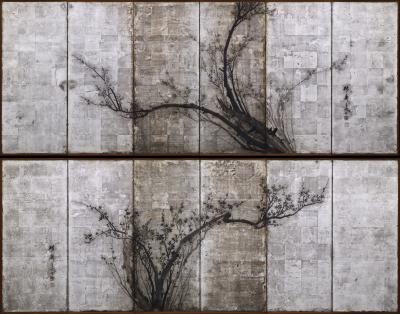
Japanese Screen Pair. Red and White Plum Blossoms on Silver Leaf
-
Meiji era, Circa 1900 Japanese Screen Pair. Flowers & Birds of Spring & Autumn.