







Showrooms
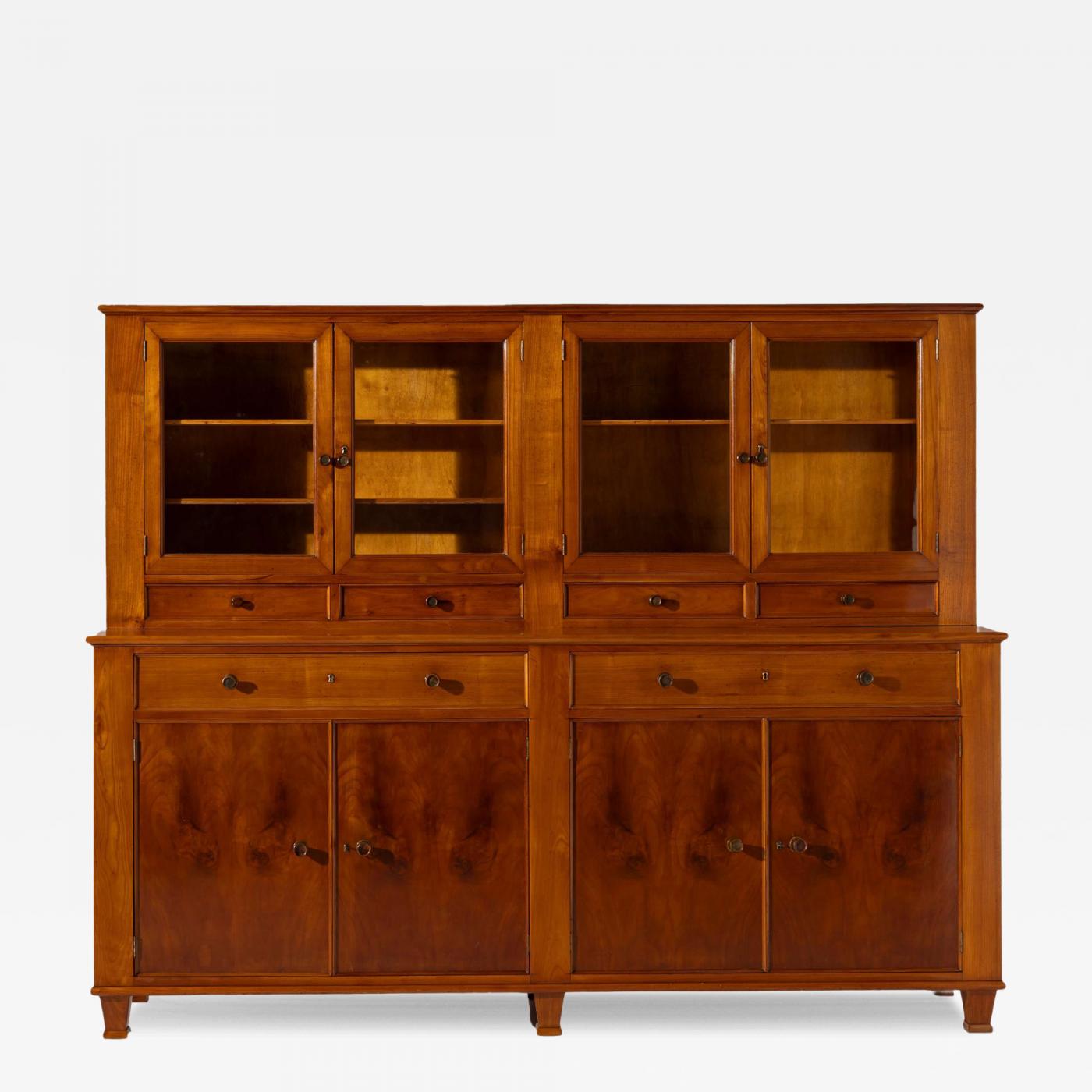
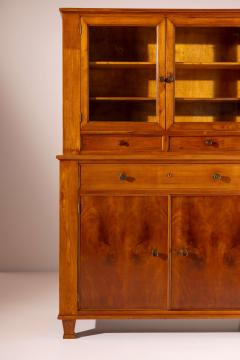
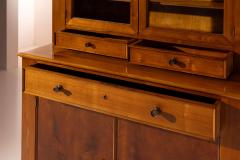
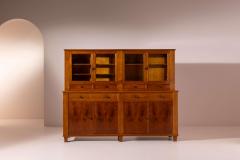
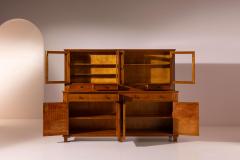
Cherrywood credenza with bookcase, Canciani manufacture, Chiavari, Italy 1940s
-
Description
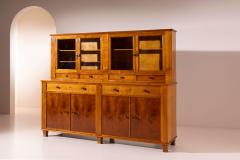
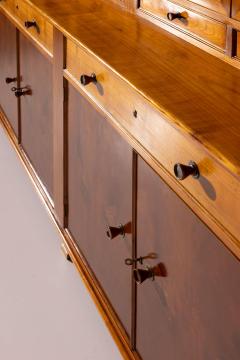
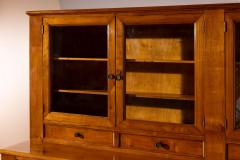
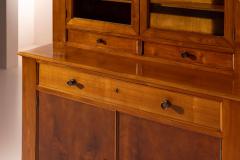
Large cherrywood bookcase sideboard with glass cabinet, drawers, and doors. Chiavari craftsmanship, Canciani manufacture, 1940s.
For much of the twentieth century, Chiavari was not only renowned for its famous lightweight chairs, exported worldwide. Alongside chair-making, many local manufacturers produced furniture and complete interiors of outstanding quality, fully in keeping with the tradition of the Chiavari chairs. At times, in our view, local artisans even surpassed that tradition. Indeed, there exists a body of luxury furnishings that suggests a still unwritten chapter in the History of Furniture: “The Chiavari Style.”
These pieces share with the Chiavari chairs the same meticulous attention to timber selection and seasoning. Cherrywood and ash thus entered the grand apartments of mid-century Italy, shaped by the skilled hands of local craftsmen. A clear and recognizable design language emerges, exemplified in this two-piece cherrywood sideboard, attributed to the Canciani workshop—a name that, from the 1930s onward, frequently appeared in the pages of Domus and other design journals, always mentioned with enthusiasm.
In this piece, the balance of forms, proportions, and overall aesthetic depart subtly from conventional standards. It is within this deviation—best described simply as Design—that the essence of the Chiavari Style can be recognized.
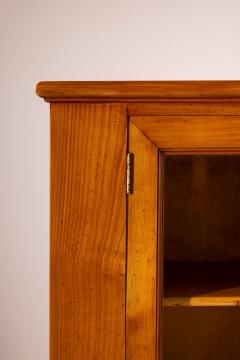
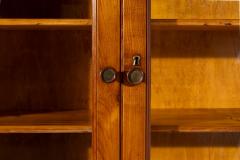
This sideboard, dating to the 1940s, has been fully restored in our specialized workshop. The shellac finish enhances the natural beauty of the wood. Beyond its aesthetic appeal, the piece also offers remarkable functionality: divided into doors, drawers, and a glass cabinet, it can be placed in a wide variety of settings—from a study filled with books to an elegant dining room. In any context, the Chiavari Style never ceases to impress.
Measurements:
Width: 202 cm / 79.5 in
Total height (sideboard + cabinet): 161 cm / 63.4 in
Depth of lower sideboard: 47.5 cm / 18.7 in
Depth of glass cabinet: 24.5 cm / 9.6 in
Height of glass cabinet: 73 cm / 28.7 in -
More Information
Documentation: Documented elsewhere (similar item) Origin: Italy Period: 1920-1949 Materials: Cherry, Glass. Condition: Good. Refinished. Wear consistent with age and use. Creation Date: 1940's Styles / Movements: Modern, Mid Century Incollect Reference #: 823716 -
Dimensions
W. 79.53 in; H. 63.39 in; D. 18.71 in; W. 202.01 cm; H. 161.01 cm; D. 47.52 cm;
More Listings from Linea Gallery View all 246 listings
-
Set of Six Campanino Chairs by Fratelli Podestà, Chiavari 1960s, New Woven Cane

-
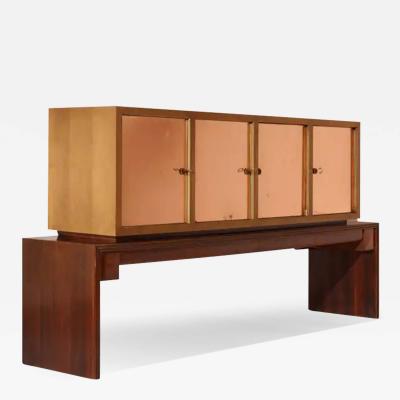
Alberto Salvati and Ambrogio Tresoldi Sideboard Cabinet with Pink Mirrors, 1960s
-
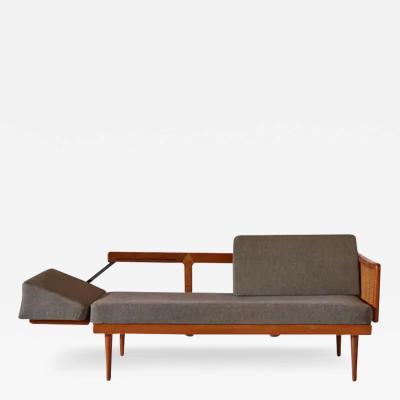
Peter Hvidt & Orla Mølgaard-Nielsen, FD 451 sofa bed for France & Søn, 1960s
-
Danny Lane Hand Shaped Glass 'Shell' Coffee Table for Fiam '1989'

-
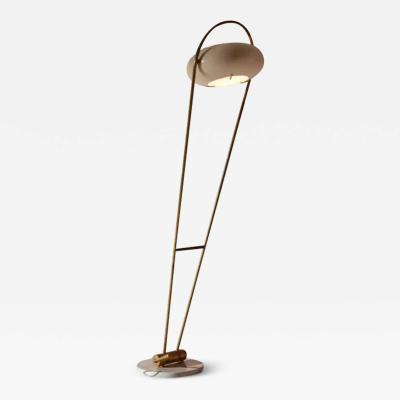
Stilux Swivel and Pivoting Floor Lamp Made of Brass and Marble, Italy, 1950s
-
Gio Ponti set of ten Leggera chairs with rope seat, Cassina, Italy, 1951
-
Osvaldo Borsani E22 Double Sided Freestanding Wall Unit for Tecno, Italy, 1950s
-
Marco Zanuso for Arflex, Italy, Pair of ''Lady'' Armchairs in Blue Cotton Velvet
-
Midcentury Stilnovo Style Pendant Light Made of Glass and Copper, Italy, 1960s
-
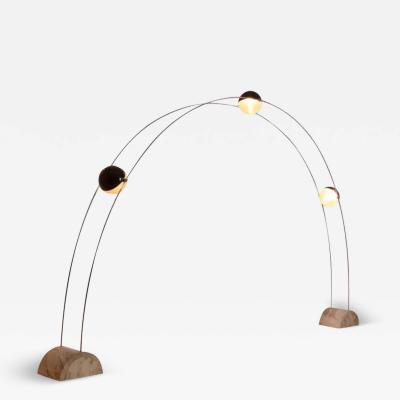
Studio A.R.D.I.T.I. for Sormani Floor Lamp Model 'Ponte' made of Marble & Metal
-
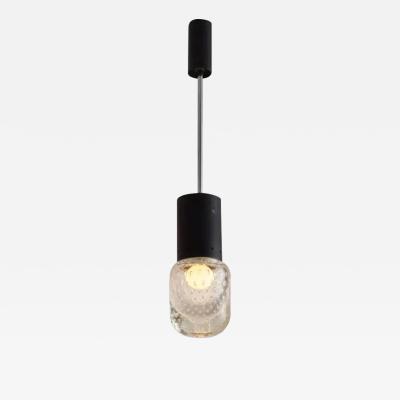
Pendant Light by Gino Sarfatti with Seguso Glass, circa 1960
-
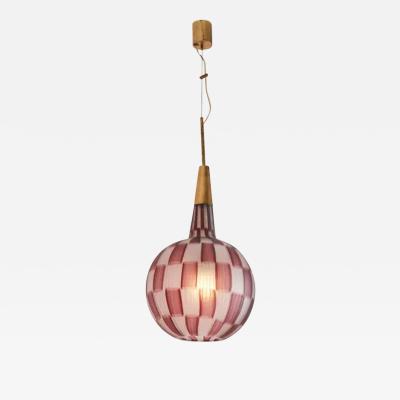
Tea Morosati pendant light by Stilnovo with Barovier & Toso glass, Italy, 1964
-
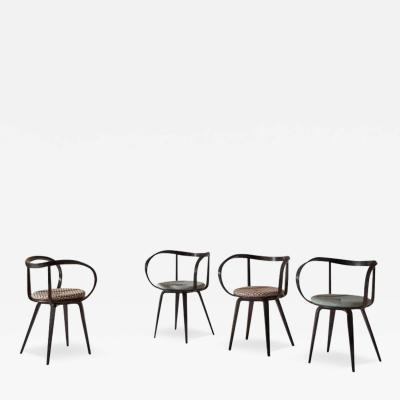
Set of Four George Nelson ''Pretzel'' Armchair Made by ICF, Italy, 1984-1986
-
Gio Ponti Teak and Brass Desk Designed for the BNL Offices, ISA Bergamo, 1950s

