











Brooklyn Heights Designer Showhouse
Photography by Hanna Grankvist
Brooklyn Heights Designer Showhouse Primary Bedroom, Dressing Room, Terrace, and Hall
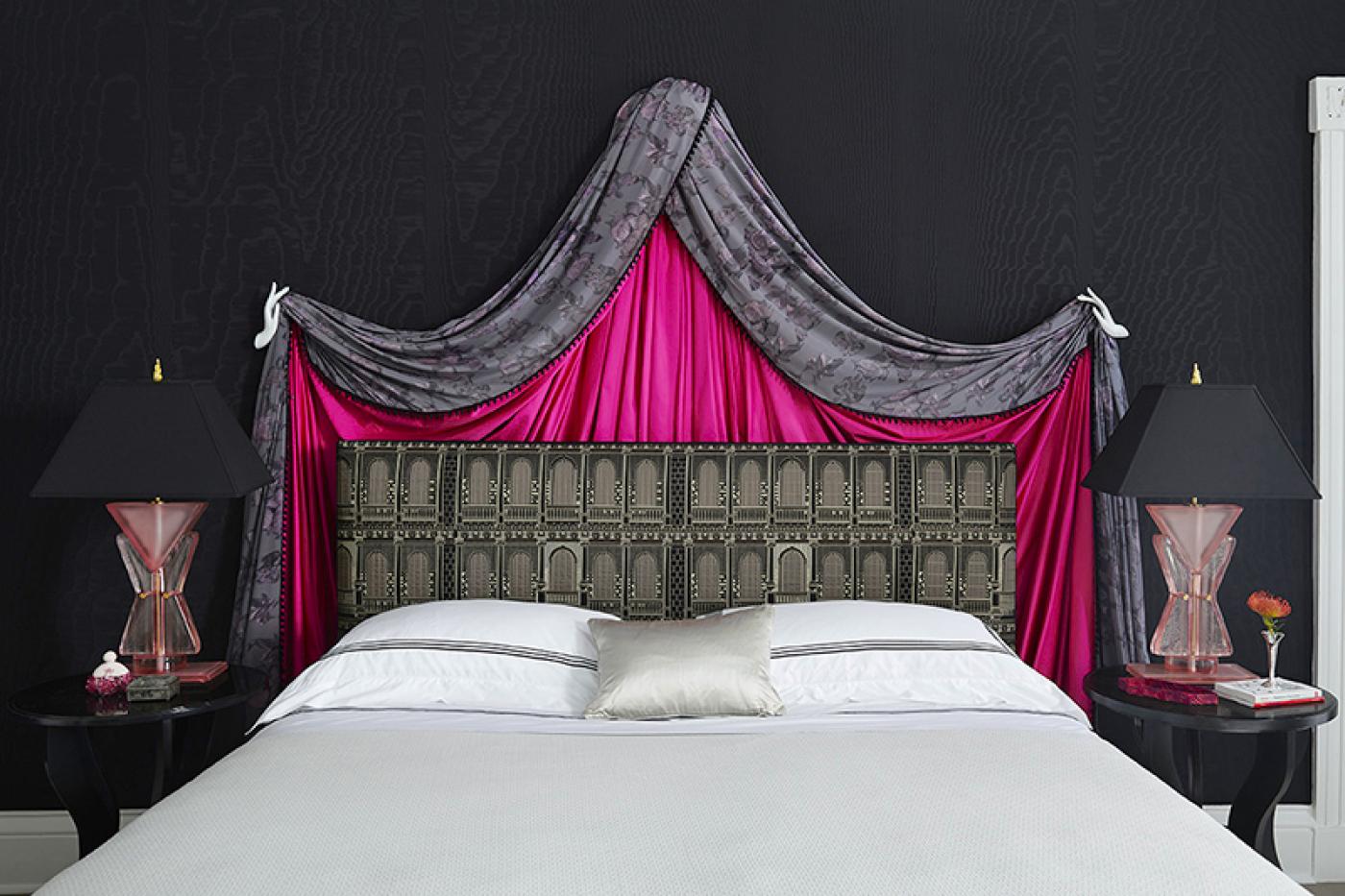
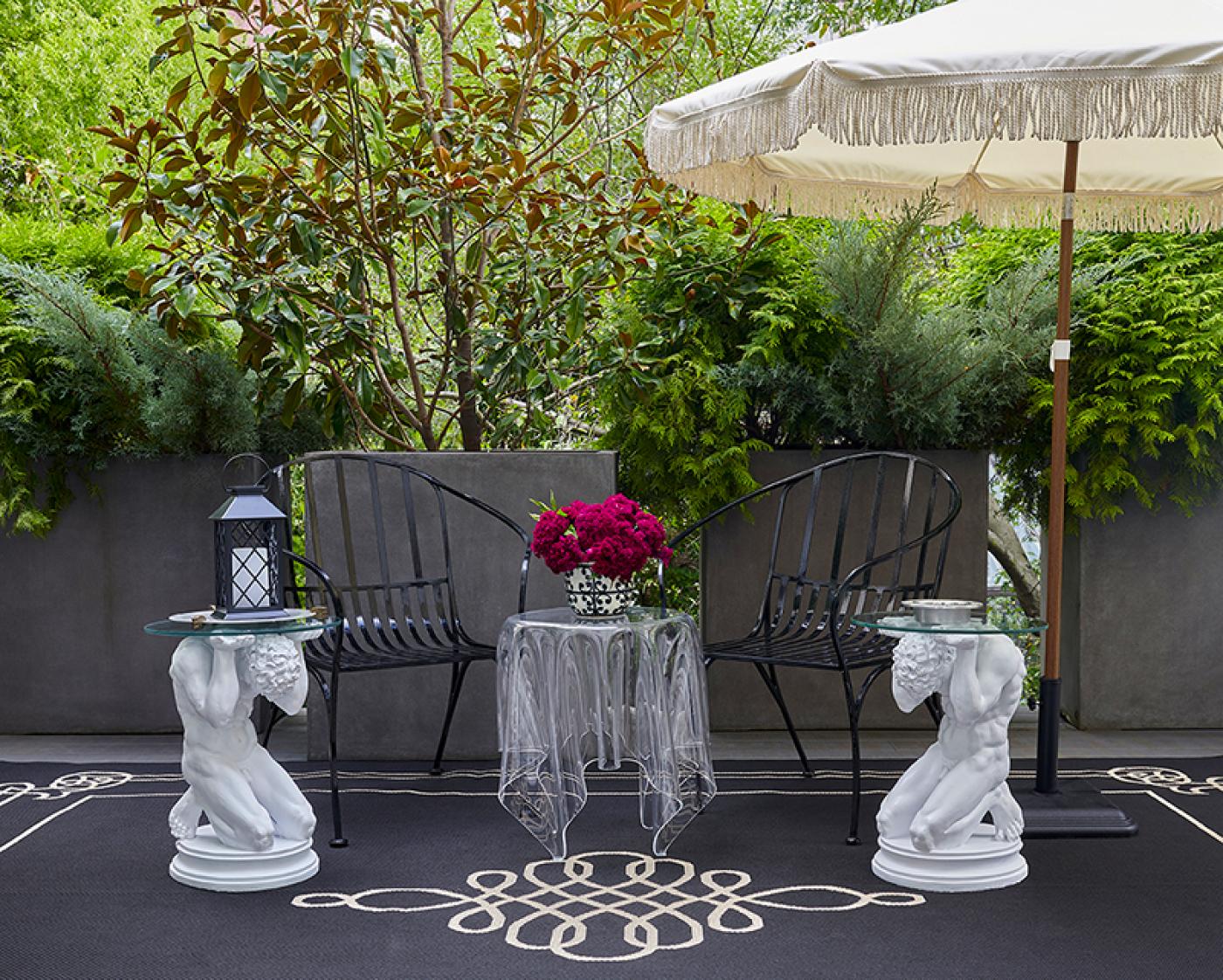
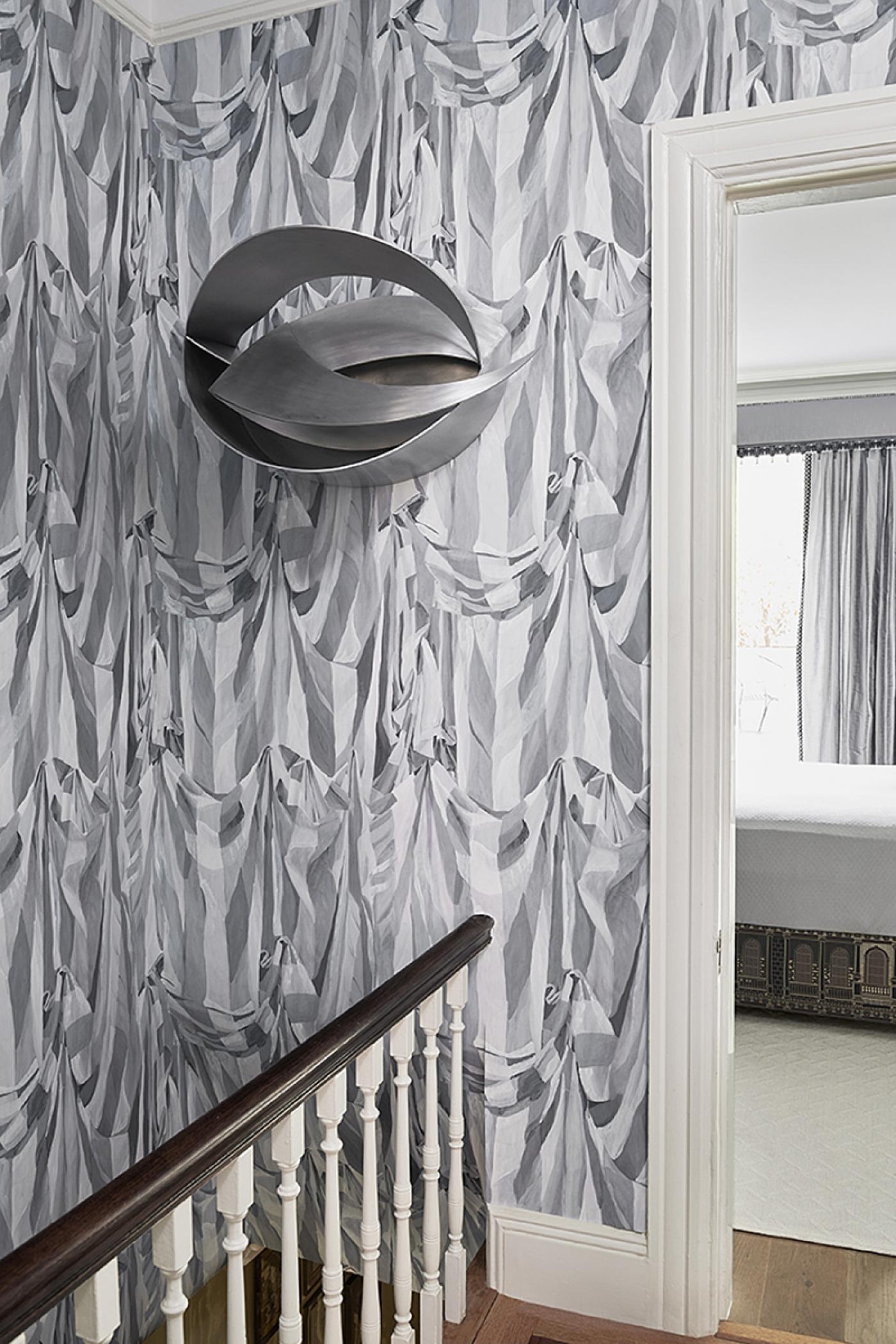
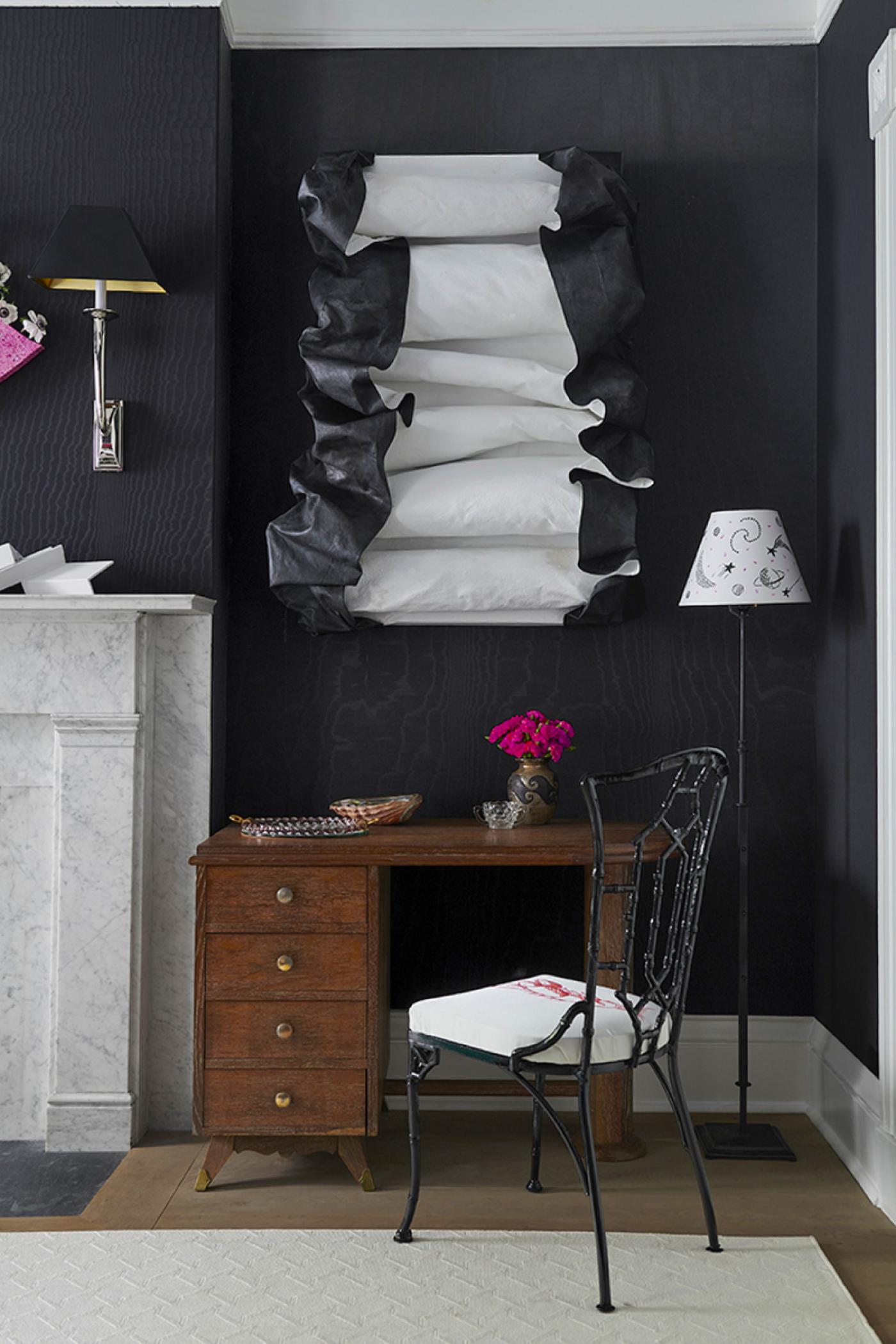
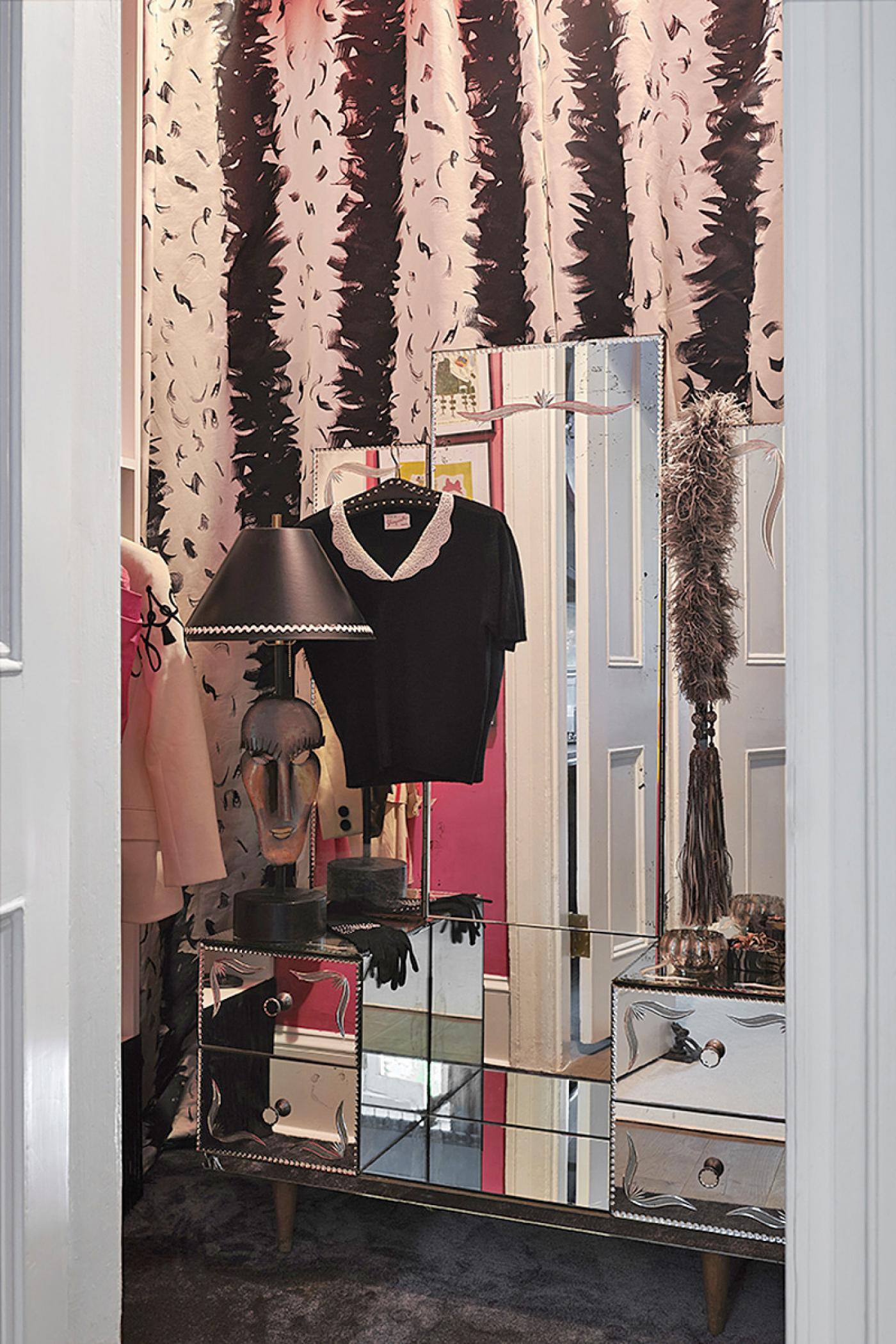
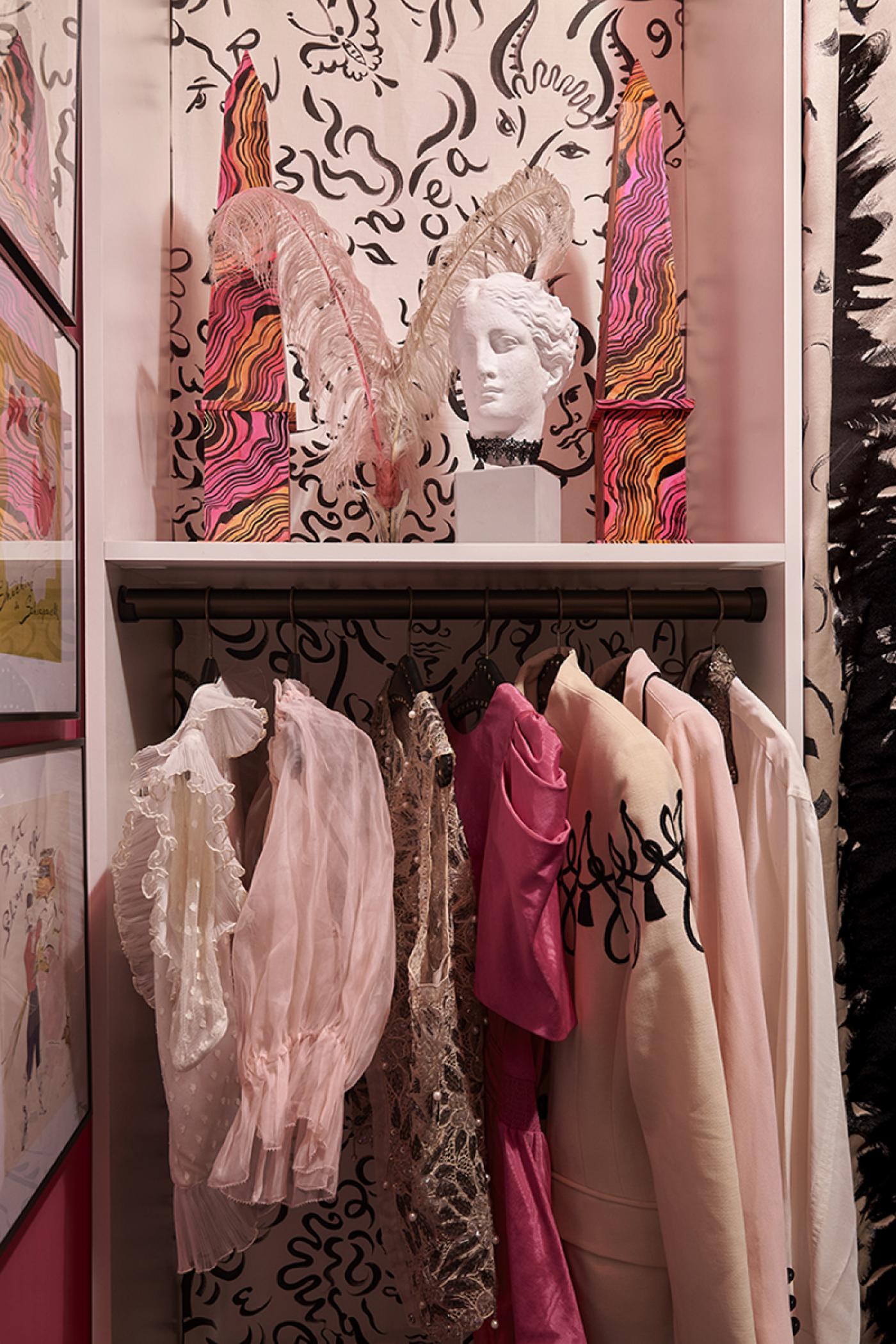
Of all the rooms in a home, the bedroom is the primary domain of the subconscious. Tara wanted to design a space that would both reflect and augment the fantastical experiences one might encounter in one’s dream life. She first looked to the Surrealist art movement for inspiration, incorporating such elements as trompe l’oeil, plays on the human form, and absurdist juxtapositions into my design. Surrealism’s progression coincided with that of the French Art Deco period, whose motifs can also be found throughout the spaces. The imaginary client Tara kept in mind was Elsa Schiaparelli, the fashion designer whose garments themselves, it could be argued, were Surrealist works. “I drew just as much inspiration from her couture dressmaker details as from the offbeat, humorous touches she regularly added with élan.” The black moiré silk lining the bedroom walls was a frequently used fabric in Schiaparell’s work, and her signature color “Shocking Pink” makes numerous appearances throughout the design. In fact, this fictional collaboration revealed itself to be kismet. In her research, Tara discovered that Schiaparelli designed a perfume in 1940 called “Sleeping” which was meant to be spritzed moments before drifting into slumber. The scent was intended to illuminate the subconscious and “light the way to ecstasy,” per its ad copy. Two other Surrealists whose influence can be found throughout the spaces are Jean Cocteau and Salvador Dalí, both of whom Schiaparelli collaborated with during her career. “My (mostly) monochromatic color scheme came to me after watching Cocteau’s 1946 film La Belle et la Bête, in which the Beast’s 17th-century château looked so gorgeous in black and white, lit only by magical anthropomorphized candelabras. In my early 20s, I made a solo pilgrimage to the Salvador Dalí Theatre-Museum in Figueres, Spain. It was a true Surrealist Gesamtkunstwerk - being there felt like walking through Dalí’s dreams. As endlessly inspiring as I found that place to be, my intention here was not to superimpose my specific dream imagery literally, but rather to create optimal conditions for anyone to drift off into whatever new reality their subconscious may reveal.”
Brooklyn Heights Designer Showhouse Primary Bedroom, Dressing Room, Terrace, and Hall
Of all the rooms in a home, the bedroom is the primary domain of the subconscious. Tara wanted to design a space that would both reflect and augment the fantastical experiences one might encounter in one’s dream life. She first looked to the Surrealist art movement for inspiration, incorporating such elements as trompe l’oeil, plays on the human form, and absurdist juxtapositions into my design. Surrealism’s progression coincided with that of the French Art Deco period, whose motifs can also be found throughout the spaces. The imaginary client Tara kept in mind was Elsa Schiaparelli, the fashion designer whose garments themselves, it could be argued, were Surrealist works. “I drew just as much inspiration from her couture dressmaker details as from the offbeat, humorous touches she regularly added with élan.” The black moiré silk lining the bedroom walls was a frequently used fabric in Schiaparell’s work, and her signature color “Shocking Pink” makes numerous appearances throughout the design. In fact, this fictional collaboration revealed itself to be kismet. In her research, Tara discovered that Schiaparelli designed a perfume in 1940 called “Sleeping” which was meant to be spritzed moments before drifting into slumber. The scent was intended to illuminate the subconscious and “light the way to ecstasy,” per its ad copy. Two other Surrealists whose influence can be found throughout the spaces are Jean Cocteau and Salvador Dalí, both of whom Schiaparelli collaborated with during her career. “My (mostly) monochromatic color scheme came to me after watching Cocteau’s 1946 film La Belle et la Bête, in which the Beast’s 17th-century château looked so gorgeous in black and white, lit only by magical anthropomorphized candelabras. In my early 20s, I made a solo pilgrimage to the Salvador Dalí Theatre-Museum in Figueres, Spain. It was a true Surrealist Gesamtkunstwerk - being there felt like walking through Dalí’s dreams. As endlessly inspiring as I found that place to be, my intention here was not to superimpose my specific dream imagery literally, but rather to create optimal conditions for anyone to drift off into whatever new reality their subconscious may reveal.”