

-
FINE ART
-
FURNITURE & LIGHTING
-
NEW + CUSTOM
- FEATURED BESPOKE MAKERS
- Stephen Antonson
- Pieter Adam
- Nader Gammas
- Eben Blaney
- Silvio Mondino Studio
- Neal Aronowitz
- Mark Brazier-Jones
- Proisy Studio
- Ovature Studios
- Cartwright New York
- Thomas Pheasant Studio
- Lorin Silverman
- Chapter & Verse
- Reda Amalou
- KGBL
- AL Design Aymeric Lefort
- Atelier Purcell
- Pfeifer Studio
- Susan Fanfa Design
-
DECORATIVE ARTS
- JEWELRY
-
INTERIORS
- FEATURED PROJECTS
- East Shore, Seattle by Kylee Shintaffer Design
- Apartment in Claudio Coello, Madrid by L.A. Studio Interiorismo
- The Apthorp by 2Michaels
- Houston Mid-Century by Jamie Bush + Co.
- Sag Harbor by David Scott
- Park Avenue Aerie by William McIntosh Design
- Sculptural Modern by Kendell Wilkinson Design
- Noho Loft by Frampton Co
- Greenwich, CT by Mark Cunningham Inc
- West End Avenue by Mendelson Group
- VIEW ALL INTERIOR DESIGNERS
- INTERIOR DESIGN BOOKS YOU NEED TO KNOW
- Distinctly American: Houses and Interiors by Hendricks Churchill and A Mood, A Thought, A Feeling: Interiors by Young Huh
- Robert Stilin: New Work, The Refined Home: Sheldon Harte and Inside Palm Springs
- Torrey: Private Spaces: Great American Design and Marshall Watson’s Defining Elegance
- Ashe Leandro: Architecture + Interiors, David Kleinberg: Interiors, and The Living Room from The Design Leadership Network
- Cullman & Kravis: Interiors, Nicole Hollis: Artistry of Home, and Michael S. Smith, Classic by Design
- New books by Alyssa Kapito, Rees Roberts + Partners, Gil Schafer, and Bunny Williams: Life in the Garden
- Peter Pennoyer Architects: City | Country and Jed Johnson: Opulent Restraint
- An Adventurous Life: Global Interiors by Tom Stringer
- VIEW ALL INTERIOR DESIGN BOOKS
-
MAGAZINE
- FEATURED ARTICLES
- Northern Lights: Lighting the Scandinavian Way
- Milo Baughman: The Father of California Modern
- A Chandelier of Rare Provenance
- The Evergreen Allure of Gustavian Style
- Every Picture Tells a Story: Fine Art Photography
- Vive La France: Mid-Century French Design
- The Timeless Elegance of Barovier & Toso
- Paavo Tynell: The Art of Radical Simplicity
- The Magic of Mid-Century American Design
- Max Ingrand: The Power of Light and Control
- The Maverick Genius of Philip & Kelvin LaVerne
- 10 Pioneers of Modern Scandinavian Design
- The Untamed Genius of Paul Evans
- Pablo Picasso’s Enduring Legacy
- Karl Springer: Maximalist Minimalism
- All Articles
Listing
Period
- Clear All
Charles Camoin
French, 1879 - 1965
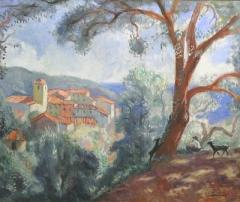
A lifelong friend of Henri Matisse and Albert Marquet, each of whom Charles Camoin met while enrolled in the Beaux-Arts de Paris, the three artists were primary among those referred to as “Wild Beasts”, or “Fauvists”. Camoin himself was instrumental in the 1905 exhibit where art critic Louis Vauxcelles backhandedly anointed the artists with the title. Their Fauvist style committed colors to the primary importance, blending light and shadow equally, with their use of thick, direct brush strokes and outlined edges making for stark, strong two-dimensional paintings.
Camoin decided early on, in part through corresponding with his informal mentor, Paul Cezannes, that he would not push exaggerated boundaries, but keep to painting “truth in color”. After a childhood spend with his mother in Paris and the resorts of the Riveria, and a bleaker period of military service, in 1920 Camoin lived between Paris and Saint Tropez, immortalizing the latter as the port and city of amazing light and colors.
“I still consider myself a Fauve. There are two kinds of colors, real ones and superficial ones. You have to chose.” Camoin proved himself to be a wizened sort, and stayed away from the educational art revolutionaries of Dadaism and Cubism, and toned his heavy colors and outlined shapes and figures with realistic presence, to the delight of all.
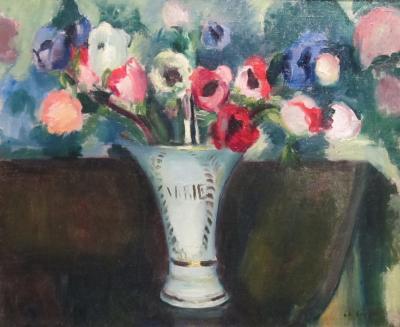
Camoin decided early on, in part through corresponding with his informal mentor, Paul Cezannes, that he would not push exaggerated boundaries, but keep to painting “truth in color”. After a childhood spend with his mother in Paris and the resorts of the Riveria, and a bleaker period of military service, in 1920 Camoin lived between Paris and Saint Tropez, immortalizing the latter as the port and city of amazing light and colors.
“I still consider myself a Fauve. There are two kinds of colors, real ones and superficial ones. You have to chose.” Camoin proved himself to be a wizened sort, and stayed away from the educational art revolutionaries of Dadaism and Cubism, and toned his heavy colors and outlined shapes and figures with realistic presence, to the delight of all.
Loading...