









Edouard Leon Cortes
French, 1882 - 1969
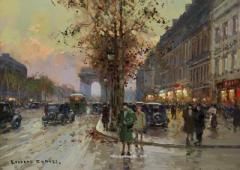
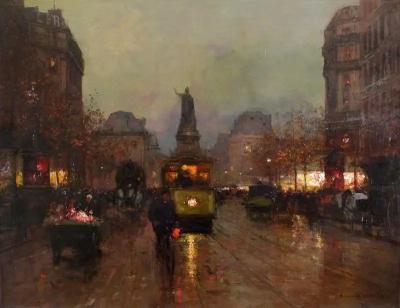
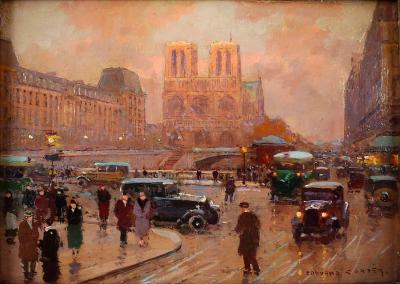
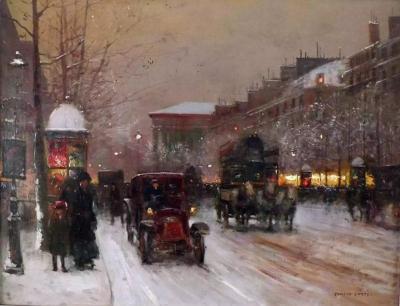
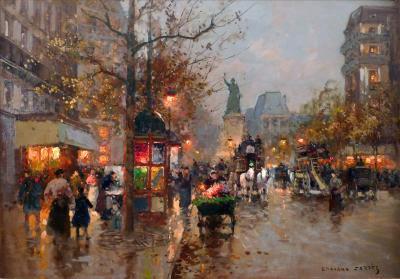
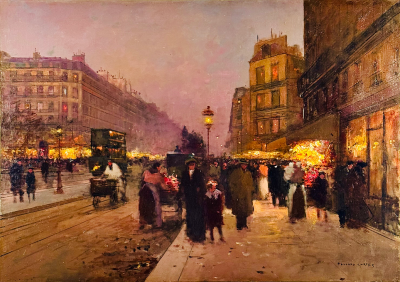
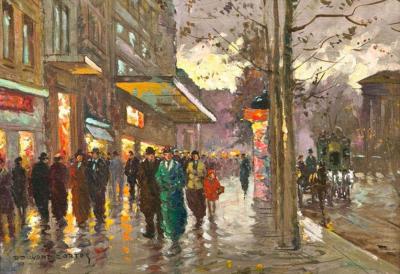
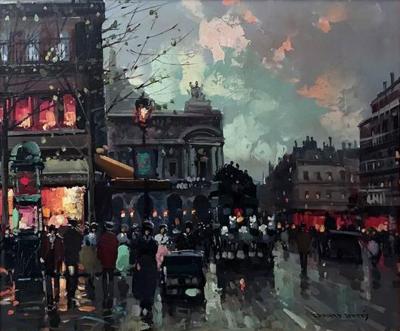
Edouard Cortes (French, 1882-1969). Edouard Cortes was born into a family of artists and artisans in Paris, 1882. His grandfather, Andre Cortes, was famous for his work on the stained glass windows of the Cathedral of Seville and his father, Antonio Cortes, was a painter at the royal court of Spain. In this artistically conducive atmosphere, Edouard showed exceptional talent early and decided at a young age that he was destined to be a painter. He once said, “I was born from and for painting.” In his youth, Cortes trained at his father’s studio and was also given advice and encouragement from his brother (also a painter) and other local artists. Surprisingly, before undergoing his formal education at the National French Art School in Paris, a sixteen-year old Cortes first exhibited his work at the national exhibition of the Societe des Artistes Francais in Paris, 1899. His large painting, Le Labour, was a great success and the French press lauded the young phenomenon of the French art scene. Edouard eventually became a member of the French Artists’ Society, exhibiting his works every year as his reputation began to grow. In 1901 Cortes began his long tradition of painting different vignettes of Paris. He also painted familial interiors, landscapes, and seascapes but achieved his greatest fame through these masterly and expressive Parisian scenes. In 1915, he was awarded the Silver Medal at the Salon des Artistes Francais and the Gold Medal at the Salon des Independents. He also received numerous awards at the Salon d’Hiver during his artistic career. Because of his pacifist beliefs stemming from his direct involvement with WWI, he refused the Legion of Honor offered by the French government for his artistic success and contributions. Cortes’ poetic Parisian scenes are imbued with nostalgia for a belle-époque France. Even into the 1950s Cortes often painted horse drawn omnibuses and fashions preceding 1920, commenting that, at least in his paintings, he wished to stop history in 1939 before the Second World War The window Cortes provides into this earlier period of Parisian life offers the viewer a visual history of France and a personal connection to this provocative time.
Edouard Cortes Paintings
Edouard Cortes Paintings
Edouard Cortes was born in France in 1882. His grandfather, originally from Spain, left Madrid when Edouard was very young and moved to Paris to eventually marry a French woman. Their son (Edouard's' father) was the first in the family to pick up a brush: painting strictly for his own pleasure, he limited his work to country scenes, specializing in landscapes dotted with cows.
As a child, Edouard Cortes liked to sketch everything and everybody who he came into contact with. He later studied at the National French Art School in Paris (more a university than a school) for five years, from the age seventeen until he was twenty-two. He first exhibited in 1902 at the Salon, the main exhibition of the Fine Art in Paris at that time. His painting, Parisian Street Scene at Nightfall, won him success and glory.
He soon became a member of the French Artists Society, exhibiting his works every year as his reputation began to grow. In 1915, he was awarded the Silver medal at the Salon des Artistes Francais and the gold Medal at the Salon des Independants. He also received numerous awards at the Salon d'Hiver.
Throughout his life, Edouard Cortes worked on improving his talent and his technique. Unlike many artists, he never opened a school in his studio or offered to teach aspiring artists (although many claim to have studied under him). He has also never signed his name to any painting other than his own.
His paintings are exhibited in the museums of France and many other foreign countries, including Belgium, England, Switzerland, Sweden and Canada.
Biography courtesy of Roughton Galleries, www.antiquesandfineart.com/roughton
As a child, Edouard Cortes liked to sketch everything and everybody who he came into contact with. He later studied at the National French Art School in Paris (more a university than a school) for five years, from the age seventeen until he was twenty-two. He first exhibited in 1902 at the Salon, the main exhibition of the Fine Art in Paris at that time. His painting, Parisian Street Scene at Nightfall, won him success and glory.
He soon became a member of the French Artists Society, exhibiting his works every year as his reputation began to grow. In 1915, he was awarded the Silver medal at the Salon des Artistes Francais and the gold Medal at the Salon des Independants. He also received numerous awards at the Salon d'Hiver.
Throughout his life, Edouard Cortes worked on improving his talent and his technique. Unlike many artists, he never opened a school in his studio or offered to teach aspiring artists (although many claim to have studied under him). He has also never signed his name to any painting other than his own.
His paintings are exhibited in the museums of France and many other foreign countries, including Belgium, England, Switzerland, Sweden and Canada.
Biography courtesy of Roughton Galleries, www.antiquesandfineart.com/roughton



 Loading...
