


Heckert Glass / Fritz Heckert / F. Heckert
German
Situated in Warmbrunn, Silesia, the Heckert company held a pivotal role in the Bohemian glass industry. Established in 1866 by Fritz Heckert, initially focusing on refining mirrors and intricately carved glass components for chandeliers, the company swiftly diversified into hollow glass enameling, leveraging resources from nearby Josephinenhütte. Until 1889, Heckert specialized in crafting replicas of seventeenth and eighteenth-century enameled glass, renowned for their "old German" style adornments. However, in 1889, Heckert expanded its horizons, acquiring its own glass factory and transitioning to producing iridescent glass embellished in the Art Nouveau aesthetic.
Following Fritz's passing in 1890, his widow Zurillie and son-in-law Otto Thamm inherited the company's legacy, overseeing operations as the company burgeoned, employing around 200 artisans across its glass and refinery facilities.
In 1898, Heckert introduced its immensely popular orange and green crystal adorned with distinctive motifs designed by Professor Max Rade from Dresden. Post-1900, the company incorporated designs by Ludwig Sütterlin of Berlin, yet faced lukewarm reception, prompting a shift to designs by Wilhelm Meitzen and Professor Ribnik.
Heckert's reputation soared further when it showcased its creations at European exhibitions, clinching a silver medal for decorative art in Turin in 1902 and a gold medal in St. Louis in 1904, fueling significant sales in the United States.
In 1905, Fritz's son Bruno assumed leadership until the conclusion of World War I, when he sold the reins of the company to the Von Loesch family, appointing Adolf Schoeps as director.
By 1923, the company merged with Josephinenhütte, rebranding as "Jo-He-Ke, Petersdorf." Subsequently, Josephinenhütte absorbed Heckert entirely in 1925, integrating its workforce and infrastructure into its own manufacturing operations.
Following Fritz's passing in 1890, his widow Zurillie and son-in-law Otto Thamm inherited the company's legacy, overseeing operations as the company burgeoned, employing around 200 artisans across its glass and refinery facilities.
In 1898, Heckert introduced its immensely popular orange and green crystal adorned with distinctive motifs designed by Professor Max Rade from Dresden. Post-1900, the company incorporated designs by Ludwig Sütterlin of Berlin, yet faced lukewarm reception, prompting a shift to designs by Wilhelm Meitzen and Professor Ribnik.
Heckert's reputation soared further when it showcased its creations at European exhibitions, clinching a silver medal for decorative art in Turin in 1902 and a gold medal in St. Louis in 1904, fueling significant sales in the United States.
In 1905, Fritz's son Bruno assumed leadership until the conclusion of World War I, when he sold the reins of the company to the Von Loesch family, appointing Adolf Schoeps as director.
By 1923, the company merged with Josephinenhütte, rebranding as "Jo-He-Ke, Petersdorf." Subsequently, Josephinenhütte absorbed Heckert entirely in 1925, integrating its workforce and infrastructure into its own manufacturing operations.
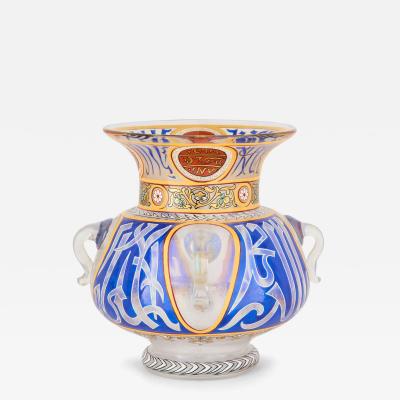
Heckert Glass / Fritz Heckert / F. Heckert
Orientalist Enamelled Glass Mosque Lamp
H 11.81 in DIA 8.66 in
$ 14,250

Sold
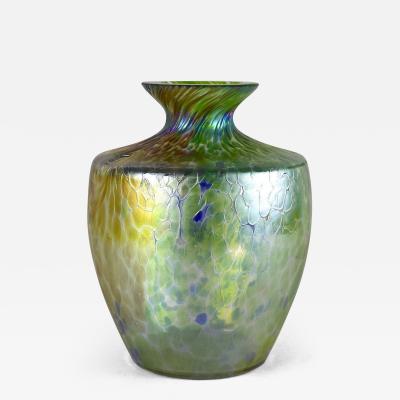
Heckert Glass / Fritz Heckert / F. Heckert
Iridescent Art Nouveau Glass Vase Attributed To Fritz Heckert, Bohemia ca. 1905
H 9 in W 6 in D 6 in DIA 6 in



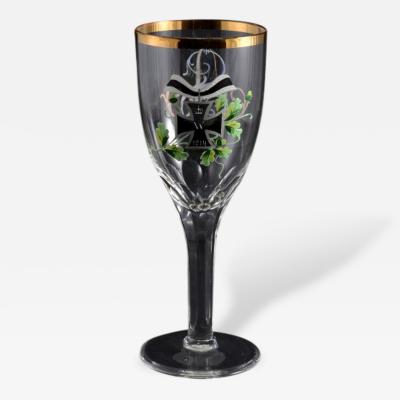
Heckert Glass / Fritz Heckert / F. Heckert
1914 Crystal Presentation Goblet Germany WW1
H 8 in W 3 in D 3 in
$ 625
 Loading...
