








George Adams
British
George Adams, Sr. (1709–1772) and George Adams, Jr. (1750–1795) were renowned English instrument makers known for their contributions to the fields of optics and astronomy. While they primarily focused on scientific instruments such as telescopes and microscopes, they also produced a limited number of globes.
George Adams, Sr., established his instrument-making business in London in the mid-18th century and gained recognition for his expertise. He crafted high-quality optical instruments that were favored by astronomers, scientists, and universities of the time. Following his death in 1772, his son, George Adams, Jr., took over the family business and continued his father's legacy.
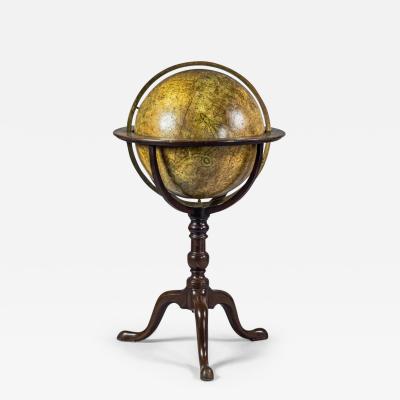
The Adams family's globes were not as prominent as their other instruments, but they are considered to be of good quality. The globes they produced were typically terrestrial globes, depicting the Earth's surface with geographical features, countries, and regions. While not as numerous or renowned as globes made by other notable cartographers, Adams globes are still valued as examples of the craftsmanship and scientific instrument-making skills of the era.
Today, antique George Adams globes are sought after by collectors and enthusiasts interested in historical cartography and scientific instruments. They provide a glimpse into the state of geographical knowledge and mapping techniques during the 18th century.
George Adams, Sr., established his instrument-making business in London in the mid-18th century and gained recognition for his expertise. He crafted high-quality optical instruments that were favored by astronomers, scientists, and universities of the time. Following his death in 1772, his son, George Adams, Jr., took over the family business and continued his father's legacy.
The Adams family's globes were not as prominent as their other instruments, but they are considered to be of good quality. The globes they produced were typically terrestrial globes, depicting the Earth's surface with geographical features, countries, and regions. While not as numerous or renowned as globes made by other notable cartographers, Adams globes are still valued as examples of the craftsmanship and scientific instrument-making skills of the era.
Today, antique George Adams globes are sought after by collectors and enthusiasts interested in historical cartography and scientific instruments. They provide a glimpse into the state of geographical knowledge and mapping techniques during the 18th century.