





Robert Motherwell
American, 1915 - 1991
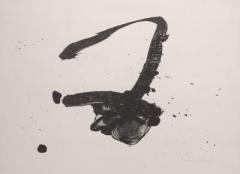
Robert Motherwell, a trailblazer and key proponent of Abstract Expressionism, left an indelible mark on the art world. As one of the movement's founders, Motherwell was at the forefront of embracing accidental elements in his work, marking a departure from traditional artistic approaches. Born with an innate talent, Motherwell received a scholarship for art at the tender age of 11, setting the stage for a lifelong exploration of aesthetic expression.
Although he initially leaned towards academic pursuits, earning degrees in aesthetics from Stanford and Harvard universities, Motherwell's true calling as a serious artist emerged in 1941. While deeply influenced by Surrealist artists Max Ernst, Yves Tanguy, and André Masson, Motherwell remained largely self-taught, allowing his artistic journey to evolve organically.
His early works, diverse in style, already contained motifs that foreshadowed the themes pervasive in his later art. The turning point came in 1944 when he held his first solo exhibition at Peggy Guggenheim's Art of This Century Gallery in New York City. Throughout the mid-1940s, Motherwell explored abstract figurative works, showcasing the lingering influence of Surrealism.
In 1949, he embarked on a significant series titled "Elegy to the Spanish Republic," creating nearly 150 versions over the next three decades. These Abstract Expressionist masterpieces revealed Motherwell's continuous development of simple, serene, and massive forms, evoking a sense of slow, suggestive movement with each stroke of black paint.
The 1960s witnessed Motherwell's artistic versatility, as seen in paintings like "Africa" (1964, 65) resembling enlarged details of elegant calligraphy and "Indian Summer, #2" (1962, 64) seamlessly blending Abstract Expressionism's bravura brushwork with the even color application characteristic of emerging Color Field Painting.
From 1958 to 1971, Motherwell was married to renowned American painter Helen Frankenthaler, and his contributions extended beyond the canvas. He shared his artistic insights as a teacher at Hunter College, directed the publication of the influential series "The Documents of Modern Art," and penned numerous essays on art and aesthetics. Regarded as Abstract Expressionism's articulate spokesperson, Motherwell's legacy endures in the timeless allure of his paintings and prints.
Explore Robert Motherwell's Artistic Legacy:
Delve into the profound expressions of Robert Motherwell through his captivating paintings and prints. Each piece reflects the evolution of an artist who dared to redefine the boundaries of expression. Immerse yourself in the transformative journey of a true pioneer of Abstract Expressionism.
Although he initially leaned towards academic pursuits, earning degrees in aesthetics from Stanford and Harvard universities, Motherwell's true calling as a serious artist emerged in 1941. While deeply influenced by Surrealist artists Max Ernst, Yves Tanguy, and André Masson, Motherwell remained largely self-taught, allowing his artistic journey to evolve organically.
His early works, diverse in style, already contained motifs that foreshadowed the themes pervasive in his later art. The turning point came in 1944 when he held his first solo exhibition at Peggy Guggenheim's Art of This Century Gallery in New York City. Throughout the mid-1940s, Motherwell explored abstract figurative works, showcasing the lingering influence of Surrealism.
In 1949, he embarked on a significant series titled "Elegy to the Spanish Republic," creating nearly 150 versions over the next three decades. These Abstract Expressionist masterpieces revealed Motherwell's continuous development of simple, serene, and massive forms, evoking a sense of slow, suggestive movement with each stroke of black paint.
The 1960s witnessed Motherwell's artistic versatility, as seen in paintings like "Africa" (1964, 65) resembling enlarged details of elegant calligraphy and "Indian Summer, #2" (1962, 64) seamlessly blending Abstract Expressionism's bravura brushwork with the even color application characteristic of emerging Color Field Painting.
From 1958 to 1971, Motherwell was married to renowned American painter Helen Frankenthaler, and his contributions extended beyond the canvas. He shared his artistic insights as a teacher at Hunter College, directed the publication of the influential series "The Documents of Modern Art," and penned numerous essays on art and aesthetics. Regarded as Abstract Expressionism's articulate spokesperson, Motherwell's legacy endures in the timeless allure of his paintings and prints.
Explore Robert Motherwell's Artistic Legacy:
Delve into the profound expressions of Robert Motherwell through his captivating paintings and prints. Each piece reflects the evolution of an artist who dared to redefine the boundaries of expression. Immerse yourself in the transformative journey of a true pioneer of Abstract Expressionism.



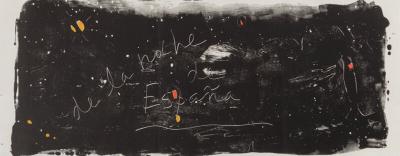


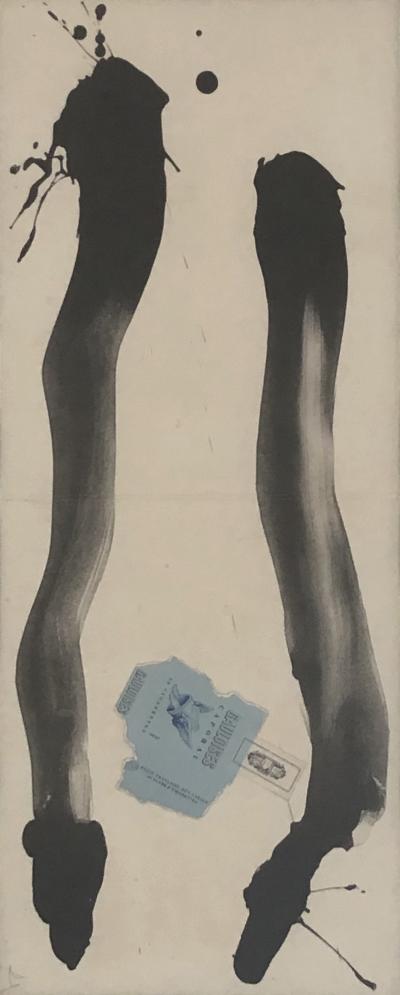
Robert Motherwell
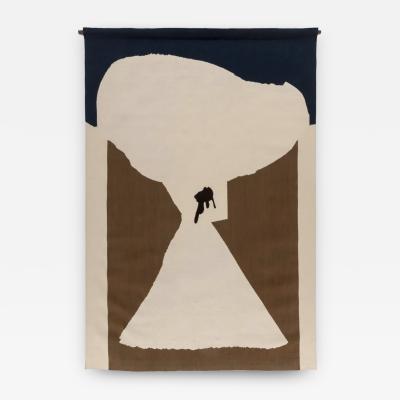
Robert Motherwell Lithograph and Collage Prints Signed in Pencil
H 3 in W 19 in D 1 in
$ 4,100
Access Trade Price



 Loading...
