











Robert Salmon
American, 1775 - 1858
Robert Salmon (1775 - After 1845)
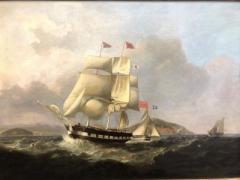
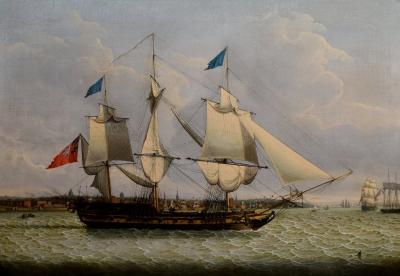
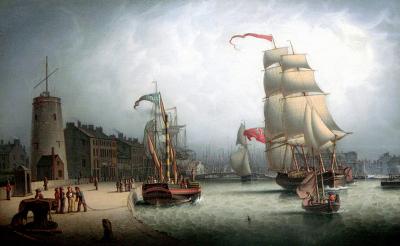
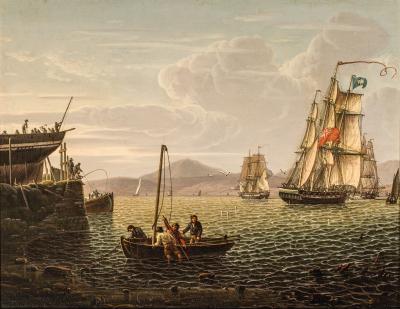
Despite his significant impact on American marine painting, the details of Robert Salmon's life remain elusive. Born in northern England, he moved to London in the 1790s and then to Liverpool in 1806. His artwork reveals a profound understanding of ships and the sea, showcasing influences from 17th-century Dutch marine painting. Notably, Salmon's incorporation of small, detailed figures sets him apart within the genre, while his skill in creating atmospheric effects is well recognized. He is often credited with establishing the luminist tradition in American art.
In 1828, Salmon emigrated to Boston, a city undergoing extensive waterfront development, which provided him with ample opportunities to establish his reputation as a painter of marine scenes and ship portraits. Alongside his marine works, he also painted theatrical scenery, including drop curtains for the Federal Street Theatre and large-scale depictions of naval battles.
Salmon's lifestyle was unconventional; he reportedly lived in a hut on the wharves, yet his paintings were in high demand. After an auction of his works in 1842, he left Boston, with his last dated pieces depicting Italian scenes completed in 1845. Following this period, he seems to have vanished, and no record of his death exists.
Despite his significant impact on American marine painting, the details of Robert Salmon's life remain elusive. Born in northern England, he moved to London in the 1790s and then to Liverpool in 1806. His artwork reveals a profound understanding of ships and the sea, showcasing influences from 17th-century Dutch marine painting. Notably, Salmon's incorporation of small, detailed figures sets him apart within the genre, while his skill in creating atmospheric effects is well recognized. He is often credited with establishing the luminist tradition in American art.
In 1828, Salmon emigrated to Boston, a city undergoing extensive waterfront development, which provided him with ample opportunities to establish his reputation as a painter of marine scenes and ship portraits. Alongside his marine works, he also painted theatrical scenery, including drop curtains for the Federal Street Theatre and large-scale depictions of naval battles.
Salmon's lifestyle was unconventional; he reportedly lived in a hut on the wharves, yet his paintings were in high demand. After an auction of his works in 1842, he left Boston, with his last dated pieces depicting Italian scenes completed in 1845. Following this period, he seems to have vanished, and no record of his death exists.



 Loading...
