






Showrooms
Unique Mantel Clock With Solar Allegory.
-
Description
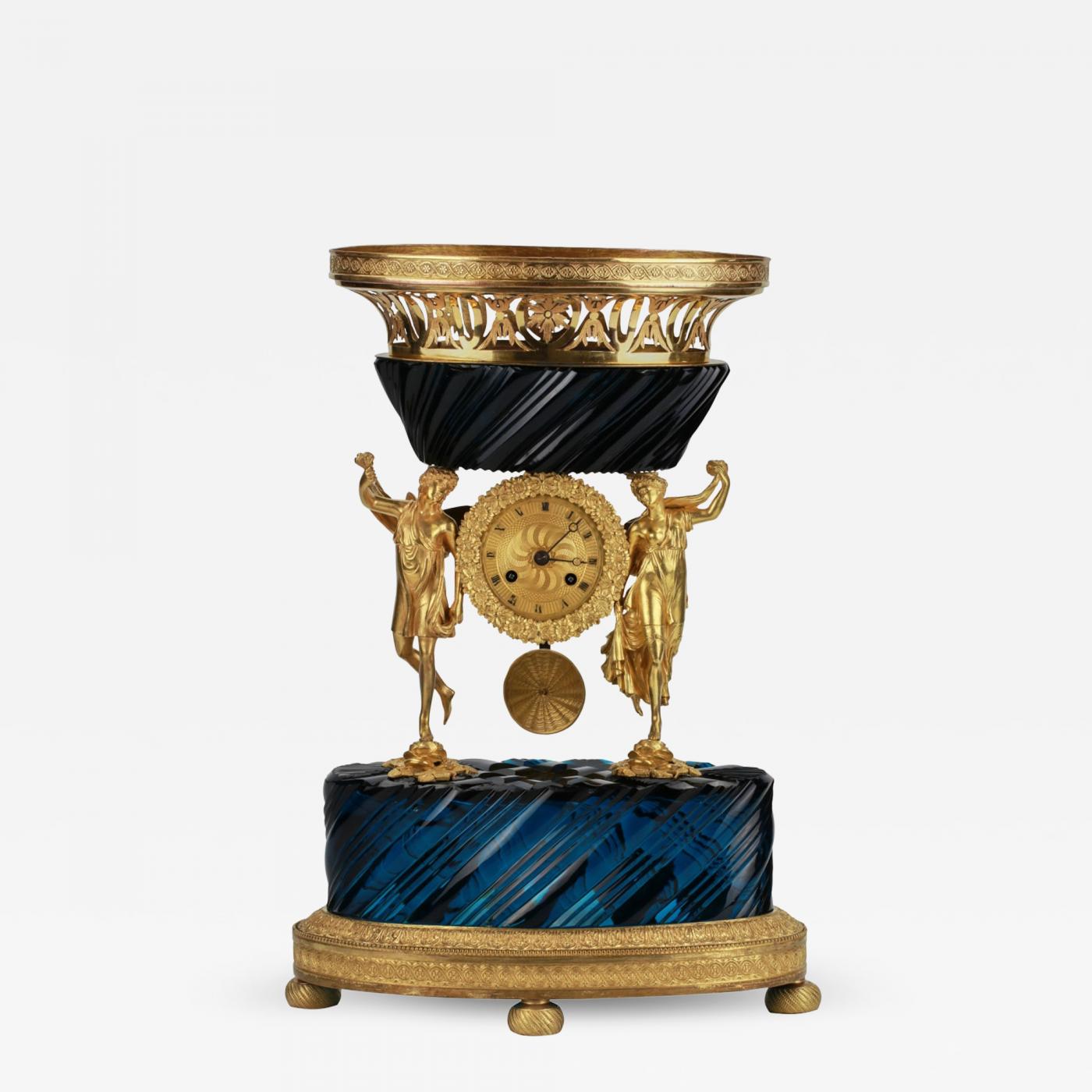
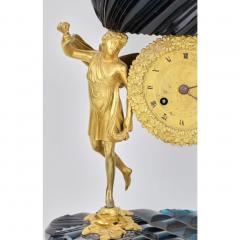
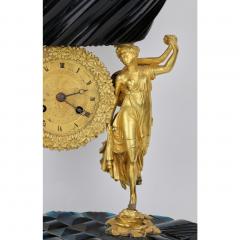
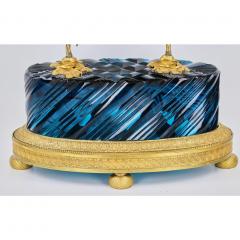
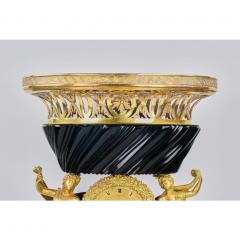
A monumental mantel clock of the Late Russian Empire style, conceived within the artistic system associated with the design models of Carlo Rossi (1775-1849). The architectonics of the work are constructed upon a strict vertical axis and imbued with solar symbolism characteristic of court art of the 1830s-1840s. The composition is formed by two volumes of deep sapphire cobalt glass attributed to the Imperial Glass Factory of Saint Petersburg. The lower massive cylindrical body is decorated with a deeply cut diagonal spiral faceting, creating a dynamic effect of flowing water and the passage of time. The plastic rhythm of the glass reinforces the leitmotif of the wave as a symbol of continuity and eternal circulation. The central section features a gilt dial with Roman numerals, surrounded by a wreath of stylized vegetal ornament and a radiant solar composition. Two allegorical figures, male and female, support the upper vessel. Their gestures are directed toward the source of light, forming a cosmogonic image of the luminary rising from the waters. The iconography relates to the theme of Helios and the symbolism of Alpha and Omega, affirming harmony, love and fertility. The upper section takes the form of a cobalt glass vase crowned with an openwork gilt bronze frieze enriched with vegetal and solar motifs. The bronze elements display refined chasing and high-quality fire gilding characteristic of Saint Petersburg workshops of the first half of the nineteenth century. Marks: Not found.Dimensions: Height: 43 cm; Width: 30 cm; Depth: 20 cm.Material: Gilt and polished bronze; cobalt glass attributed to the Imperial Glass Factory; clock mechanism with pendulum.Condition: Good. Even gilding. Minor wear to the base. Minor micro-chips to the pedestal of the glass section, not affecting the overall visual integrity or structural stability of the piece.Provenance: Private European collection.Literature: Igor Sychev. Russian Lighting Fixtures of the Classical Period. 1760-1830. Moscow, P.V.B.R., 2003, illustrations 116, 189, 279, 305, 635, 795, 844, 845, 866, 868.
Carlo Rossi (1775-1849) was a central figure in shaping the artistic image of Saint Petersburg during the reigns of Alexander I and Nicholas I. His activity extended far beyond architectural ensembles and encompassed comprehensive interior design. In the Mikhailovsky Palace, the General Staff Building and the Alexandrinsky Theatre, Rossi created holistic artistic programs that included furniture, lighting fixtures, clocks, bronze decorative elements and glass objects. The architect determined not only the spatial organization of halls but also their decorative furnishings. Archival documents confirm his involvement in designing models for vases, candelabra and mantel garnitures. Rossi collaborated closely with court bronze foundries responsible for fire gilding and sculptural modeling, as well as with the Imperial Glass Factory, which supplied colored artistic glass for palace interiors. During the 1820s-1840s the Imperial Glass Factory achieved an outstanding level in the production of cobalt glass distinguished by depth of color and high transparency. Cooperation between architects and the factory enabled the creation of objects in which glass and bronze formed a unified artistic organism. Such integration is characteristic of the Late Russian Empire style, which sought a synthesis of architecture, sculpture and decorative art. The solar symbolism present in this clock corresponds to the ideological program of the reign of Nicholas I, in which the theme of light and order acquired state significance. The radiant decoration of the dial and the dynamic spiral faceting of the glass resonate with Rossi's architectural principles, where axial symmetry, proportional harmony and allegorical imagery defined the canon of imperial interior design. Mantel clocks of this type often became the compositional focal point of the fireplace wall, reinforcing the ceremonial character of the space. Thus, the present work reflects the principles of Rossi's school of interior design and demonstrates the high level of interaction between Saint Petersburg bronze casting and artistic glass production in the first half of the nineteenth century. -
More Information
Period: 19th Century Condition: Good. Good. Even gilding. Minor wear to the base. Minor micro-chips to the pedestal of the glass section, not affecting the overall visual integrity or structural stability of the piece. Styles / Movements: Empire Dealer Reference #: 3512 Incollect Reference #: 883108 -
Dimensions
W. 11.81 in; H. 16.93 in; W. 30 cm; H. 43 cm;
Message from Seller:
Maison ANTIQON invites you to discover our exceptional collection of fine art and antiques at our premier showrooms, Maison ANTIQON in Nice, France, and Antikvariāta Centrs in Riga, Latvia. For inquiries, private appointments, or to explore our curated international heritage, please reach out to us directly at info@antiqon.com or via phone at +33 6 30 17 47 17.
More Listings from Antiqon View all 119 listings
-
Porcelain And Gilt Bronze Lamp In The Sevres Style France, Circa 1900
-
18-Carat Gold And Diamond Ring

-
Silver Tea Glass Holder With Relief Medallions In The Neo-Russian Style.
-
Silver Beer Tankard With Atlas And Carved Ivory Religious Scenes Lubeck
-
Porcelain And Gilt-Bronze Table Lamp In The Style Of Sevres France, Circa 1900
-
Designer Sideboard With Murano Glass Panels In The Geometric Postmodern Style
-
French Crystal Pitcher With Silver Mount. France.
-
Lady's Bonheur Du Jour In The Napoleon III Style. France
-
Art Nouveau Wooden Console Table. Turn Of The 19th-20th Century
-
Art Deco Style Sideboard With Exotic Wood Marquetry Europe, 20th Century
-
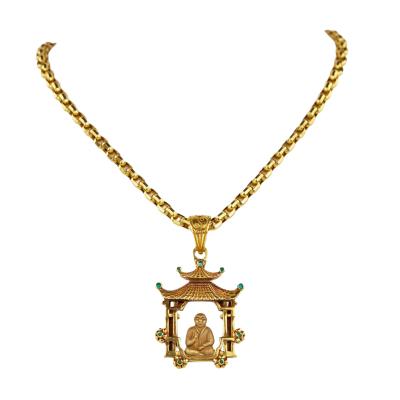
Gold Necklace With A Pagoda Pendant Featuring A Meditating Buddha.
-
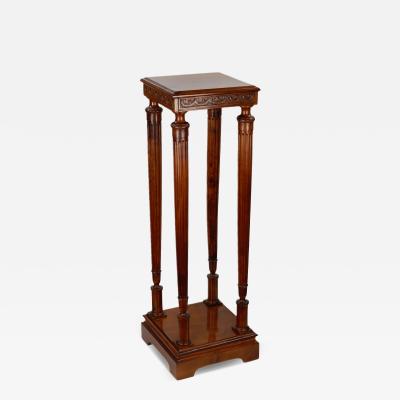
Solid Walnut Console Table In The Art Deco Style. Europe, Early 20th Century
-
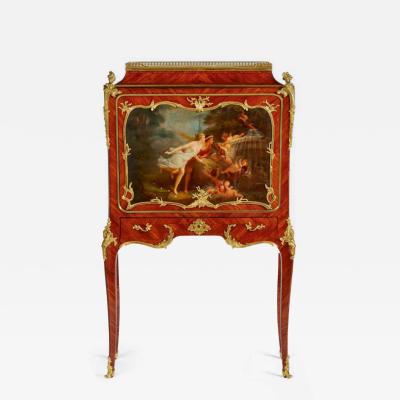
Secretary Desk With A Painted Panel, Paul Sormani France, Paris
-
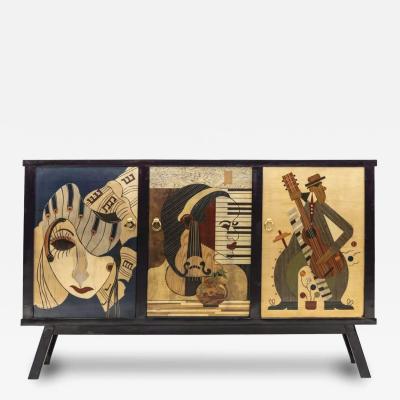
Art Deco Commode With Musical-Themed Marquetry. Europe, 20th Century