







Showrooms
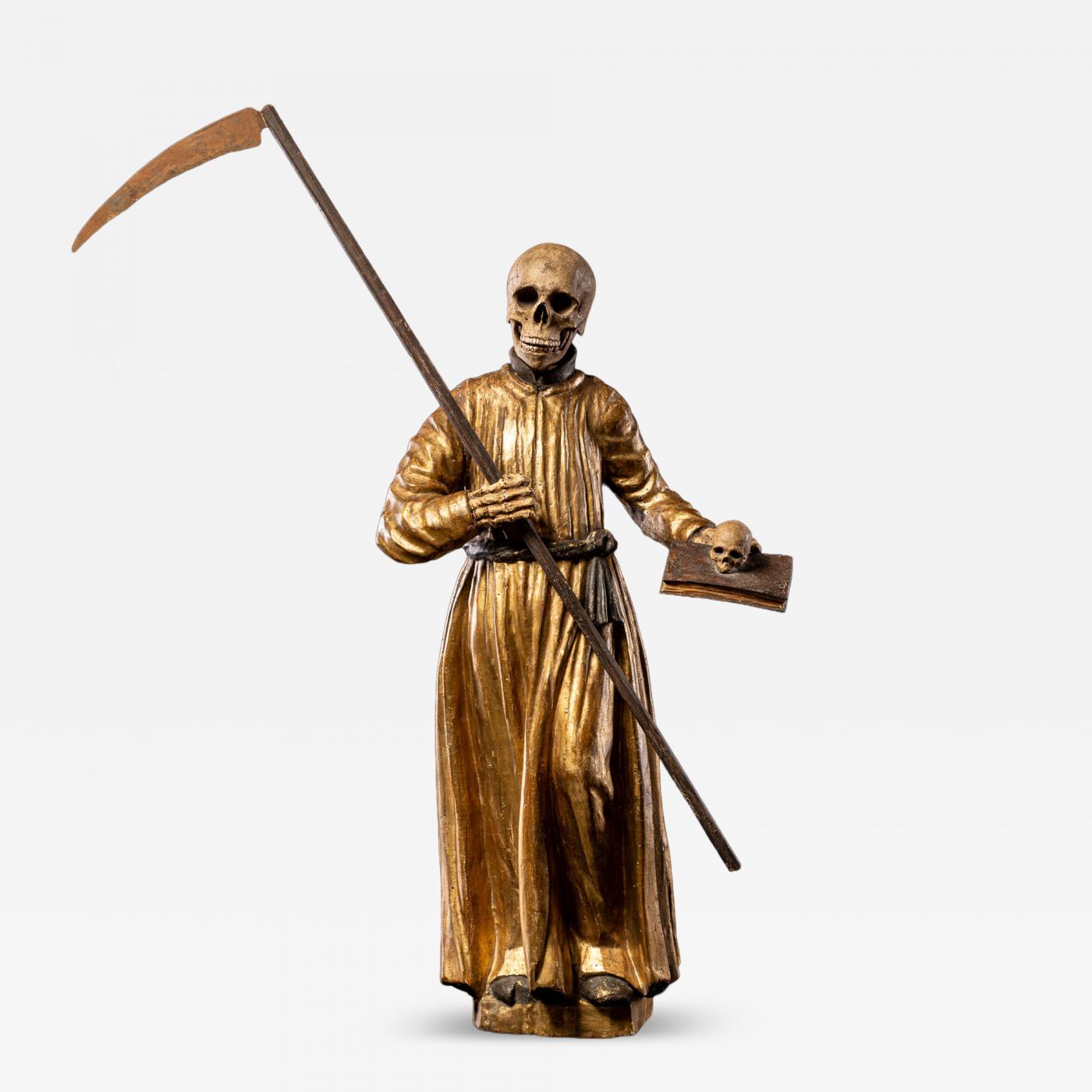
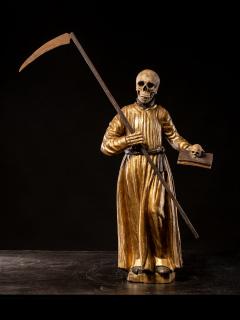
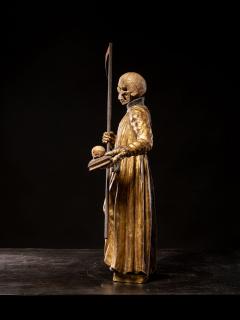
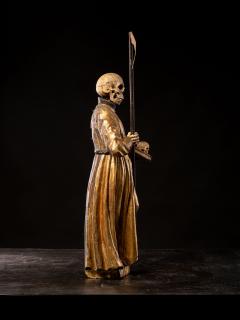
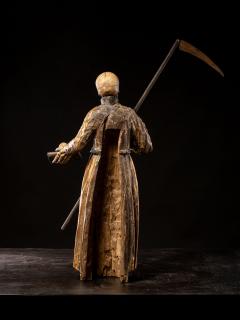
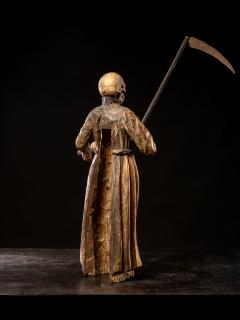
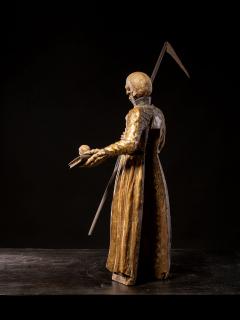
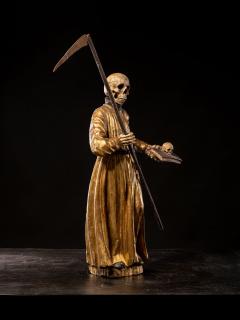
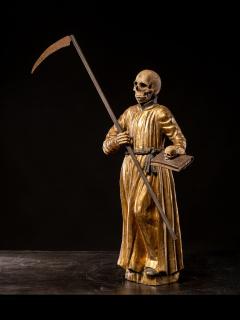
A South German polychromed and gilt wood figure of a Monastic “Poor Soul”
-
Description
A South German polychromed and gilt wood figure of a Monastic “Poor Soul” (Arme Seele)
18th C
Wood, gilded, iron
74 x 15 x 18 cm
29 1/8 x 5 7/8 x 7 1/8 in
6206
€ 9,900.00
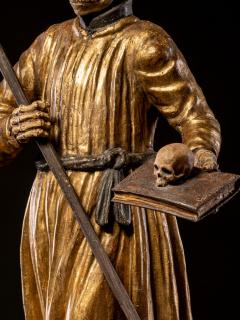
Depicted standing and shown frontally, the skeletal figure is largely concealed by a long, cinctured monastic habit. The hooded skull is inclined slightly to one side, and the figure holds a scythe while presenting a book surmounted by a skull, attributes associated with mortality and moral reckoning.Although such figures are frequently described as personifications of Death (Tod in Mönchskutte), the present sculpture may more plausibly represent a deceased, unredeemed monk, or Arme Seele (“Poor Soul”). The restrained posture and contemplative character contrast with the animated skeletal figures of contemporary Danse Macabre imagery and align more closely with devotional representations of souls in purgatory. The monastic costume, rendered without specific order insignia, is characteristic of Southern German Baroque sculpture.The cult of the Arme Seelen, formally sanctioned by the Church at the Council of Florence in 1439, remained influential in Southern Germany through the Baroque period, and sculptures of this type served as moralising reminders of mortality and the efficacy of prayer for the dead.Wear and surface abrasion consistent with age; losses to the gilding and polychromy; the scythe with oxidation and patina; minor restorations.
Représentée debout et de face, la figure squelettique est en grande partie dissimulée par une longue robe monastique ceinturée. Le crâne, partiellement couvert par le capuchon, est légèrement incliné sur le côté. La figure tient une faux et présente un livre surmonté d’un crâne, attributs traditionnellement associés à la mortalité et au jugement moral.Bien que de telles figures soient fréquemment décrites comme des personnifications de la Mort (Tod in Mönchskutte), la présente sculpture pourrait plus vraisemblablement représenter un moine défunt et non racheté, une Arme Seele (« Âme pauvre »). L’attitude retenue et le caractère contemplatif contrastent avec les figures squelettiques animées de la Danse macabre contemporaine et se rapprochent davantage des représentations dévotionnelles des âmes du purgatoire. Le costume monastique, dépourvu d’attributs spécifiques d’un ordre religieux, est caractéristique de la sculpture baroque d’Allemagne du Sud.Le culte des Arme Seelen, officiellement sanctionné par l’Église lors du concile de Florence en 1439, demeura influent en Allemagne du Sud tout au long de la période baroque. Les sculptures de ce type servaient de rappels moralisateurs de la mortalité et de l’efficacité de la prière pour les morts.Usure et abrasions de surface conformes à l’âge ; pertes de dorure et de polychromie ; oxydation et patine de la faux ; restaurations mineures.
Staand en frontaal weergegeven, is de skeletfiguur grotendeels bedekt door een lange, gegorde monastieke pij. De met een kap bedekte schedel is licht zijwaarts gekanteld. De figuur houdt een zeis en presenteert een boek bekroond met een schedel, attributen die traditioneel worden geassocieerd met sterfelijkheid en morele verantwoording.Hoewel dergelijke figuren vaak worden beschreven als personificaties van de Dood (Tod in Mönchskutte), kan het onderhavige beeld waarschijnlijker worden geïnterpreteerd als een overleden, onverloste monnik, een Arme Seele (“arme ziel”). De ingetogen houding en het contemplatieve karakter contrasteren met de levendig uitgebeelde skeletfiguren uit de eigentijdse Dodendans-voorstellingen en sluiten nauwer aan bij devotionele voorstellingen van zielen in het vagevuur. Het monastieke gewaad, uitgevoerd zonder specifieke orde-insignes, is kenmerkend voor de Zuid-Duitse barokke beeldhouwkunst.De cultus van de Arme Seelen, officieel erkend door de Kerk tijdens het Concilie van Florence in 1439, bleef gedurende de barokperiode van groot belang in Zuid-Duitsland. Sculpturen van dit type dienden als moraliserende herinneringen aan de vergankelijkheid en aan de werkzaamheid van gebed voor de doden.
Slijtage en oppervlakte-abrasie overeenkomstig de ouderdom; verliezen aan vergulding en polychromie; oxidatie en patina van de zeis; geringe restauraties.
Stehend und frontal dargestellt, ist die skelettierte Figur weitgehend von einer langen, gegürteten Mönchskutte verhüllt. Der von der Kapuze bedeckte Schädel ist leicht seitwärts geneigt. Die Figur hält eine Sense und präsentiert ein von einem Totenschädel bekröntes Buch, Attribute, die traditionell mit Vergänglichkeit und moralischer Abrechnung verbunden sind.Obwohl derartige Darstellungen häufig als Personifikationen des Todes (Tod in Mönchskutte) beschrieben werden, dürfte die vorliegende Skulptur eher einen verstorbenen, unerlösten Mönch, eine sogenannte Arme Seele, darstellen. Die zurückhaltende Haltung und der kontemplative Charakter stehen im Gegensatz zu den lebhaft bewegten Skelettfiguren der zeitgenössischen Totentanzdarstellungen und entsprechen vielmehr den andachtsvollen Bildwerken von Seelen im Fegefeuer. Das monastische Gewand, ohne spezifische Ordensinsignien ausgeführt, ist charakteristisch für die süddeutsche Barockskulptur.Der Armenseelenkult, der durch das Konzil von Florenz im Jahr 1439 kirchlich sanktioniert wurde, blieb in Süddeutschland während der Barockzeit von großer Bedeutung. Skulpturen dieser Art dienten als moralisierende Mahnungen an die Vergänglichkeit des Lebens und an die Wirksamkeit des Gebets für die Verstorbenen.Altersbedingte Gebrauchsspuren und Oberflächenabrieb; Verluste an Vergoldung und Polychromie; Oxidation und Patina an der Sense; kleinere Restaurierungen. -
More Information
Period: 18th Century Styles / Movements: Traditional Dealer Reference #: 6206 Incollect Reference #: 850171 -
Dimensions
W. 15 in; H. 74 in; D. 18 in; W. 38.1 cm; H. 187.96 cm; D. 45.72 cm;
Message from Seller:
Spectandum, a by-appointment gallery in Leuven, Belgium, can be reached at contact@spectandum.com 32475648678. The gallery specializes in Natural History, Ethnography, European works of art, antiquities, and rare curiosities sourced from around the world.
More Listings from Spectandum View all 181 listings
-
Kundu Knive-brass wrapped and tacked Hilt - wooden brass decorated Sheath, DRC

-
Kholuka ou Mbaala mask by the hand of Nkaleweni, the "Master of the Frontier”

-
Wooden folk-art figure, depicting a stylized feminine soul burning in Purgatory

-
Collection of 4 antique Vietnamese waterpipe bowls
-
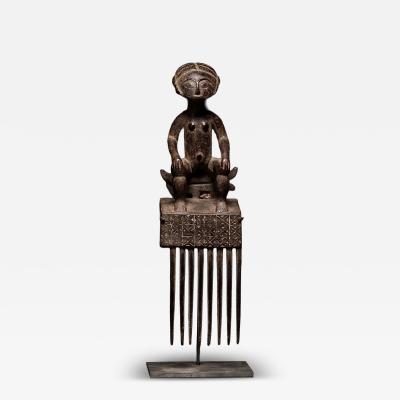
Ashanti Comb representing Female sitting Figure, Ghana
-
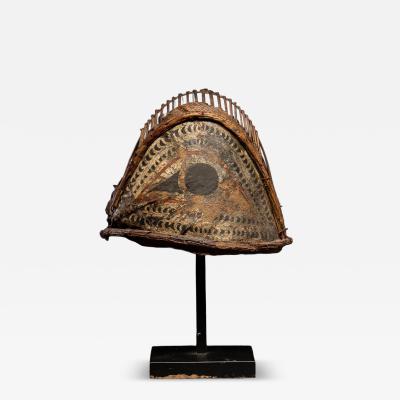
Vanuatu Hat, New Hebrides Wickerwork
-
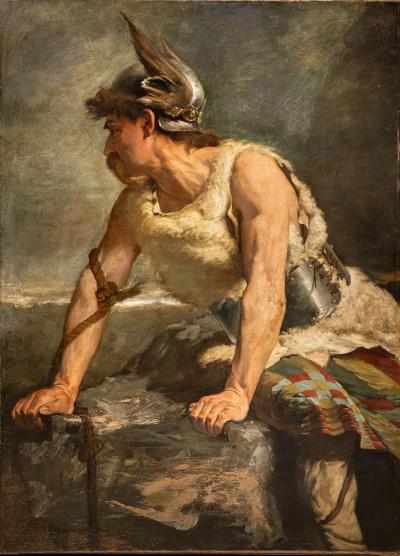
19th Century Portrait of a Germanic Warrior Chief Wearing a Winged Helmet
-
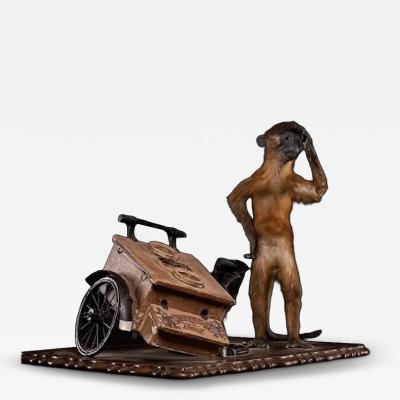
A taxidermy Golden-bellied Mangabey Monkey mounted on a wooden plinth
-
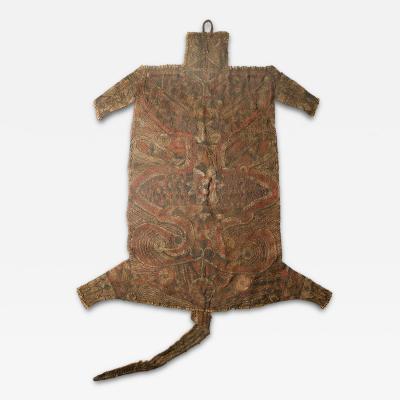
Framed Mafo embroidered Leopard skin, 'guop n'gui koko', Bamileke People
-
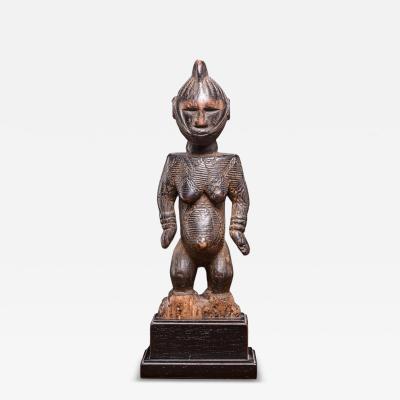
Igala scarified Maternity with infant on her back, Nigeria
-
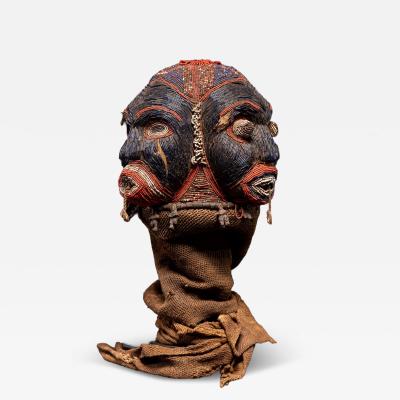
Bamileke Triple Cult head embroidered with dark blue European Glassbeads
-
Lozi Wood and Bone Flywhisk with inlaid facial sculpture, Zambia

-
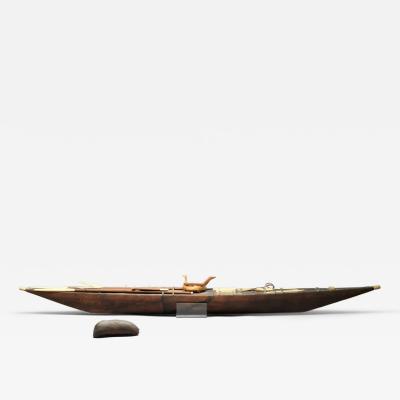
Inuit Model Kayak. Wooden frame covered with seal skin, lined with bone
-
18th C Vanitas (Memento Mori) Bust carved in marble, Italy

