






Showrooms
Agate Snuffbox With Two Compartments In A Gold Mount Germany, Dresden
-
Description
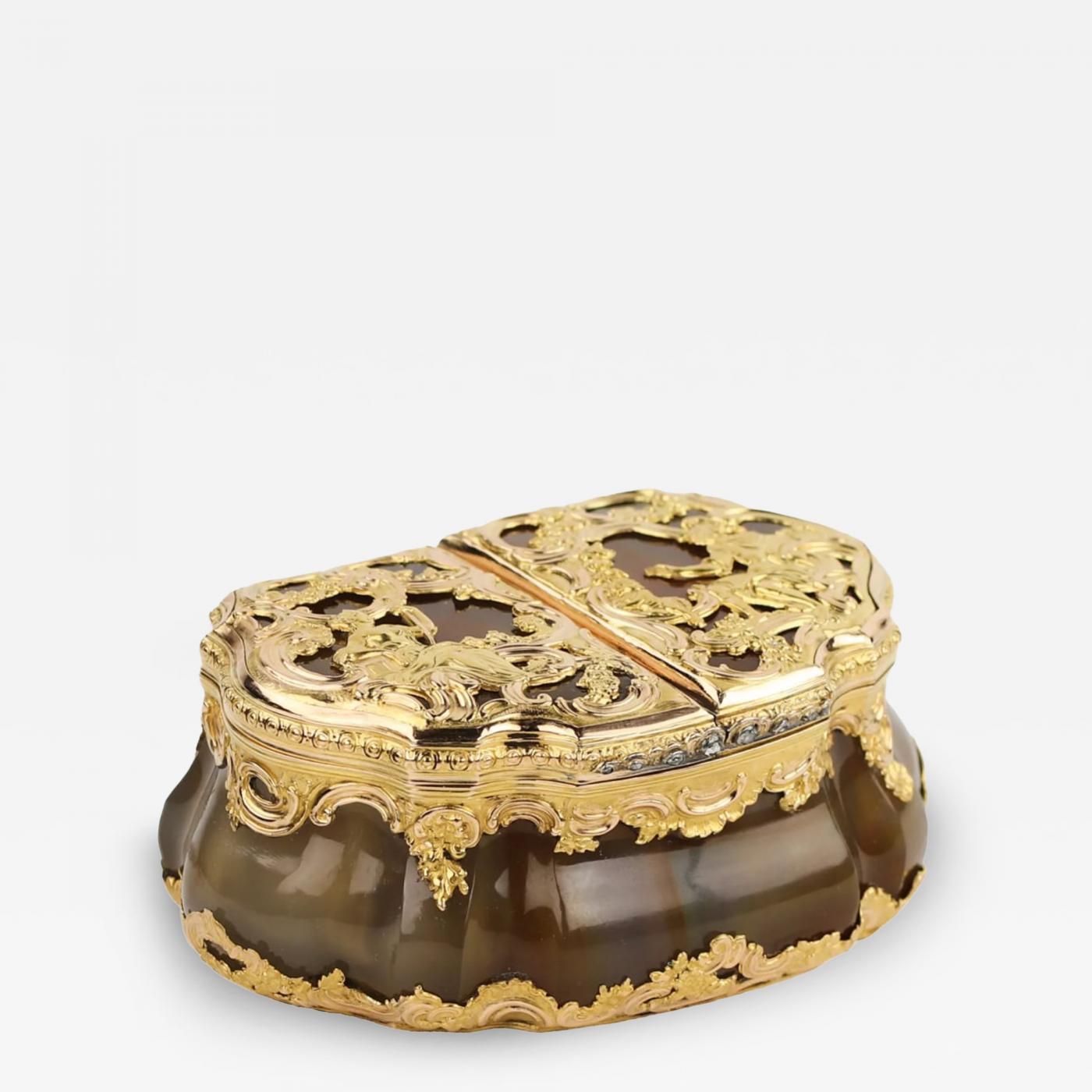
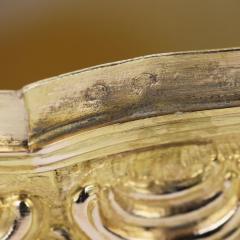
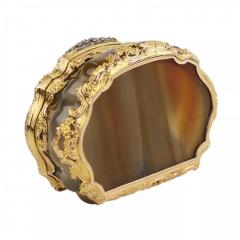
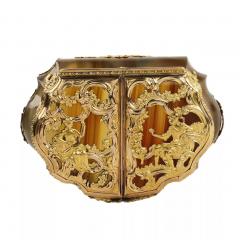
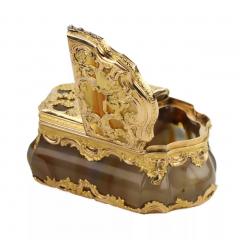
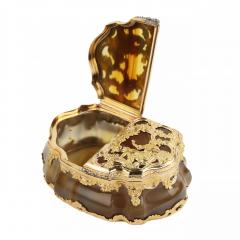
A masterpiece of 18th century jewellery art, a rare double-compartment snuffbox carved from solid natural agate and mounted in 18 carat gold. The exceptional combination of precious materials, virtuoso execution and a carefully conceived mythological subject makes this object an outstanding example of Rococo decorative art. The body is entirely formed from monolithic agate, without the use of veneers or applied stone elements. The stone is meticulously carved and polished, revealing an expressive natural structure with smooth transitions from smoky grey and olive tones to rich honey-amber hues, creating a striking sense of depth and inner luminosity. Such a level of workmanship was achievable only through the use of high-quality stone of considerable size, underscoring the prestigious nature of the commission. The snuffbox features a complex dual-compartment construction with two independent hinged lids, a rare and technically demanding solution for the mid-18th century. This structural feature is directly linked to the object's iconographic programme and allegorically refers to the myth of Venus and Adonis, symbolising separation, death and ultimate reunion as an image of eternal love and cyclical renewal of nature. The exterior of the lids is adorned with high-relief gold compositions depicting Venus and Adonis surrounded by Cupids. The scenes are set within asymmetrical Rococo cartouches and enriched with elaborate floral and foliate ornament. The sculptural treatment is distinguished by strong plasticity, refined modelling of the figures and meticulous attention to decorative detail, characteristic of court art of the Rococo period. The interior of both compartments is likewise fully carved from agate and preserves the stone's natural pictorial pattern, without any metal liners. The ceremonial character of the object is enhanced by old-cut diamonds set into the front sections of the lids. The central and lower bands of the body are decorated with applied gold garlands and Rococo scrolls, harmoniously uniting stone and metal into a cohesive artistic ensemble. Marks: Two Paris import gold marks, owl in an oval, early 19th century.Dimensions: 10.3 x 7.2 x 4.5 cm.Weight: 260 g.Condition: In good collectible condition. No visible defects, fully consistent with the period of creation.
Snuffboxes carved from solid semi-precious stone and mounted in gold occupied a privileged position within the hierarchy of personal luxury objects among the European aristocracy of the 18th century. During the Rococo period, such objects were perceived not merely as utilitarian accessories, but as markers of social status, refined taste and affiliation with court culture. Snuffboxes carved from monolithic agate were especially valued, as working a single block of stone required exceptional skill and access to rare material of suitable size and quality. Mid-18th century Dresden was one of the leading artistic centres of Europe. Under the Saxon court, a refined tradition of decorative art developed, focused on the synthesis of goldsmithing, hardstone carving and sculpture. Artisans working in this milieu created objects in which the natural expressiveness of stone was combined with the sculptural plasticity of gold, transforming functional items into complete artistic statements. The choice of the myth of Venus and Adonis reflects the Rococo fascination with classical mythology as a source of allegorical imagery. The story of tragic love, death and rebirth was interpreted as a poetic metaphor for the cyclical rhythms of nature, sensuality and the transience of beauty. The dual-compartment construction of the snuffbox reinforces this symbolic programme, elevating the object to a rare example of jewellery conceived with a coherent iconographic concept. Such snuffboxes, distinguished by complex construction, the use of old-cut diamonds and high-relief gold decoration, were intended for a narrow circle of wealthy and educated patrons, often closely associated with court life. Today, they are regarded as museum-level objects and rare testimonies to the flourishing of European Rococo jewellery art, represented in major museum and private collections. -
More Information
Period: 18th Century Condition: Good. In good collectible condition. No visible defects, fully consistent with the period of creation. Styles / Movements: Rococo Dealer Reference #: 12175 Incollect Reference #: 883204 -
Dimensions
W. 4.06 in; H. 1.77 in; W. 10.31 cm; H. 4.5 cm;
Message from Seller:
Maison ANTIQON invites you to discover our exceptional collection of fine art and antiques at our premier showrooms, Maison ANTIQON in Nice, France, and Antikvariāta Centrs in Riga, Latvia. For inquiries, private appointments, or to explore our curated international heritage, please reach out to us directly at info@antiqon.com or via phone at +33 6 30 17 47 17.
More Listings from Antiqon View all 218 listings
-
Meissen Porcelain Figure Boy With A Goat. Allegory Of Autumn
-
Silver Cognac Set With Four Gilt Shot Cups And Tray. Ivan Khlebnikov
-
Meissen Porcelain Figure Of A Lapdog Germany, Meissen

-
Pair Of Monumental Neo-Baroque Bronze Candelabra. Europe.
-
Gilt Bronze And Brass Desk Lectern. Europe, 20th Century
-
Pair Of French Silver-Mounted Glass Wine Ewers. Tetard Freres. Paris

-
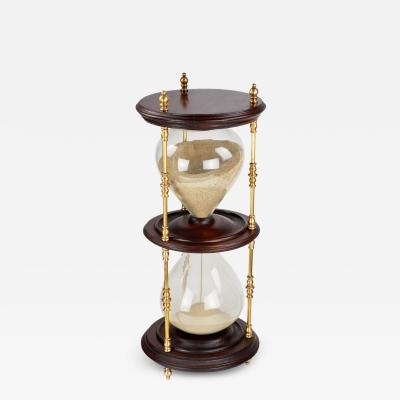
Hourglass. Europe, Late 19th Century
-
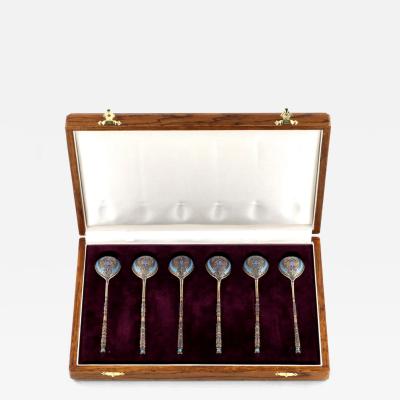
Set Of Six Cloisonne Enamel Silver Teaspoons In A Presentation Case.
-
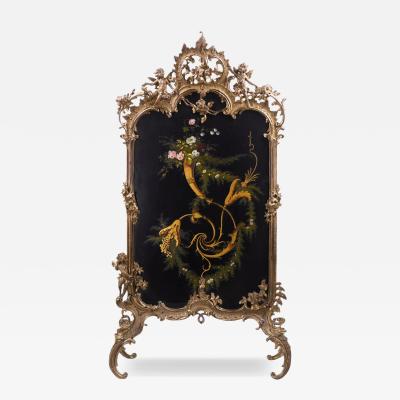
Fireplace Screen In The Neo Rococo Style. Eisenwerk Lauchhammer Germany
-
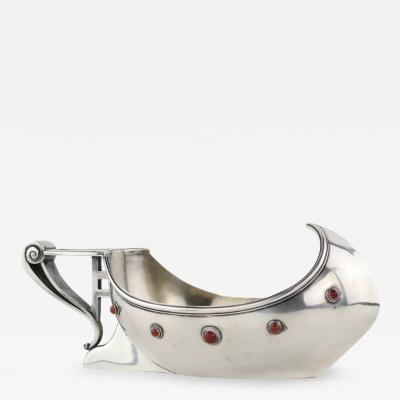
Russian Presentation Silver Kovsh In Art Nouveau Style. Alexander Vyakova.
-
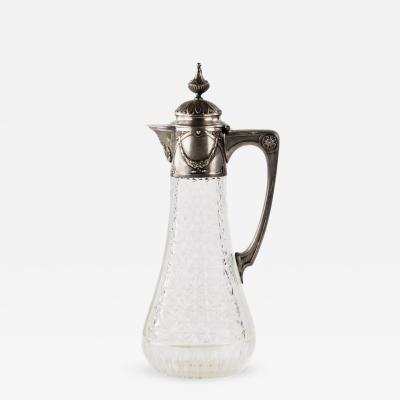
French Cut-Crystal And Silver-Mounted Ewer. Early 20th Century
-
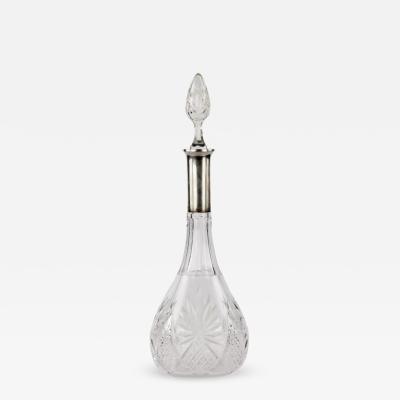
Crystal Decanter With Silver Mounted Neck. Germany
-
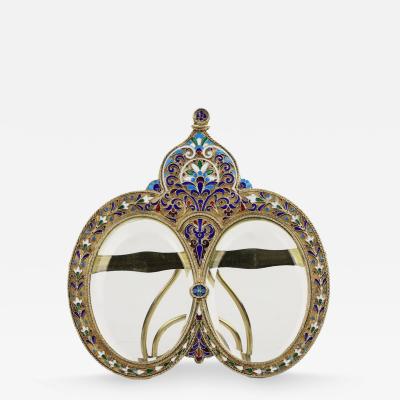
Silver Photo Frame With Polychrome Cloisonne Enamel.
-
Covered Neoclassical Cup. Robert Garrard II & Edward Burrows. England