





Showrooms
Elegant bronze bust of a woman, by Carrier-Belleuse, Paris, France, circa 1860
-
Description
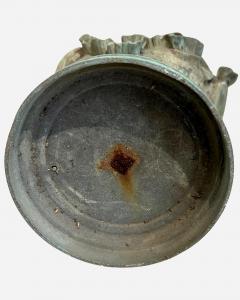
Very elegant bronze bust of a woman, made by Albert-Ernest Carrier-Belleuse in the second half of the 19th century. The sculpture, in perfect condition, has a lovely patina due to time which further accentuates the grace and finesse of the face and the details of the clothing and hairstyle, particularly neat. Flowers and foliage delicately hide the model’s chest.
Signed intaglio in the font « Carrier-Belleuse ».
Height: 39 cm (15.35 inches)
Width: 20 cm (7.87 inches)
Depth: 13 cm (5.12 inches)
Base diameter: 12 cm (4.72 inches)
Biography : Albert-Ernest Carrier-Belleuse (1824 – 1887)
Albert-Ernest Carrier de Belleuse, known as Carrier-Belleuse, sculptor, is one of the most prolific artists of the 19th century and knows the greatest successes under the Second Empire, benefiting from the personal support of Napoleon III.
Son of Louis-Joseph-François Carrier de Belleuse, notary, and Louise-Françoise-Eulalie Eudelinne, Albert-Ernest Carrier de Belleuse was born on June 12, 1824 in Anizy-le-Château, in the Aisne. His father died in 1834, leaving the family in a precarious situation. The brothers François and Etienne Arago, cousins of the family, then took charge of his education. In 1837, the young Carrier-Belleuse began an apprenticeship in the workshop of the chaser Bauchery, then with the goldsmith Jacques Henri Fauconnier (1776-1839).
Through François Arago, he met the sculptor David d’Angers who helped him gain admission to the École des Beaux-Arts. Carrier-Belleuse entered on April 1, 1840. Noted for his skill by the great bronze houses of Paris such as Barbedienne and Denière, he soon received numerous commissions for models for candelabras, clocks, fireplace ornaments, etc.
In 1848, probably at the initiative of François Arago, president of the “executive commission” (Provisional Government), Carrier-Belleuse received his first public commission for a small statue of Mademoiselle Rachel singing La Marseillaise. It was at this same time that his relationship with Anne-Louise Adnot (1821-1903), a watercolourist and widow of Baudesson, an art dealer, began, whom he married on 9 July 1851 in London. That same year, he took part in the Salon des artistes français for the first time, where he presented two bronze medallions.
From 1851 to 1855, Carrier-Belleuse stayed in England, where he worked as director of the modelling and drawing school at Mintons, a large porcelain manufacturer.
Back in France, he settled in Paris in a large studio located at 15 rue de la Tour d’Auvergne. From 1857 onwards, he regularly sent works to the Salon and became famous thanks to the success of large marbles, such as the Bacchante (1863), acquired by Napoleon III. At the same time, Carrier-Belleuse acquired a great reputation for his terracotta busts that were reminiscent of those of 18th century artists. He created busts of a large number of celebrities of his time: Napoleon III, Renan, Thiers, Grévy, Arago, Théophile Gautier, Honoré Daumier, among others. He also modeled many fantasy busts of mythological inspiration and created a series of portraits of great historical and artistic figures such as Mary Stuart, Shakespeare and Mozart.
Carrier-Belleuse also devoted himself greatly to decorative sculpture and contributed to the decorations of many important buildings: in Paris, the caryatids of the Théâtre de la Renaissance, the pediment of the entrance to the Banque de France, the decoration of the Hôtel de la Païva, in Bucharest, the statue of Michel le Brave, in Buenos Aires, the tomb of José de San Martin…. He worked for the goldsmiths Froment-Meurice and Christofle.
From 1961, Carrier-Belleuse was part of the committee of the Société Nationale des Beaux-Arts. In 1873, he participated in the construction of the Paris Opera directed by his friend Charles Garnier and created the two monumental torches that flank the grand staircase, in the main hall and the caryatids of the chimney of the grand foyer. In 1875, Carrier-Belleuse was appointed director of art works at the Manufacture de Sèvres. He gave it a very modern impetus that manifested itself in the creation of a complete range of vases.
Carrier-Belleuse died at the age of 62, in Sèvres, at the factory, on June 3, 1887.
Carrier-Belleuse employed and trained many talented young artists in his studio on rue de la Tour d’Auvergne, including Alexandre Falguière, Jules Desbois, Eugène Delaplanche, Jules Dalou, but above all, from 1864, Auguste Rodin, whose “master” he was. Carrier-Belleuse’s influence on his student—his taste, in particular, for 18th-century art—is particularly noticeable in Rodin’s early works. The most emblematic work of Carrier-Belleuse’s collaboration with Rodin is undoubtedly the Pedestal of the Titans, a copy of which can be seen in Paris at the Musée Rodin, designed by Carrier-Belleuse and executed by Rodin but signed only with the master’s name, as was the custom at the time. In 1882, Rodin created a terracotta bust of Carrier-Belleuse, which he exhibited at the Salon the same year and the original of which is now in Stanford, California. -
More Information
Documentation: Signed Origin: France Period: 19th Century Materials: Bronze Condition: Good. Wear consistent with age and use Creation Date: Circa 1860 Styles / Movements: Traditional Incollect Reference #: 778921 -
Dimensions
W. 20 in; H. 39 in; D. 13 in; Diam. 12 in; W. 50.8 cm; H. 99.06 cm; D. 33.02 cm; Diam. 30.48 cm;
Message from Seller:
Catherine Canavese is an expert from the "Compagnie Nationale des Experts." She is an astute antique dealer and offers to connoisseurs, dealers and private customers a curated selection of objects, furniture, sculptures, lamps and decorative elements of the XIXth up to the XXIth century, all original and of the best quality. The gallery has been in operation since 2001.
Sold
More Listings from Galerie Canavèse View all 451 listings
-
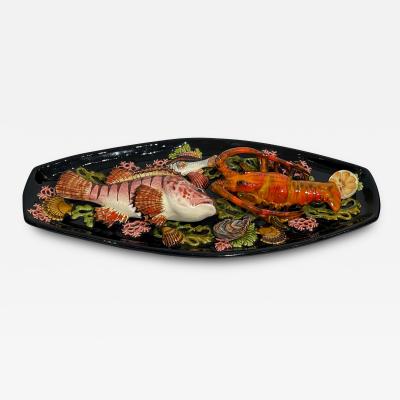
Majolica dish decorated with sea animals Poterie de Vallauris, France circa 1960
-
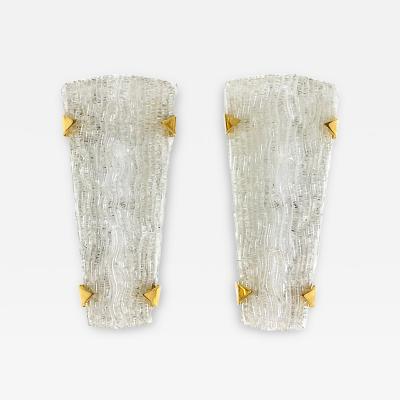
Pair of glass lighting sconces, Editions Maison Arlus, Paris, France, circa 1960
-
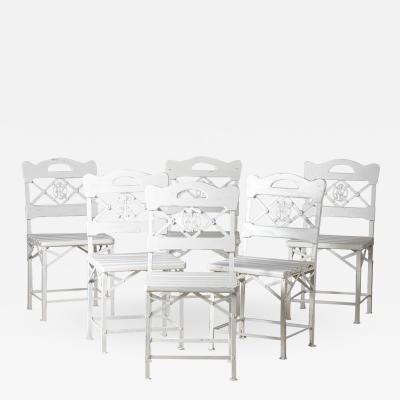
La Restauration garden chairs, France, circa 1880
-
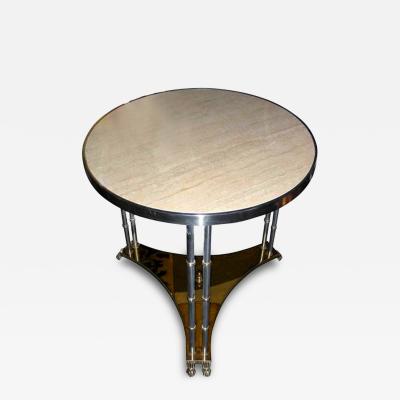
High pedestal table in travertine by Maison Jansen, Paris, France circa 1980
-
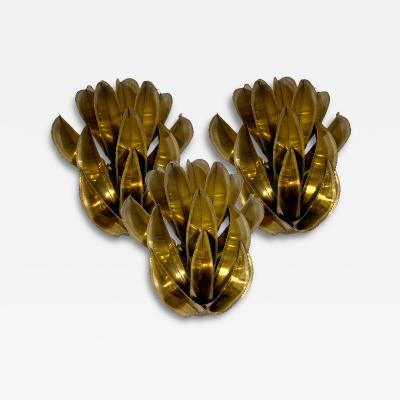
Set of three “agave” sconces attributed to Christian Techoueyres France 1970
-
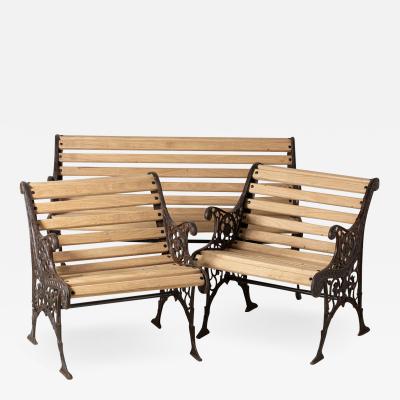
Garden set in cast iron and wood, France, circa 1930
-
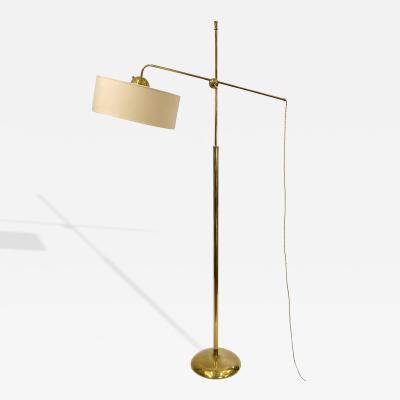
Polished brass floor lamp in the style of Robert Mathieu, France circa 1950
-
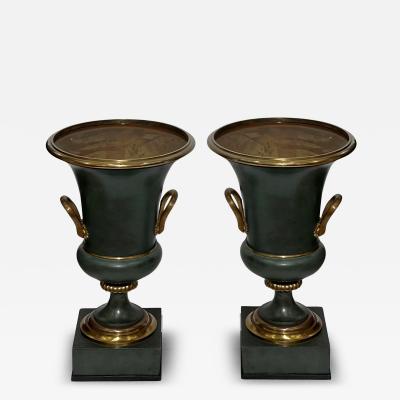
air of Medici-style Empire vase-lamps, France, circa 1940
-
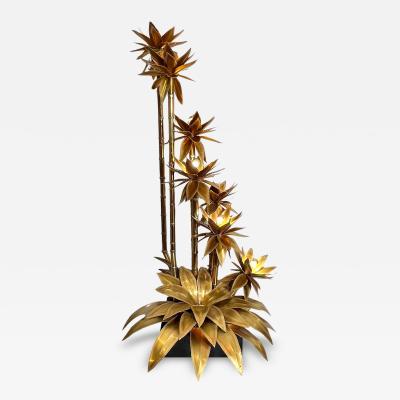
Large “Agave” floor lamp attributed to Christian Techoueyres, France circa 1970
-
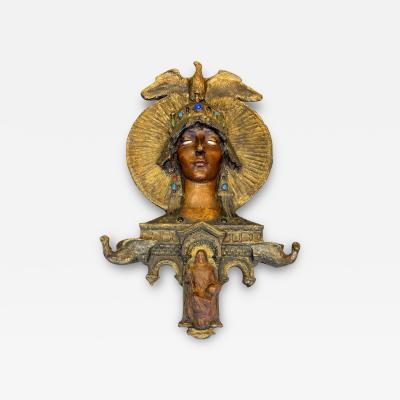
“Theodora, Florentine medallion” in plaster cast, by Jean Rivière, France, 1891
-
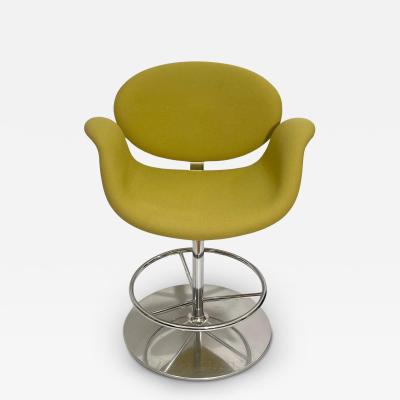
"Little Tulip" swivel chair with footrest, Pierre Paulin, Netherlands circa 1960
-
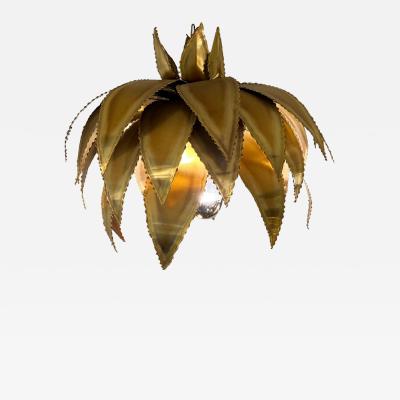
Solid brass "Agave" pendant light, Christian Techoueyres, France, circa 1970
-
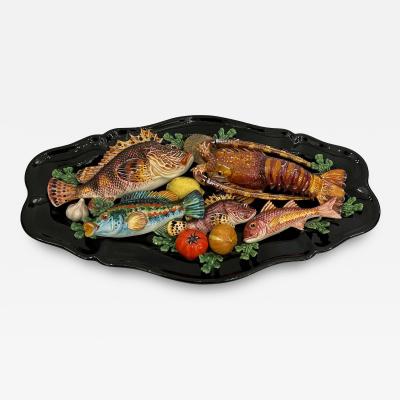
Large dish decorated with sea animals, Poterie de Vallauris, France, circa 1960
-
Medici-style Empire vase-lamp, France, circa 1940