







Offered by:
Solomon Treasure
1050 Second Ave
New York City, NY 10022 , United States
Call Seller
917.686.9732
Showrooms
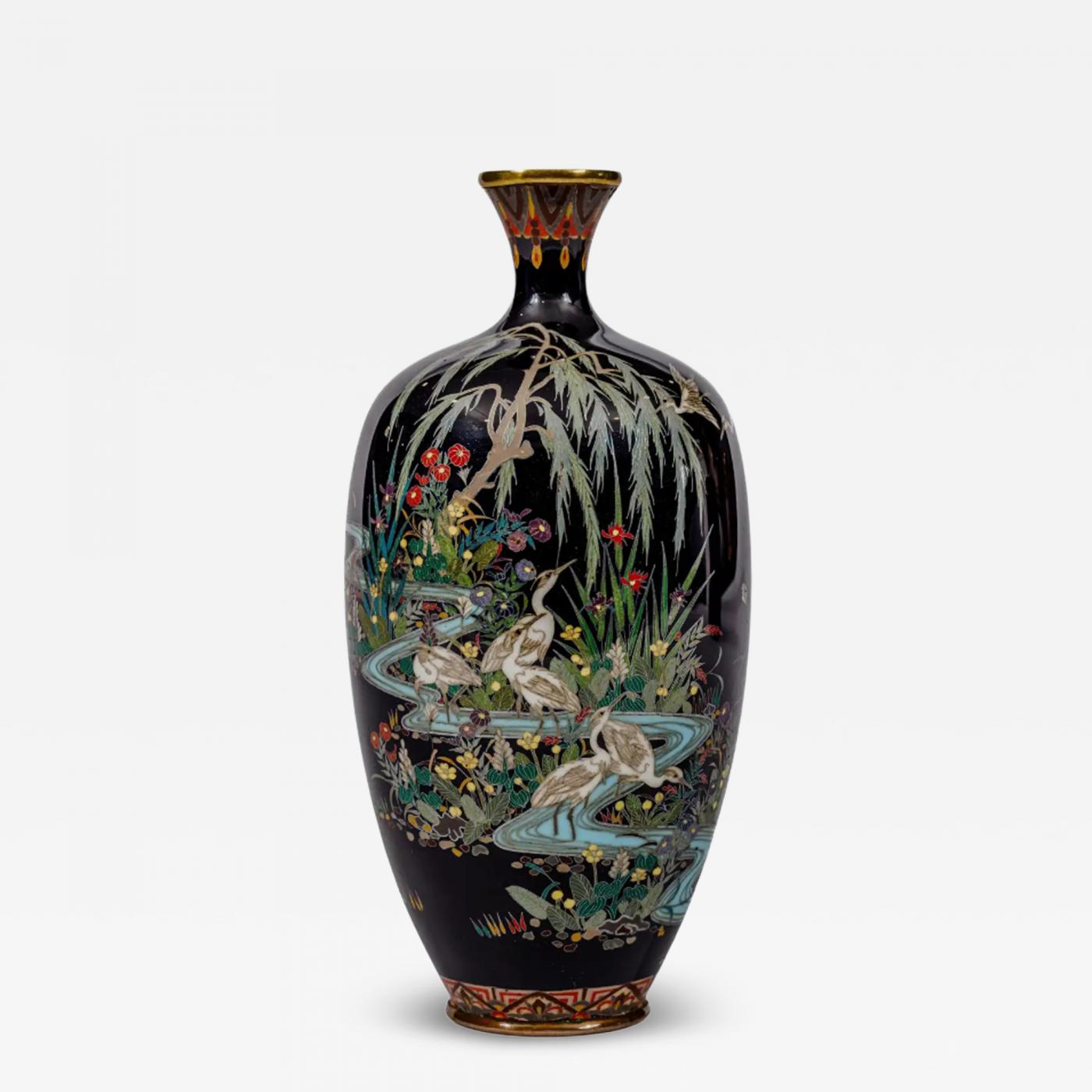
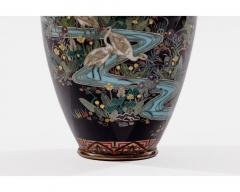
Japanese Cloisonné Enamel Vase Attributed to Hayashi Kodenji with Cranes
-
Description
A highly refined and important example of Japanese cloisonné enamel from the Meiji period (1868–1912), attributed to Hayashi Kodenji, one of the most influential pioneers in the development of modern cloisonné during the late nineteenth century.
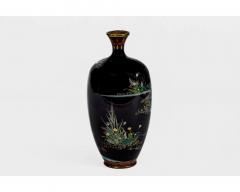
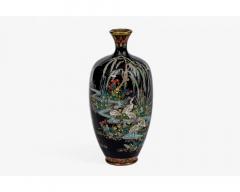
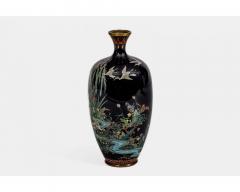
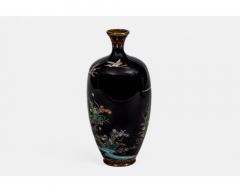
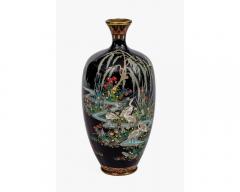
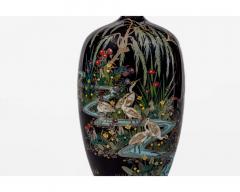
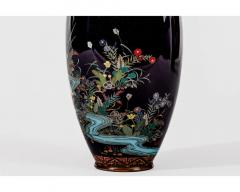
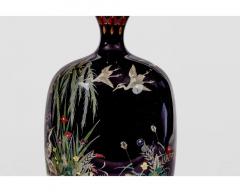
The vase is of elegant baluster form, set against a deep, mirror-like black enamel ground that provides a dramatic field for a richly detailed pictorial landscape. The composition depicts cranes poised along a gently winding stream beneath cascading willow branches, surrounded by flowering plants and natural grasses. The scene unfolds with remarkable fluidity across the surface, creating a miniature world of quiet movement and poetic balance—an interpretation of nature that reflects the highest aesthetic ideals of the Meiji period.
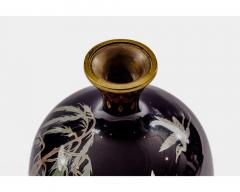
Executed in exceptionally fine silver cloisonné wire, the work represents a level of technical sophistication reserved for the finest examples of the period. The use of silver wire—far more costly and technically demanding than standard copper—allows for extraordinarily delicate outlines and an almost painterly precision in the rendering of the cranes, flowing water, foliage, and blossoms. The fineness of the wirework, combined with the controlled application of enamel, achieves a level of detail and subtlety rarely encountered, even among high-quality cloisonné.
Such extensive use of silver wire was typically confined to the most accomplished workshops due to both the expense of the material and the advanced skill required to manipulate it successfully. Works of this caliber were produced in limited numbers and today are highly sought after for their rarity and exceptional craftsmanship.
Hayashi Kodenji played a pivotal role in establishing Nagoya as a center for cloisonné production, advancing both technical and artistic standards during the early Meiji period. Works attributed to his workshop are represented in major museum collections, including the Metropolitan Museum of Art and the Victoria and Albert Museum, where they are celebrated for their refined compositions and technical mastery.
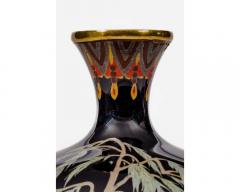
The neck and foot are finished with precisely executed geometric borders, framing the central scene while preserving the vase’s elegant proportions. The overall balance between intricate detail and open ground reflects a sophisticated understanding of composition and restraint.
A museum-quality work of considerable refinement and importance, this vase exemplifies the pinnacle of Meiji period cloisonné—uniting rare materials, masterful technique, and a beautifully composed naturalistic vision.
6.5" high x 3" diameter
Good condition. No damage noted. -
More Information
Origin: Japan Period: 19th Century Materials: Copper, Enamel Condition: Good. Good condition. No damage noted. Styles / Movements: Asian, Traditional Patterns: Asian/Oriental Incollect Reference #: 855755 -
Dimensions
H. 6.5 in; Diam. 3 in; H. 16.51 cm; Diam. 7.62 cm;
Message from Seller:
For four generations, Solomon Treasure has built a distinguished reputation for offering rare and important 18th-19th century antiques and fine art, serving museums, collectors, and designers worldwide. Located in the heart of Manhattan, we specialize in exceptional pieces ranging from Napoleon Neoclassical to Art Deco and Middle Eastern Islamic treasures. Contact: Mory Talasazan, Director | mory@solomontreasureny.com | 917.686.9732 |
More Listings from Solomon Treasure View all 174 listings
-
1876 Centennial Exhibition, J & L. Lobmeyr Ormolu Mounted Ruby Glass Centerpiece
-
Rare One-of-a-Kind Buccellati Sterling Silver Polo Trophy for Boca Raton Polo
-
A Massive Museum Pair of Meiji Period Japanese Cloisonne Enamel Chargers Plates
-
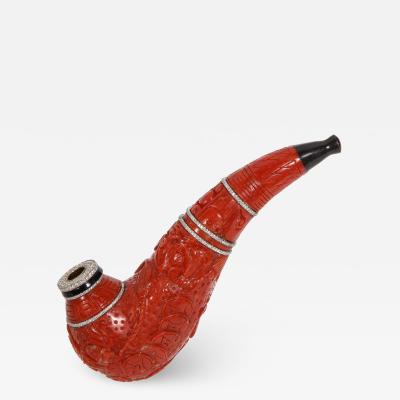
Contemporary Coral, 18k Gold, Diamonds, and Onyx Pipe
-
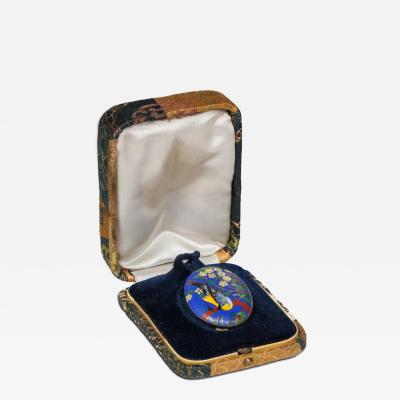
A Rare Alexis Falize Antique Gold and Cloisonné Enamel Locket, Circa 1867
-
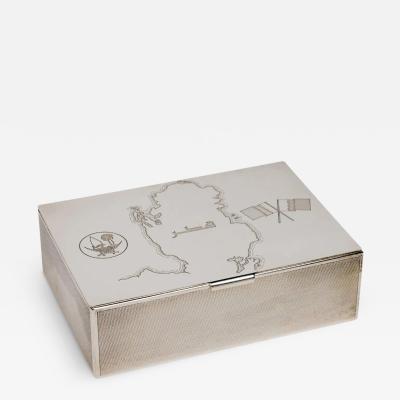
State of Qatar and Grant Macdonald, a Rare Silver Humidor Box
-
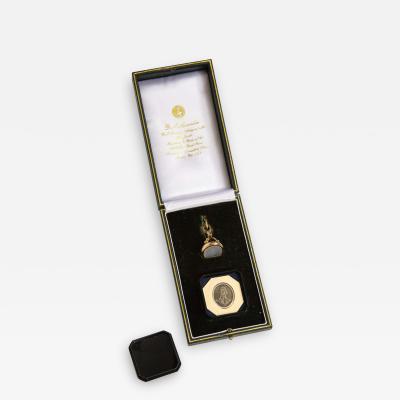
A Rare American Gold Intaglio Seal of George Washington, Early 19th Century
-
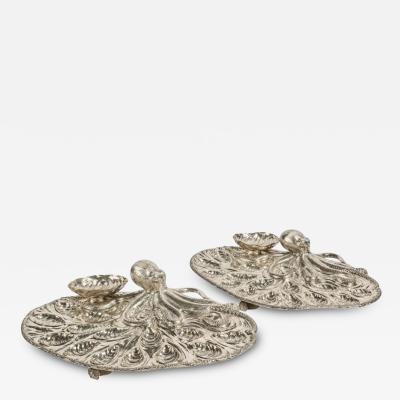
Rare Pair of Mario Buccellati Italian Silver Marine-Themed Oyster Platters
-
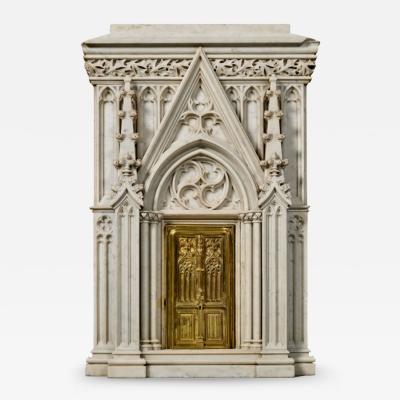
A Rare Monumental Italian Carved Carrara Marble Model of A Cathedral
-
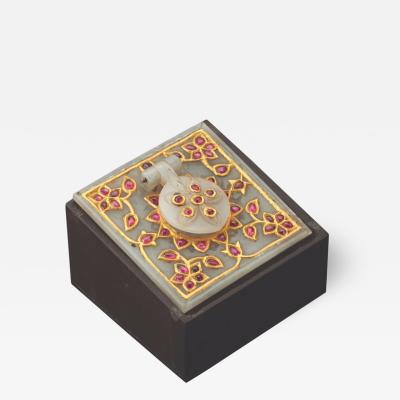
Al Thani Collection, a Mughal Indian Square White Jade Inkwell Cover, circa 1800
-
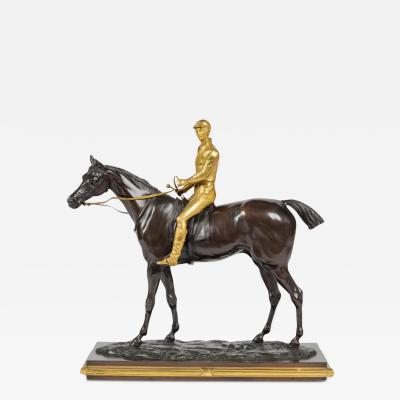
Isidore-Jules Bonheur, A Rare Gilt and Patinated Bronze Jockey on A Horse
-
Monumental Meiji Period Japanese Cloisonne Enamel Jardiniere
-
A Rare 1924 ‘King Fouad I’ Box by René Lalique
-
Sanford Robinson Gifford (American 1823-1880), A Rare Portrait Of Mrs. Sanford

