
















Showrooms
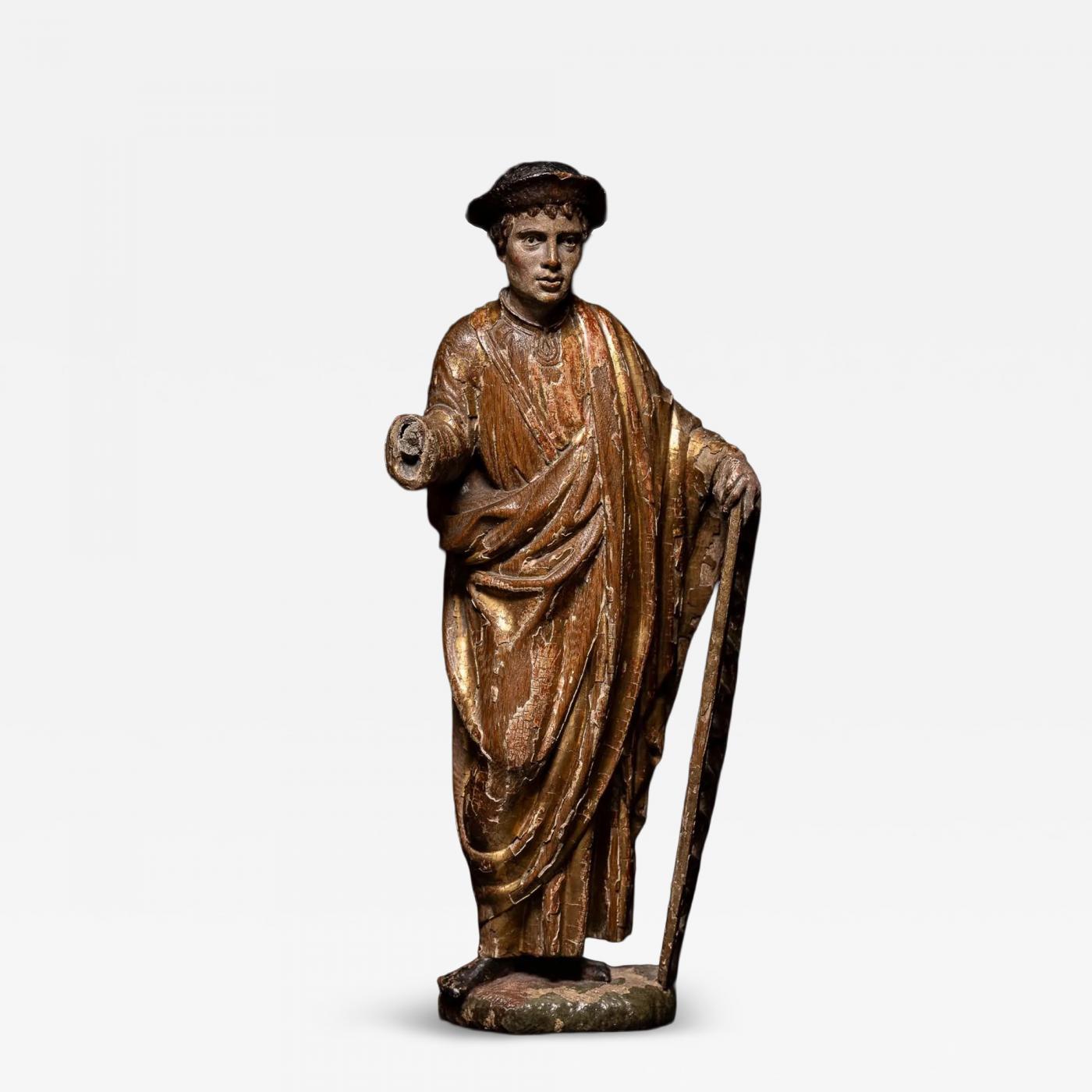
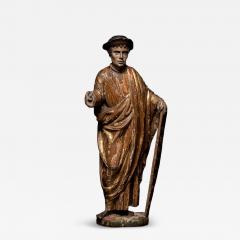
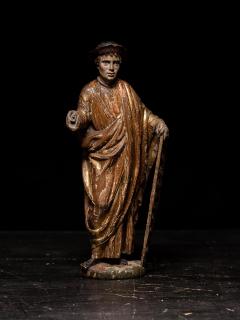
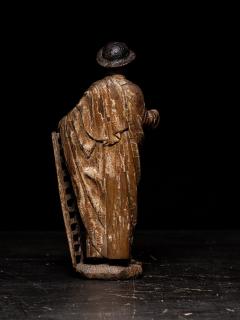
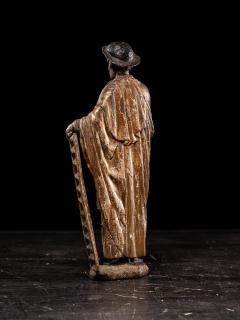
Polychromed Statue representing Sint Alexis of Edessa.Flemish school, Belgium
-
Description
late 16th Century
Wood
45 x 20 x 7 cm
17 3/4 x 7 7/8 x 2 3/4 in
12008
€ 7,500.00
The Greek version of his legend made Alexius the only son of Euphemianus, a wealthy Christian Roman of the senatorial class. Alexius fled his arranged marriage to follow his holy vocation. Disguised as a beggar, he lived near Edessa in Syria, accepting alms even from his own household slaves, who had been sent to look for him; they did not recognize him] until a miraculous icon of the Blessed Virgin Mary singled him out as a "Man of God.Fleeing the resultant notoriety, he returned to Rome, so changed that his parents did not recognize him, but as good Christians took him in and sheltered him for seventeen years, which he spent in a dark cubbyhole beneath the stairs, praying and teaching catechism to children. After his death, his family found a note on his body which told them who he was and how he had lived his life of penance from the day of his wedding, for the love of God.The life of St Alexius is recounted in a French poem, la Vie de saint Alexis, believed to date from the early or mid-11th century. This is regarded as one of the earliest works of French literature.
La version grecque de sa légende fait d'Alexis l'unique fils d'Euphemianus, un riche Romain chrétien de la classe sénatoriale. Alexis a fui son mariage arrangé pour suivre sa vocation sainte. Déguisé en mendiant, il a vécu près d'Édesse en Syrie, acceptant l'aumône même de ses propres esclaves domestiques, qui avaient été envoyés pour le chercher ; ils ne l'ont pas reconnu jusqu'à ce qu'une icône miraculeuse de la Bienheureuse Vierge Marie le désigne comme un "Homme de Dieu". Fuyant la notoriété qui en résultait, il est retourné à Rome, tellement changé que ses parents ne l'ont pas reconnu, mais en bons chrétiens, ils l'ont accueilli et abrité pendant dix-sept ans, qu'il a passés dans un coin sombre sous l'escalier, priant et enseignant le catéchisme aux enfants. Après sa mort, sa famille a trouvé une note sur son corps qui leur indiquait qui il était et comment il avait vécu sa vie de pénitence depuis le jour de son mariage, par amour pour Dieu. La vie de saint Alexis est racontée dans un poème français, "la Vie de saint Alexis", qui remonte au début ou au milieu du XIe siècle. Cela est considéré comme l'une des premières œuvres de la littérature française.
Die griechische Version seiner Legende stellt Alexis als den einzigen Sohn des Euphemianus dar, einem wohlhabenden christlichen Römer aus dem senatorischen Stand. Alexis floh vor seiner arrangierten Ehe, um seinem heiligen Beruf zu folgen. Verkleidet als Bettler lebte er in der Nähe von Edessa in Syrien und akzeptierte Almosen sogar von seinen eigenen Haussklaven, die geschickt wurden, um ihn zu suchen; sie erkannten ihn nicht, bis eine wunderbare Ikone der Seligen Jungfrau Maria ihn als "Mann Gottes" auswies. Um der daraus resultierenden Bekanntheit zu entkommen, kehrte er nach Rom zurück, so verändert, dass ihn seine Eltern nicht erkannten, aber als gute Christen nahmen sie ihn auf und beherbergten ihn siebzehn Jahre lang, die er in einem dunklen Winkel unter der Treppe verbrachte, betend und den Kindern Katechismusunterricht erteilend. Nach seinem Tod fand seine Familie eine Notiz auf seinem Körper, die ihnen mitteilte, wer er war und wie er sein Leben der Buße seit dem Tag seiner Hochzeit aus Liebe zu Gott gelebt hatte. Das Leben des heiligen Alexis wird in einem französischen Gedicht namens "La Vie de Saint Alexis" erzählt, das auf den Anfang oder die Mitte des 11. Jahrhunderts zurückgeht. Dies wird als eines der frühesten Werke der französischen Literatur angesehen.
Provenance
Private Collection Bruges Belgium -
More Information
Documentation: Signed Period: Pre 18th Century Materials: Wood Creation Date: Late 16th Century Styles / Movements: Traditional Incollect Reference #: 817579 -
Dimensions
W. 7.87 in; H. 17.72 in; D. 2.76 in; W. 20 cm; H. 45 cm; D. 7 cm;
Message from Seller:
Spectandum, a by-appointment gallery in Leuven, Belgium, can be reached at contact@spectandum.com 32475648678. The gallery specializes in Natural History, Ethnography, European works of art, antiquities, and rare curiosities sourced from around the world.
More Listings from Spectandum View all 175 listings
-
A cased taxidermy display of the Toad and Frog orchestra

-
Lozi Wood and Bone Flywhisk with inlaid facial sculpture, Zambia

-
Massim Pig charme sculpture, Trobiant

-
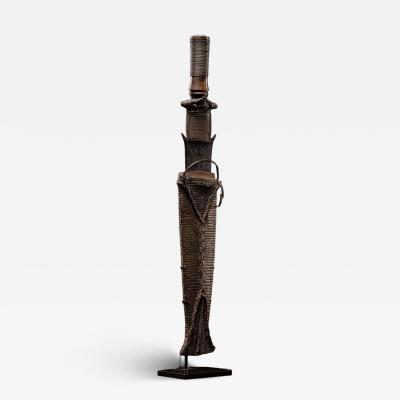
Fang Short Sword with wood and snakeskin Sheath, Gabon
-
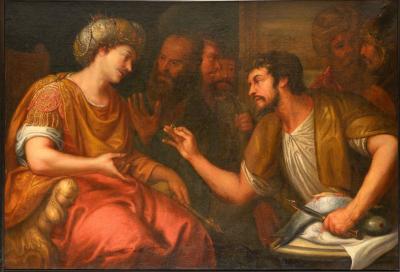
17th C The Ring of Polycrates, Tyrant of Samos, Circle of Antonio Molinari
-
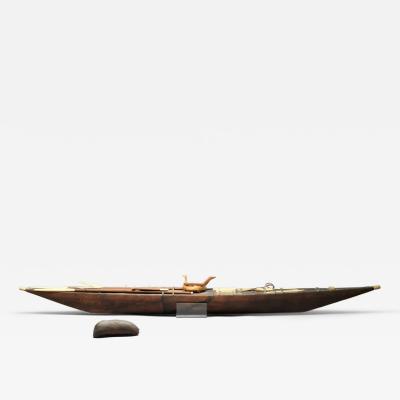
Inuit Model Kayak. Wooden frame covered with seal skin, lined with bone
-
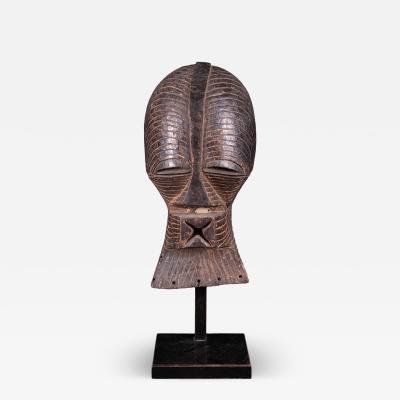
Female Kifwebe Mask with old collection label, Luba-Songye People, DR Congo
-
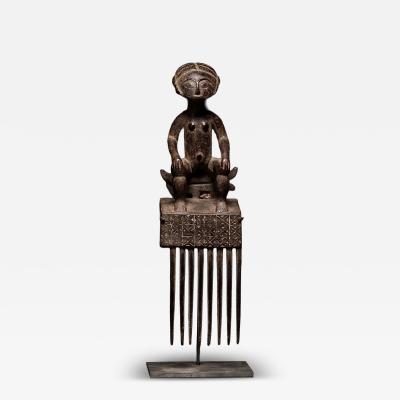
Ashanti Comb representing Female sitting Figure, Ghana
-
Japanese hard Wood Nyoi (Sceptre) with black rock finish
-
Didactical Horse Skull on a wooden museum stand (Equus ferus caballus NR)

-
A taxidermy Golden-bellied Mangabey Monkey mounted on a wooden plinth
-
Collection of 4 antique Vietnamese waterpipe bowls

-
Kundu Knive-brass wrapped and tacked Hilt - wooden brass decorated Sheath, DRC

-
Sunset over the Sea, Jan de Clerck (1891 - 1964), Oil on Unalit, Signed

