













Showrooms
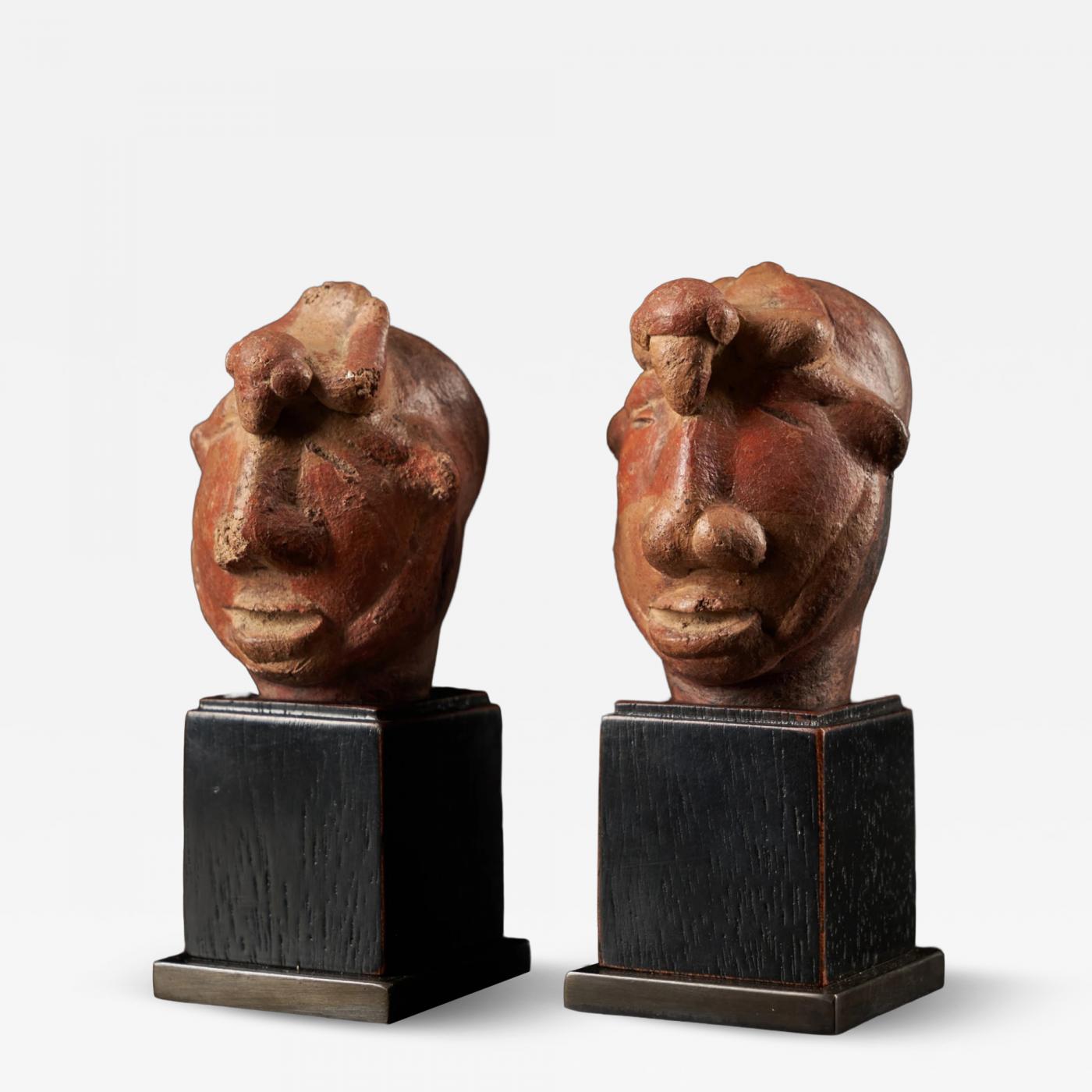
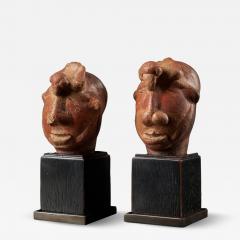
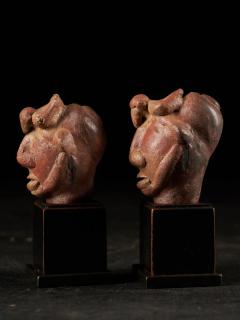
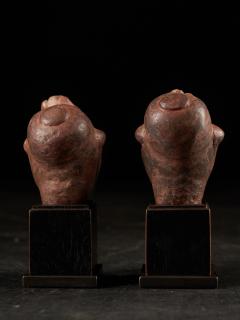
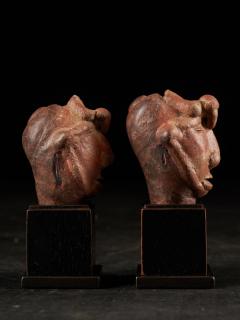
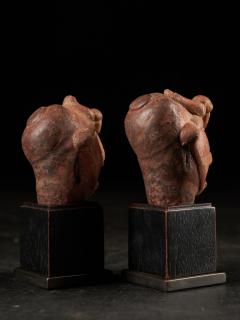
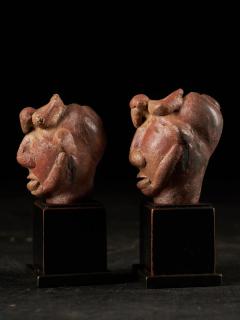
Set of two Mesoamerican Miniature Terracotta Head
-
Description
300-600 AD
Terracotta
11 x 6 x 6 cm
4 3/8 x 2 3/8 x 2 3/8 in
1698
€ 1,600.00
This small head of a ceramic figure with a bird headdress is probably Pre-Columbian. It seems to originate from the territory of present-day Mexico. Further research should reveal whether the fragment was made on Jaina Island. Can we situate it in the Late Classic Period, c. 600 – 850 AD? If the fragment indeed came from Jaina Island, it is most probably the head of a figurine that served as a burial gift. The clay figures, made by the artisans of Jaina, represented a broad spectrum of male and female professions, going from weavers, attendants, warriors, hunters, ballplayers, scribes, prisoners, dancers to musicians. Bird motifs were common in Mayan culture. They were often associated with the act of weaving, as they use twigs to build or weave their nests. They also could refer to hunting.
Cette petite tête en céramique avec une coiffe en forme d'oiseau provient du territoire de l'actuel Mexique. Il s'agit très probablement de la tête d'une figurine qui servait de cadeau funéraire. Les figurines en argile représentaient un large éventail de professions masculines et féminines, allant des tisserands, aux serviteurs, guerriers, chasseurs, scribes, prisonniers, danseurs et musiciens. Les motifs d'oiseaux étaient courants dans la culture maya. Ils étaient souvent associés à l'acte de tissage, car ils utilisent des brindilles pour construire ou tisser leurs nids. Ils pouvaient également renvoyer à la chasse.
Provenance
European Private Collection -
More Information
Period: Pre 18th Century Creation Date: 300-600 AD Styles / Movements: Traditional Incollect Reference #: 817268 -
Dimensions
W. 2.36 in; H. 4.33 in; D. 2.36 in; W. 6 cm; H. 11 cm; D. 6 cm;
Message from Seller:
Spectandum, a by-appointment gallery in Leuven, Belgium, can be reached at contact@spectandum.com 32475648678. The gallery specializes in Natural History, Ethnography, European works of art, antiquities, and rare curiosities sourced from around the world.
More Listings from Spectandum View all 172 listings
-
Collection of 6 Antique Chinese Opium Boxes enameled with decorative patterns

-
Early 20th C, DRC, Selection of three Bark cloth Beaters

-
A pair of 19th C cased Indian Tiger Trophies - Rowland Ward Bamboo style
-
Wooden sculpture of a Dancing Tengu, Late Edo–Meiji Period, Japan
-
Counter top Cigar store Northern American Indian statue, Unknown artist
-
Kongo People, DRC.Lidded Wicker Basket - Container
-
Decorative Ceramic Centerpiece Plate
-
21st C., Expressionism, Animal Painting, Auzoux's Troglodytes Gorilla's

-
17th C, Baroque, Hunting Scene, Wild Boar Hunt

-
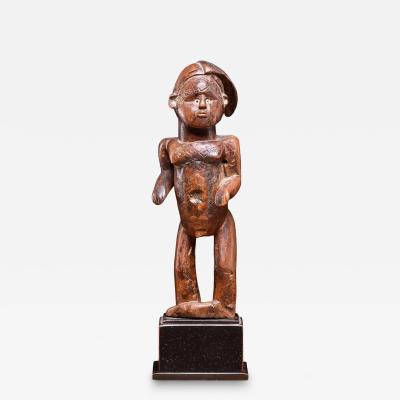
Bwende Standing Statue with scarified body, DRC
-
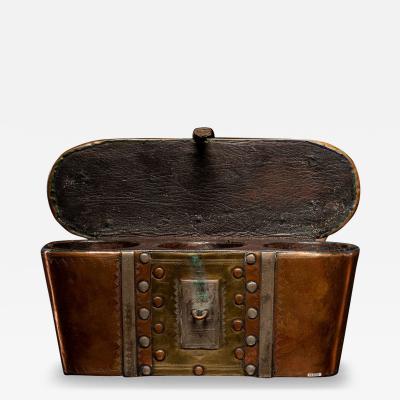
Tuareg Container, Welo Province, Ethiopia
-
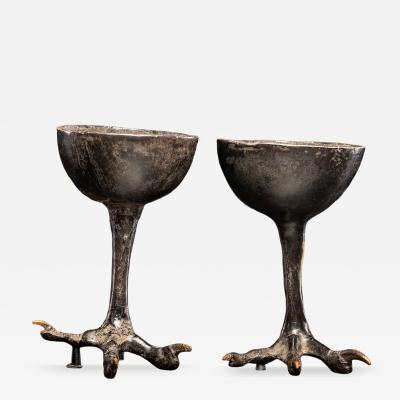
Two wooden witchcups mounted on birdlegs
-
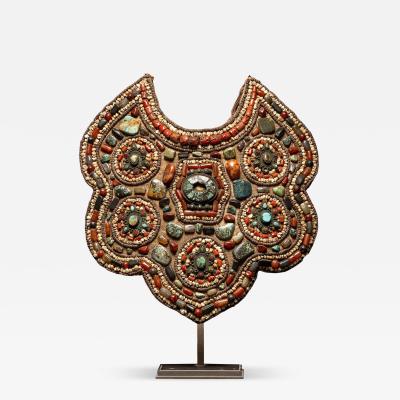
Tibetan antique Pectoral, Turquoise and Fossil Coral from Himalaya
-
Two vintage Danish Safari chair in tan leather by Kaare Klint for Rud Rasmussen

