



Offered by:
Thomsen Gallery
8 East 67th Street
New York City, NY 10065 , United States
Call Seller
212.288.2588
Showrooms
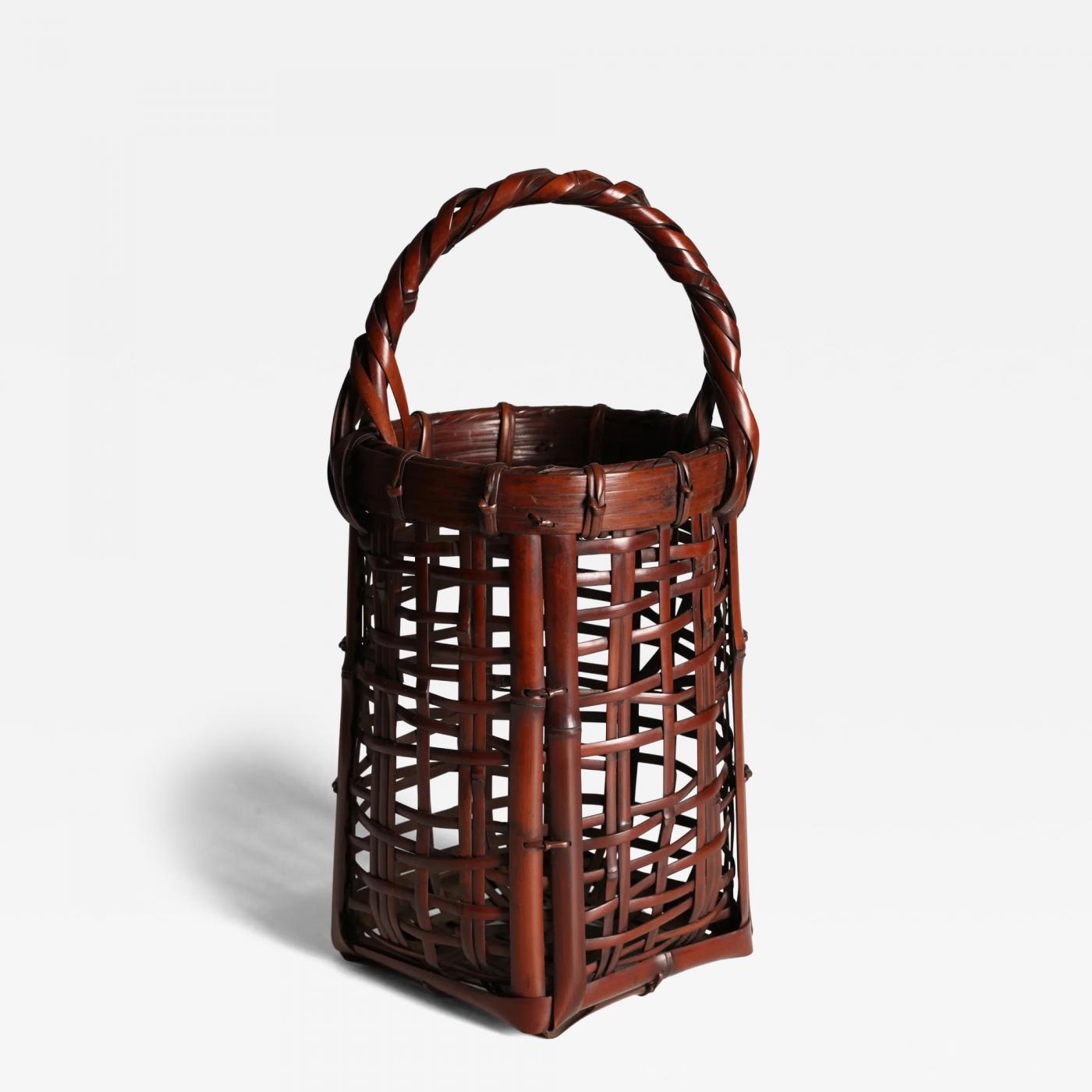
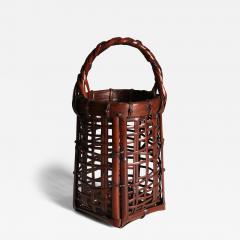
Handled Flower Basket Named “Well Head”, ca 1930
-
Description
Wada Waichisai III
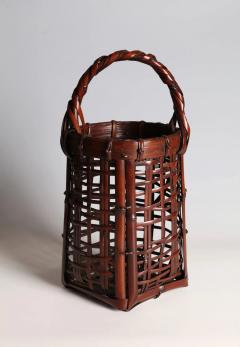
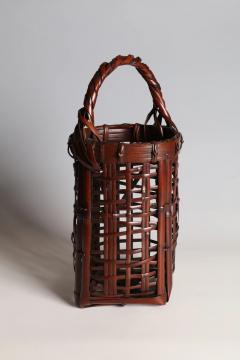
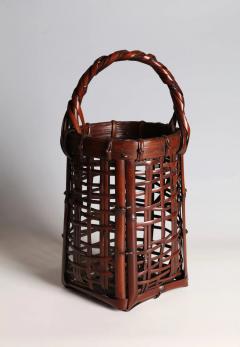
Handled Flower Basket Named “Well Head”, ca 1930
Bamboo and rattan
Size 19½ x 9 x 9 in. (49.5 x 23.5 x 23 cm)
T-5059
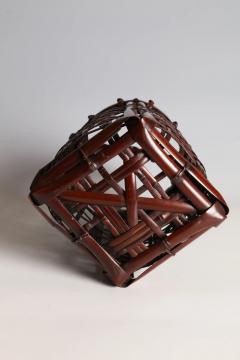
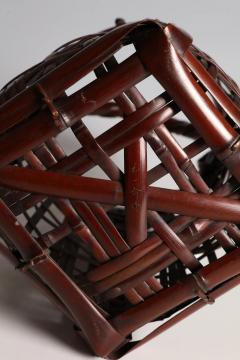
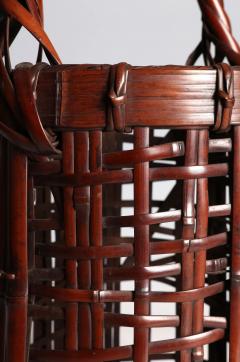
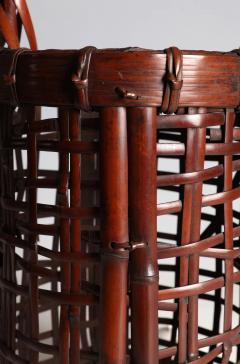
Plaited from hōbichiku bamboo (smoked nemagaridake, Sasa kurilensis, or other dwarf bamboo that has darkened through years of exposure to kitchen smoke) and rattan; free-style yotsume-ami (square plaiting), bending, twisting, wrapping, knotting
Signed underneath with incised characters: Waichisai saku 和一斎作
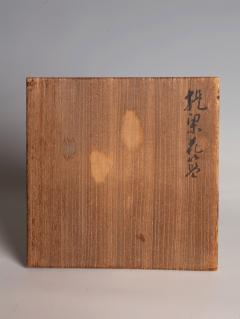
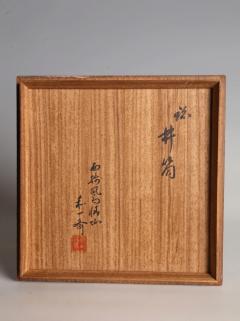
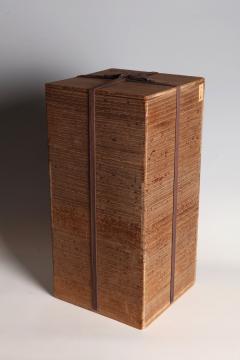
Comes with the original fitted wood tomobako storage box, inscribed outside: Teiryō hanakago (Handled flower basket); inscribed and signed inside Mei Izutsu Nishisetsu fūu jōshi Waichisai (Named "Well Head," in the moody wind and rain of western Settsu, Waichisai); sealed: Waichisai
The third Wada Waichisai (literally, “First in Japan,” also occasionally rendered as Waissai) was born into one of the most prestigious bamboo art lineages in the city of Sakai (now incorporated into present-day Osaka): indeed the first Wada Waichisai (1851–1901) is widely regarded as one of the two founders of Sakai basketry along with Hayakawa Shōkosai I (1815–1897), the former specializing in bamboo and the latter in rattan. Despite Waichisai I’s foundational role, few baskets can be securely attributed to him today.
Waichisai II, the artist’s father, relocated the family workshop to Arima in Hyogo Prefecture—a region known for its everyday basket production. His works are rare, but Wada Waichisai III’s baskets are well represented in major collections. Upon his father’s death in 1933, Waichisai III inherited the family name and continued working in Arima until the War, when he was forced to move to nearby locations such as Awaji Island and Kobe. The signature on the basket’s tomobako (storage box) includes the unusual phrase Nishisetsu fūu jōshi (“the moody wind and rain of western Settsu [Province]”), which likely refers to Arima; this poetic reference occurs on two boxes in the Naej Collection (shortly to be made available online), one of them dated 1933.
During the 1930s, Waichisai III embraced the avant-garde spirit that was transforming Japanese bamboo art. This was a vibrant period when bamboo works had just gained recognition in the prestigious Teiten national art salon, and department stores in major cities regularly hosted bamboo art exhibitions. Artists such as Tanabe Chikuunsai I and Yamamoto Chikuryōsai I in Sakai, Iizuka Rōkansai in Tokyo, and Waichisai III himself were actively expanding the expressive possibilities of the medium.
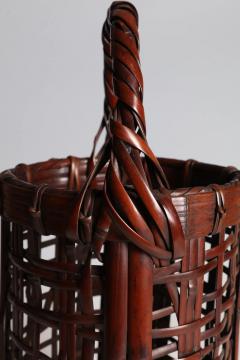
This basket, one of Waichisai III’s most striking works from this era, features bold, irregular plaiting, a richly patinated surface, and a dramatically twisted handle—elements that underscore his mastery and artistic confidence. The basket is titled Izutsu (“Well Head” or “Well Curb”), a name that reflects its shape, reminiscent of the protective railing around a traditional Japanese well. The title also alludes to the famous Noh play Izutsu, a ghost drama that explores the romantic longing between two childhood friends who once played by a well.
In naming the basket Izutsu, Waichisai III followed a growing trend among contemporary bamboo artists to give poetic titles to their works—titles that sometimes describe form but also evoke cultural and literary resonance. In this case, the name associates physical craftsmanship with emotional and narrative depth, reinforcing the basket’s place as both an object of decorative utility and a work of art. - More Information
-
Dimensions
W. 9 in; H. 19.5 in; D. 9 in; W. 22.86 cm; H. 49.53 cm; D. 22.86 cm;
Message from Seller:
Thomsen Gallery, now located at 8 East 67th Street, New York City, NY 10065, specializes in important Japanese paintings, folding screens, hanging scrolls, ceramics, ikebana bamboo baskets, lacquerware, and contemporary works by select artists. Owned and directed by Erik and Cornelia Thomsen, the gallery brings decades of expertise in Japanese art to a global clientele, including private collectors and major museums. For inquiries, contact them at 212-288-2588 or info@thomsengallery.com.
More Listings from Thomsen Gallery View all 198 listings
-
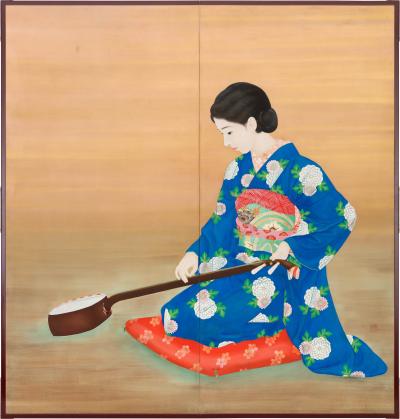
Shamisen Player, ca. 1930
-
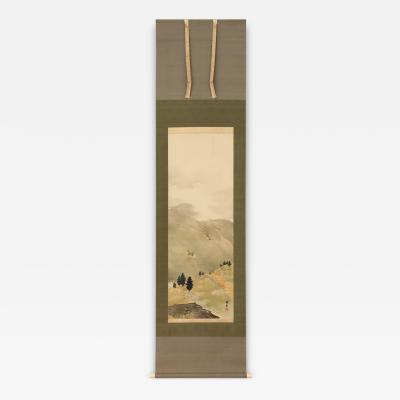
Oncoming Rain in a Mountain Valley, 1920s
-
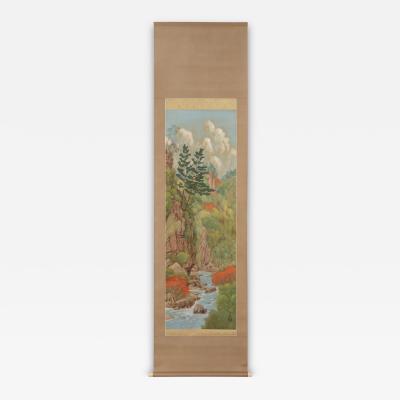
View of the Yabakei Gorge, 1920
-
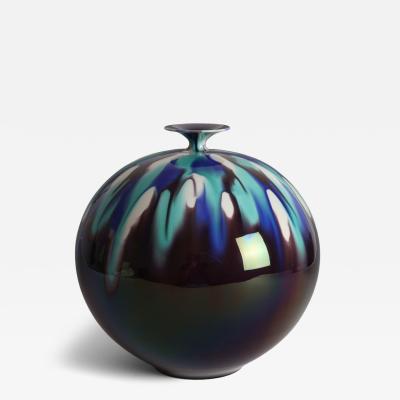
Vase with Brilliant Glaze (T-5161)
-
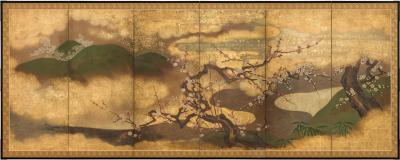
Blooming Plum and Cherry Trees along Stream, ca 1800
-
Three-Seat Sofa
-
Scenes of the Twelve Months, circa 1915-25
-
Flask with Maple Glaze, 1993
-
Vase with Slip Decor (T-5158)
-
Bronze as Bronze II, 2025
-
Tea Bowl (T-4838)
-
Enjoying a Cool Evening on Ponto-chō, Kyoto (T-4852)
-
Scenes from Life at the Chinese Imperial Court, early 17th century
-
Vase with Marbleized Clay (T-5157)