


Showrooms
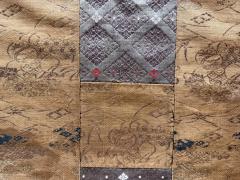
Antique Japanese Silk Kesa Monk's Robe with Patchwork Meiji Era
-
Description
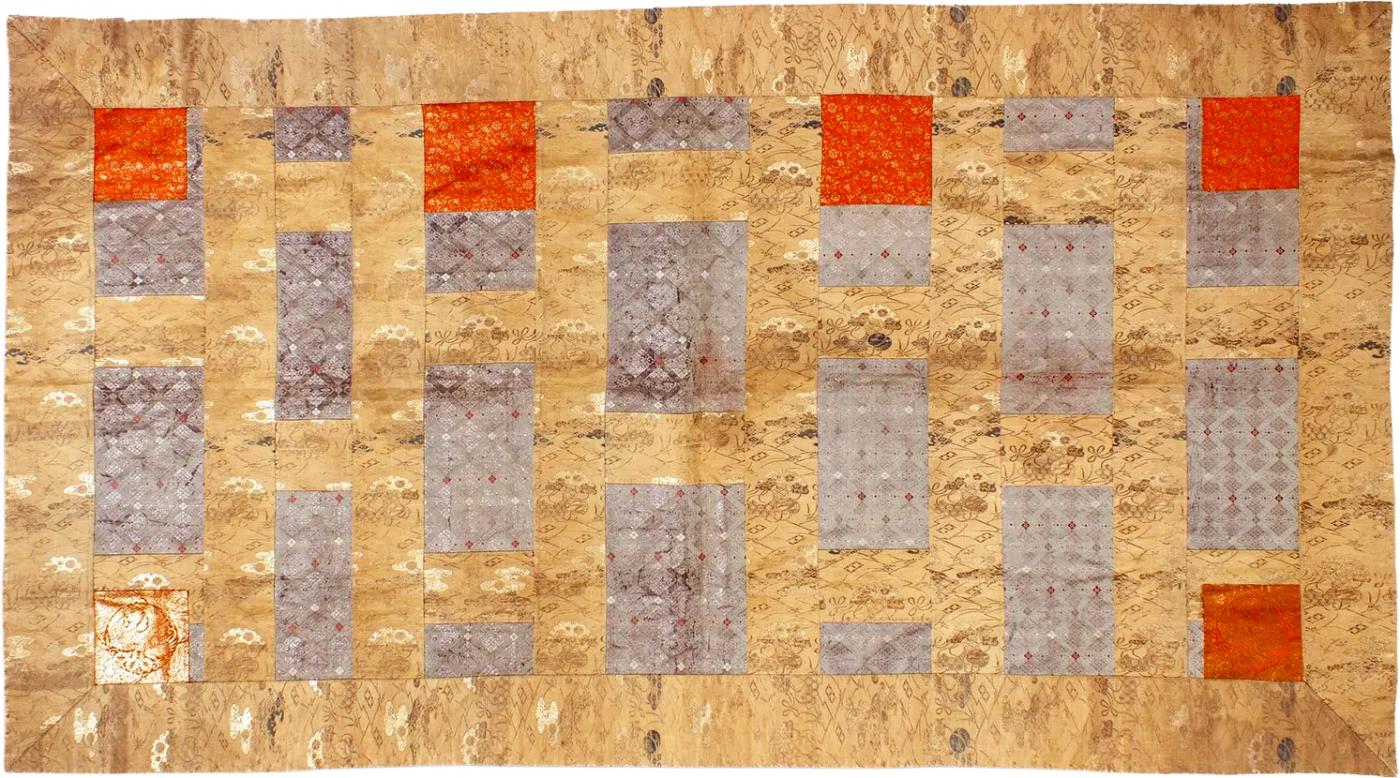
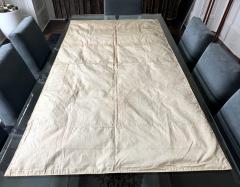
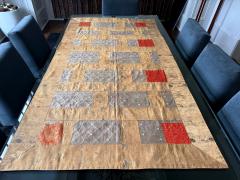
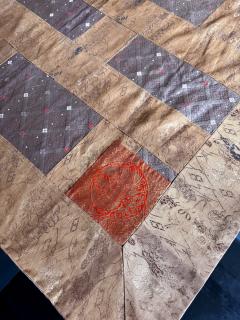
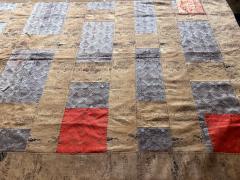
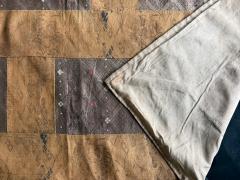
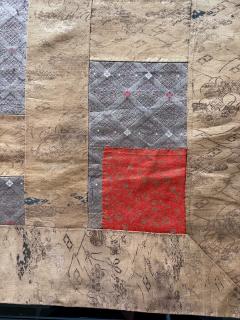
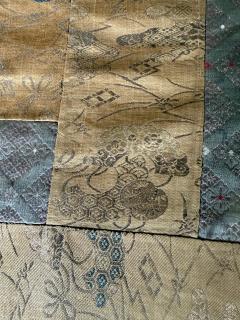
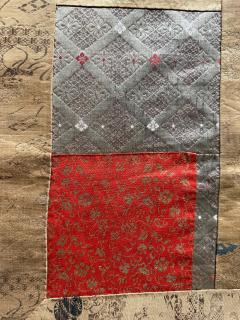
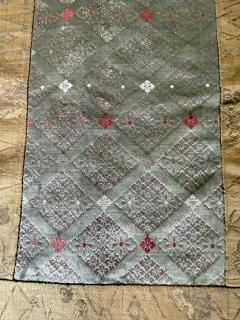
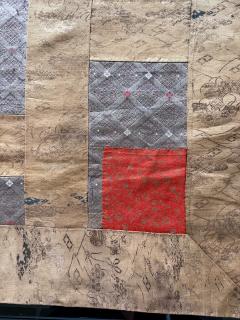
A Japanese Kesa (Monk's Vestment) with patchwork circa 19th century. consisting of thirteen columns with seven alternate stripes in an eye-catching patchwork. This Kesa is of fine condition and has been very well preserved. The background is of a shimmering golden-color silk brocade fabric woven with fine geometrical pattern with roundels of floral and grass motifs. The patchwork was done using a silver-toned silk fabric woven with geometrical motifs of lozenge-shaped four petal hibiscus flowers. The intricate pattern has a texturized embossed surface no doubt being the finest silk. Six brocade squares in contrasting bright orange color were sewn to the four corners and two along the longitude side, which has phoenix motif. The four squares in the corners represent the Four Heavenly Kings (Shi Tenno); while two squares in the middle section with represent compassionate bodhisattvas. Framed in the wide border of the same brocade used as the background but oriented vertically for a visual contrast, the Kesa is fully lined on the back with silk with hand-stitches and retains a small old paper label verso.
Kesa is derived from the Sanskrit word "Kasaya", meaning “dark colored,” a reference to the saffron colored robes worn by early Indian Buddhist monks. It is essentially a rectangular cloth originally sewn from patches of rags, being formless, it serves as a symbolism of the ascetic life of one's choosing. In Japan, since at least the Heian period (794–1185), the Kesa has been worn by Buddhist priests as their outermost robe, draped over the left shoulder and attached under the right armpit. While it served some function of protection, it was more a signal of the wearer’s faith and became increasingly elaborate over the centuries. During the Edo period (1600–1868), many Kesa worn were patched together from exquisite silk brocade fabrics that were donated to the temples by members of the aristocracy, ruling military class, or wealthy merchants. By stitching the fabric into a patchwork robe, the monks concentrated their attention on the creation of a devotional work of art, every stitch part of an act of meditation on the teachings of the Buddha. The number of stripes (from 5 to up to 25) indicates the wearer’s rank and the occasion for which it was worn, the highest number of stripes usually only being worn by an abbot during festival ceremonies. The normal daily Kesa generally has seven columns. The Kesa on offer is more likely a ceremonial robe for special occasion. -
More Information
Origin: Japan Period: 19th Century Materials: silk, brocade Condition: Good. Very fine antique condition. Shimmering effect from different angles. Very light old red stains on the back. Creation Date: 19th century Styles / Movements: Asian, Traditional Patterns: Abstract, Asian/Oriental, Florals/Botanical, Geometric, Handmade Incollect Reference #: 862144 -
Dimensions
W. 77 in; H. 43 in; D. 0.2 in; W. 195.58 cm; H. 109.22 cm; D. 0.51 cm;
Message from Seller:
Tishu, based in Atlanta, GA, offers a diverse collection ranging from Neolithic art to 20th-century collectibles, with a focus on Mid-century design, Japanese and Korean art, Asian textiles, and Contemporary Aboriginal art. Driven by a passion for timeless beauty, the gallery is open by appointment only and offers works that span 5,000 years of history. Reach them at 305-400-0561 or tishu@tishugallery.com.
More Listings from Tishu View all 1151 listings
-
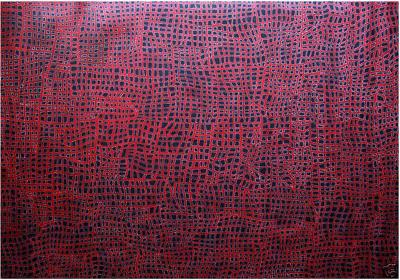
Australia Aboriginal Painting Woman Body Paint by Abie Loy Kemarre
-
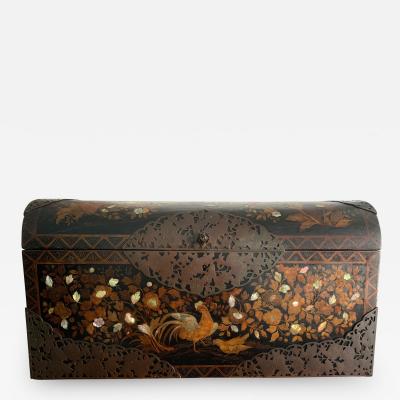
Japanese Namban Lacquer and Inlay Coffer Momoyama Period
-
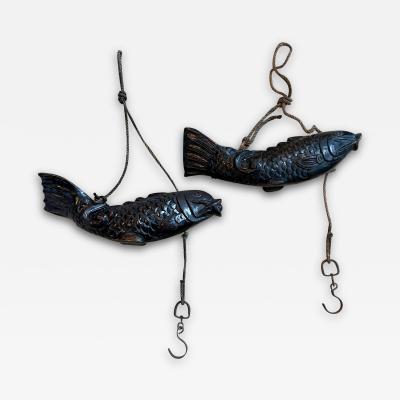
Near Pair of Japanese Jizai Kagi Wood Koi Folk Art Sculptures
-
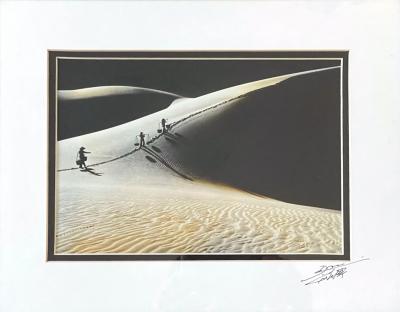
Framed Photograph by Don Hong-Oai
-
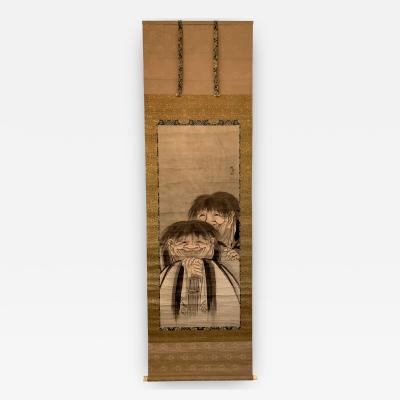
Large Antique Zen Japanese Ink Scroll After Sesson Shukei
-
Pair Framed Vintage Print of Drawings by Diego Rivera

-
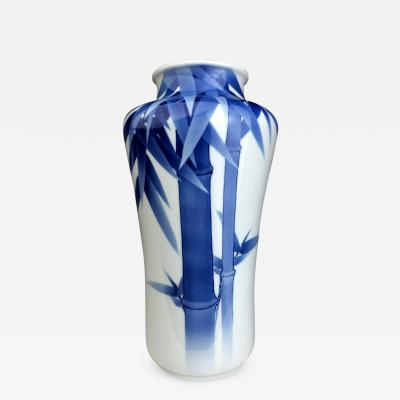
Japanese Porcelain Vase Makuzu Kozan Meiji Period
-
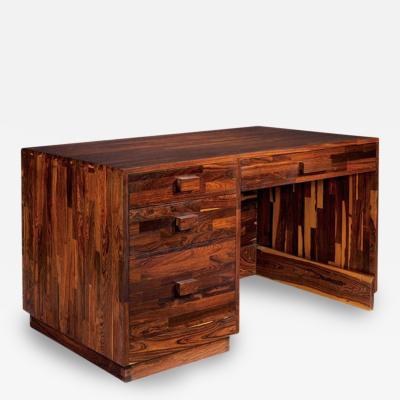
Rare Cocobolo Wood Desk Don Shoemaker like jimmy in Better Call Saul
-
Rare Antique French Goyard Wardrobe Steamer Trunk

-
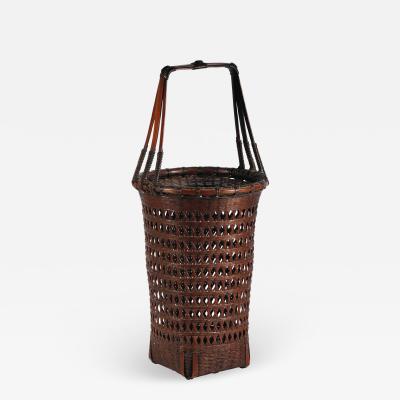
Japanese Bamboo Basket Ikebana by Yamashita Kochikusai
-
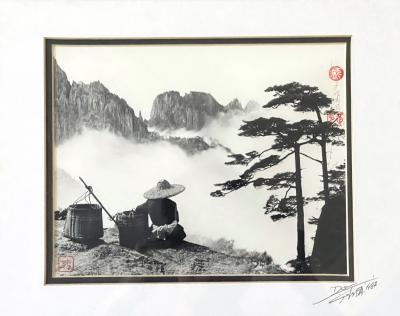
Framed photograph by Don Hong-Oai
-
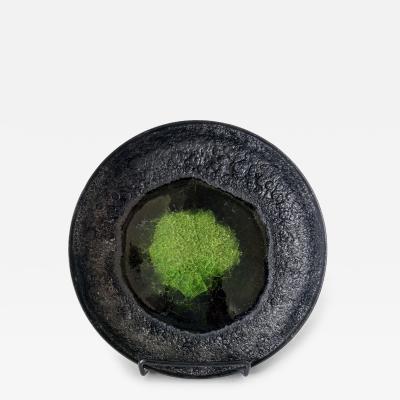
Ceramic Bowl with Bespoken Volcanic Glaze by Beatrice Wood
-
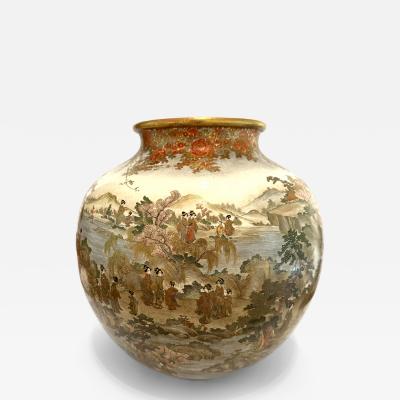
Exceptional Large Japanese Ceramic Moon Vase by Kinkozan Meiji Period
-
Framed Black and White Photograph Arthur Tress