









Showrooms
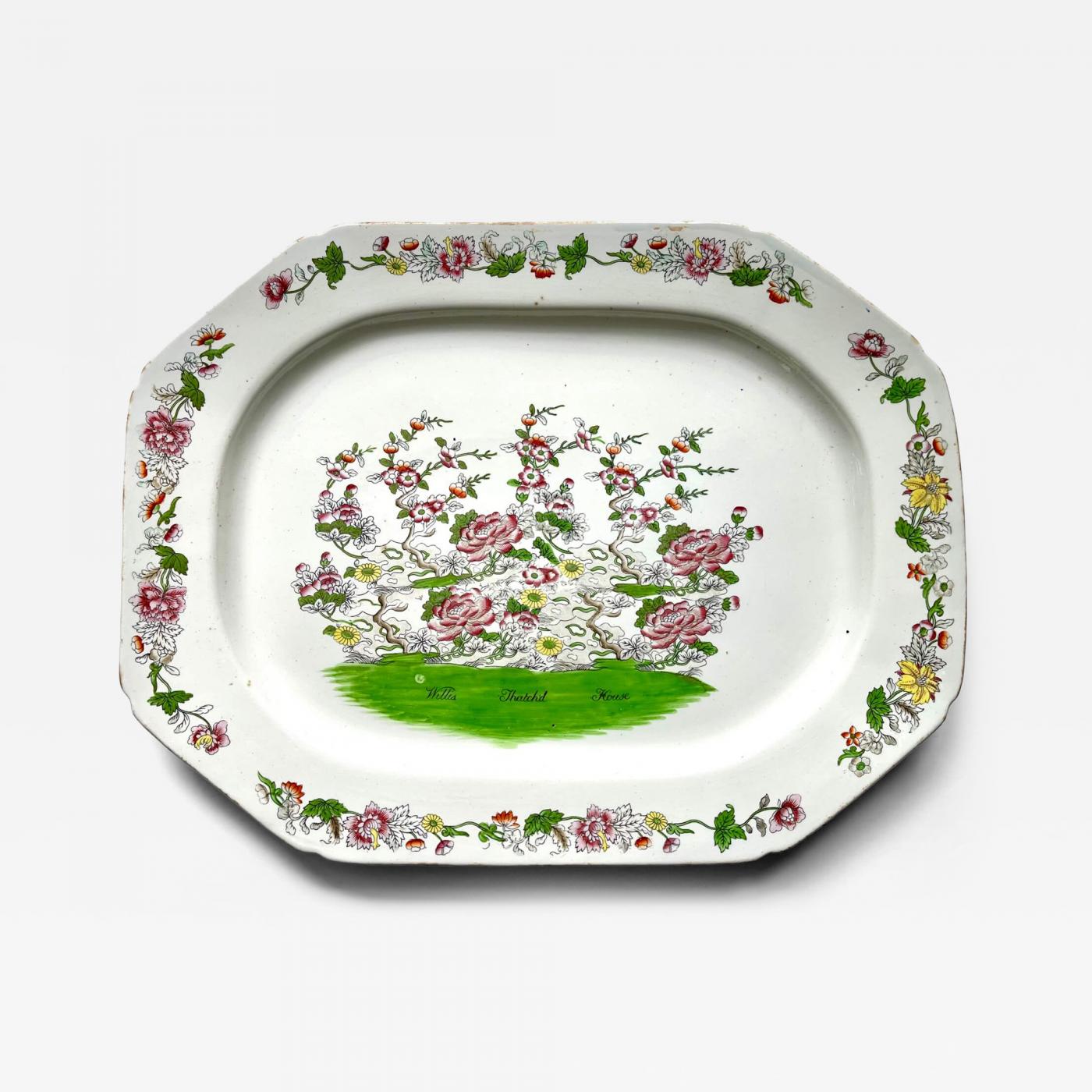
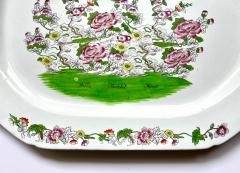
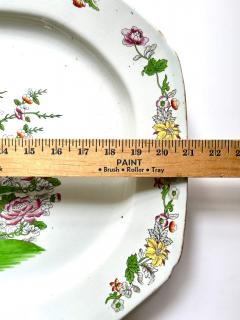
Rare Spode 'Willis Thatch'd House' London Trial Pattern Platter, circa 1810
-
Description
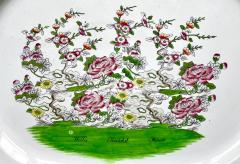
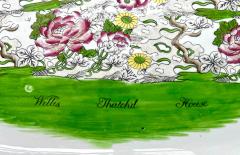
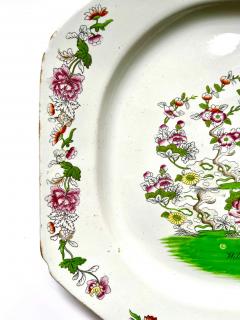
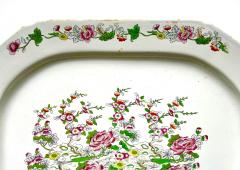
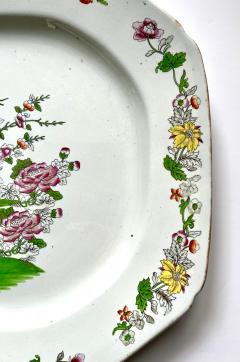
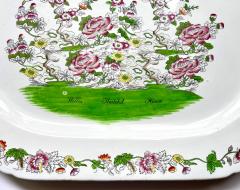
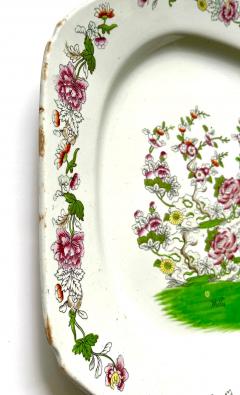
A C R O T E R I O N is pleased to offer this extraordinarily rare and historically important "stone-china" platter of considerable size and weight produced by the Spode factory in Stoke-on-Trent, Staffordshire circa 1810 as a pre-production "trial" example for the legendary 'Thatched House Tavern' in St. James's Street, London; the elongated octagonal white body with transfer and painted design copied from Qianlong period Chinese export porcelain having black transfer outlined partially painted underglaze and overglaze enamel "famille rose" floral-and-foliate-spray borders surrounding central 'chinoiserie' landscape vignette of rose trees, peonies, and other 'flora' among 'scholar's rocks' on bold underglaze green painted ground with 'Willis Thatch'd House' in black underglaze transfer cursive script.
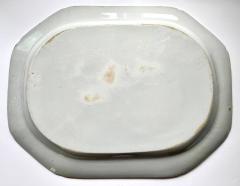
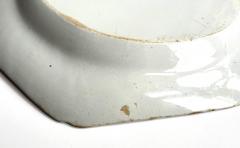
This platter is an exceptionally rare and possibly sole archetype of Spode pattern #1270, which came to be known as the "Willis Indian Tree", among many other latter variants, that was introduced to the general public in 1814 but with a much altered and simplified design. Given its overall 'secondary' quality; the glazing with 'slips' to the extremities, partial painting, design inconsistencies; i.e. the slightly off-centre 'centre' transfer design and right-side border design divergence, general production flaws in the body itself, as well as being completely unmarked to the reverse, it is likely this platter was shipped to the proprietor's of Willis's in London as a singular unfinalized design maquette not intended for use, however it very obviously was.
"Willis Thatched House", also known as "Willis's", and "Willis's Rooms", began so named in 1770 when James Willis took over the proprietorship of the existing "Thatched House Tavern" social club established in 1711 in a thatched house built in 1670, and together with "Almack's", established 1765, were the names of two prominent social clubs in London based in adjoining assembly rooms on King Street, St James's, Westminster, and were considered the most fashionable of the limited number of upper-class mixed-sex public social venues in Georgian and Regency London. The site of the clubs, "Almack's Assembly Rooms", and from 1781, "Willis's Rooms", have retrospectively become interchangeable and were the immediate precursor of two of London's greatest surviving clubs, Brooks's and Boodle's. The clubs' social desirability began to decline by the late 1830's and both buildings were demolished in 1844 with the site being used for The Conservative Club building in 1845.
"The Thatched House" was a prominent 18th-century and early 19th-century political and social gathering venue famous for its meeting rooms and is described in 'Club life of London' by John Timbs (1866) as "The large club-room faced St. James's street, and when lit in the evening with wax-candles in large old glass chandeliers, the Dilettanti pictures could be seen from the pavement of the street" referring to the portraits hung on the walls of prominent members of the "Society of Dilettanti"; "a society of noblemen and scholars that sponsored the study of ancient Greek and Roman art, and the creation of new work in the style" which regularly met at Willis's.
The Victoria & Albert Museum in London has but one example from Willis's in the form of a very used 'creamware' plate dated circa 1800 with 'Willis Thatch'd House' at centre in the same script as the present example but in brown. Accession # 462-1907.
A museum-worthy example for the serious collector of early English ceramics as well as an historically important surviving document from Georgian and Regency London's boisterous social life.
Provenance: An important private collection of early English ceramics, Boston, Massachusetts. -
More Information
Documentation: Documented elsewhere (similar item) Origin: England Period: 19th Century Materials: Tranfer-printed and painted stone china. Condition: Fair. No chips, cracks, or repairs, staining from use to unglazed edge areas, factory flaws, knife marks, please read the description above for further information. Creation Date: circa 1810 Styles / Movements: Chinese Export, George III, Regency Patterns: Asian/Oriental, Florals/Botanical Incollect Reference #: 861648 -
Dimensions
W. 21 in; H. 1.75 in; D. 16.25 in; W. 53.34 cm; H. 4.45 cm; D. 41.28 cm;
Message from Seller:
Acroterion, founded in 2012, is by-appointment in New York’s historic Hudson Valley, offering the exceptional in fine and decorative art. Phone: 917.656.5863 | Email: info@acroterion.com
More Listings from Acroterion View all 136 listings
-
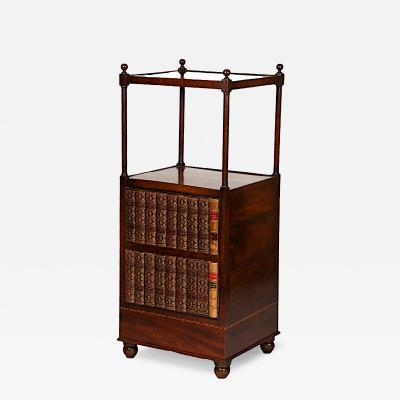
English Regency Mahogany Étagère or Library Stand, circa 1815
-
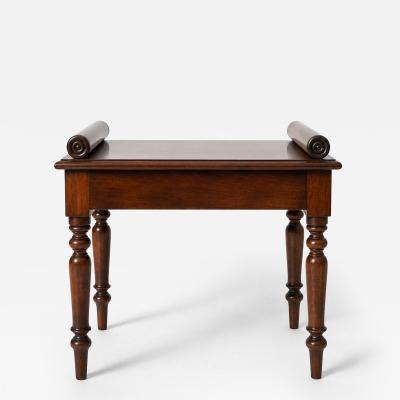
English Mahogany Single Seat Hall Bench, circa 1840
-
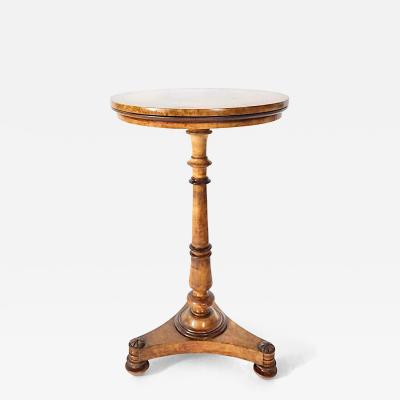
English Mahogany Inlaid Birdseye Maple Occasional Table by Seddons, circa 1840
-
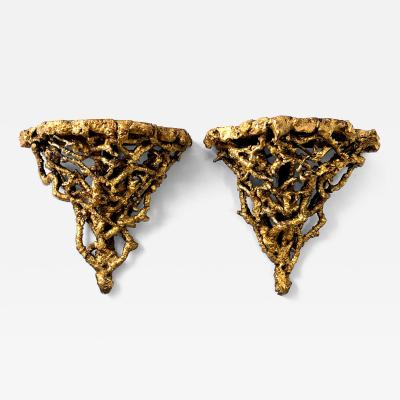
George III 'Rustic' Giltwood Wall Brackets, circa 1800
-
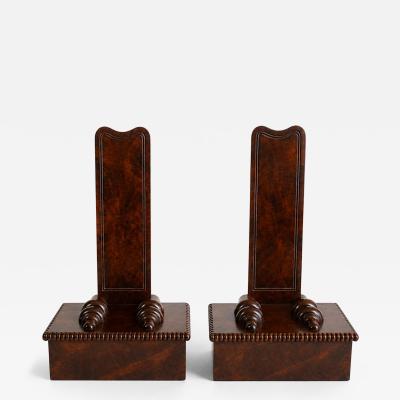
George IV Mahogany Charger or Salver Stands by Gillows of Lancaster, circa 1825
-
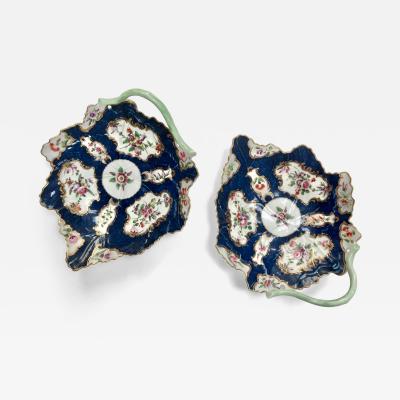
Pair of Dr. Wall Worcester Porcelain 'Scale Blue' Leaf & Twig Dishes, circa 1770
-
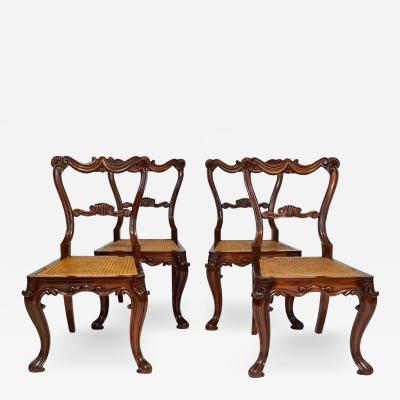
Regency Rococo Revival Rosewood Caned Seat Side Chairs
-
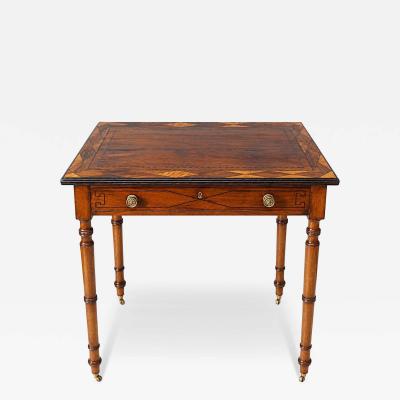
George Bullock British Specimen Woods Inlaid Writing Table, circa 1810
-
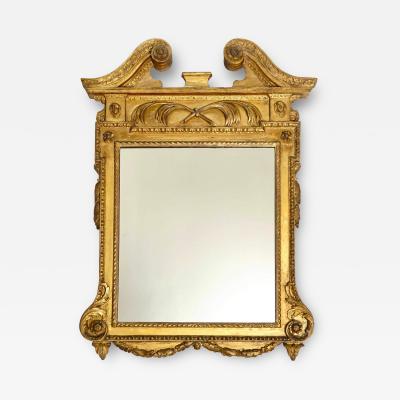
English George II Giltwood Mirror in the Manner of William Kent, circa 1735
-
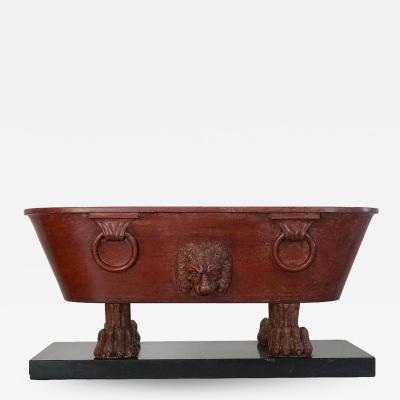
Grand Tour Rosso Antico Marble Model of a Roman Labrum or Bath
-
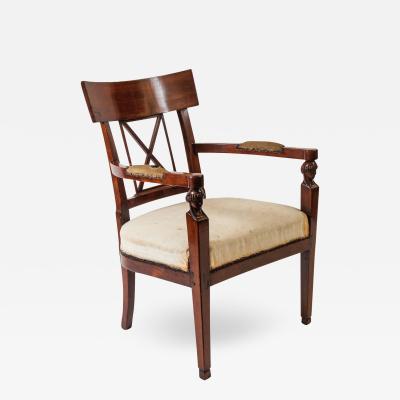
Italian Consulate Fauteuil
-
Pair of 19th Century Italian Neoclassical Tazze in Polychrome Marbles

-
Indian Company School Gouache Paintings on Paper, Professions, Set of 2, C. 1810
-
Georgian Memorial or Mourning Portrait, Thomas Hudson