
- FINE ART
- FURNITURE & LIGHTING
-
NEW + CUSTOM
- SHOP BY MAKERS
- The latest work from extraordinary artisans and designers
- MEET THE MAKERS
- The stories behind today's most talented artisans and studios
- TODAY'S TOP ARTISTS
- Exceptional designers, ateliers and boutique brands worldwide
- SHOP NEW + CUSTOM
- All
- Seating
- Lighting
- Tables
- Case Pieces & Storage
- Mirrors
- Ceramics
- Decorative Objects
- Rugs & Carpets
- DECORATIVE ARTS
- JEWELRY
- INTERIORS
- MAGAZINE






Showrooms
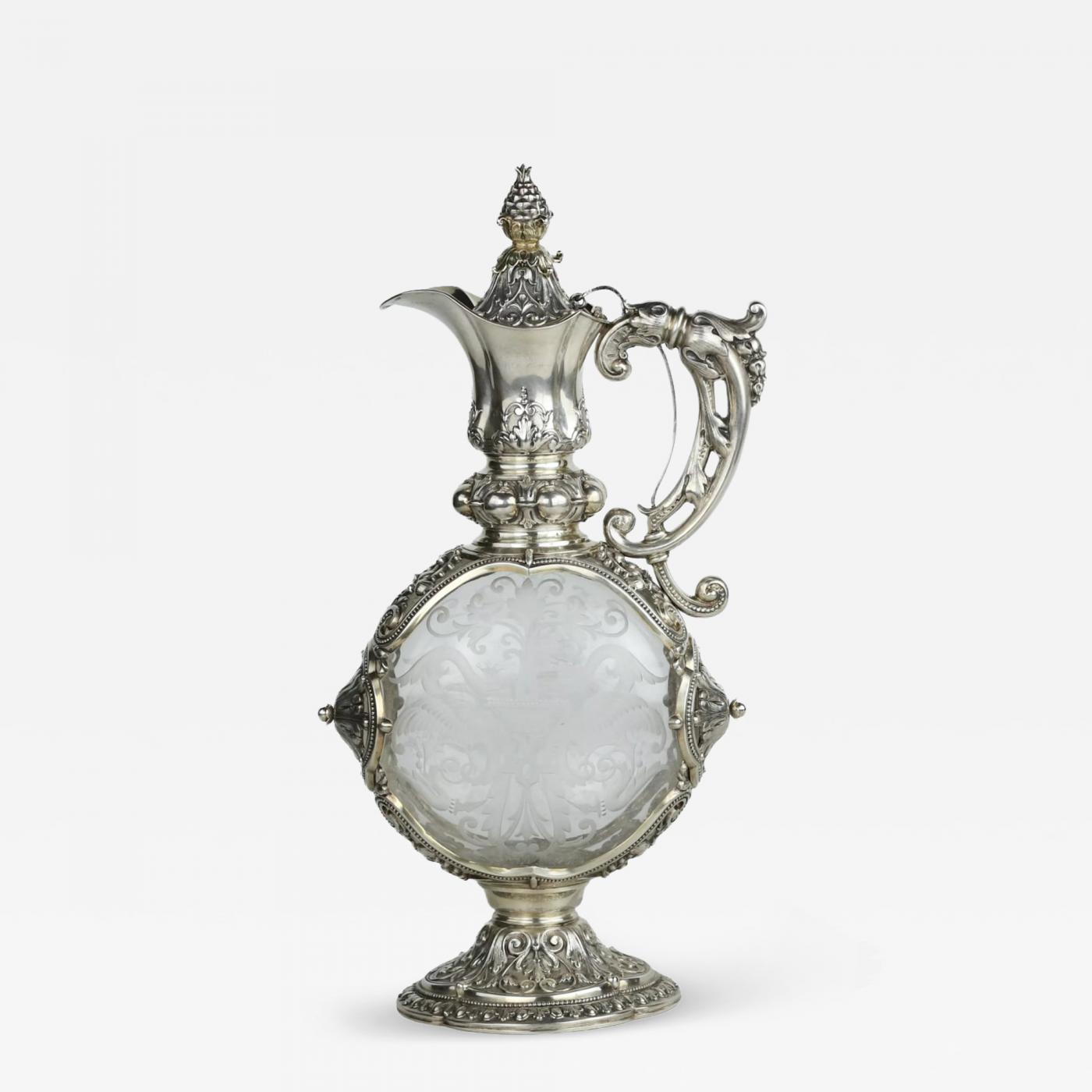
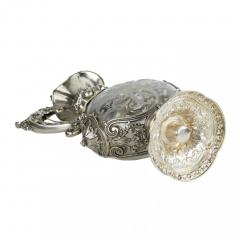
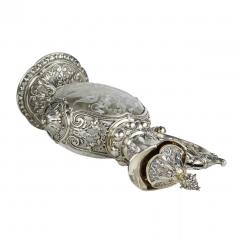
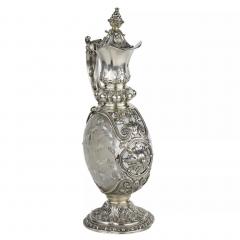
Wine Ewer In Neo-Renaissance Style Germany, Second Half Of The 19th Century
-
Description
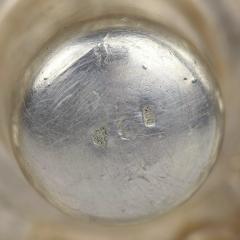
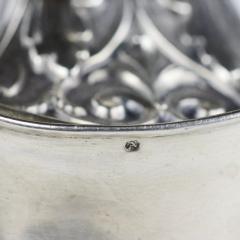
An exquisite wine ewer crafted in Germany in the second half of the 19th century in the Neo-Renaissance style. The body is made of transparent engraved glass with ornamental motifs depicting two swans surrounded by floral scrolls, creating a lace-like effect. The vessel is mounted in a silver frame richly decorated with relief festoons, acanthus leaves, rocaille scrolls, and cartouches. The base is shaped as a quatrefoil stand with Renaissance-style lace ornamentation. The tall neck is adorned with leaf and rocaille motifs. The silver handle is executed in elaborate plasticity with vegetal forms and is connected to the hinged lid of the spout. The lid, crowned with a pinecone finial, is operated through a lever mechanism incorporated into the handle. This piece represents the highest level of German silversmithing, combining refined glass engraving with sumptuous silver mounts. Marks:- Maker's mark: initials "AAI" in a rectangular shield.- Assay: "800" silver, in use in Germany in the second half of the 19th century. Dimensions: Height 37.5 cm; width 18.5 cm. Material: Glass, silver (800 standard), gilding. Condition: Good condition, with natural patina of age; no losses; lid and mechanism fully functional.
In the second half of the 19th century, Germany experienced a flourishing of decorative arts, strongly influenced by historic revival styles. The Neo-Renaissance, inspired by the art and architecture of the 16th century, became a dominant aesthetic, embodying grandeur and elevated taste. Such objects were not merely utilitarian vessels but also works of art that adorned banquet tables and symbolized the refinement of their owners. Wine ewers in glass and silver played a prominent role in European dining culture, combining functionality with artistic value. German workshops, including renowned centers such as Hanau, produced lavish examples for both the aristocracy and the rising bourgeoisie of the Grunderzeit period, when economic prosperity was matched by cultural revival. The swan motif carries deep symbolism: across European tradition, swans were associated with purity, fidelity, and grace. The acanthus and rocaille decoration reflects the visual language of Neo-Renaissance design, blending classical antiquity with Baroque-inspired ornament. This ewer is a rare synthesis of glass engraving and German silversmithing, a remarkable example of 19th-century decorative art, embodying the spirit of the Grunderzeit. -
More Information
Period: 19th Century Condition: Good. Good condition, with natural patina of age; no losses; lid and mechanism fully functional. Styles / Movements: Traditional Dealer Reference #: 12186 Incollect Reference #: 883213 -
Dimensions
W. 7.28 in; H. 14.76 in; W. 18.49 cm; H. 37.49 cm;
Message from Seller:
Maison ANTIQON invites you to discover our exceptional collection of fine art and antiques at our premier showrooms, Maison ANTIQON in Nice, France, and Antikvariāta Centrs in Riga, Latvia. For inquiries, private appointments, or to explore our curated international heritage, please reach out to us directly at info@antiqon.com or via phone at +33 6 30 17 47 17.
More Listings from Antiqon View all 242 listings
-
Rare Gold Snuffbox With Enamel Miniature After William Beechey.
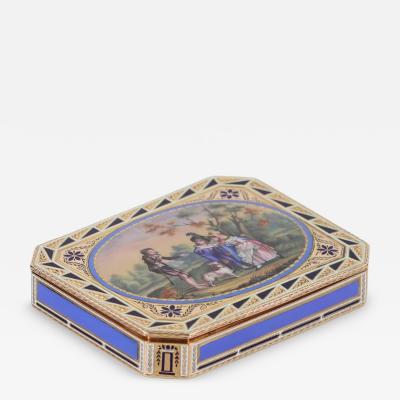
-
Nicols & Plinke. A Silver Wine Jug With Cut-Glass Body St Petersburg, Russia

-
Pair Of Cut Crystal Wine Ewers With Silver Mounts Germany

-
Paper Knife With Guilloche Silver Handle. Germany, Early 20th Century
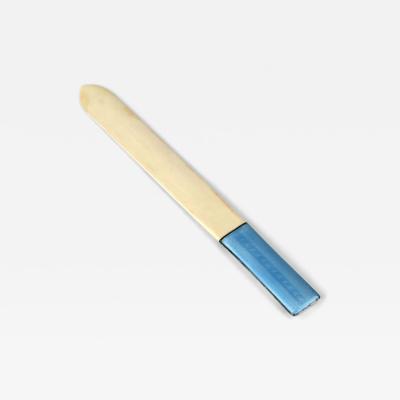
-
A Miniature Silver Violin In A Case, Europe, Early 20th Century
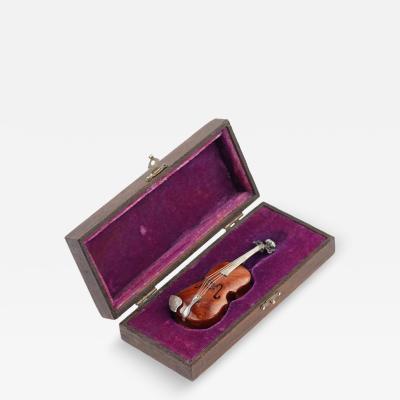
-
Pair Of Japanese Silver Vases With Enamel Japan, Turn Of The 19th-20th Century

-
Gold Snuffbox With Enamel. Hanau, 1810-1815 Germany, Early 19th Century
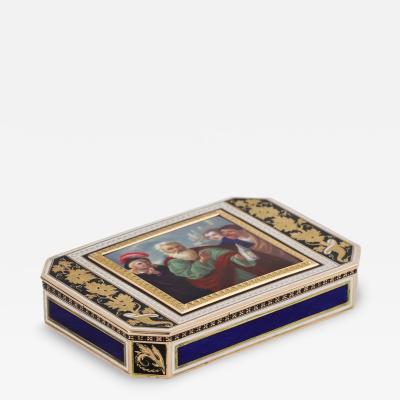
-
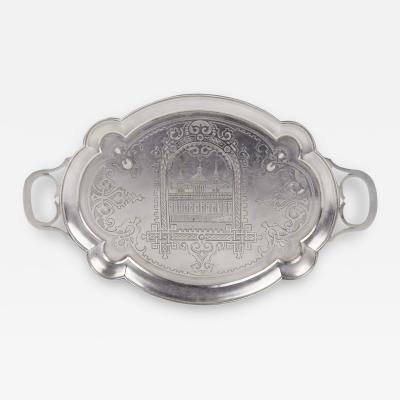
Silver Tray With A View Of The Moscow Kremlin Russia, Moscow, 1881
-
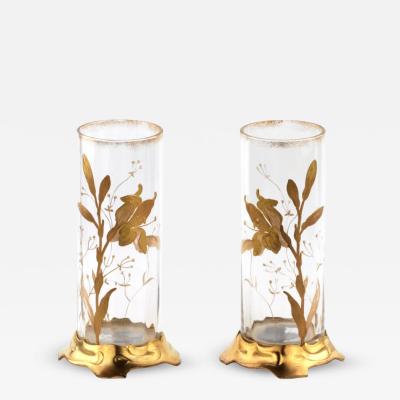
Pair Of Art Nouveau Decorative Vases. Europe, Early 20th Century
-
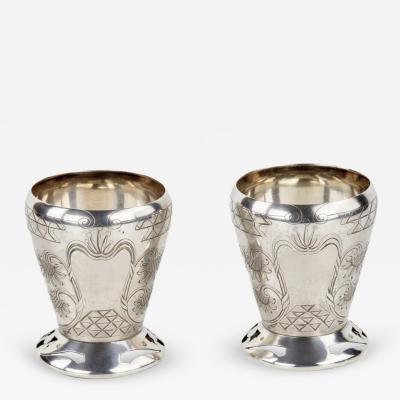
Pair Of Russian Silver Shot Cups In The Art Nouveau Style. Fifth Moscow Artel.
-
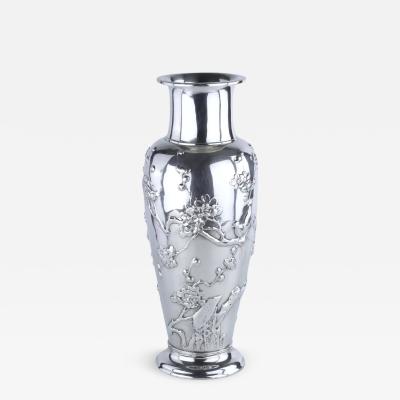
Silver Vase In Japanese Style, Tiffany & Co., Usa, 1928
-
Silver Enamel Goblet. 20th Artel Of Moscow Russia, Moscow, Early 20th Century
-
French Carriage Clock With Porcelain Panels In The Third Rococo Style. France
-
Olish Silver Miniature Figure Of A Nobleman. Poland, 20th Century

