









Showrooms
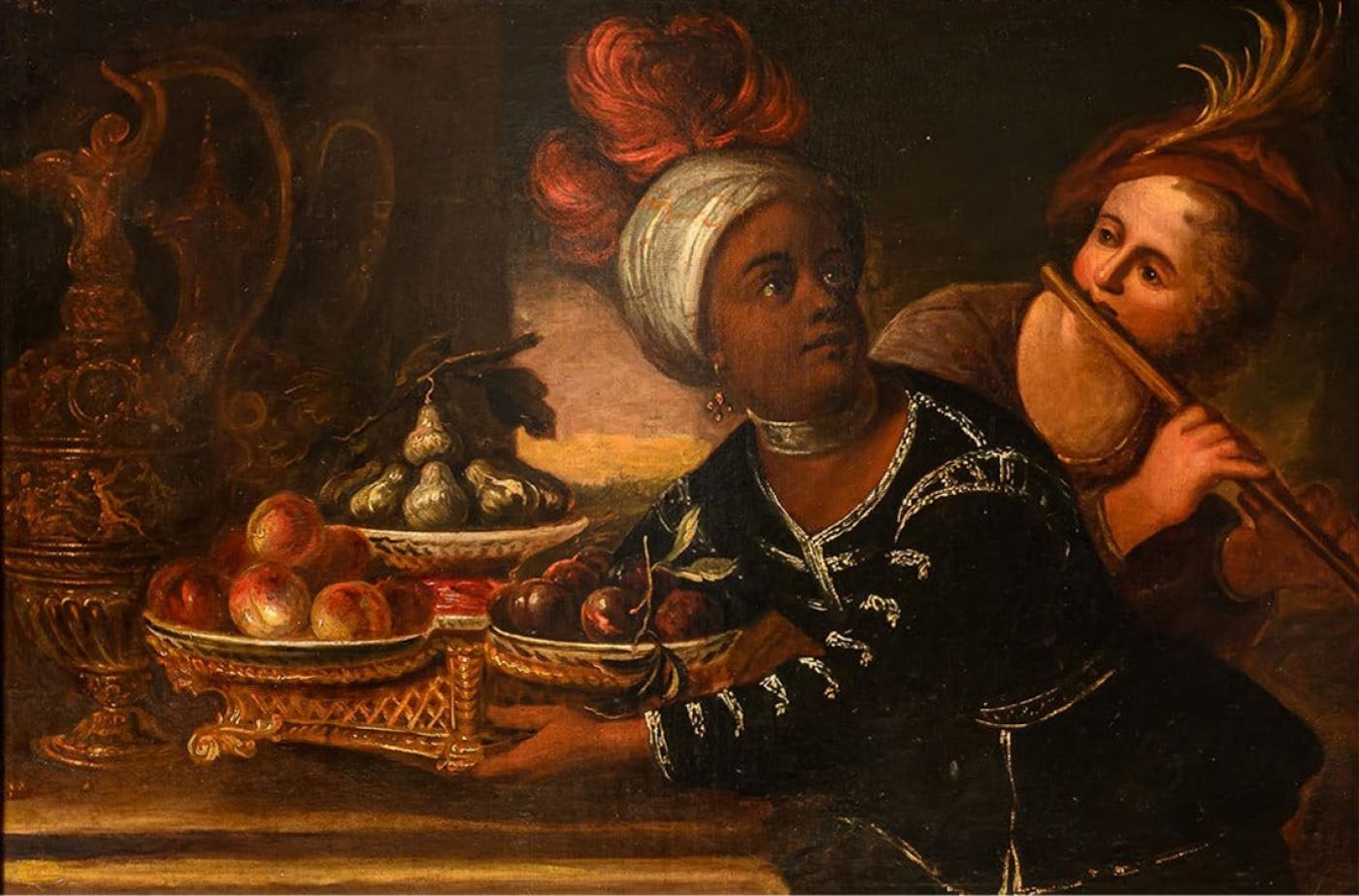
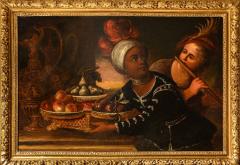
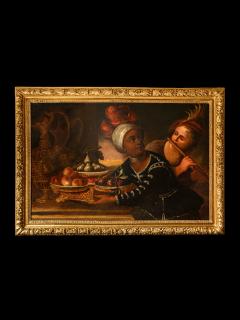
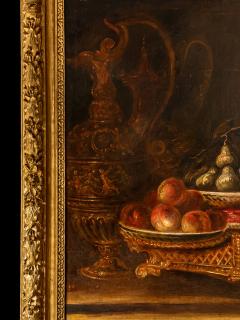
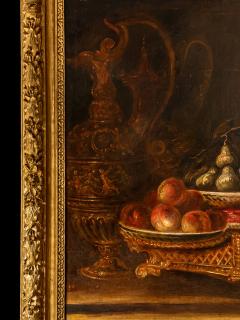
Moor Servant with Fruit basket, Dutch School, Oil on Canvas
-
Description
Moor Servant with Fruit basket, Dutch School, Oil on Canvas.
17th C
Oil on canvas.
24 3/8 x 36 1/4 in
62 x 92 cm
6173
€ 9,900.00
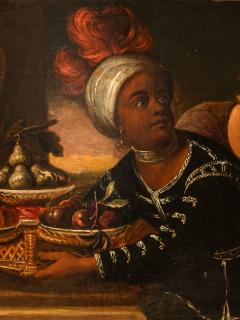
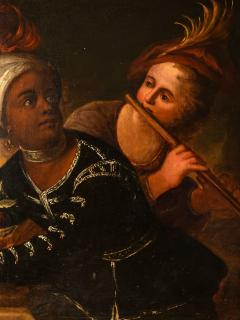
This painting combines a lavish still life with human figures. On the left, large jugs and bowls of fruit are presented by a servant depicted as a “Moor”; on the right, a young boy plays the flute. Such compositions carried multiple layers of meaning in the seventeenth century.The presence of a servant functioned as a status symbol for the wealthy patron and alluded to prosperity, global trade, and international connections during the Dutch Golden Age. At the same time, the figure enhanced the exotic character of the work, alongside luxury objects such as silverware, costly textiles, and imported fruit.Within the artistic conventions of the period, the servant was not portrayed as an individual personality but as a visual and symbolic element emphasizing luxury, power, and a cosmopolitan outlook. This motif is found, among others, in the work of Juriaen van Streeck (1632–1687), whose still lifes follow the tradition of Willem Kalf and explore themes of beauty and transience.
Ce tableau associe une nature morte somptueuse à des figures humaines. À gauche, de grandes cruches et des coupes de fruits sont présentées par un serviteur représenté comme un « Maure » ; à droite, un jeune garçon joue de la flûte. De telles compositions revêtaient plusieurs significations au XVIIᵉ siècle.La présence d’un serviteur servait de symbole de statut social pour le commanditaire fortuné et renvoyait à la richesse, au commerce mondial et aux relations internationales de l’âge d’or néerlandais. La figure contribuait également au caractère exotique de l’œuvre, en dialogue avec des objets de luxe tels que l’argenterie, les textiles précieux et les fruits importés.Conformément aux conventions artistiques de l’époque, le serviteur n’est pas représenté comme un individu à part entière, mais comme un élément visuel et symbolique soulignant le luxe, le pouvoir et une vision cosmopolite du monde. Ce motif apparaît notamment dans l’œuvre de Juriaen van Streeck (1632–1687), dont les natures mortes s’inscrivent dans la tradition de Willem Kalf et abordent les thèmes de la beauté et de la fugacité.
In dit schilderij wordt een rijk stilleven gecombineerd met figuren. Links zien we grote kruiken en schalen met fruit, aangedragen door een bediende die wordt voorgesteld als een ‘Moor’; rechts staat een jonge knaap die fluit speelt. Dergelijke voorstellingen waren in de zeventiende eeuw meerduidig van betekenis.De aanwezigheid van een bediende fungeerde als een statussymbool voor de welgestelde opdrachtgever en verwees naar rijkdom, wereldhandel en internationale contacten tijdens de Nederlandse Gouden Eeuw. Tegelijk versterkte de figuur het exotische karakter van het werk, samen met luxegoederen als zilverwerk, kostbare stoffen en geïmporteerd fruit.Binnen de kunstpraktijk van die tijd was dit een gangbare conventie: de bediende werd niet zozeer als individu afgebeeld, maar als visueel en symbolisch element dat luxe, macht en een kosmopolitische blik benadrukte. Het motief is onder meer bekend uit het werk van Juriaen van Streeck (1632–1687), die in zijn stillevens aansloot bij de traditie van Willem Kalf en de thematiek van schoonheid en vergankelijkheid.
Dieses Gemälde verbindet ein reiches Stillleben mit Figuren. Links sind große Krüge und Schalen mit Früchten zu sehen, die von einem als „Mohr“ dargestellten Diener präsentiert werden; rechts spielt ein junger Knabe die Flöte. Solche Darstellungen waren im 17. Jahrhundert vielschichtig in ihrer Bedeutung.Die Anwesenheit eines Dieners fungierte als Statussymbol des wohlhabenden Auftraggebers und verwies auf Reichtum, weltweiten Handel und internationale Verbindungen während des niederländischen Goldenen Zeitalters. Zugleich verstärkte die Figur den exotischen Charakter des Werkes, zusammen mit Luxusgütern wie Silbergefäßen, kostbaren Textilien und importierten Früchten.Im Rahmen der damaligen künstlerischen Konventionen erscheint der Diener nicht als individuelle Persönlichkeit, sondern als visuelles und symbolisches Element zur Betonung von Luxus, Macht und kosmopolitischer Weltanschauung. Dieses Motiv findet sich unter anderem im Werk von Juriaen van Streeck (1632–1687), dessen Stillleben in der Tradition Willem Kalfs stehen und Themen wie Schönheit und Vergänglichkeit behandeln. -
More Information
Period: Pre 18th Century Creation Date: 17th Century Styles / Movements: Traditional Dealer Reference #: 6173 Incollect Reference #: 850172 -
Dimensions
W. 36.25 in; H. 24.375 in; W. 92.08 cm; H. 61.91 cm;
Message from Seller:
Spectandum, a by-appointment gallery in Leuven, Belgium, can be reached at contact@spectandum.com 32475648678. The gallery specializes in Natural History, Ethnography, European works of art, antiquities, and rare curiosities sourced from around the world.
More Listings from Spectandum View all 181 listings
-
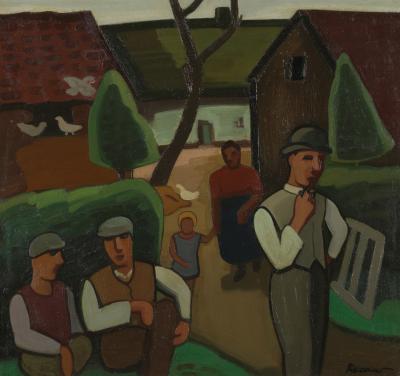
Early 20th C, Brabant Fauvism, Farming Family on a Sunday Morning, Oil on Canvas
-
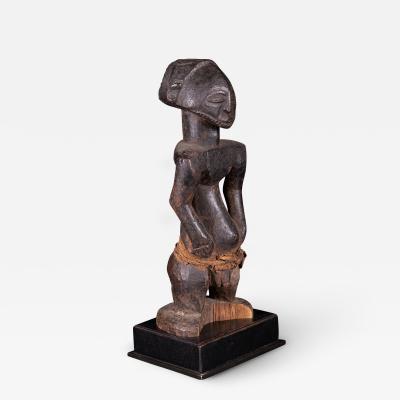
Hemba Commemorative Ancestor Singit Statue of a Chief, Hemba People.DRC
-
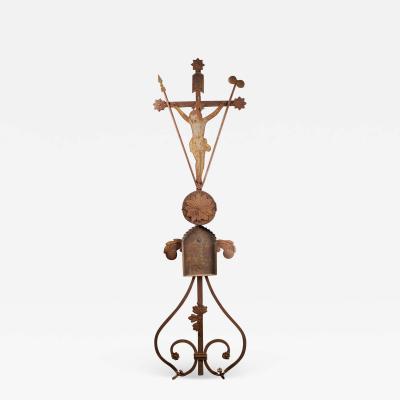
First half 20th C, USA, Wrought Iron Cross from a German Immigrant Cemetery
-
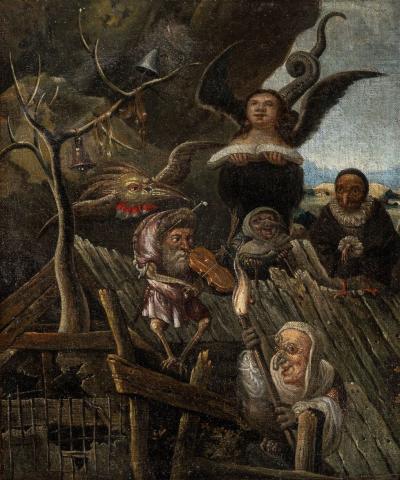
17th C representation of the Roof of Folly: An Allegory of the Fall
-
Seated terracotta Figure with nose-ring, Quimbaya culture, ca 100 AD

-
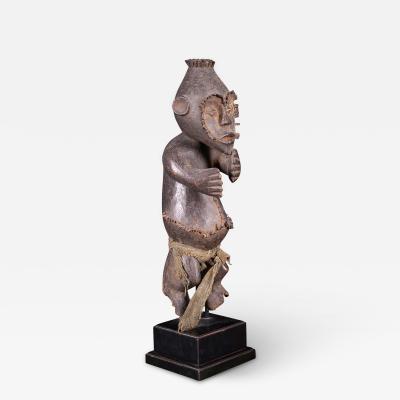
Mambila Tadep Male Guardian Figure, Mambila People,Nigeria
-
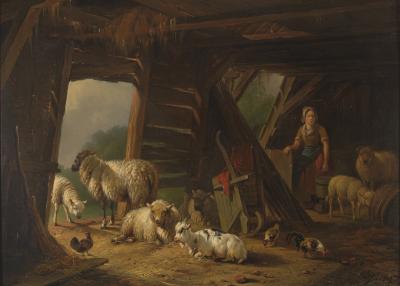
19th C, Romanticism, Genre Painting, Pieter Plas, Sheepstable, Signed
-
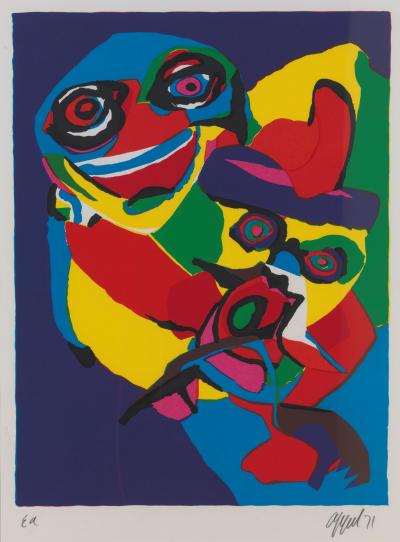
20th C, Appel Karel (1921-2006),Masks-Artist Proof, Screen Print, Framed, Signed
-
Classicizing Baroque, Biblical, Willem Muys, Rebekka and Eliëzer

-
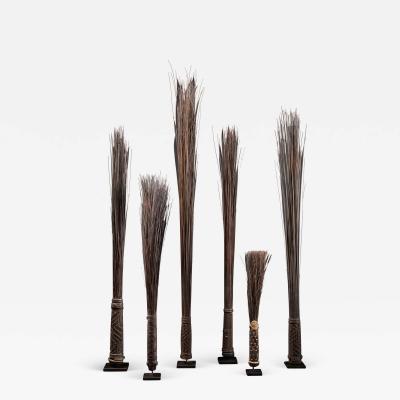
Mbole People, DRC. Chief Scepters Collection made of Palmtree Leaf Midribs
-
19th C, Romanticism, Landscape, Karel De San, Cattle at the Waterhole

-
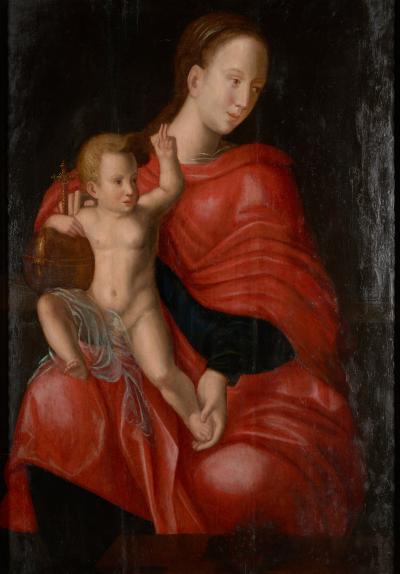
16th C?, Biblical, Manner of Joos van Cleve, Madonna with Child, Oil on Panel
-
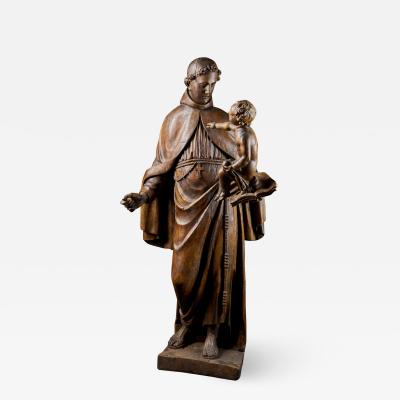
17th C, Baroque, Saint, Italian School, Wooden Sculpture of Saint Anthony
-
Large 19th C, Pharmacy reversed painted Display Dispensing Jar

