









Offered by:
Arthur T. Kalaher Fine Art
28E Jobs Lane
Southampton, NY 11968 , United States
Call Seller
631.204.0383
Showrooms
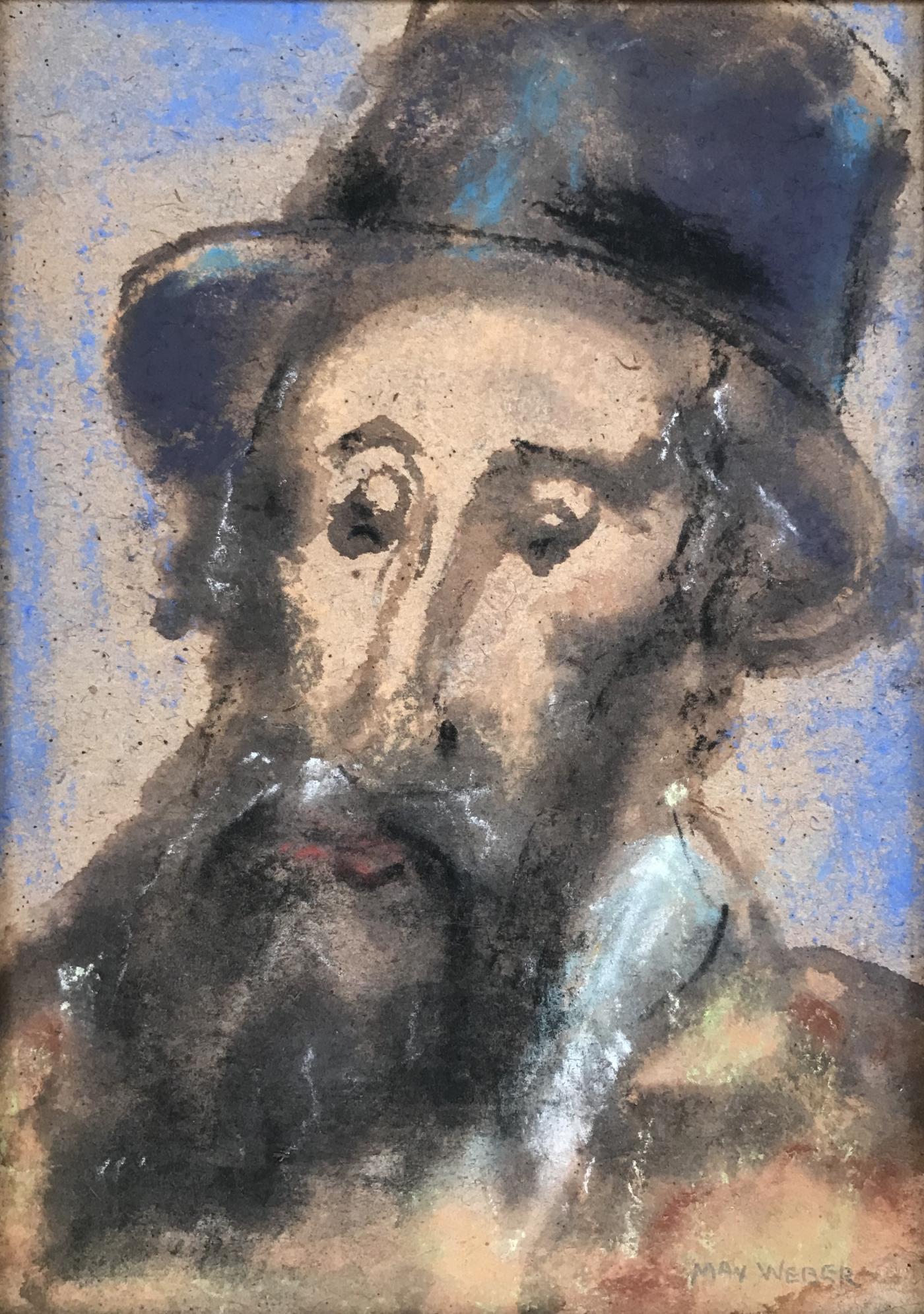
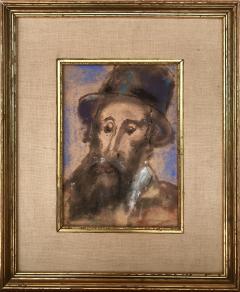
"Portrait of a Hasidic"
-
Description
Watercolor and oil pastel on paper by the well known American artist, Max Weber. Circa 1945. Signed in pencil lower right. Condition: Excellent. Provenance: Hertz Gallery, Lawrence, New York. Overall in original frame with linen liner 18 by 12 inches.
Max Weber was an American Jewish artist considered to be one of the pioneers of modernism in America. He was born on April 18, 1881, in Bialystok, Russia (now Poland), to an orthodox Jewish family. His family immigrated to Brooklyn, New York in 1891. From 1898 to 1900, Weber was enrolled at the Pratt Institute in Brooklyn. There he studied under Arthur Wesley Dow, noted painter and printmaker, who taught him to see forms as visual relationships rather than objects. From 1901 to 1905, Weber taught art at public schools in Lynchburg, Virginia and Duluth, Minnesota.
In September 1905, Weber moved to Paris and studied at the Académie Julian under Jean Paul Laurens, the Académie Colarossi, and the Académie de la Grande Chaumière. In 1908, he participated in a small class at Matisse’s newly opened academy. While in Paris, Weber frequented the Paris Salon retrospectives of Cézanne and Gauguin (both in 1907) as well as the studios of Matisse and Picasso. He also visited Gertrude Stein’s salon and was a close friend of Henri Rousseau. During this time, Weber was greatly influenced by Cubist artists Pablo Picasso and George Braque and his work was exhibited in the Salon des Indépendants and the Salon d’Automne.
Weber returned to New York in 1909, bringing to America a knowledge of European modernist developments, including its dynamism, abstraction, and emotion. For a short period, Alfred Stieglitz, whose Gallery 291 promoted European and American modernism, supported Weber. As an influential member of the Stieglitz group, Weber became one of America’s first important modernist artists. He was also one of the first American artists to focus on the Indians of the American Southwest. In 1913, Weber’s one-man exhibition at the Newark Museum was the first modernist exhibition at an American museum.
Following a rocky relationship, Weber severed ties with Stieglitz and began to support himself by teaching at the Clarence H. White School of Photography (1914) and later at the Art Students League (1920–1921 and 1925–1927). In 1928 he was selected to be the director of the Society of Independent Artists and in 1930 his work was selected for a one-person exhibition at the Metropolitan Museum of Art as part of its inaugural year. From 1937 to 1940, Weber served as the national chairman and honorary national chairman of the American Artists’ Congress.
Throughout Weber’s long career, his style changed and evolved. He experimented with Fauvism, Cubism, Dynamism, Expressionism, and Futurism as well as with revolutionary techniques from Europe, which he learned during his time in Paris at the beginning of the twentieth century. During the 1920’s his work reflected the influence of European artists like Paul Cézanne, Henri Matisse, Pablo Picasso, and Henri Rousseau as well as of tribal African art. He also dabbled in different mediums – oil, watercolor, printmaking and sculpture.
After 1930, Weber developed an identifiable style described as lyrical and Expressionistic. His paintings depicted romanticized landscapes, peaceful domestic scenes, and emotional religious themes, often reflecting the spiritualism of the artist’s religion. Weber’s work during the 1930’s also sometimes focused on social issues and reflected his left-wing political tendencies, especially seen in his factory portrayals.
In addition to being an artist, Weber wrote extensively during his lifetime. He published works on topics of modern aesthetics, including ‘The Fourth Dimension from a Plastic Point of View,’ which was published in "Camera Work" in July 1910. Weber wrote articles and books on art history as well as poetry. Weber was devoted to advancing the development, understanding, and expression of modern art in America throughout his lifetime and continued to work as an artist until his death in Great Neck, Long Island in 1961. -
More Information
Origin: United States, New York Period: 1920-1949 Materials: Oil pastel and watercolor on paper Condition: Excellent. Creation Date: Circa 1945 Incollect Reference #: 230045 -
Dimensions
W. 6.5 in; H. 9 in; D. 0.25 in; W. 16.51 cm; H. 22.86 cm; D. 0.64 cm;
Message from Seller:
Arthur T. Kalaher Fine Art, located in Southampton, NY, offers a curated selection of traditional and contemporary works, including pieces by the Peconic Bay Impressionists and the estate of Nahum Tschacbasov. For inquiries, contact 631.204.0383 or visit arthurkalaherfineart.com.
Sold
More Listings from Arthur T. Kalaher Fine Art View all 306 listings
-
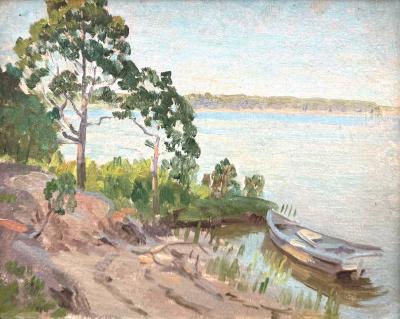
“Lakeshore Rowboat”
-
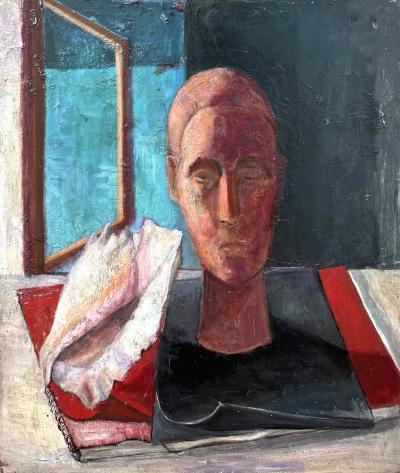
“Figure with Conch Shell”
-
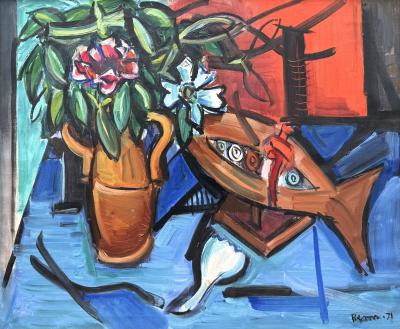
“Still Life - Wooden Fish”
-
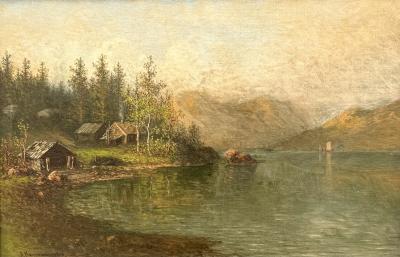
“Norwegian Lakeside Landscape”
-
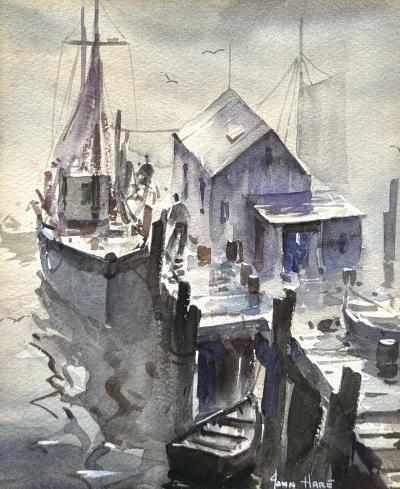
“In Gloucester Harbor”
-
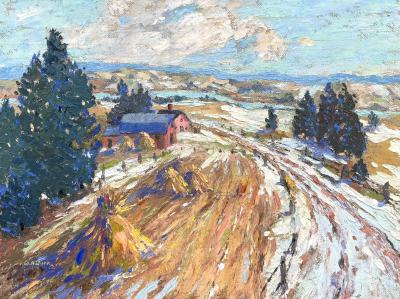
“Haystacks in a Winter Thaw”
-
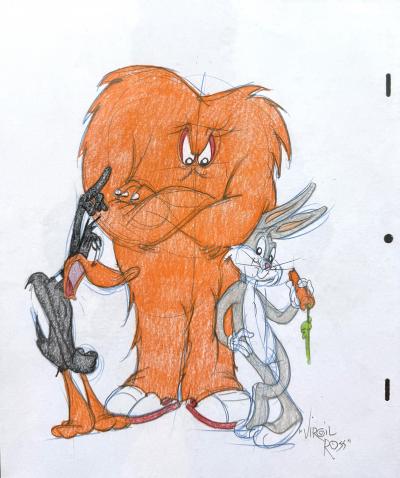
“Gossamer, Daffy Duck and Bugs Bunny”
-
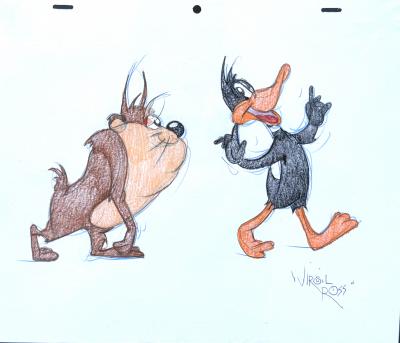
“Tasmanian Devil and Daffy Duck”
-
“Gossamer, Bugs Bunny and Marvin the Martian”
-
“Untitled Abstract”
-
“Avenue des Champs-Elysees, Paris”
-
“Voilier en Bretagne”
-
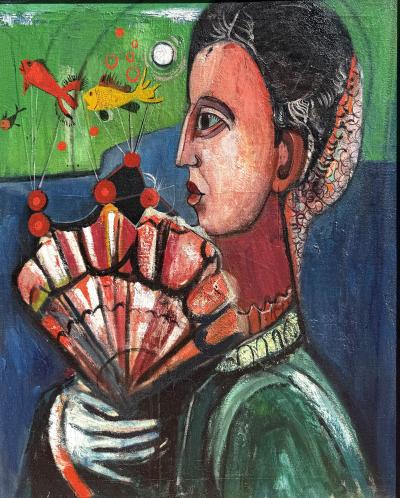
“Gentleman with Fan and Gold Fish”
-
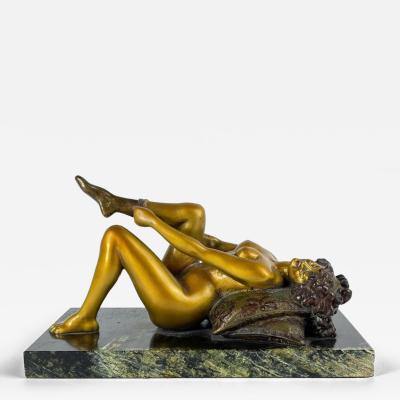
“Reclining Female Nude”