










Offered by:
Masterpiece Antiques
Stefan Uhlir, Am Holzpoldlgut 11,
Lichtenberg 4040 , Austria
Call Seller
43.650.423.5262
Showrooms
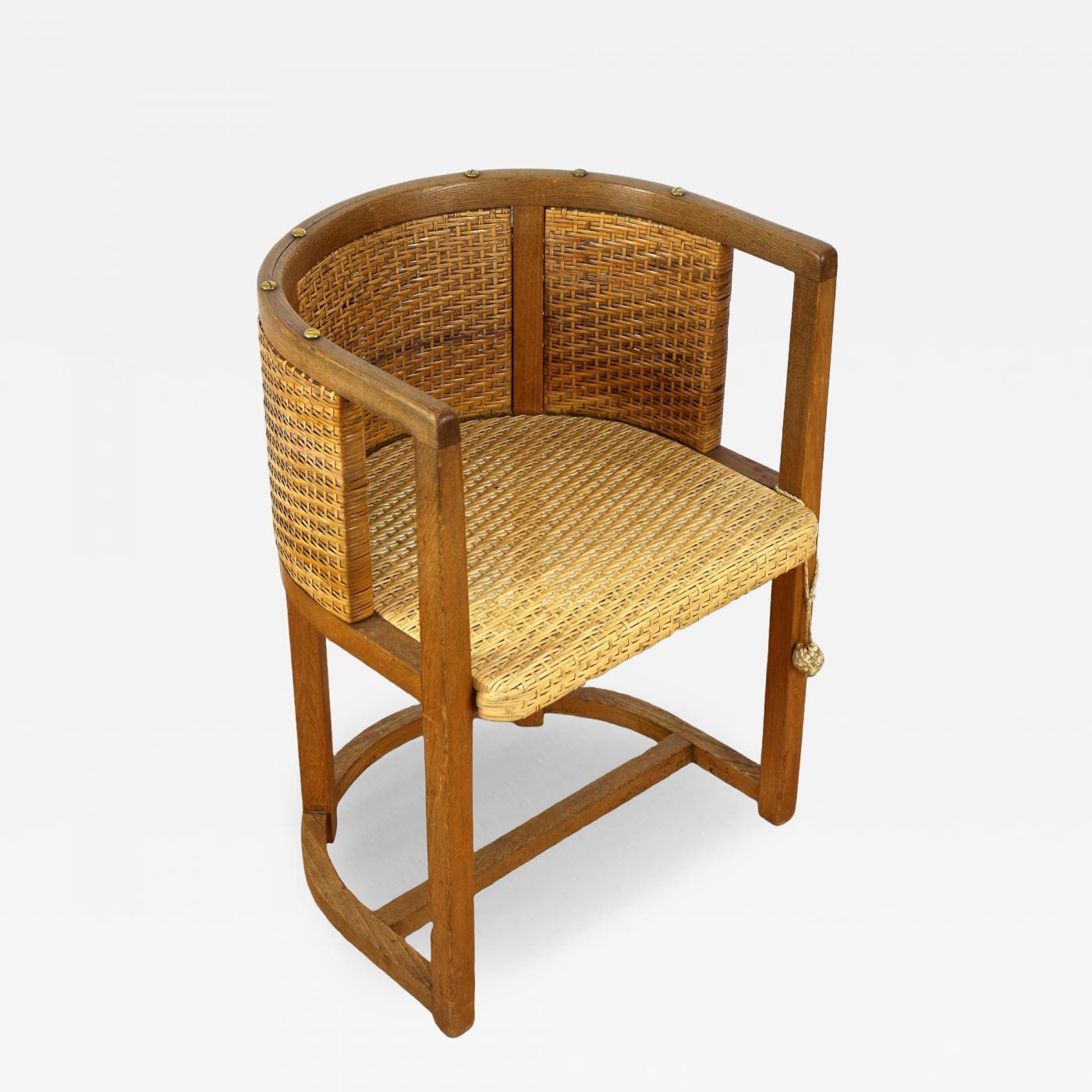
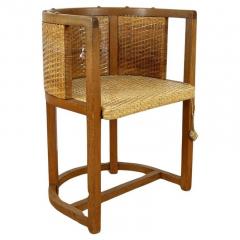
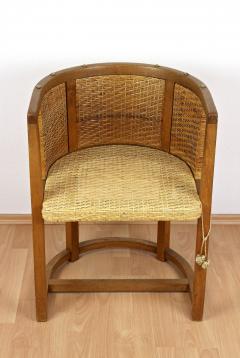
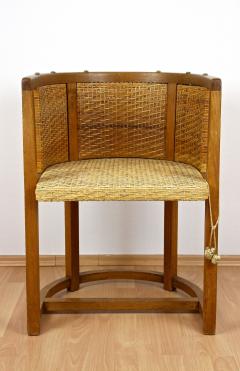
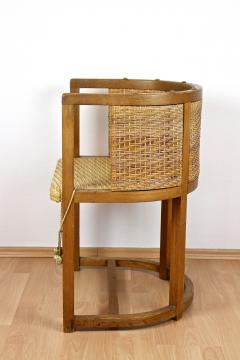
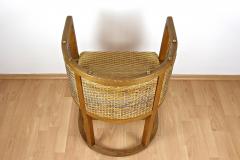
20th Century Art Nouveau Armchair Mod. 1307 by Prag-Rudniker, Austria ca. 1903
-
Description
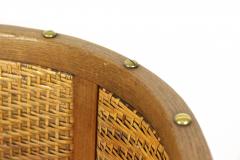
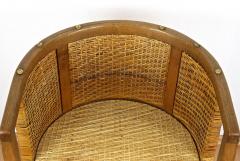
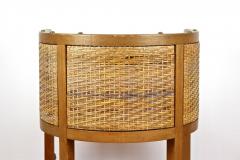
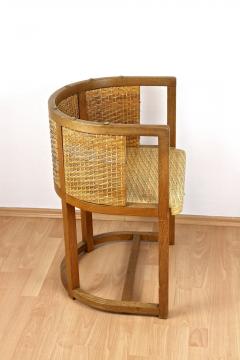
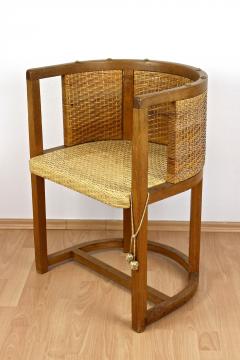
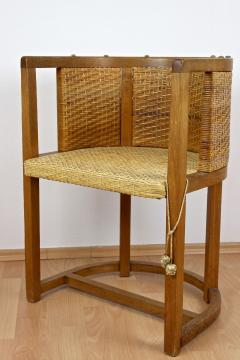
Extraordinary early 20th century Art Nouveau armchair - Mod. 1307 (first edition!) - designed by Wilhelm Schmidt and manufactured by the famous basketwork company of Prag-Rudniker in Vienna. Made of solid elmwood around 1903, this real rare design icon comes in great original condition, only the woven rattan seating surface had to be renewed. The outstanding design from W. Schmidt makes this fantastic wooden clubchair an absolute timeless piece of seating furniture, even if its already over 122 years old. Six decorative brass screws on top of the backrest finalize the exceptional look of this unique Art Nouveau armchair/ clubchair from Vienna - Austria. Marked with the metal plaque "Prag-Rudniker" at the bottom.
About Prague-Rudnik Basketry Factory:
The "Prague-Rudnik Basketry Factory" began in 1877 in Rudnik (Galicia), where Ferdinand Ernst Count Hompesch founded a basket-weaving school. The distribution of the products was entrusted to the Prague merchants Karl and Josef Kraus. Karl and Josef Kraus eventually founded the "Prague-Rudnik Basketry Factory," which was registered in the commercial register in 1886. The main office was located in Prague and was moved to Vienna in the beginning of the 20th century, where a branch had already been located on Mariahilferstrasse since the company's founding.
Prague-Rudnik quickly rose to become a large trading company, boasting of itself as "the largest company on the continent in basketry." The company employed around 2,500 people and had factories in Budapest, Prague, Rudnik, and Vienna. It also had branches in Germany, France, England, the Middle East, and the USA. therefore represented worldwide.
Hans Vollmer (1879-1946), a student of Josef Hoffmann, was employed as a key designer at the company from 1901 onwards. He introduced the square and cube forms into the wicker furniture design. In addition to willow rods, rattan (also known as wicker or rattan cane), made from palm trees, was also used. The frame construction was made from local elm wood, a particularly hard and elastic wood.
When Vollmer established his own architectural practice in 1905, Wilhelm Schmidt (1880 – after 1928) took up his position as chief designer at Prag-Rudniker and was appointed to a "leading position" in 1903: "...the majority of the charming and solid furniture produced by this company is designed by Schmidt. It is by no means merely wickerwork furniture; rather, a considerable amount of joinery work is required, especially on the better pieces."
Schmidt, who had also been with the company since 1901, had, like Vollmer, received his training from Josef Hoffmann. Therefore, it is not surprising that geometric forms also played an important role in his work. -
More Information
Documentation: Signed Origin: Austria Period: 1900-1919 Materials: elmwood, rattan, brass Condition: Good. *breathtaking original condition - only the seating surface has been renewed Creation Date: 1903 Styles / Movements: Modern, Art Nouveau Dealer Reference #: AN-AC05 Incollect Reference #: 854713 -
Dimensions
W. 21.26 in; H. 29.53 in; D. 19.29 in; W. 54 cm; H. 75.01 cm; D. 49 cm;
Message from Seller:
Masterpiece Antiques, located in Linz, Austria, specializes in fine European antique furniture from periods including Baroque, Empire, Biedermeier, and more. For inquiries, contact office@masterpiece-antiques.com | +43 (0)650 4235262.
More Listings from Masterpiece Antiques View all 401 listings
-
20th Century Art Nouveau Wall Mirror - Bronzed, Austria ca. 1910
-
20th Century Murano Glass Vase "Jack In The Pulpit", Italy circa 1970
-
20th Century Art Nouveau Bentwood Chairs by KOHN, Set Of 2, Vienna ca. 1910
-
19th Century Rustic Tramp Art Wall Mirror, Handcarved, Austria circa 1880
-
Murano Glass Fish Sculpture, Blue/ Green Tones , Mid Century - Italy ca. 1970
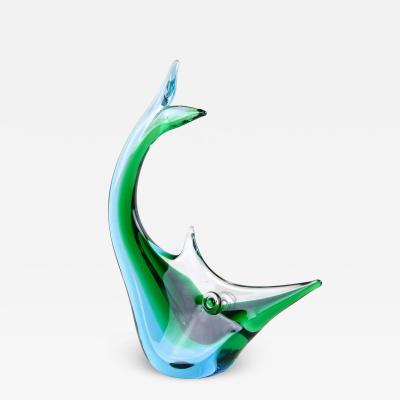
-
20th Century Octagonal Murano Glass Mirror With Glass Flowers, Italy ca. 1970s
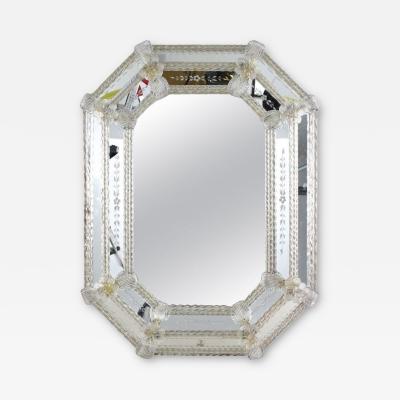
-
19th Century Rustic Black Forest Mirror, Doubleframe - Handcarved, AT ca. 1870
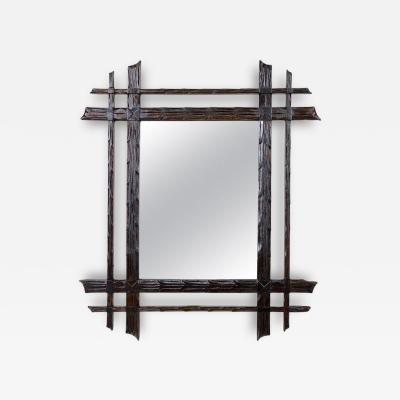
-
19th Century Rustic Tramp Art Wall Mirror, Handcarved, Austria ca. 1890
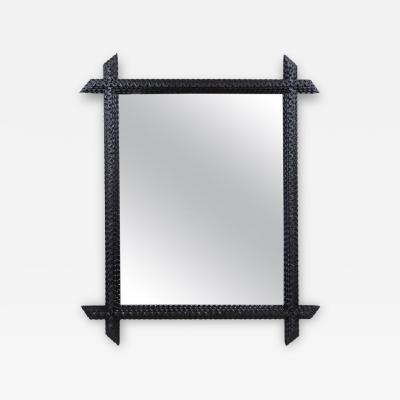
-
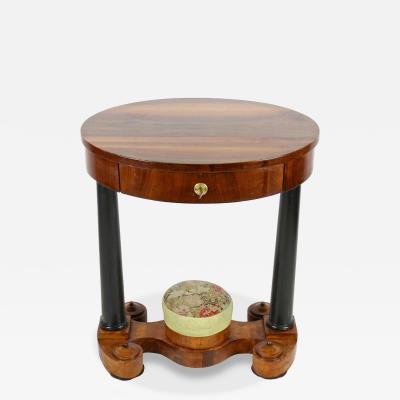
19th Century Oval Biedermeier Side Table, Nutwood , Hungary circa 1835
-
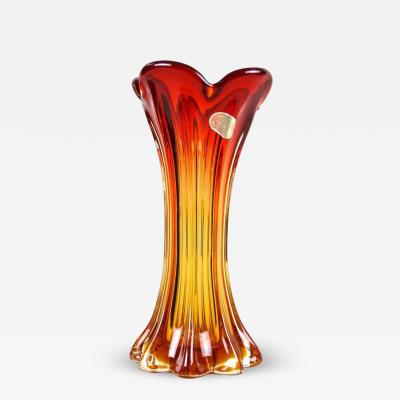
20th Century Murano Glass Vase, Mid Century - Red / Orange, IT ca. 1960/70
-
18th Century Baroque Cabinet With Inlay Works, Nutwood/ Plum/ Oak, AT ca. 1780

-
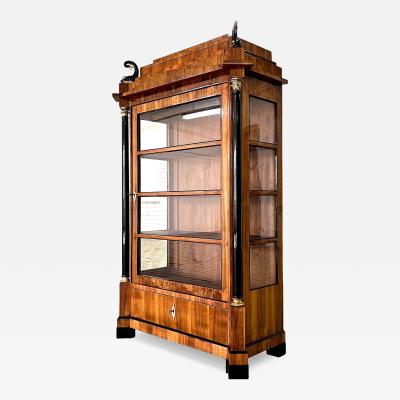
19th Century Empire Cabinet/ Vitrine With Mystical Figures , DE ca. 1850
-
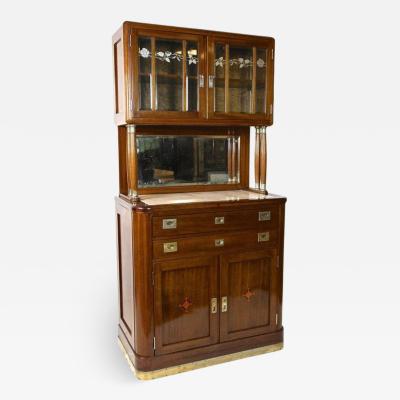
20th Century Art Nouveau Cabinet/ Buffet by H. Bäck,Mahogany, Austria ca. 1910
-
20th Century Murano Glass Centerpiece/ Bowl, Mid Century, Italy ca. 1960

