



Offered by:
Carlton Hobbs, LLC
PO Box 877
Tuxedo Park, NY 10987 , United States
Call Seller
212.423.9000
Showrooms
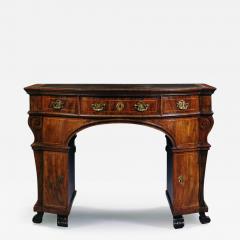
8013 THE NOSELEY HALL LIBRARY TABLES – A RARE PAIR OF BACK-TO-BACK MAHOGANY
-
Description
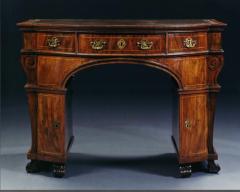
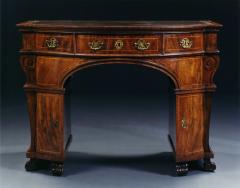
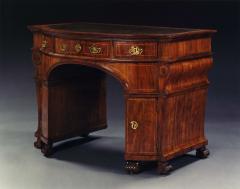
8013 THE NOSELEY HALL LIBRARY TABLES – A RARE PAIR OF BACK-TO-BACK MAHOGANY KNEEHOLE LIBRARY TABLES IN THE MANNER OF WILLIAM KENT English. Circa 1740. Measurements: Height: 29 1/2″ (75cm) Width: 41″ (104cm) Depth: 26 1/2″ (67cm) Depth of Straight Side: 20″ (51cm)
Of mahogany with gilt brass mounts and inlay. Each with bow fronted top with very old but later gilt and tooled leather inset, the frieze fitted to the front with three feather banded drawers, each drawer with a brass inlaid escutcheons and handle back-plates and brass handles, the arched kneehole flanked by bow fronted feather-banded cupboard doors, each with a brass inlaid escutcheon, the shaped sides, the whole raised on six scrolling feet. Possibly once with ratcheted reading stand whose outline is faintly observable beneath leather replaced crossbanded strip in rear of one table.
Provenance:
Noseley Hall, Leicestershire, seat of the Hazlerigg Family
The present tables are closely related, albeit in more simplified form, to a pair of mahogany pier tables of 1735, almost certainly designed by the celebrated architect and designer William Kent (figure 1).
That table was one of a pair with en suite pier glasses provided to Kent’s client and close associate Lady Burlington, by the carver John Boson who seems certain to have been working to a design by Kent. In a letter written at Bath in 1735, Lady Burlington refers to these tables, and to Kent using his nickname in that family: “I hope the Signior has remembered about my tables and glasses.”1
The present tables represent another version of the pier tables, with decorative elements eschewed in favor of a more purely architectural form. In the essentials of the design the tables are strikingly similar, with projecting central arched kneeholes below a substantial undermold. The frieze below is set with three drawers and is divided from the main body of the table by a band of molding running around the whole piece, repeated at the level of the springing of the arched kneehole that gives the tables their most marked accent. The giltwood owls to the sides of the pier table are in the present piece reduced to a voluted corbel that continues fluently as the curving sides of the present tables.
The present piece is also closely related to a single kneehole dressing table formerly in the collection of the 5th Lord Byron at Newstead Abbey. That piece, “an outstanding example of fine quality craftsmanship,”2 is, like the present piece, bow-fronted with an arched kneehole to the center. Significantly the bowed front incorporates conforming bowed drawers, as in the present pair of tables. In addition the kneehole is flanked to the edge by uprights with scrolling brackets towards the top. However, these uprights are treated as applied elements in the conventional manner rather than being incorporated into the body of the piece in the imaginative and satisfying manner of the present tables.
The back-to-back composition of the present library tables was an innovation in English furniture design in the reign of George II (1727-1760). Such tables, conceived as two halves of identical kneehole and pedestal form, could placed together as a center table, in which position, as Chippendale describes, “both sides were made useful”.3 However, they could also be used separately as side tables. The aforementioned pair of writing tables now at Chatsworth House, for example, were conceived with matching ensuite mirrors and, therefore, were likely designed as commodes. The furniture historian R.W. Symonds identified a group of tables of back-to-back design including two examples in the manner of William Kent; one of which, formerly in the collection of the Duke of Westminster, Symonds tentatively attributed to Kent himself.4 That example, is of well-proportioned form with an arched kneehole to the center of a projecting front. However, the tables differs from the present pieces in the elaborate decoration, with acanthine moldings, ring handles and a Greek key to the frieze.
Undoubtedly the most celebrated example of this rare form is a highly elaborate pair of commodes originally at Fonthill Splendens and likely to have been supplied to Alderman Beckford in the 1760s. For at least part of their history these commodes were used separately, rather than as a combined unit, as at the time of Phillip’s sale in August 1801 the pieces were in different bedrooms at the house and constituted different lots. Those pieces, one of which is now in the collection of the Victoria and Albert Museum, have been attributed to the celebrated furniture-maker John Channon and are of the finest workmanship, embellished with lavish gilt bronze mounts and brass inlay.5
Brass inlay also appears on the present tables as the back plates, shaped as a pierced asymmetric cartouches. The technique of brass inlay in this period is associated with John Channon and his circle, as the most prominent representative of a trade which flourished from the 1740s creating furniture of extremely high quality embellished with brass inlay of complex patterns and intricate forms.6
Inlaid brass back plates, though of simpler form than those of the present tables, appear on a cabinet with the name J. Graveley branded underneath the base which also features intricate brass inlay in panels bordering the mirror-fronted double doors.7
The present tables were formerly part of the collection of Noseley Park, Leicestershire. It seems likely, given the advanced and unusual nature of the design, that they were acquired by Sir Arthur Hesilrige, 7th Baronet (c1698-1763), a figure of considerable taste and sophistication. Having inherited his title as a minor Sir Arthur went on to re-establish his family’s fortunes, rebuilding the old house at Noseley in the years around 1728 and rejuvenating the ornamental gardens and canal. Part of the motivation for these architectural improvements was the need to accommodate a rapidly expanding collection of furniture, paintings and works of art. As Nichols says in his The History and Antiquities of the County of Leicestershire (1798), Sir Arthur was “an admirer of the fine arts, in 1723 he passed a considerable time in Italy, particularly at Rome, whence he brought home many curious antiques, with which he embellished the old family mansion.” 8
Footnotes:
1 Geoffrey Beard & Judith Goodison, English Furniture 1500-1840, Oxford: Phaidon and Christie’s (1987), p. 104.
2 R.W. Symonds, English Furniture: From Charles II to George II, London: The Connoisseur Ltd, p.93, figure 59.
3 Quoted in R.W. Symonds, ‘Back-to-Back Writing Tables’, Country Life, Volume CXX, No. 3113, September 13, 1956, p.533.
4 R.W. Symonds, ibid., p, 534, illustrated: figures 3 and 4.
5 Sotheby’s New York, The Collection of Mr. And Mrs. Saul P. Steinberg, Friday, May 26th, 2000, Lot 205.
6 Christopher Gilbert and Tessa Murdoch, John Channon and brass-inlaid furniture 1730-1760, New Haven and London: Yale University Press (1993), p.62-3.
7 Christopher Gilbert and Tessa Murdoch, ibid., p.1.
8 Quoted in Sotheby’s, Noseley Hall, Leicestershire, 28th and 29th September 1998, p. 45. -
More Information
In the Style of: William Kent Period: 18th Century Condition: Good. Styles / Movements: Traditional Incollect Reference #: 721982 -
Dimensions
W. 41 in; H. 29.5 in; D. 26 in; W. 104.14 cm; H. 74.93 cm; D. 66.04 cm;
Message from Seller:
Carlton Hobbs, LLC specializes in the acquisition, conservation, and research of 17th to 19th century British and Continental furniture and works of art, with a focus on pieces of exceptional merit, including royal and aristocratic provenance. For inquiries, contact 212.423.9000 or email stefanie@carltonhobbs.com.
More Listings from Carlton Hobbs, LLC View all 251 listings
-
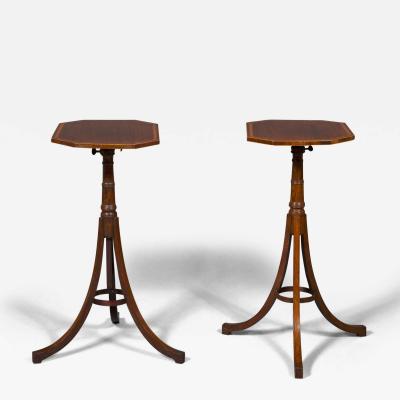
AN EXCEPTIONALLY WELL DRAWN AND FINE PAIR OF OCCASIONAL TABLES
-
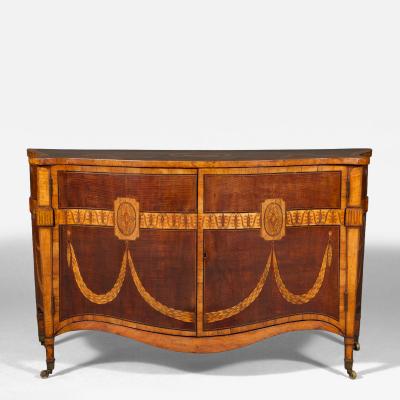
George III harewood and engraved boxwood marquetry serpentine two-door commode
-
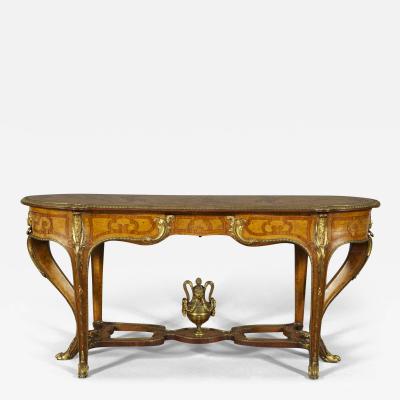
11170 A VERY FINE QUALITY MARQUETRY AND GILT BRASS MOUNTED CENTER table
-
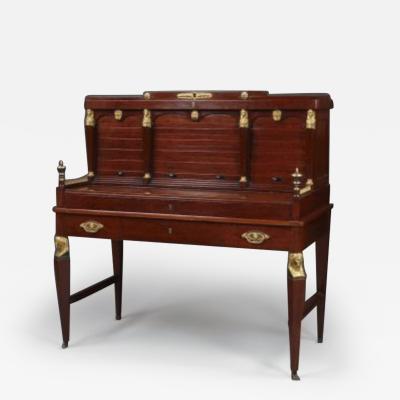
THE ROMANOV BUREAU AN IMPERIAL MAHOGANY GILT AND PATINATED BRONZE MOUNTED
-
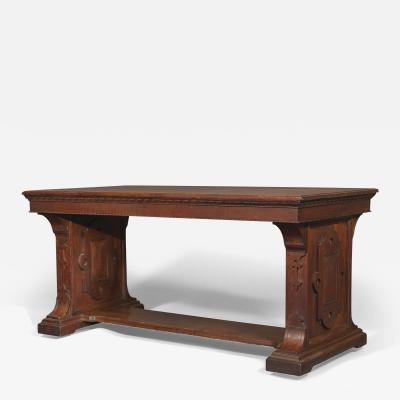
11606 AN INTERESTING AND UNUSUAL OAK LIBRARY TABLE
-
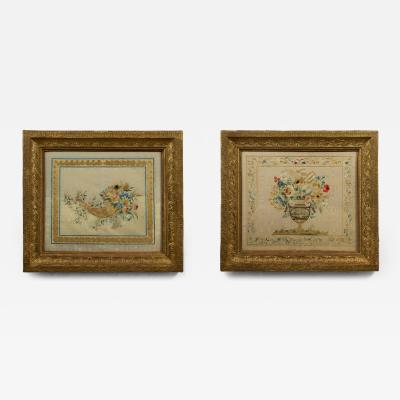
Pair of needlework panels in impressive original gilt carton-pierre frames
-
11140 AN INTERESTING CARVED OAK ARTS AND CRAFTS PERIOD LIBRARY OR CENTER TABLE

-
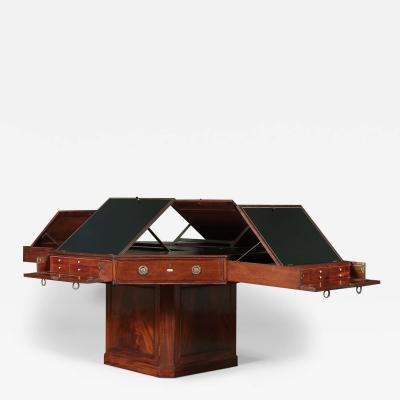
A SPECTACULAR GEORGE III MAHOGANY OCTAGONAL SWIVEL TOP LIBRARY TABLE
-
AN INTERESTING PAIR OF CARVED AND POLYCHROME PAINTED STANDS
-
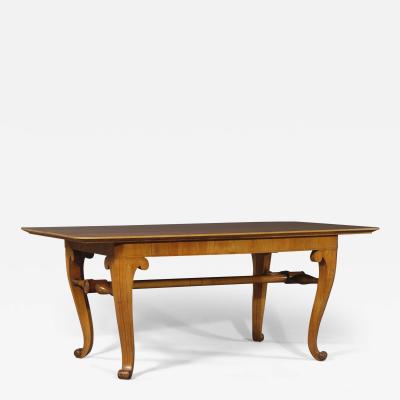
11539 A CHERRYWOOD VENEERED LIBRARY TABLE
-
11009d A SUPERB SET OF SIX REGENCY CARVED MAHOGANY SIDE CHAIRS

-
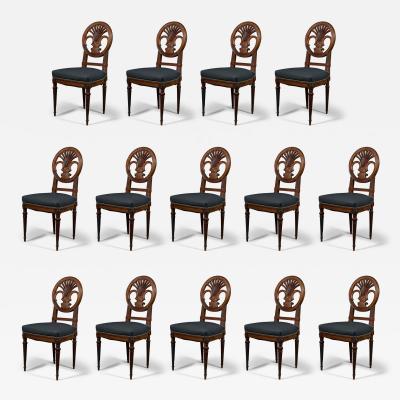
11684 A VERY RARE SET OF FOURTEEN MAHOGANY DINING CHAIRS
-
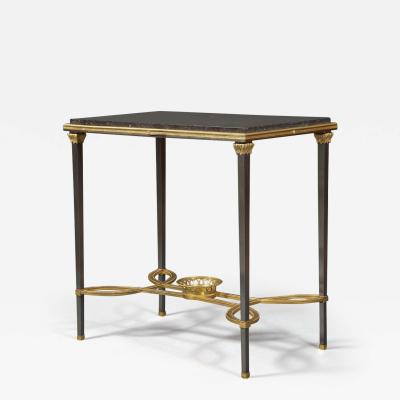
AN EXQUISITE STEEL AND GILT BRONZE CENTER TABLE WITH FOSSIL MARBLE TOP
-
Painting of a Boy Building a House of Cards, Accompanied by his Mastiff