






Asher Brown Durand
American, 1796 - 1886
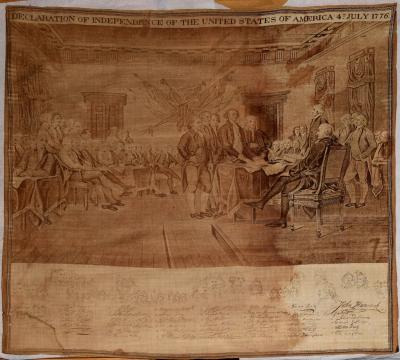
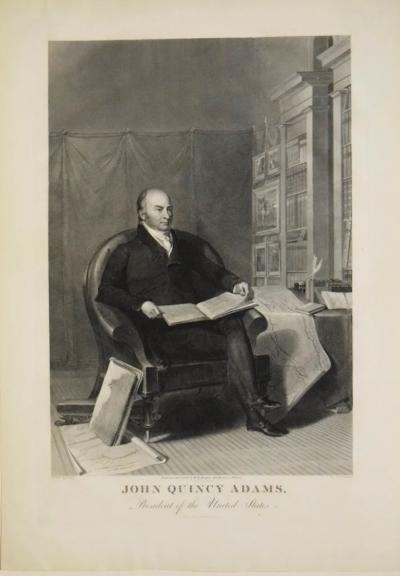
Asher Brown Durand, born in 1796, was best known as the "father" of the Hudson River School of landscape due to his similar aesthetics and style. Durand studied with the engraver Peter Maverick from 1812-17 and was made a partner in 1820. Durand completed an engraving of John Trumbull's historical painting "Declaration of Independence", which launched his reputation nation wide. Durand went on to head three different engraving companies and had many pupils. In 1835, he gave up the business to paint, beginning with portraiture but soon moving to landscapes.
In 1840, Durand toured Europe and then went on a painting excursion to the Adirondacks, after which so he turned exclusively to landscapes. Durand wrote his nine famous "Letters on Landscape Painting", that was printed in The Crayon in 1855. These letters outlined the principals that characterized the Hudson River School. He urged students to peruse individual style and turn away from contrived drama. Durand viewed nature as its own subject, not just scenery. He believed that one should paint from direct observation, realistically, to reach the spiritual moment caught in nature. Durand's work reveals atmospheric affects with precise detail, a finished surface and almost invisible brushwork. Durand died in 1886.
Biography courtesy of The Caldwell Gallery, www.antiquesandfineart.com/caldwell
In 1840, Durand toured Europe and then went on a painting excursion to the Adirondacks, after which so he turned exclusively to landscapes. Durand wrote his nine famous "Letters on Landscape Painting", that was printed in The Crayon in 1855. These letters outlined the principals that characterized the Hudson River School. He urged students to peruse individual style and turn away from contrived drama. Durand viewed nature as its own subject, not just scenery. He believed that one should paint from direct observation, realistically, to reach the spiritual moment caught in nature. Durand's work reveals atmospheric affects with precise detail, a finished surface and almost invisible brushwork. Durand died in 1886.
Biography courtesy of The Caldwell Gallery, www.antiquesandfineart.com/caldwell
Although born to a humble, middle class family, Asher B. Durand ultimately became one of the most important American painters of the 19th century. Durand began his life and artistic career in Newark, New Jersey where he was an apprentice and partner to the engraver Peter Maverick. Although Durand found great success in the medium of engraving (he created a famous reproduction of John Trumbull's Declaration of Independence) he eventually put down the burin for the paintbrush in 1835. Like most American painters, Durand produced a number of portraits until turning to the American landscape for inspiration. During the latter years of his life, Durand focused his artistic eye on the beautiful views enclosed within the forests and banks of the Hudson River Valley and expressed that which he saw in what David B. Lawall terms a "conceptual realism."
Durand's unique style and use of realism eventually earned him the title of both father and leader of the Hudson River School.
In addition to his artistic production, Durand also headed and joined a number of art organizations during his lifetime. For instance, Durand was a founding member of the National Academy of Design, of which he was president from 1845-1861, as well as co-founder of two associations devoted to the art of drawing: the New York Drawing Association and the New York Sketch Club. In these positions, Durand found himself a friend, mentor and teacher of many artists, such as Thomas Cole, John Frederick Kensett and John William Casilear. Durand also related his artistic theories and visions to the general public through his famous publication, "Letters on Landscape Painting" in the periodical The Crayon (co-edited by his son, John Durand). Today, Durand's works can be viewed in such esteemed collections as the Smithsonian American Art Museum and the Corcoran Gallery of Art in Washington, D.C., the Museum of Fine Arts, Boston and the Metropolitan Museum of Art in New York.
Selected Bibliography:
Falk, Peter Hastings, ed.. Who Was Who in American Art 1564-1975: 400 Years of Artists in America. Madison, CT: Sound View Press, 1999.
Durand, John. The Life and Times of A.B. Durand. New York: Kennedy Graphics, Inc. and Da Capo Press, 1970.
Lawall, David B. Introduction, in A.B. Durand 1796-1886. Newark, NJ: Schillat-Farrell Press, 1971.
Biography courtesy of Questroyal Fine Art, LLC, www.antiquesandfineart.com/questoroyal
In addition to his artistic production, Durand also headed and joined a number of art organizations during his lifetime. For instance, Durand was a founding member of the National Academy of Design, of which he was president from 1845-1861, as well as co-founder of two associations devoted to the art of drawing: the New York Drawing Association and the New York Sketch Club. In these positions, Durand found himself a friend, mentor and teacher of many artists, such as Thomas Cole, John Frederick Kensett and John William Casilear. Durand also related his artistic theories and visions to the general public through his famous publication, "Letters on Landscape Painting" in the periodical The Crayon (co-edited by his son, John Durand). Today, Durand's works can be viewed in such esteemed collections as the Smithsonian American Art Museum and the Corcoran Gallery of Art in Washington, D.C., the Museum of Fine Arts, Boston and the Metropolitan Museum of Art in New York.
Selected Bibliography:
Falk, Peter Hastings, ed.. Who Was Who in American Art 1564-1975: 400 Years of Artists in America. Madison, CT: Sound View Press, 1999.
Durand, John. The Life and Times of A.B. Durand. New York: Kennedy Graphics, Inc. and Da Capo Press, 1970.
Lawall, David B. Introduction, in A.B. Durand 1796-1886. Newark, NJ: Schillat-Farrell Press, 1971.
Biography courtesy of Questroyal Fine Art, LLC, www.antiquesandfineart.com/questoroyal
Asher Brown Durand, the son of a watchmaker and silversmith, served a five year apprenticeship to an engraver, Peter Maverick, in Newark New Jersey. After completing his apprenticeship, he became a partner in the business. His reputation as an engraver was firmly established with the publication of his engraving after John Trumbull's Declaration of Independence in 1823. Between 1821 and 1831 Durand helped found the New York Drawing Association (1825), the National Academy of Design (1826), and the Sketch Club (1827). Also during this period, he formed a partnership with his brother, Cyrus, and Charles C. Wright which specialized in the production of bank notes.
In 1832 Durand dissolved his profitable engraving business and entered into a short, successful period as a portrait painter. A financial panic in 1837 combined with encouragement from Thomas Cole led him to try landscape painting.
He became the second president of the National Academy of Design in 1845, a position he held until his resignation in 1861. In 1847 he helped found the Century Association.
He visited the White Mountains as early as 1839, and again from 1855 to 1857. The Crayon for November 1856 noted, "Mr. Durand's sketches of West Campton scenery, ... are both larger and of a different character than his previous studies, being almost wholly confined to mountain views."
The painting of Durand on this page was painted by Daniel Huntington in 1857 based on a trip to Franconia Notch in 1855 where Huntington accompanied Durand (see the Reference below).
Durand spent the rest of his life after 1857 painting in New York City.
References
New Hampshire Scenery
The Painted Sketch
Credits
Portrait of Asher Brown Durand, The Painted Sketch, page 143.
Biography courtesy of Roughton Galleries, www.antiquesandfineart.com/roughton
In 1832 Durand dissolved his profitable engraving business and entered into a short, successful period as a portrait painter. A financial panic in 1837 combined with encouragement from Thomas Cole led him to try landscape painting.
He became the second president of the National Academy of Design in 1845, a position he held until his resignation in 1861. In 1847 he helped found the Century Association.
He visited the White Mountains as early as 1839, and again from 1855 to 1857. The Crayon for November 1856 noted, "Mr. Durand's sketches of West Campton scenery, ... are both larger and of a different character than his previous studies, being almost wholly confined to mountain views."
The painting of Durand on this page was painted by Daniel Huntington in 1857 based on a trip to Franconia Notch in 1855 where Huntington accompanied Durand (see the Reference below).
Durand spent the rest of his life after 1857 painting in New York City.
References
New Hampshire Scenery
The Painted Sketch
Credits
Portrait of Asher Brown Durand, The Painted Sketch, page 143.
Biography courtesy of Roughton Galleries, www.antiquesandfineart.com/roughton

 Loading...
