












Offered by:
Robert Funk Fine Art
1581 Brickell Ave., Suite 2303
Miami, FL 33129 , United States
Call Seller
305.857.0521
Showrooms
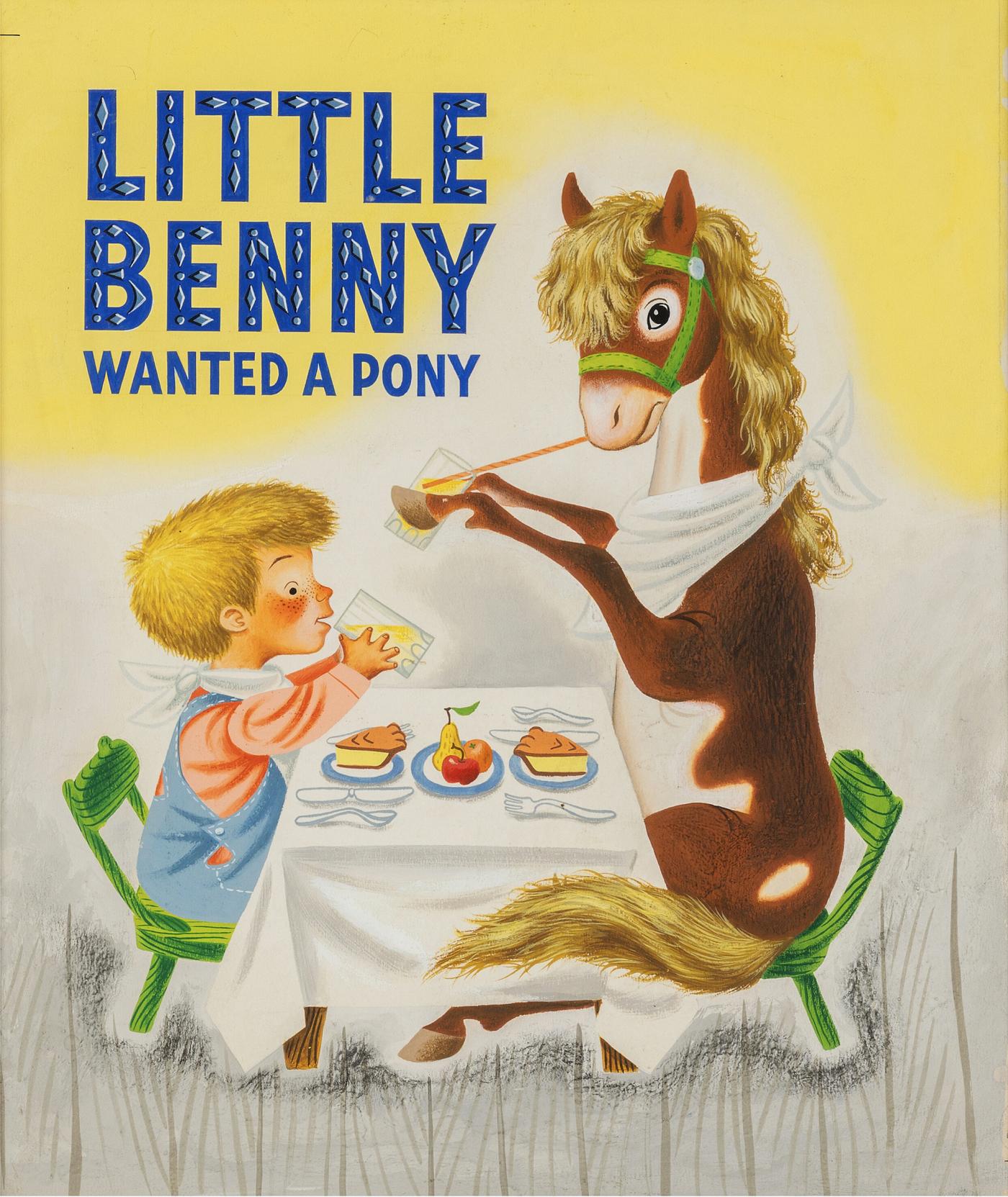
Little Benny Wanted a Pony Little Golden Book Cover Illustration Original Art
-
Description
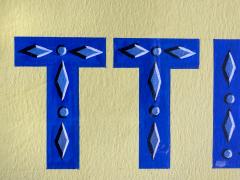
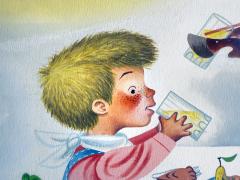
Little Benny Wanted a Pony, from Little Golden Books, is a classic in the children's book genre. Famed Illustrator Richard Scarry succeeds in connecting people's lives, but in his case, it is an adult connecting with a child via the fantasy world of his paintings. So is the unique talent of a children's book illustrator. Scarry's talent as a child whisperer does not end there. He is an artist who has crafted a unique style that draws on the flatness and simplicity of modernism and cartooning, combined with the psychological insight of an artist like Paul Klee. His stylized graphic shapes create a strong visual impact and clarity, communicating a narrative that a child can understand and an adult can cherish. Notice how Scarry has handled the display typeface. It's legible and attractive, with a branding that creates an immediate impact. His font stems are composed of meticulously crafted alternating diamond and circular shapes. On close inspection, it's clear the artist spent a great deal of time getting the minute details correct.
Unsigned, Nicely framed under glass. to 21,25 x 19.25
Bio from Wikipedia
Scarry was born in Boston, Massachusetts to Mary McClure and John Scarry Sr., who were of Irish-American ancestry and ran a small department store chain. Scarry had four siblings: older brother John Jr., younger sister Barbara, and younger brothers Edward and Leo. The family enjoyed a comfortable life at their 32 Melville Avenue home in the Dorchester neighborhood,even during the Great Depression.
Following high school, Scarry enrolled in Boston Business School, but dropped out in 1938.[8] He then studied at the School of the Museum of Fine Arts in Boston, the Archipenko Art School in Woodstock, New York, and the Eliot O'Hara Watercolor School in Goose Rocks, Kennebunkport, Maine, before being drafted into the U.S. Army in 1942.
Career
After entering the Army, Scarry was assigned to the military's radio repair school. After small success at that trade, he was chosen to paint a large sign and was then made an art director after receiving a medical dispensation "from strenuous physical activity." Later he became "Editor and Writer of Publications for the Information and Morale Services Section of the Allied Force Headquarters", served in North Africa, and was discharged from the Army in 1946. After the war, Scarry worked in magazine and advertising in New York City, including a very brief stint at Vogue. In 1949, he made a career breakthrough with Little Golden Books.
Scarry's most famous series of books was about Busytown and revolved around anthropomorphic animals. While his books are largely populated by common animal species, he proved to be quite adept at giving human characteristics to a seemingly endless number of creatures, machines, and creations. Many of his later illustrations feature characters in traditional Swiss clothing and show architecturally correct drawings of half-timber houses.
The fabric of Scarry's world was woven with a strong sense of community and cooperation. His characters work together, be it building a house or constructing a highway. And he endowed his characters with an honest humanity that underscores his tales. Scarry knew children needed to know that they did not have to be perfect all the time.[11]
A snapshot of Scarry's illustration style from the book Busy, Busy Town
Scarry was a disciplined worker.[8] Scarry was closely associated with mass-market children's publisher Ole Risom. They worked together on dozens of books, including I Am a Bunny, which Risom wrote and Scarry illustrated. First published in 1963, it remained in print into the 2000s.[12] Risom and Walter Retan also co-wrote an illustrated biography, The Busy, Busy World of Richard Scarry.[13] In the 1980s and 1990s, many of Scarry's Best Ever books were produced as animated videos and aired during TLC's now-defunct Ready Set Learn! block. The Busytown books were also adapted into an animated series, The Busy World of Richard Scarry, which was produced by Canada-based CINAR (now WildBrain) and Paramount Television and aired on the pay-TV channel Showtime from 1993 to 1997. It reran in the late 1990s on Nickelodeon and its sister channel Noggin (now the Nick Jr. Channel). A further animated series, Busytown Mysteries, was commissioned by CBC from the Cookie Jar Group (the successor to CINAR) in 2007, and it aired on the Kids' CBC morning program block.
Busytown was featured at the Carnegie Museums of Pittsburgh from June 13 to September 8, 2002, in an interactive exhibit, Richard Scarry's Busytown.[14] His books were popular with children throughout the world, with over 100 million copies sold.[2]
Scarry's papers and drawings are collected in the University of Connecticut archives.
Personal life and family
While working as a freelance illustrator, Scarry met Patricia "Patsy" Murphy, a writer of children's textbooks, when they collaborated on one of her books; they married in 1948. She is credited with writing many of the stories in his subsequent children's books, such as Good Night, Little Bear; The Bunny Book; and The Fishing Cat. Before moving to Europe, the family lived on a farm in Ridgefield, Connecticut.
In 1972, Scarry and his wife moved to Lausanne, Switzerland. In 1974, they bought a chalet in nearby Gstaad, where Scarry enjoyed spending time with his adult son, Richard Scarry Jr., skiing, coin collecting, and sailing.
Scarry's son is also an illustrator, who sometimes works in his father's style, using the name Huck Scarry. He moved to Vienna, Austria, and has four children.
Death
On April 30, 1994, in Gstaad, Switzerland, Scarry died of a heart attack, caused by complications from esophageal cancer, at age 74
Scarry began his book career in 1949 as an illustrator of books by other people, specifically Kathryn & Byron Jackson's Mouse's House. He continued as only or primarily an illustrator through 1955, then began turning out original books.
His titles, in order of publication, are:
Bibliography
Golden Books
Mouse's House, 1949
Duck and His Friends, 1949
Two Little Miners, 1949
My Little Golden Dictionary, 1949
Christopher Bunny and Other Animal Stories, 1949
First Book Ever, 1950
Animals' Merry Christmas, 1950
Here Comes the Parade, 1951
The Gingerbread Man, 1953
Rabbit and His Friends, 1954
The Party Pig, 1954
Pierre Bear, 1954
The Bunny Book, 1955
Nursery Tales, 1958
Rudolph the Red Nosed Reindeer, 1958
Cars and Trucks, 1959
Firemen and Fire Engine Stamps, 1959
Naughty Bunny, 1959
Just for Fun 1960
Chicken Little, 1960
Tinker and Tanker Out West, 1961
Tinker and Tanker and Their Space Ship, 1961
Tinker and Tanker and the Pirates, 1961
Good Night, Little Bear, 1961
The Country Mouse and The City Mouse, 1961
The Hickory Dickory Clock Book, 1961
Tommy Visits the Doctor, 1962
My Little Golden Book of Manners, 1962
Manners, 1962
What Animals Do, 1963
A Tinker and Tanker Coloring Book, 1963
I Am a Bunny 1963
Chipmunk's ABC, 1963
The Rooster Struts, 1963
Tinker and Tanker, Knights of the Round Table, 1963
Tinker and Tanker in Africa, 1963
Polite Elephant, 1964
Is This the House of Mistress Mouse? 1964
Feed the Hippo His ABC's, 1964
Animal Mother Goose, 1964
Best Nursery Rhymes Ever, 1964 (reprinted as Best Mother Goose Ever)
Busy, Busy World, 1965
Teeny Tiny Tales, 1965
The Santa Claus Book, 1965
The Bunny Book, 1965
Storybook Dictionary: A Giant Golden Book, 1966 (reprinted as Best Picture Dictionary Ever)
Planes, 1967
Trains, 1967
Cars, 1967
Egg in the Hole Book, 1967
Springtime Tales, 1967
Autumn Tales, 1967
Winter Tales, 1967
Best Story Book Ever 1967
What Do People Do All Day? 1968
The Early Bird/Lowly Worm Meets the Early Bird 1968
What Animals Do, 1968
The Great Pie Robbery, 1969
The Supermarket Mystery, 1969
Great Big Schoolhouse 1969
Summer Tales, 1970
Great Big Air Book 1971
Look and Learn Library
Fun with Words
Things to Know
Going Places
Best Stories Ever
Hop Aboard! Here We Go! 1972
Funniest Storybook Ever 1972
Nicky Goes to the Doctor, 1972
Silly Stories, 1973
Babykins and His Family, 1973 -
More Information
Documentation: Ample Provenance Origin: United States, Connecticut Period: 1950-1979 Materials: Gouache on Illustration Board Condition: Good. very good Creation Date: 1950 Styles / Movements: Modernism, Outsider Art, Illustration Article References: Little Golden Books Incollect Reference #: 845573 -
Dimensions
W. 11 in; H. 13 in; W. 27.94 cm; H. 33.02 cm;
Message from Seller:
Robert Funk Fine Art in Miami offers an eclectic collection shaped by 45 years of experience, blending art with commercial perspectives. For inquiries or art advisory services, contact Robert Funk at decoypoet@yahoo.com or 305.857.0521.
More Listings from Robert Funk Fine Art View all 1158 listings
-
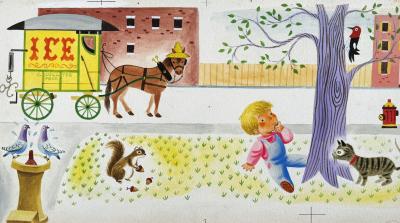
Richard Scarry Little Benny Wanted a Pony Illustration Children Book Illustrator
-
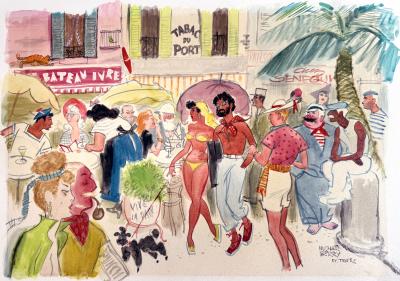
St. Tropez Glamorous Star Struck Period Painting from the Brigitte Bardot Era
-
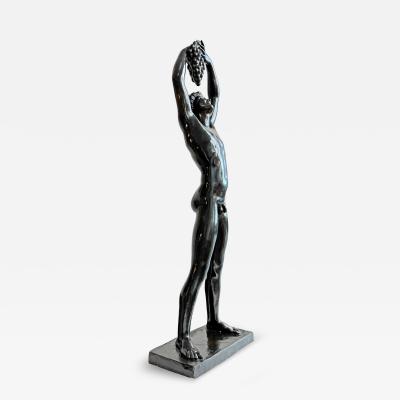
Art Deco Erotic Male Nude Bronze Sculpture Gay Interest
-
Androscoggin River Falls, study for The Manufacturers National Bank of Lewiston
-
Mail Art Correspondence Art Pioneer Two Envelops and Collage Signed
-
Wedding Day - Norman Rockwell Americana - Female Illustrator

-
Portrait of a Little Girl

-
Audrey Hepburn Portrait from Breakfast at Tiffany original artwork on paper
-
On Kawara is Predated in Conceptual Use of Numbers or Word Art by Ray Johnson
-
Mail Art Early Conceptual Art Neo-Dada and Early Pop Art
-
Damballa Ceremony Original Painting of Haitian Art Vodou Ceremony
-
Portrait Champetre
-
India's Nehruand Gandhi Time Magazine Cover Original Art Signed
-
Haitian Surrealism Children in a Swirling Dance