









Offered by:
Carswell Rush Berlin Antiques
P.O. Box 210, Planitarium Station
New York City, NY 10024 , United States
Call Seller
646.645.0404
Showrooms
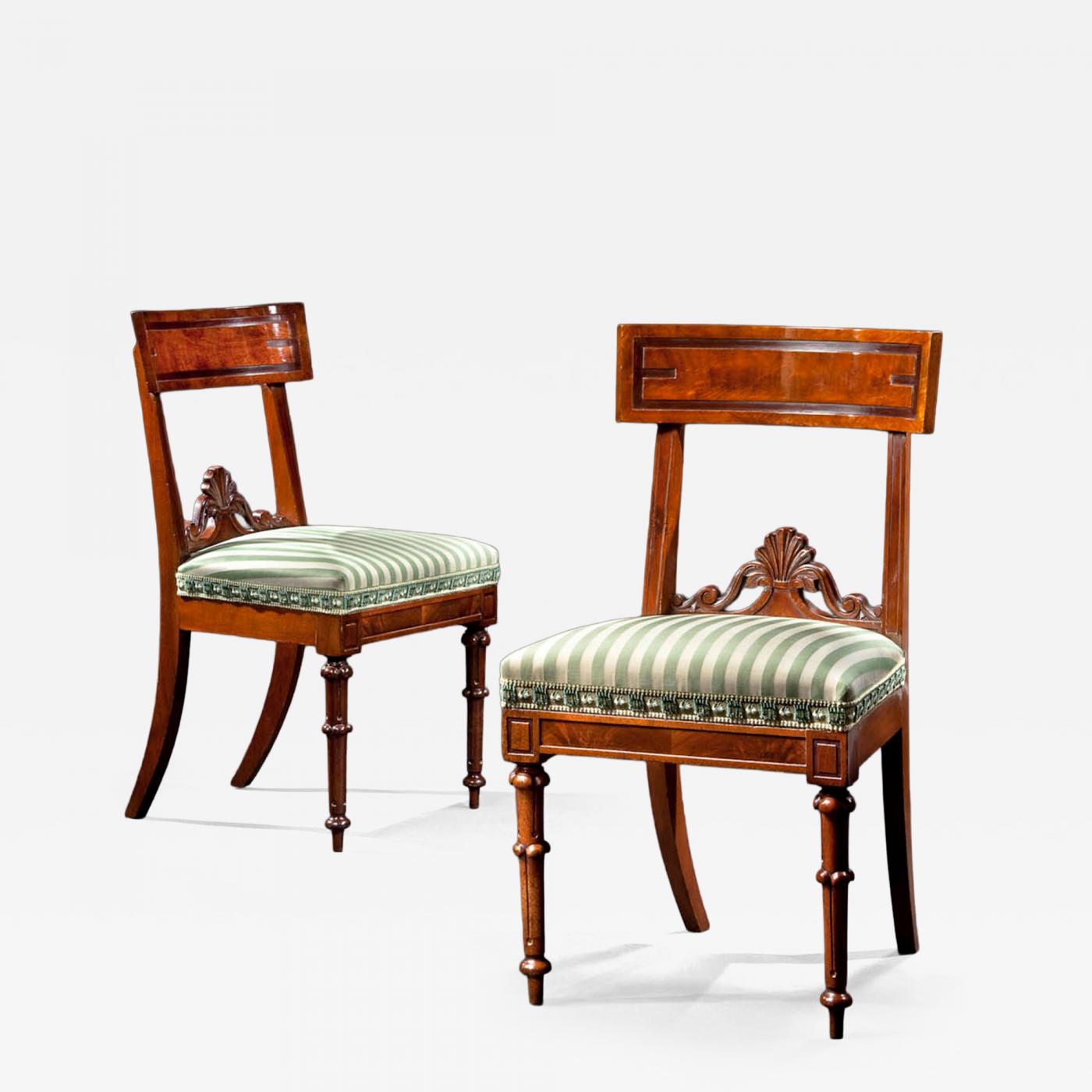
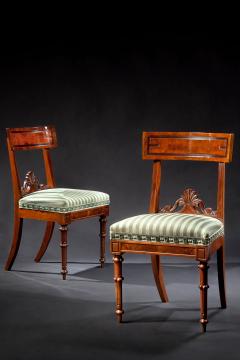
Pair of Dining Chairs
-
Description
Pair of dining chairs, Richard Parkin (1787-1861)
Philadelphia, 1835-1840
The pair with Klismos-type curved crest rail with incised border and flame walnut veneer supported by paneled styles, a highly distinctive stay rail of a stylized anthemion issuing scrolls sits above an upholstered seat with paneled seat rail and paneled dies above the turned, tapering front legs with Gothic-type decoration.
H: 32¾” W: 18” D: 18”
Condition: Excellent:
Published: Jonathan A. Boor, Allison, John, Peter and Christopher Boor, Philadelphia Empire Furniture (Hanover, University Press of New England, 2006), p.310.
Carswell Rush Berlin, Classical Furniture in Federal Philadelphia, Antiques and Fine Art Magazine, (Spring 2007), p. 192-199.
Carswell Rush Berlin, “A Shadow of a Magnitude: The Furniture of Thomas Cook & Richard Parkin,” Luke Beckerdite, Ed. American Furniture (Chipstone Foundation, 2013), p. 186, fig. 54.
A set of eleven identical chairs in the collection of the Landis Valley Museum in Lancaster, PA. bear the label of RICHARD PARKIN/ CABINET – MAKER/ EGYPTIAN HALL/ 134 South Second Street/ Philadelphia.[1]
This chair design is largely original and can not be found in any period pattern book. By 1835, very few American firms produced genuinely original, high-style pieces and most of the furniture trade had devolved into production of simple plain-style furniture in which the figure of the veneer was the primary decorative element, with few if any distinctive regional characteristics. Chairs of this caliber set Parkin apart from the majority of his competitors, not just in Philadelphia but in the United States, and establish him on a very high plain.
Richard Parkin was born in England about 1787 and died in Philadelphia on September 16, 1861.[3] He was buried in the American Mechanics Cemetery on Islington Lane at 27th Street.[4] It is likely that he received his training in England and it is believed that he arrived in Philadelphia shortly before beginning to appear in city directories in partnership with Thomas Cook.
Cook and Parkin was among the largest, most successful and long-lived cabinetmaking firms in Philadelphia of the Classical period. They are listed in partnership in Philadelphia directories for the first time in 1819 at 26 Bank Street as Chair Manufacturers and then moving in 1820 to 56 Walnut Street, where the partnership would be listed as Cabinet Makers until 1833. Cook also appeared alone as a cabinetmaker in 1819 in Paxton’s Directory at 4 Fromberger’s Court. In 1829 both partners began working outside the partnership at separate addresses, Parkin at 94 South Third Street (at Chestnut) and Cook at 7 Pear (running East-West between Dock and Third, between Walnut and Spruce).[5] By 1833 Parkin was listed at 134 South Second Street, known as “Egyptian Hall”, in a building he leased from cabinetmaker Joseph Barry, while Cook returned to 56 Walnut upon the total dissolution of the partnership.[6] Parkin continued until 1848 to be listed at 134 South 2nd.[7] He continued to work up until a year before his death, moving from Egyptian Hall to Lewis below Thompson in 1848 and was joined there by his son Thomas in 1853 through 1855 when Thomas died.[8] For four years, beginning in 1856, Richard operated a steam sawmill first at 399 Broad then 683 North Broad and finally at Spring Garden where, it seems, he was joined by Richard, Jr. Richard is last listed as a cabinet maker in 1860 on Spring Garden as Richard Parkin & Son (Richard Parkin, Jr.), when he was living with Richard Jr. at 540 North 12th.
Among the most significant and best known pieces by the firm is an important sideboard in the collection of the Baltimore Museum of Art bearing the Walnut Street label and dating, presumably, to 1826-1833. Inspired by a design in Thomas Hope’s 1807 Household Furniture, it is pictured in Wendy A. Cooper’s Classical Taste in America 1800-1840 (Baltimore Museum of Art, 1993), p. 56.
Most of the surviving furniture by these cabinetmakers displays a keen sense of high fashion and demonstrates a deep knowledge of period English and French pattern book designs but it also manifests that level of creativity that enabled the very best American cabinetmakers to move beyond the pattern book to create a wholly original and successful design. These chairs are an excellent example.
Cook & Parkin in Museum collections
These cabinetmakers have begun to get the attention they deserve from American museums. A cabinet and a drum table by Cook & Parkin have recently been added to the collection of the Philadelphia Museum and the Art Institute of Chicago has recently acquired an identical chair to the present set by Richard Parkin. Winterthur has recently identified a chair in their collection as by Parkin.
S-S-SBH-961301
[1] Berlin, Carswell Rush, A Shadow of a Magnitude: The Furniture of Thomas Cook & Richard Parkin, Luke Beckerdite, Ed. American Furniture (Chipstone Foundation, 2013), p. 186, fig. 54.
The label, now separated from the chair, has a corrected address changed from 123 South Second Street to no. 134 and is also inscribed “Whitfield,” a family name in the provenance of this set. The set descended in the Reigart family of Lancaster, Pa.; the original owner probably being Emanuel Carpenter Reigart (1796-1869) and Barbara Swarr (1800-1838).
[2] A pair of rosewood arm chairs, probably en suite with the set of six rosewood side chairs, is also known.
[3] Parkin’s year of birth is uncertain as the 1850 and 1860 census information is inconsistent and neither date comports with that given in his death notice in the Philadelphia Public Ledger, September 18, 1861 and his City Death Certificate. He is recorded as being 60 years old in 1850, 68 years old in 1860 and 74 years old at his death in 1861. The Death Certificate date has been used to calculate his birth year.
[4] His grave site in Div. B, Sec. 5, lot 30, grave 4, was moved in the mid-1950’s when this cemetery was closed. The location of his remains and those of many family members is unknown.
[5] Robert DeSilver’s Philadelphia Directory
[6] Wendy A. Cooper, Classical Taste in America 1800-1840 (Baltimore Museum of Art, 1993) p. 270
[7] It is interesting to note that Parkin was working in close proximity to two of Philadelphia’s most famous cabinetmakers; Anthony Quervelle at 126 South Second Street (1825-1848), and Michel Bouvier at 91 South Second Street (1825-1844) and James MacDonald’s Cabinet, Chair and Sofa Warehouse was across the street at 135 S. 2nd.
[8] Because a Richard is also listed from 1853 and ’54 at other addresses it is logical to assume these must be the first listings of Richard, Jr., Richard’s third son and the youngest of his six children. -
More Information
Documentation: Documented elsewhere (similar item) Period: 19th Century Creation Date: 1835-1840 Styles / Movements: Traditional, Gothic Incollect Reference #: 846950 -
Dimensions
W. 18 in; H. 32.75 in; D. 18 in; W. 45.72 cm; H. 83.19 cm; D. 45.72 cm;
Message from Seller:
Welcome to Carswell Rush Berlin Antiques, a premier New York City-based dealer specializing in American antique furniture and decorative accessories from the Classical period (1800-1840). For inquiries, please contact us at 646.645.0404 or email carswellberlin@msn.com.
More Listings from Carswell Rush Berlin Antiques View all 67 listings
-
Inlaid Octagonal Checker Board

-
Carved and Ebonized Anglo-Indian Center Table

-
Pair of Art-Deco Venetian Carved Silver-Leafed Corbels or Wall Brackets

-
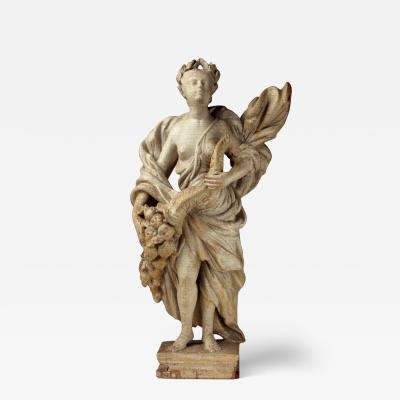
“Plenty” a wood sculpture
-
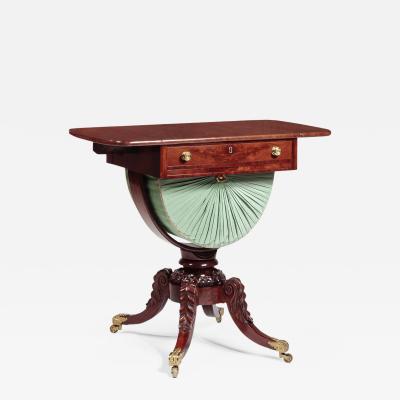
Carved Mahogany Work Table with Demi-Lune Bag
-
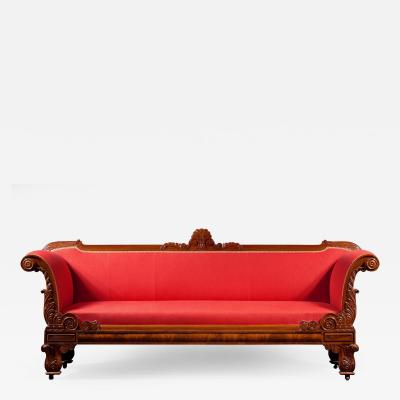
Classical Carved Mahogany Sofa
-
Slant-Top Pedestal Desk
-
Fine Sheraton Carved Mahogany Drop-Leaf Dining Table, 1820
-
Rare Carved Mahogany Elliptic Bureau with Egyptian Herms

-
Set of Eleven Wedgwood Dinner Plates with matching Meat Platter
-
Square Elliptic Sarcophagus Cellaret
-
Set of 12 Classical Mahogany Dining Chairs, c. 1830

-
Carved Mahogany Love Seat

-
Blue and White "Beauties of America" Meat Platter with the United States Capitol

