







Offered by:
Macklowe Gallery, Ltd
445 Park Avenue
New York City, NY 10022 , United States
Call Seller
212.644.6400
Showrooms
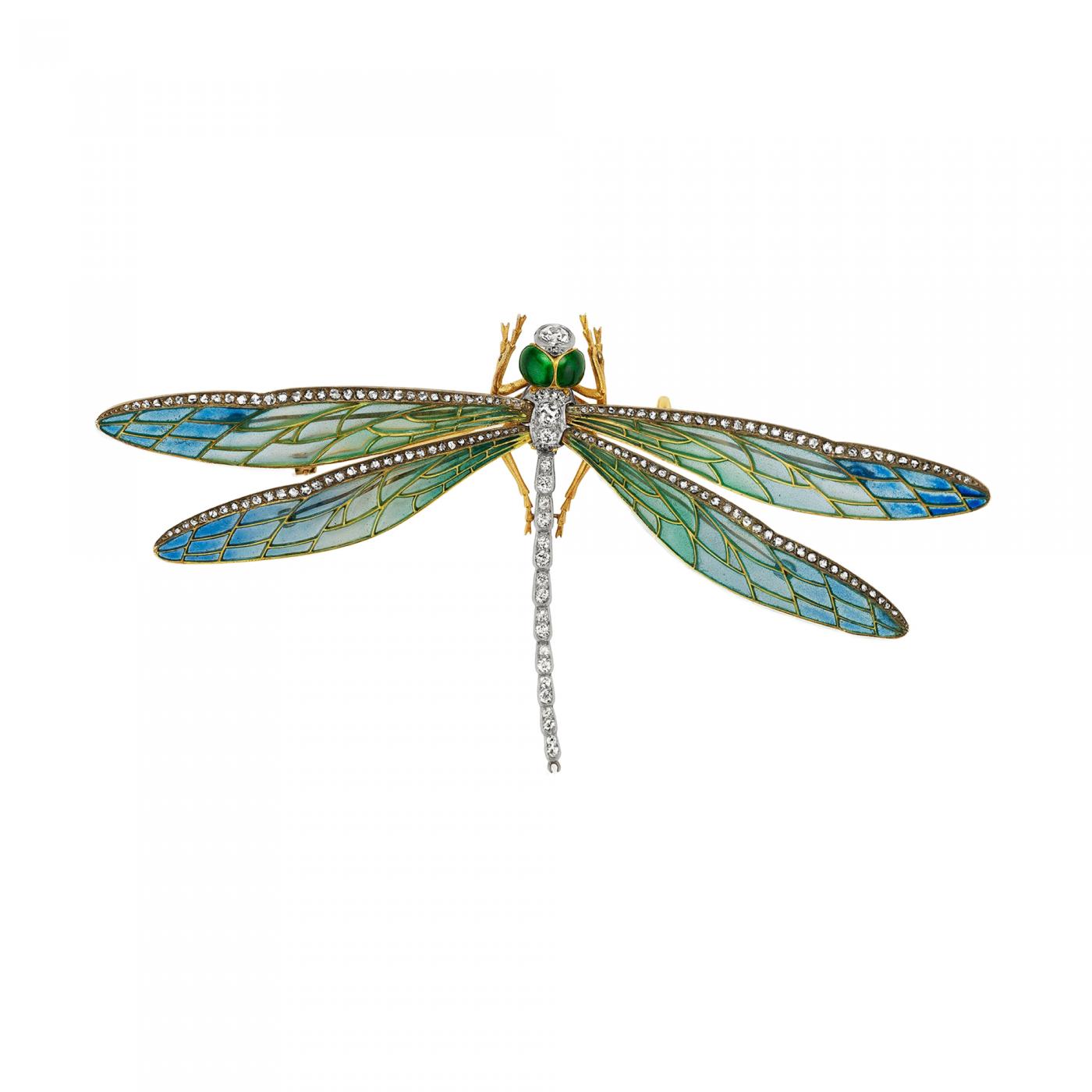
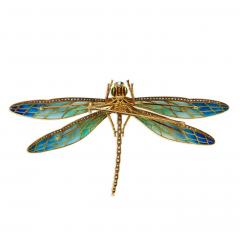
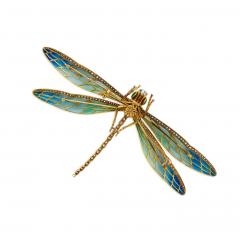
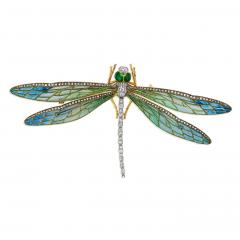
Edgar Bensé for Boucheron Plique-à-jour Enamel Dragonfly Brooch
-
Description
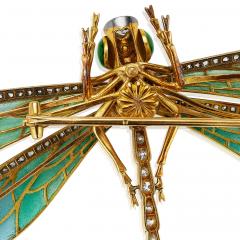
Created by the workshop of Edgar Bensé for Maison Boucheron around 1900, this dragonfly with wings set en tremblent is composed of plique-à-jour enamel and diamonds. The delicate insect is designed with hovering wings of green to blue shaded plique-à-jour edged with rose-cut diamonds, joining the old mine and old European-cut curving body and head with green enamel eyes, set in 18K gold, platinum and silver. Combining refined enamel work and mechanical ingenuity, this Parisian Art Nouveau dragonfly, designed by Boucheron and executed by Bensé, exemplifies both the sensitive naturalism and technical virtuosity of the period.
Dimensions: 2.625" length, 4.875" width.
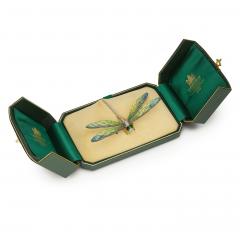
Materials: 1 old mine-cut diamonds (approximate total weight 0.33 carat); 25 old mine-cut diamonds (approximate total weight 0.67 carat); 138 rose-cut diamonds (approximate total weight 0.86 carat); Plique-à jour-enamel; 18K Gold; Platinum; Silver; Fitted vintage velvet and leather box from Hancock's, London
Gram Weight: 25.9 grams
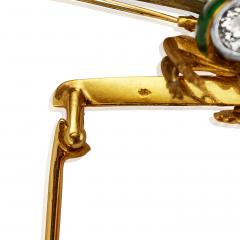
Signed: Edgar Bense maker's mark, French assay marks
Literature: A similar example in the collection of Maison Boucheron is pictured in Boucheron: Four Generations of a World-Renowned Jeweler, by Gilles Néret, p. 26. Another example by Bensé for Boucheron, and surviving in its original case, is held in the collection of The Metropolitan Museum of Art, New York, and was featured in the 2018 exhibition Jewelry: The Body Transformed.
Edgar Joachim Gabriel Bensé (b. Copenhagen, 1865) was a Parisian jeweler and enamelist of Danish heritage. Within the record of his marriage in Paris in 1892, Paul-Léon Briançon, (1857-?) chef d'atelier for René Lalique (1860-1945), is listed as Bensé's first witness, speaking to the possibility that these two elite artisans worked together, perhaps even for Lalique and may have shared techniques and ideas over time. As the older man, born in 1857, Briançon may have trained Bensé. Briançon and Lalique themselves had met as students at the École des Beaux-Arts. In 1885, when Briançon was 28, he joined forces with Lalique to take over the workshop of Jules Destape. For the first few years, the firm was often referred to as Lalique & Briançon. Henri Vever, the historian of 19th-century French jewelry, described Briançon as an "exemplary foreman", responsible for bringing to life Lalique's avant-garde designs. He was Lalique's collaborator for over 20 years until 1905, taking charge of production and directing the other craftsmen, collaborating in Lalique's transformation from acting as an outside supplier for major jewelry houses like Boucheron and Aucoc to producing signed art jewelry in his own right. Working within five minute walk of the Lalique residence/workshop in 20 rue Thérèse, where his friend Briançon was master, Bensé succeeded S. Audiane at 76 rue des Petits-Champs in 1895. The workshop was located within the "golden triangle" of artisans supplying the luxury trade. Based on a small group of superb plique-à-jour enamel dragonflies, their wings set en tremblent, it is documented that Bensé produced work for both Boucheron and Lacloche Frères. The dragonfly offered here bears the artist’s maker’s mark, and is highly similar to the Boucheron dragonfly in the collection of the Metropolitan Museum of Art in New York, which is accompanied by its original fitted Boucheron Paris box. Another closely-related dragonfly has descended in the family of Frédéric Boucheron. Toward the end of his three volume history, Vever mentioned Bensé as a distinguished jeweler of a number who deserved discussion, among them Colonna, Liénard, Dufréne, Falguières, and Téterger, naming them as "resourceful jewelers who occasionally created bold designs, and always strove to produce new and meticulously made pieces." Presumably, Bensé’s focus shifted when Art Nouveau suddenly declined in favor. While no further extant Bensé jewels are documented, he may have collaborated with the major houses on complex pieces that did not bear his mark. The last time he appears in the Annuaire du commerce Didot-Bottin is in the year 1909, and his hallmark registration disappears in 1911, when he is succeeded in his long-time premises in the rue des Petits-Champs by Langlet Frères. Though mastery of plique-à-jour enameling is widely associated with Lalique, and justly so, it was re-discovered and patented by Charles Riffault, a superb artisan creating jewelry for Frédéric Boucheron in the 1860s. In 1872, Boucheron took over the patent from Riffault. A collegial and friendly man, he never enforced it. -
More Information
Documentation: Signed Origin: France Period: 19th Century Creation Date: 1890 Gemstones: Diamond Metals: Enamel, Gold, Platinum, Silver Styles / Movements: Signed Pieces Dealer Reference #: BO-22297 Incollect Reference #: 871868
Shipping Information:
We are delighted to offer complimentary overnight domestic (US) shipping on all orders via FedEx and UPS for all jewelry orders. We offer overnight domestic (US) shipping on furniture and decorative arts purchases for a fee, based on the size and weight of the item purchased
Message from Seller:
Macklowe Gallery is the premier dealer of museum-quality 20th Century Decorative Arts, specializing in Tiffany lamps, French Art Nouveau, and antique jewelry. Visit us at 445 Park Avenue, NYC, or contact us at 212.644.6400 | email@macklowegallery.com |
More Listings from Macklowe Gallery, Ltd View all 317 listings
-
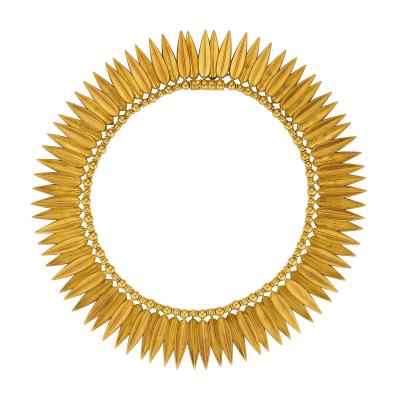
Ernesto Pierret Fringe Necklace
-
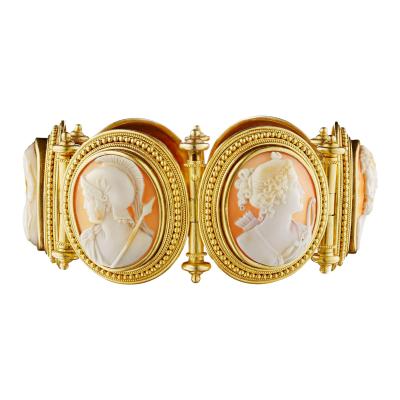
Etruscan Revival Cameo Bracelet
-
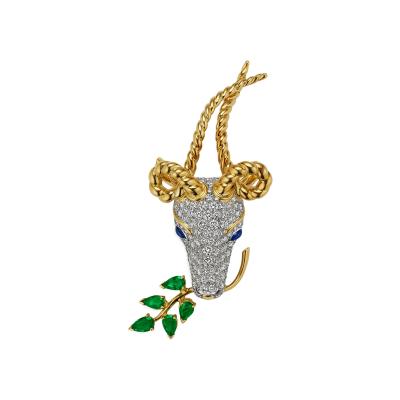
Jean Schlumberger for Tiffany & Co. "Gazelle" Brooch
-
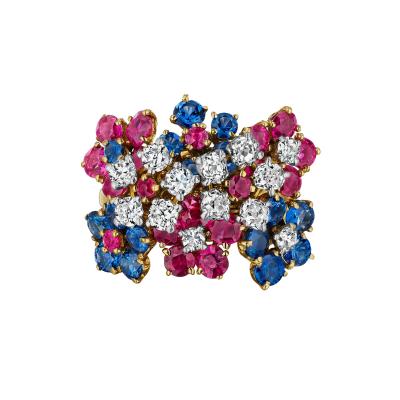
Van Cleef & Arpels Paris "Hawaii" Ring
-
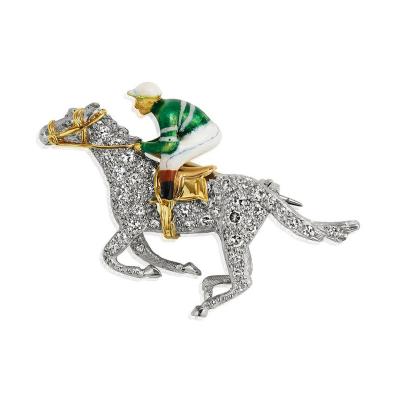
Alabaster & Wilson Horse and Jockey Brooch
-
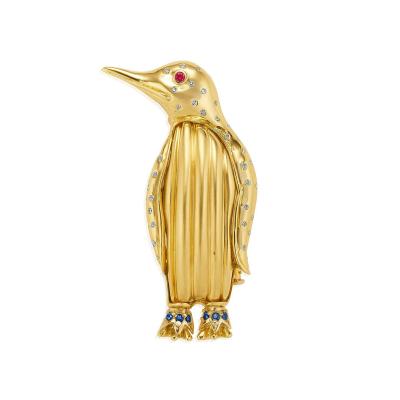
Aldo Cipullo for Cartier Penguin Brooch
-
Tiffany & Co. Modernist Diamond Suite

-
Tiffany & Co. Kashmir No-Heat Sapphire Ring
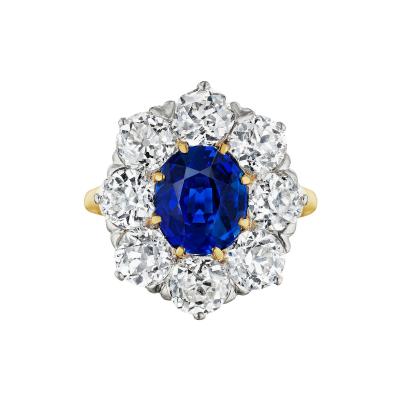
-
Bulgari "Trombino" Colombian Emerald Ring
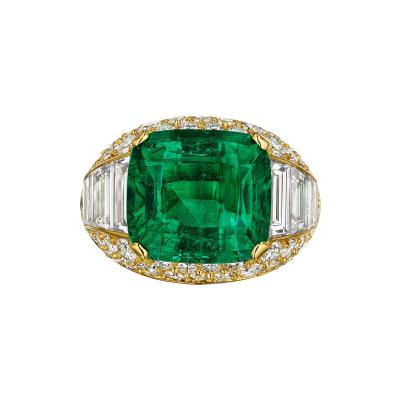
-
Cartier Paris Diamond Bracelet
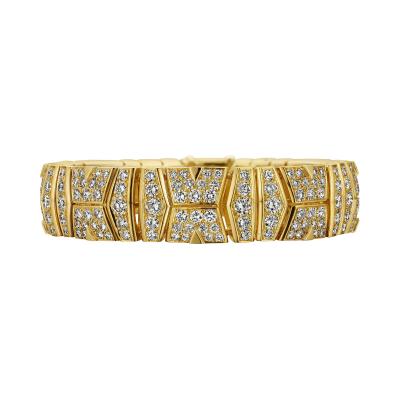
-
Van Cleef & Arpels Paris Mother-of-Pearl Ring
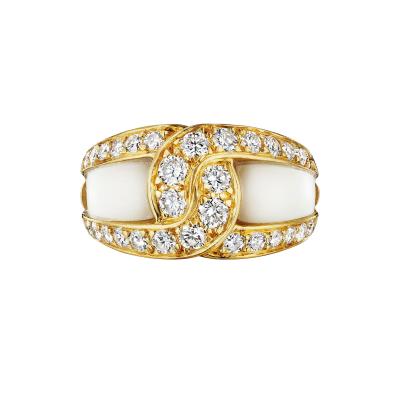
-
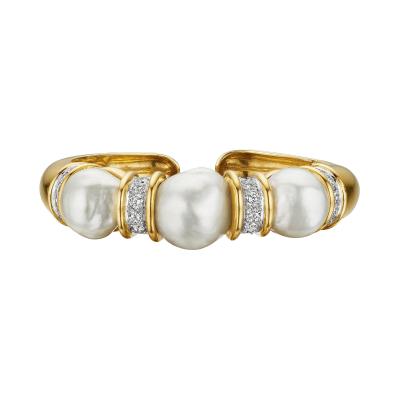
David Webb South Sea Pearl Bracelet
-
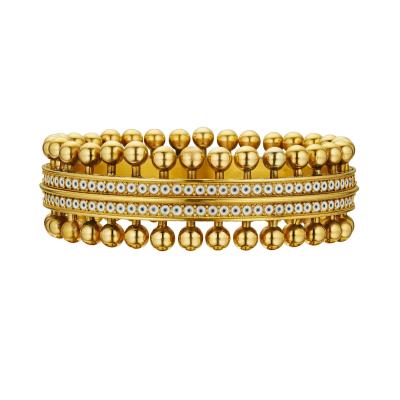
Robert Phillips Archaeological Revival Bracelet
-
Van Cleef & Arpels Mid-Century Diamond Ring