












Showrooms
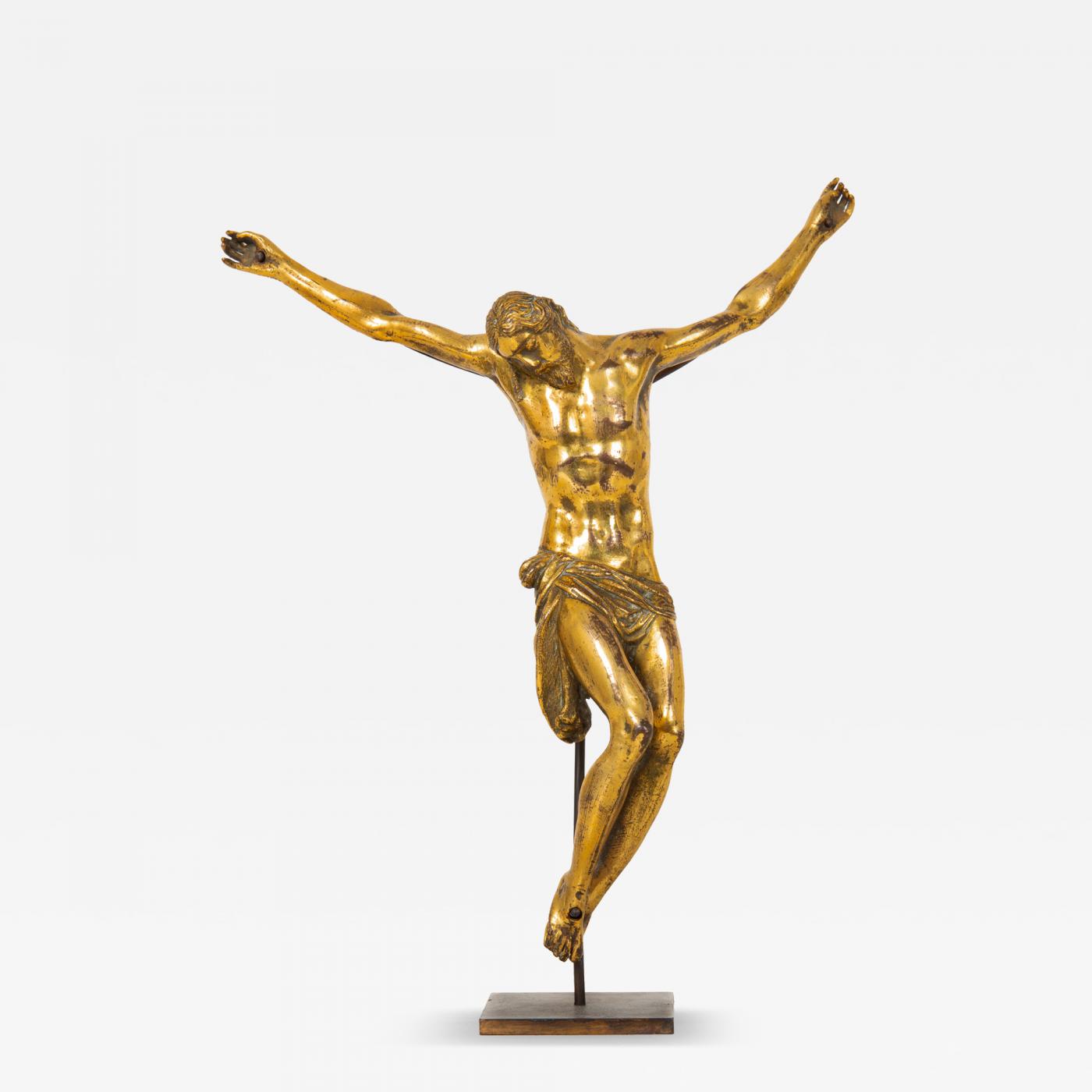
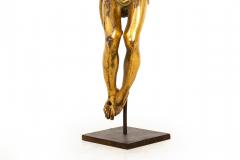
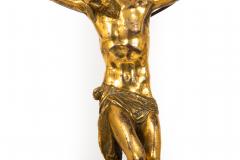
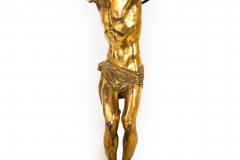
German Gilt Bronze Corpus Christi after Guglielmo della Porta, 17th century
-
Description
GILT BRONZE CORPUS CHRISTI
Probably Augsburg, Southern Germany, circa early seventeenth century
10 1/4" H x 2" D x 2 1/4" W at base
7 7/8" W hand to hand
Gilt bronze, later display stand
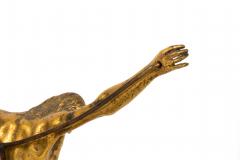
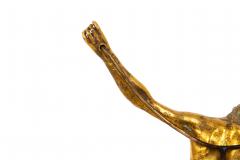
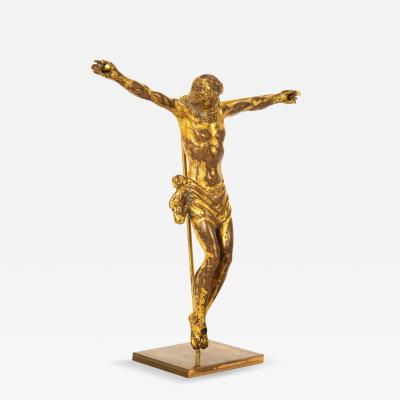
A finely cast and finished gilt bronze Corpus Christi, probably Augsburg, Southern Germany, late sixteenth or early seventeenth century. The figure belongs to the late Renaissance group of crucifix models associated with Guglielmo della Porta and his Roman workshop, whose Corpus Christi types were widely adapted in silver and bronze during the second half of the sixteenth century. The example of della Porta served as the seed inspiration for models of the Crucified Christ for more than 200 years and influenced many generations of sculptors, both domestic and foreign.
In the present example, following with great similarity the della Porta model, Christ is shown as the Christus patiens: the suffering Savior after death. His head inclines toward the proper right shoulder, recalling the Gospel of John, in which Christ bows his head at the moment of death. The closed eyes, lowered face and extended arms give the figure a solemn stillness. The rightward inclination of the head also carried devotional meaning, the right side being traditionally associated with the Elect at the Last Judgment.
The perizonium is tied at the proper right hip and drawn across the body in densely worked, rhythmically folded bands. The perizonium treatment follows a convention with early textual precedent in Gregory of Tours’s sixth century Liber in gloria martyrum. Gregory’s account preserves the significance of the linen covering of the Crucified Christ as an expression of sacred modesty, a concern that remained central to later devotional images of the Christus patiens. The present treatment also relates to late sixteenth century Italian crucifix models that were reinterpreted in South German workshops. Here the cloth is controlled and closely worked, with the folds moving firmly across the hips rather than opening into a more expansive Italianate display. Note the very fine chiseling and texturing executed on the fabric, which curves and wraps around in a tactile manner reflective of the direction of the linen.
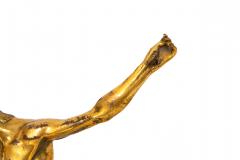
The figure follows the three nail type, with the feet crossed and intended to be secured by a single nail. This form became especially important in Catholic devotional imagery after the mid sixteenth century and was associated with post Tridentine teaching on the proper representation of the Crucifixion. The hands are pierced for attachment to a cross, with the fingers individually modeled and sensitively positioned. Their open arrangement gives the arms a particular expressive force, balancing physical suspension with devotional restraint.
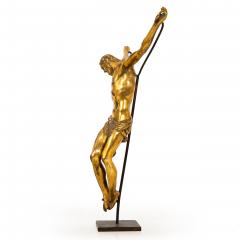
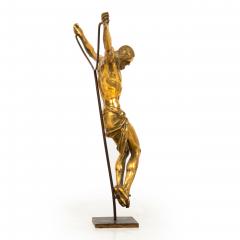
In articulating the wound in Christ's side, the point of piercing by the Roman soldier's spear is engraved into the torso with small incised droplets of blood descending from it, rather than being raised in relief as is often encountered in Italian bronze examples. The back is fully finished with careful attention to the shoulders, spine, hair and reverse of the perizonium; together with the high level of engraving, bright-carving and brilliant gilding, there is a hint of a trained jeweler in the high level of completion work, this despite the figure’s function as part of a crucifix where the back would remain undisclosed.
A very fine example.
Reference:
Sotheby's, London, 2 July 2019, "Old Master Sculpture and Works of Art", lot 60; achieved 6250 GBP ($ 7800 USD)
Deutsche Bronzen des Mittelalters und der Renaissance: Medaillen und Goldschmiedearbeiten, Kunstmuseum der Stadt Düsseldorf, 1960, no. 23
Condition: Wear to the very early gilding. This appears on examination to be original, though it is not possible to know this for certain. Trace verdigris in crevices.
ref. 606HBQ25Z -
More Information
Origin: Germany Period: Pre 18th Century Materials: Gilt Bronze, Carved Styles / Movements: Baroque, Religious, Traditional Dealer Reference #: 606HBQ25Z Incollect Reference #: 882005 -
Dimensions
W. 7.88 in; H. 10.25 in; D. 2.25 in; W. 20.02 cm; H. 26.04 cm; D. 5.72 cm;
Message from Seller:
Silla, Ltd. is a family-owned antique gallery located at 117 W Burd St., Shippensburg, PA 17257, specializing in 19th and early 20th century bronze sculptures and unique period furniture. For more information or to schedule a visit, contact us at sales@sillafineantiques.com or call 717.708.9017.
More Listings from SILLA View all 376 listings
-
Fine Pair of American Classical Mahogany Card Tables, Massachusetts ca. 1820
-
French Louis XV Style Kingwood Marble Top Bibliotheque Cabinet
-
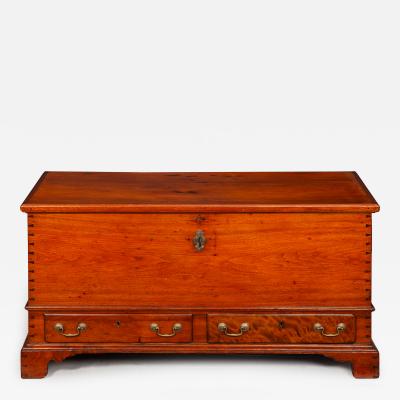
18th Century American Chippendale Walnut Blanket Chest circa 1780s
-
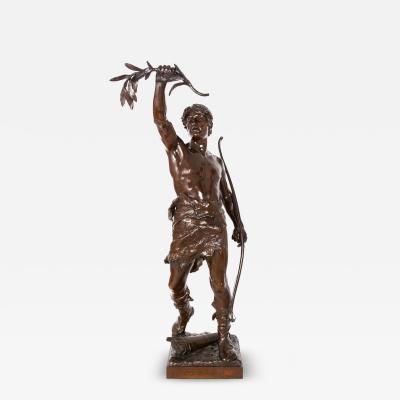
A Fine 36” H French Antique Bronze Sculpture “Victory” by Eugene Marioton
-
Fine Maritime Seascape Painting of American Clipper Ships by Henry Scott

-
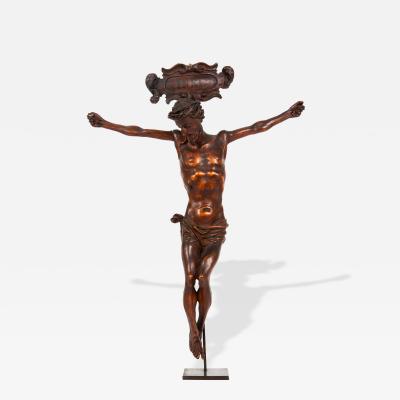
18th Century Finely Carved Boxwood Corpus Christi on Stand
-
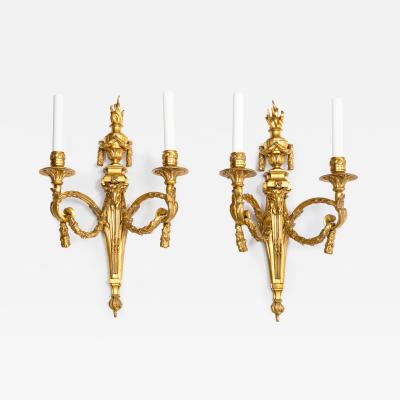
19th Century Pair of French Louis XVI Style Two-Light Wall Sconces Candelabra
-
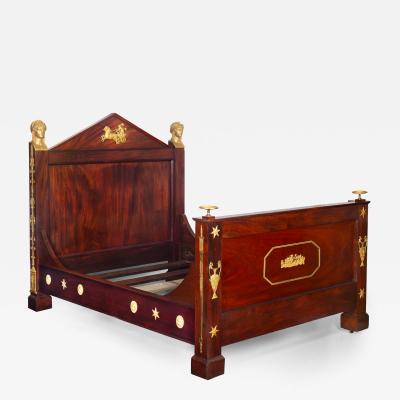
Rare Fine French Empire Mahogany Bed by Jacob-Desmalter ca. 1805-15
-
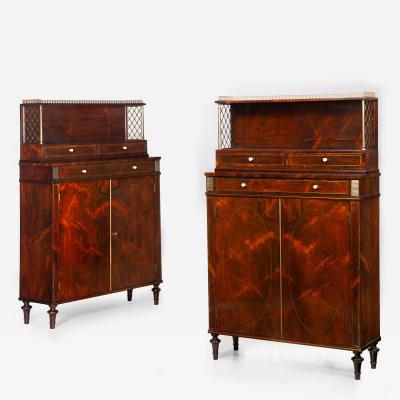
Pair of English Regency Rosewood Bookcase Cabinets att. John McLean c. 1820
-
Neoclassical Simulated Bamboo Giltwood Console Pier Table, 20th century

-
Fine German Renaissance Gilt Bronze Corpus Christi, 17th/18th Century
-
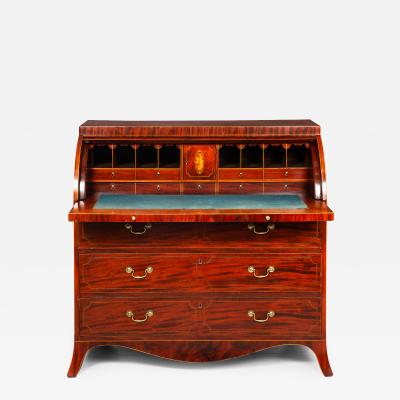
Rare American Federal Mahogany Cylinder Desk, Baltimore or Annapolis ca. 1800
-
Seascape Painting of American Clipper Ship “Red Cloud” by Henry Scott

-
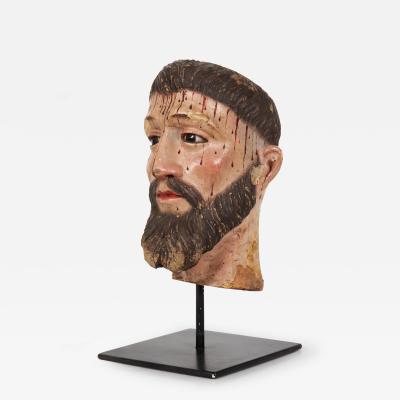
Spanish Polychromed Carved Head of Christ as Ecce Homo, early 18th century