






Showrooms
Silver Easter Egg. Erik Kollin. Faberge Firm Russia, Saint Petersburg
-
Description
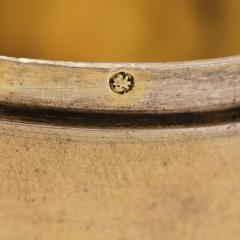
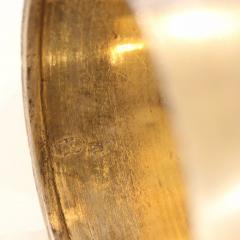
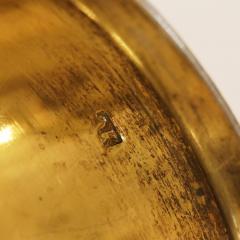
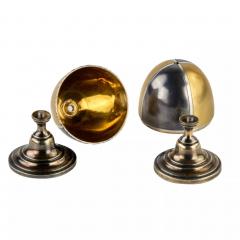
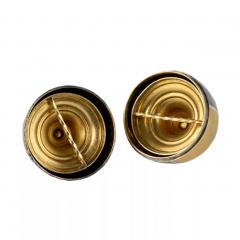
A rare and refined piece of table silver executed in the form of an Easter egg with an ingenious functional transformation into two independent egg cups. The composition is built upon the strict geometry of an ovoid body opening along a vertical axis and forming a pair of pedestal cups. Each half retains a complete and harmonious silhouette, demonstrating a carefully engineered construction and a high level of silversmithing craftsmanship. The exterior surface is divided into four segments with a striking contrast between silver and gilded sections. The laconic articulation creates a clear rhythm and allows compositional variation when assembled, including a chessboard arrangement of the gilded panels. The interior surfaces are fully gilded in accordance with traditional tableware production, enhancing both durability and decorative effect. The profiled base and elegant stem reflect the aesthetics of Saint Petersburg Historicism with references to Italian Renaissance plasticity. The piece was executed by Erik August Kollin (1836-1901), one of the leading masters of the early Faberge firm. From 1866 Kollin served as senior master to Carl Faberge and played a decisive role in shaping the early artistic language of the House, characterized by strict proportions, architectural clarity of form and impeccable metalwork. Marks: Maker's mark "E.K."; assay mark "84" with the coat of arms of Saint Petersburg in an oval cartouche; additional workshop marks inside the chashi. Dimensions: Height: 12 cm; diameter: 5.5 cm. Weight: 109 g. Condition: Good. Gilding even throughout. Minor wear to the base. No deformation, cracks, restorations or signs of active use. Provenance: Private collection.
In the second half of the 19th century, Saint Petersburg emerged as one of the foremost centers of European jewelry and silver production, where the long-standing traditions of Russian silversmithing converged with the stylistic vocabulary of Historicism. Within this artistic climate, the House of Faberge began to develop its distinctive language, grounded in architectural clarity, refined proportions and exceptional technical precision. Before the creation of the celebrated Imperial Easter Eggs, the firm established its reputation through masterfully executed objects of daily luxury, particularly silver tableware and utilitarian forms elevated to works of art. Erik August Kollin (1836-1901), a Finnish-born master working in Saint Petersburg, played a decisive role in this formative period. Appointed senior master to Carl Faberge in 1866, Kollin was among the earliest craftsmen to shape the aesthetic and technical standards of the firm. According to research published by specialists of the State Hermitage Museum and the Faberge Museum in Saint Petersburg, early Faberge silver was characterized by restrained decoration, structural clarity and meticulous craftsmanship rather than excessive ornament. Kollin's mark "E.K." appears on significant early works dating from the 1860s to the 1880s and is widely recognized as an important indicator of the firm's foundational phase. The Easter egg held profound symbolic meaning within Orthodox culture, representing Resurrection and renewal. While the later Imperial presentation eggs became symbols of dynastic splendor, there also existed a parallel tradition of creating functional objects in egg form, including egg cups, salts and table vessels. These pieces embodied the concept of refined domestic luxury in aristocratic Saint Petersburg society, where table setting was considered an extension of artistic culture and social ritual. The use of contrasting silver and gilding, as seen in this example, reflects both practical and aesthetic considerations. Gilding protected the interior surfaces from corrosion while simultaneously enhancing the interplay of light and texture. The segmented exterior recalls Renaissance compositional discipline, filtered through the 19th-century Historicist lens that characterized much of Faberge's early production. Today, silver works executed by early Faberge masters such as Erik Kollin are highly valued by collectors and museum institutions. They represent a crucial developmental stage in the evolution of the House of Faberge and provide insight into the artistic foundations that would later culminate in some of the most celebrated masterpieces of European decorative art. -
More Information
In the Style of: Fabergé Period: 19th Century Condition: Good. Good. Gilding even throughout. Minor wear to the base. No deformation, cracks, restorations or signs of active use. Styles / Movements: Aesthetic Movement, Traditional Dealer Reference #: 5635 Incollect Reference #: 883174 -
Dimensions
W. 2.17 in; H. 4.72 in; W. 5.51 cm; H. 11.99 cm;
Message from Seller:
Maison ANTIQON invites you to discover our exceptional collection of fine art and antiques at our premier showrooms, Maison ANTIQON in Nice, France, and Antikvariāta Centrs in Riga, Latvia. For inquiries, private appointments, or to explore our curated international heritage, please reach out to us directly at info@antiqon.com or via phone at +33 6 30 17 47 17.
More Listings from Antiqon View all 186 listings
-
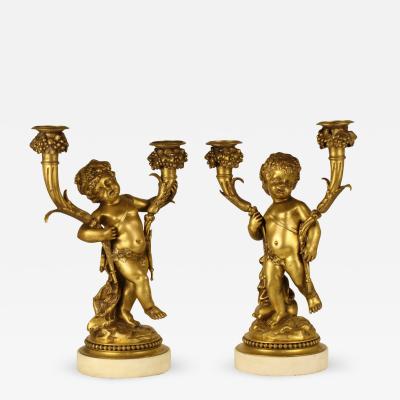
Pair Of Candelabra With Figures Of Cupids France
-
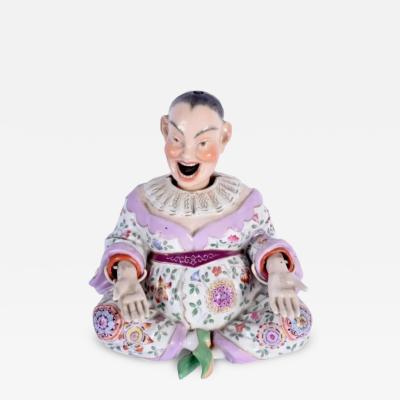
Porcelain Figure Of A Chinese Man With A Nodding Head. Germany.
-
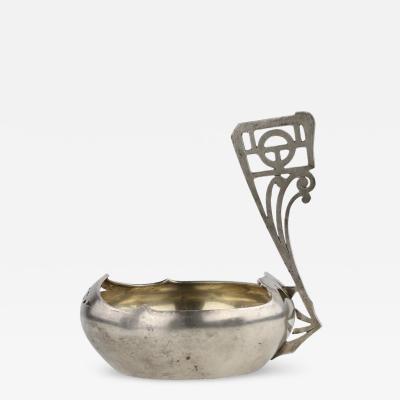
Russian Silver Kovsh In The Art Nouveau Style.
-
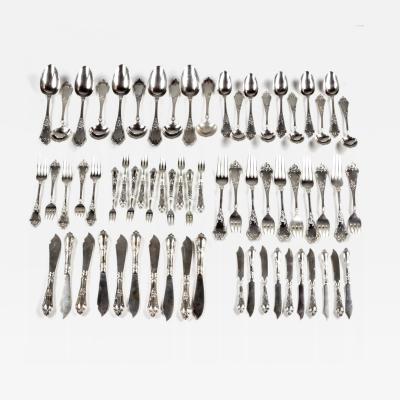
Silver Table Service By G. Klingert Russia, Moscow, 1908-1917
-
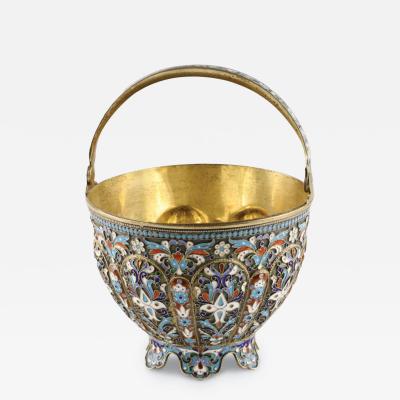
Russian Silver Sugar Bowl In Cloisonne Enamel Russia, Moscow, 1896-1908
-
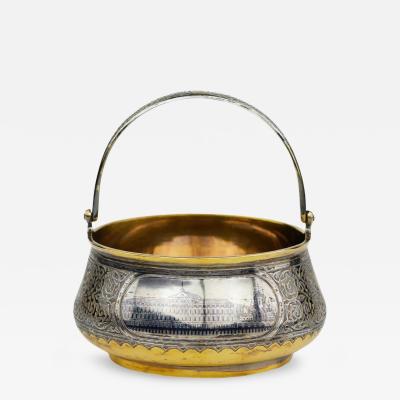
Sweetmeat Basket With Views Of Moscow Pavel Ovchinnikov Firm, Moscow, Russia
-
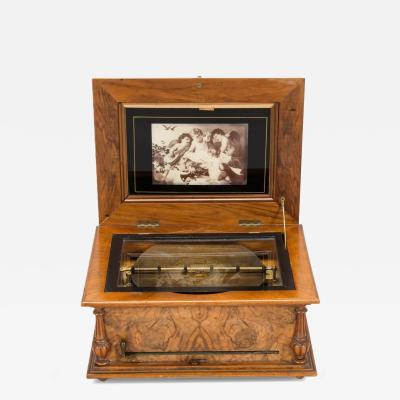
Disc Musical Box With Singing Birds. Germany, Hamburg. Late 19th Century
-
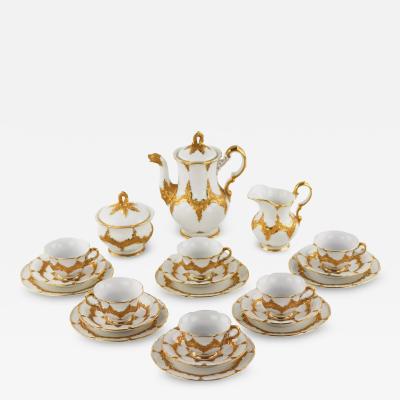
Luxurious Mocha Coffee Service For Six Persons. Meissen. 20th Century
-
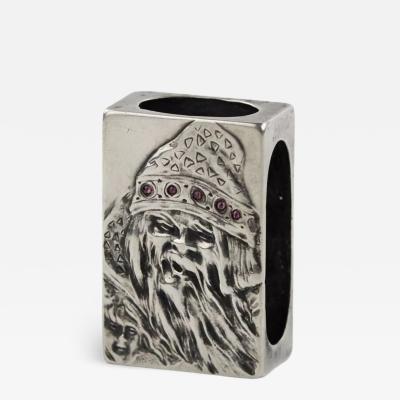
Silver Match Safe With The Image Of A Leshy In The Style Of Russian Art Nouveau
-
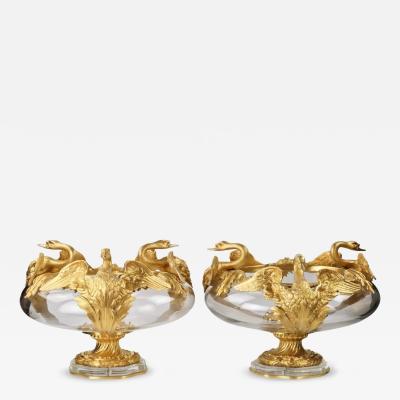
Pair Of Swan-Motif Jardinieres France, 20th Century
-
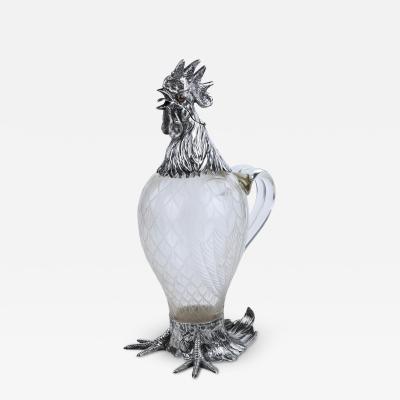
Glass And Silver Rooster-Form Jug. Hanau, J.D. Schleissner Sohne.
-
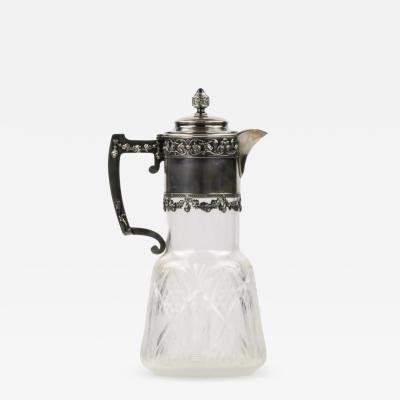
Crystal Jug With Silver, 13th Artel Russia, Moscow, Early 20th Century
-
Gold Snuffbox With Miniature "Sainte Anne Trinitaire".
-
Meissen B-Form Coffee Service For Six Germany, Meissen, 20th Century