





Listings / Furniture / Tables / Side Tables


Offered by:
Found Collectibles
255 West 36th St. Suite 502-503
New York City, NY 10018 , United States
Call Seller
954.294.3099
Showrooms
“Arimelo” Side Tables in Brazilian Rosewood by Sergio Rodrigues, Brazil, 1958
-
Description
Designed in 1958, the Arimelo side tables represent one of the earliest and most architecturally disciplined expressions of Sergio Rodrigues’ design philosophy. Conceived during the formative years of his independent practice, these rare tables predate many of the designer's internationally celebrated works and reveal the intellectual foundations that would later define Brazilian Modernism. At a moment when Rodrigues was establishing a design language rooted in Brazil’s climate, culture, and extraordinary native materials, the Arimelo model demonstrates an exceptional balance between structural clarity, sculptural restraint, and craftsmanship.
Executed in richly figured Brazilian rosewood (Jacaranda da Bahia) veneer over a solid Brazilian rosewood framework, the tables celebrate one of the most prized cabinetmaking timbers ever used in twentieth-century furniture. Revered for its exceptional density, remarkable stability, and dramatic grain, Brazilian rosewood possesses a visual depth unlike any other hardwood, with flowing ribbons of dark chocolate, amber, burgundy, and nearly black figuring that become an integral component of the design itself. Rather than applying decoration, Rodrigues allowed the natural movement of the wood to define the character of each surface, transforming the material into the primary ornament.
The construction reflects Rodrigues' enduring commitment to honesty in craftsmanship. Broad sculptural legs taper gently toward the floor while subtly projecting above the tabletop, creating a refined architectural rhythm that visually anchors the composition. Delicately curved aprons soften the otherwise rigorous geometry, while the elegantly floating top introduces a sense of lightness uncommon in solid hardwood furniture of the period. Every element serves both a structural and visual purpose, exemplifying Rodrigues' belief that beauty should emerge directly from proportion, joinery, and material integrity.
Although modest in scale, the Arimelo tables embody the same architectural intelligence found in Rodrigues' larger seating and case pieces. Their compact proportions were carefully conceived to integrate seamlessly into sophisticated interiors while maintaining a powerful sculptural presence. This disciplined approach reflects the broader ideals of Brazilian Modernism, which sought to create furniture that complemented architecture rather than competed with it, embracing openness, natural light, and organic materials instead of excessive ornamentation inherited from European traditions.
The rarity of the Arimelo model further distinguishes these tables. Produced in comparatively limited numbers during the late 1950s, surviving examples remain exceptionally scarce, particularly as a matched pair. Their appearance in Sergio Rodrigues' original manufacturing catalogue firmly establishes their place within the documented body of his work, providing important historical validation and reinforcing their significance within the evolution of postwar Brazilian design. Originally acquired from a distinguished private residence in Rio de Janeiro's historic Laranjeiras neighborhood, the pair retains meaningful provenance that further enhances its desirability among serious collectors.
Today, the Arimelo side tables stand as an exceptional example of Sergio Rodrigues' early mastery—works that illustrate the moment Brazilian furniture design confidently established its own identity through native materials, masterful woodworking, and architectural sophistication. Rare, historically documented, and beautifully executed in one of the world's most celebrated hardwoods, they represent an important opportunity to acquire a pair of museum-quality pieces from the formative years of one of the twentieth century's most influential furniture designers. | Depth: 23.25 in -
More Information
Documentation: Documented elsewhere (similar item) Period: 1950-1979 Condition: Good. Good. Wood has been restored and refinished. Styles / Movements: Modern, Mid Century Dealer Reference #: 596B Incollect Reference #: 885518 -
Dimensions
W. 22.25 in; H. 14.6 in; W. 56.52 cm; H. 37.08 cm;
Message from Seller:
Found Collectibles is a furniture and décor gallery located in 225 West 36th Street, Suite 503 in New York City, dedicated to sourcing unique yet timeless collections from across the globe. Each collection tells a story particular to its time and place in history. Specializing in expert craftsmanship, we only feature small-batch, high-quality designs. Contact us: Mobile: +1 954 294 3099, Landline: +1 646 649 4260
More Listings from Found Collectibles View all 472 listings
-
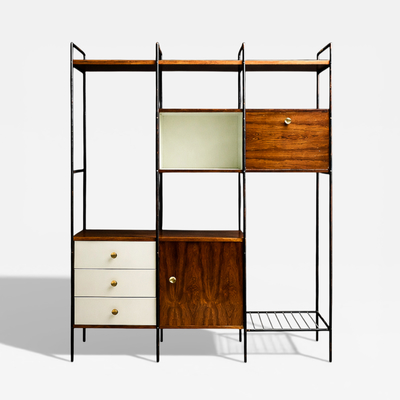
“MF 710” Rosewood & Metal Bookshelf, Geraldo de Barros for Unilabor, c. 1955
-
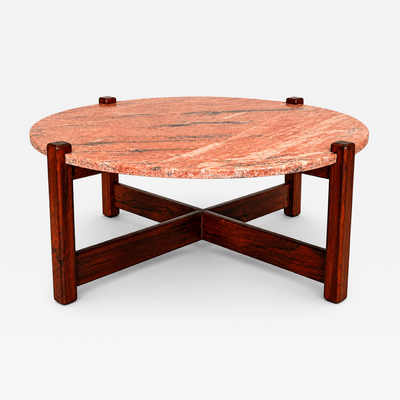
Brazilian Modern Coffee Table in Rosewood & Pink Granite, Fátima, 1960s
-
Set of Six Dining Chairs in Metal and Boucle by Carlo Hauner, Brazil, 1950s

-
Set of 6 Chairs in Saddle Mohair and Rosewood, Attributed to Forma, 1950s

-
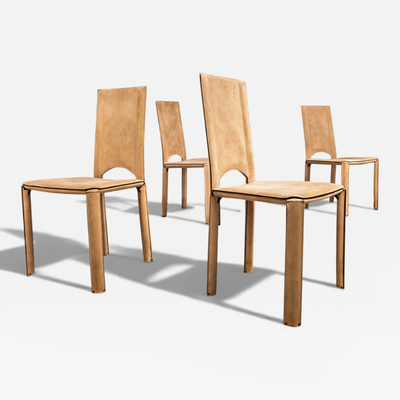
Brazilian Modern Set of 4 Chairs in Suede, Mario Bellini, 1970s
-
Concha Sofa in Hardwood & Camel Mohair by Joaquim Tenreiro, Brazil, 1960s

-
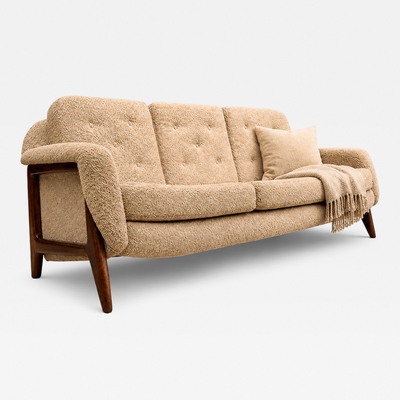
Sergio Rodrigues “Stella” Three-Seat Sofa in Rosewood & Bouclé, Brazil
-
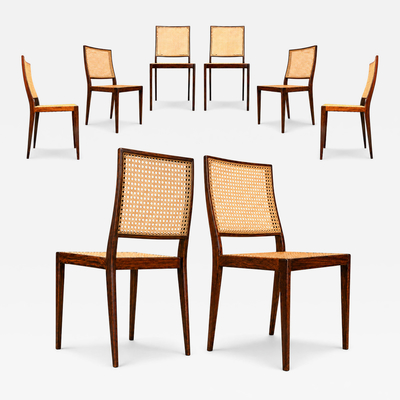
Eight “MT 552” Rosewood Dining Chairs, Geraldo de Barros for Unilabor, 1950s
-
Sofa in Hardwood, Leather & Fabric by Carlo Hauner, 1950s

-
“Pétala” Rosewood Coffee Table by Jorge Zalszupin for L’Atelier, 1959

-
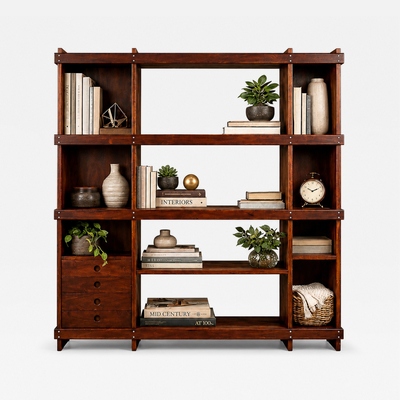
Rosewood Bookshelf by Sergio Rodrigues for OCA, Brazil, c. 1968
-
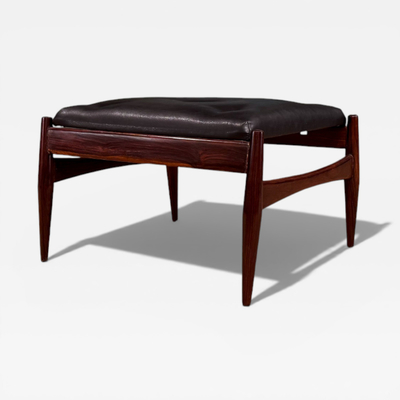
Ottoman in Rosewood & Leather, Liceu de Artes, 1960s
-
“Concha” Sofa in Plum Mohair Velvet, Joaquim Tenreiro, Brazil, 1960s

-
Set of Ten Rosewood & Cane Dining Chairs by Móveis Primus, Brazil, 1960s