






Antoine Blanchard
French, 1910 - 1988
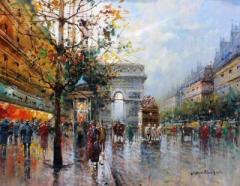
Antoine Blanchard, born Marcel Masson on November 15, 1910, in a quaint village near the Loire, France, was the eldest of three siblings. His father, a skilled carver managing a carpentry and furniture shop, sparked Antoine's early artistic inclinations. Recognizing his talent, his parents sent him to Blois for drawing lessons. Furthering his education at the Ecole des Beaux-Arts in Rennes, where he studied sculpture and drawing, Blanchard garnered acclaim, receiving the prestigious Prix du Ministre.
In 1932, Blanchard moved to Paris, captivated by the city's street life and bustling atmosphere. In 1939, he married, and with the outbreak of war, he temporarily set aside his artistic pursuits until 1942. Following the war, he resumed painting, balancing his passion with familial responsibilities. Blanchard's daughter Nicole and, later, granddaughter A. Champeau, continued the artistic legacy within the family.
In 1948, after relinquishing control of the family business, Blanchard returned to Paris, rekindling his love for the city's Belle Époque era. Immersed in research, he delved into the 1890s, collecting images that inspired his paintings. Unlike imitating contemporaries like Édouard Cortès, Blanchard crafted his unique depictions of Paris at the turn of the century, focusing on daily life.
His masterful portrayals of iconic landmarks such as l’Arc de Triomphe, la Madeleine, Café de la Paix, and Notre Dame garnered international acclaim. Today, Antoine Blanchard stands as a prominent figure among the School of Paris painters, celebrated for his distinctive style and evocative representations of Belle Époque Paris. Art collectors worldwide seek his coveted works, solidifying his status as a leading exponent of this esteemed artistic movement.
In 1932, Blanchard moved to Paris, captivated by the city's street life and bustling atmosphere. In 1939, he married, and with the outbreak of war, he temporarily set aside his artistic pursuits until 1942. Following the war, he resumed painting, balancing his passion with familial responsibilities. Blanchard's daughter Nicole and, later, granddaughter A. Champeau, continued the artistic legacy within the family.
In 1948, after relinquishing control of the family business, Blanchard returned to Paris, rekindling his love for the city's Belle Époque era. Immersed in research, he delved into the 1890s, collecting images that inspired his paintings. Unlike imitating contemporaries like Édouard Cortès, Blanchard crafted his unique depictions of Paris at the turn of the century, focusing on daily life.
His masterful portrayals of iconic landmarks such as l’Arc de Triomphe, la Madeleine, Café de la Paix, and Notre Dame garnered international acclaim. Today, Antoine Blanchard stands as a prominent figure among the School of Paris painters, celebrated for his distinctive style and evocative representations of Belle Époque Paris. Art collectors worldwide seek his coveted works, solidifying his status as a leading exponent of this esteemed artistic movement.

Antoine Blanchard
Original Antione Blanchard Paris Street Scene Oil Painting
H 18 in W 22 in D 3 in
$ 3,900

 Loading...
