






Mutual Appreciation
A Florida Collector Displays His Passion for 20th-Century Pennsylvania Impressionists in a Tropical Setting
Some thirty years ago, when a south Florida CEO with northeastern roots set out to establish his art collection, he determined to choose from the heart, selecting works he loves—distinctive twentieth-century American impressionist, realist, and modernist paintings and sculpture. His primary focus is on the group of artists known as the Pennsylvania Impressionists or the New Hope School, arguably the largest school of American Impressionism.
|
|
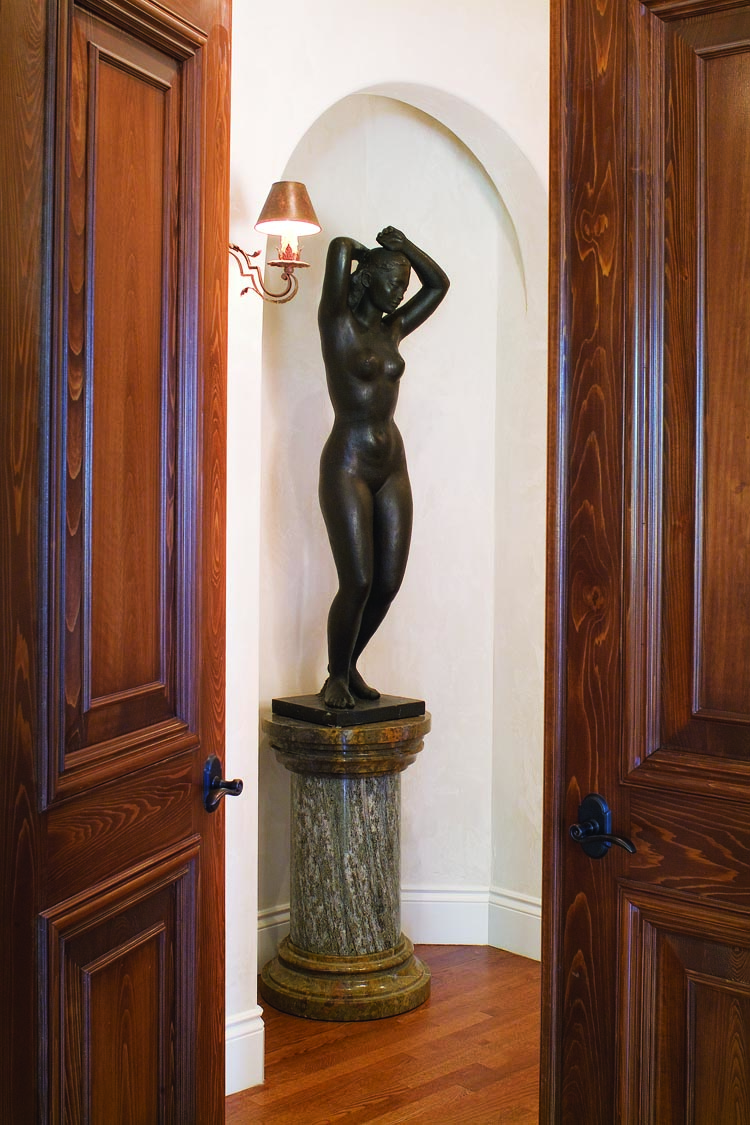
“Although I have acquired the work of many of the important American impressionist and modernist painters, such as George Bellows and Birger Sandzen, I have a passion for collecting artists of the New Hope School,” says the collector. “These artists are truly a national group. They are no longer considered a regional group. During the prime of their careers, many of these artists were considered among the nation’s elite. They were winning medals at significant exhibitions and were known for the quality of their work.”
|
|
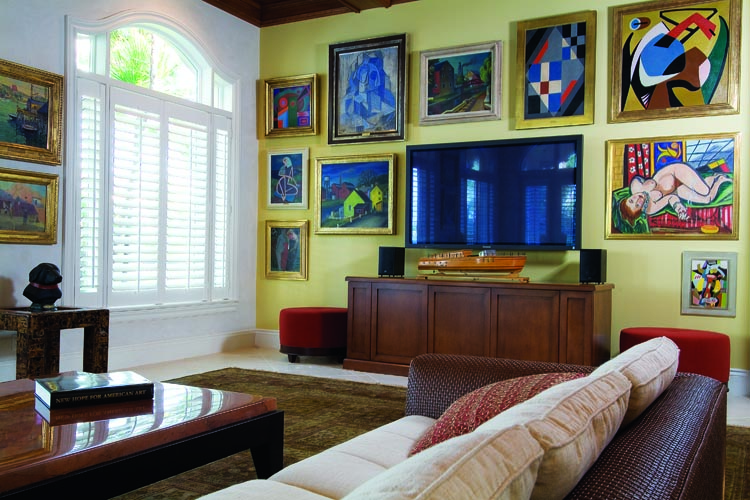
- The great room’s “modernist wall” (left to right, top row) shows Red Center, circa 1941, by Lloyd Ney (1863–1964); Blue Lady, circa 1930, by Charles Frederick Ramsey (1875–1951); Canal in New Hope, circa 1932, by R.A.D. Miller (1905–1966); Checkered Abstract, circa 1938, by Charles Frederick Ramsey; and In Flight by Lewis Stone (1902–1984). Below them are (left, top), Pink Lady, circa 1939, by Josef Zenk (1904–2000); (left, bottom) Three Graces, circa 1931, by Charles Evans (1997–1992) and New Hope Mills, circa 1932, by R.A.D. Miller. At right are Casual Smoke by Joseph Meyerhans (1890–1980) and The Wrench by Lewis Stone. The “speedboat” is a 1940s radio.
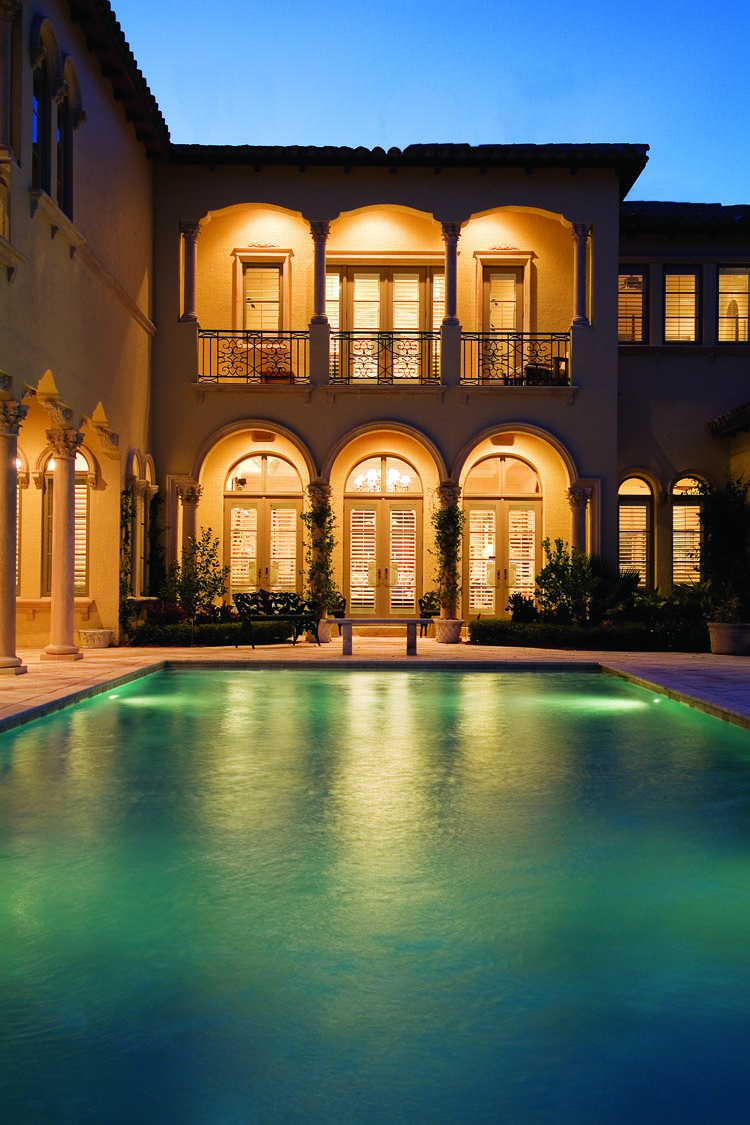
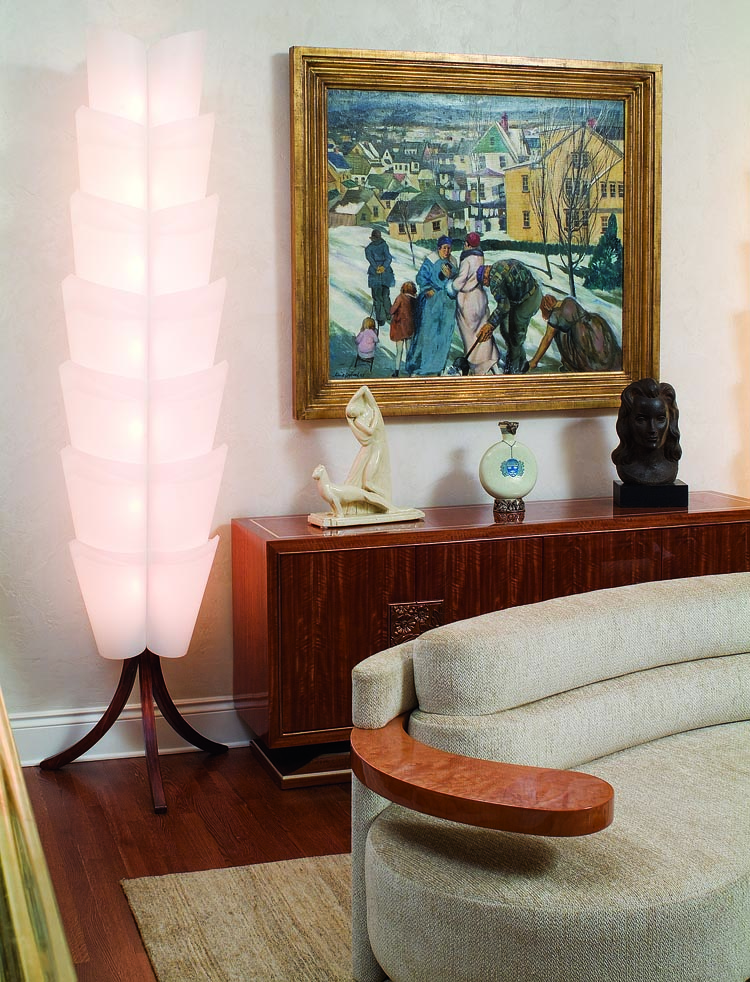
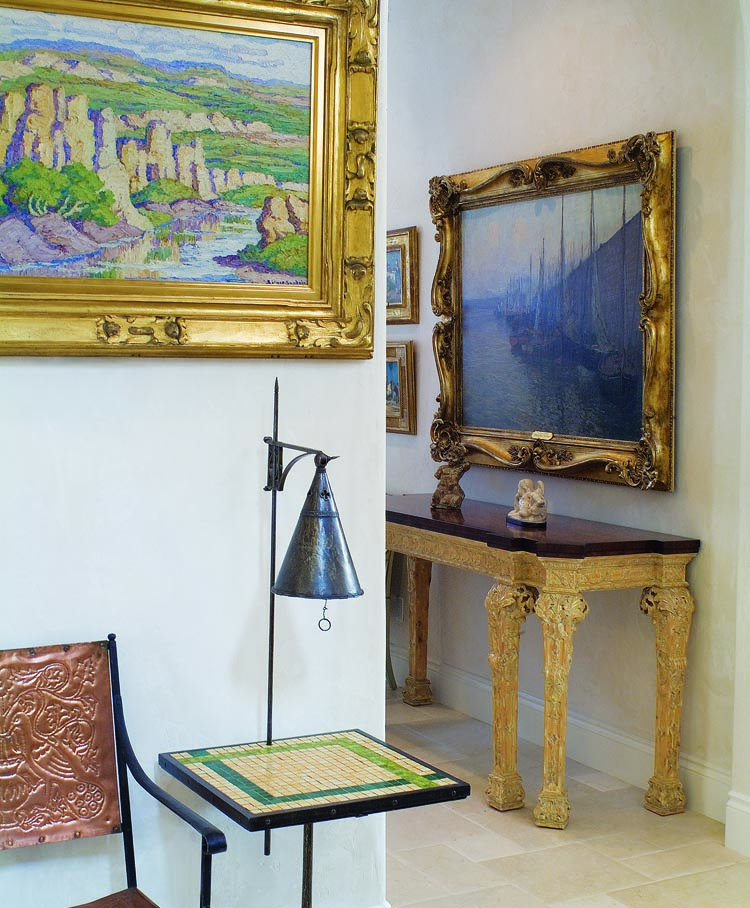
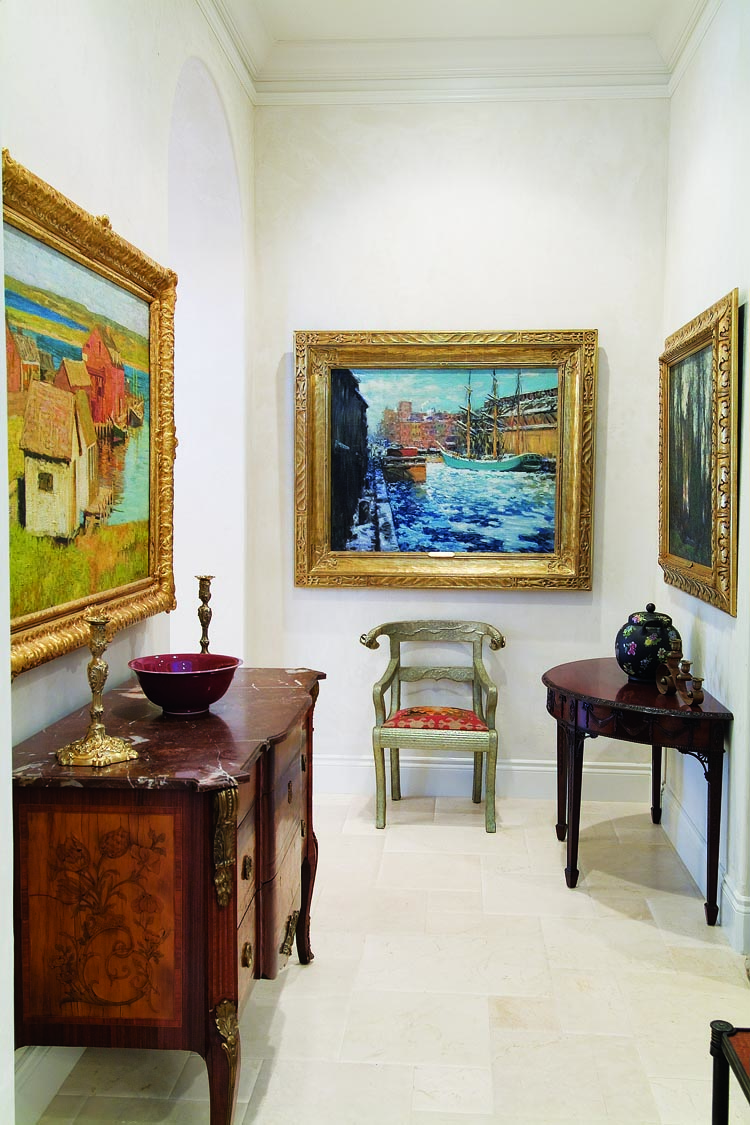
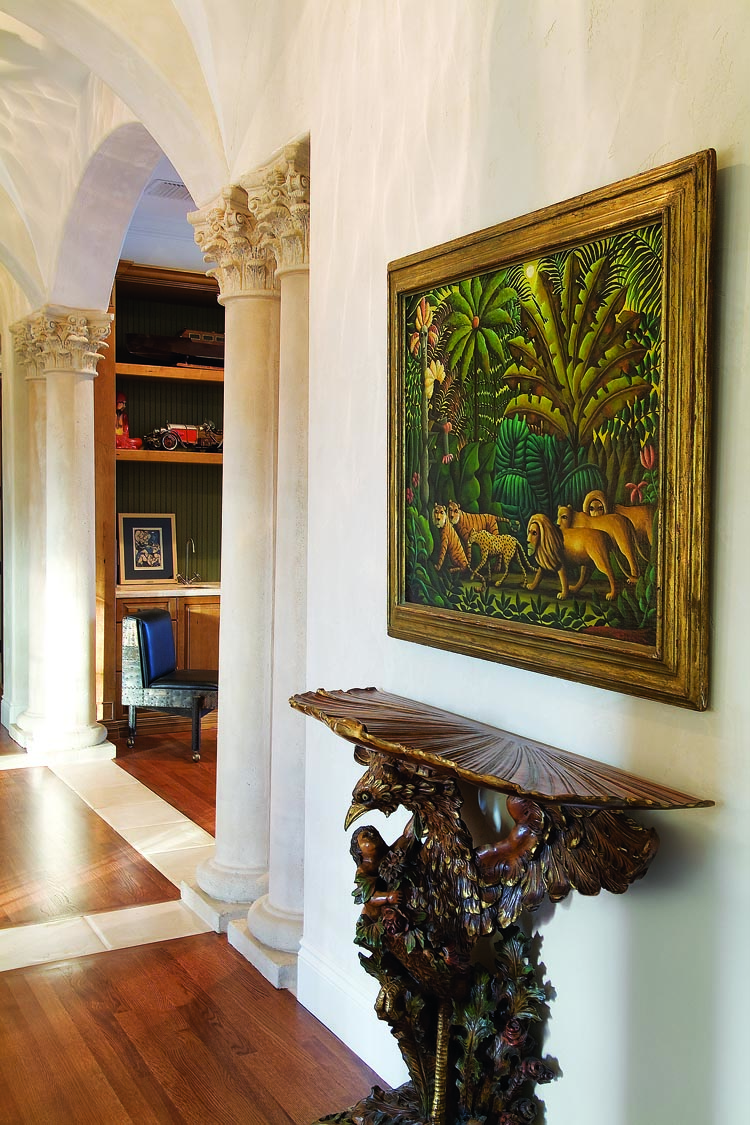
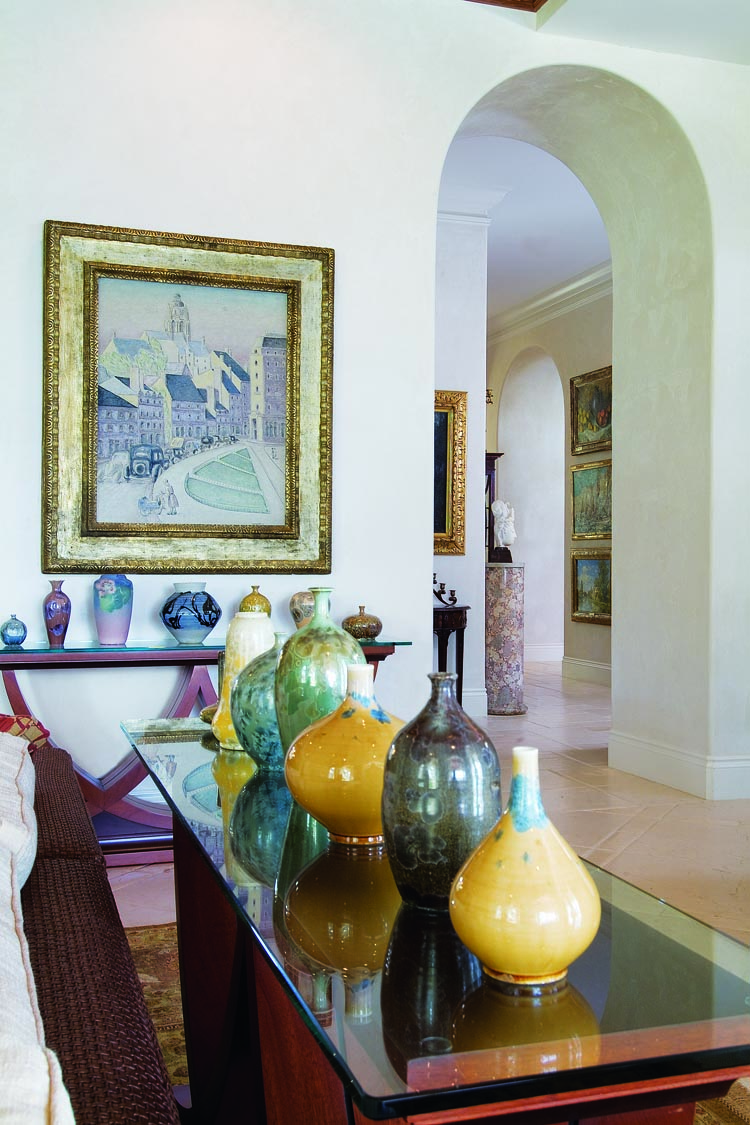
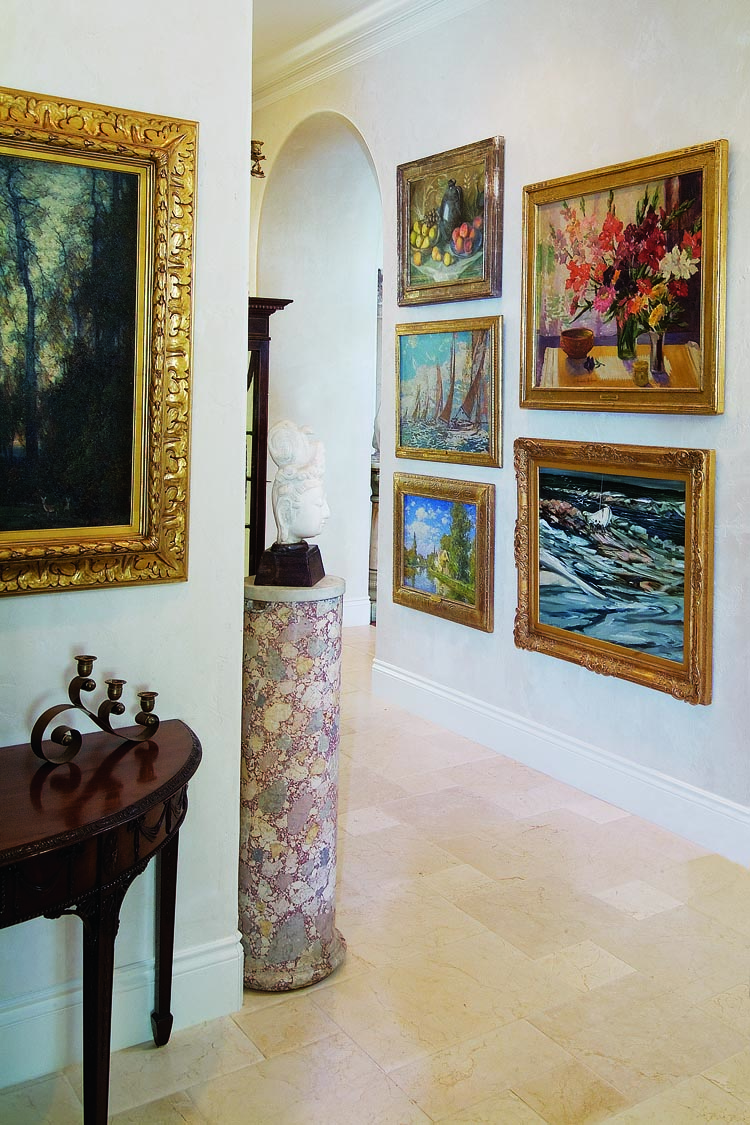
Like contented snowbirds, the northeastern paintings appear right at home in his family’s sun-filled Mediterranean Revival style home, which though built in 2004, appears to date from the 1920s, thanks to its architectural vocabulary drawn from classical Greece and Rome and Moorish-influenced Spain. “This home provides many great places to showcase art, because of its high ceilings, wide open spaces, ample wall space, and layout,” notes the collector. To cruise through its generously proportioned rooms, wide hallways, and gracious staircase, is to enjoy a spatial flow with visual delights at every turn. Its architectural detailing is composed of Corinthian columns, niches, and arches, with wrought-iron railings, crystal chandeliers and expansive windows that frame ocean vistas. But it is the fine and decorative art and the collector’s juxtaposition of pieces that most captivate the eye.
|
|
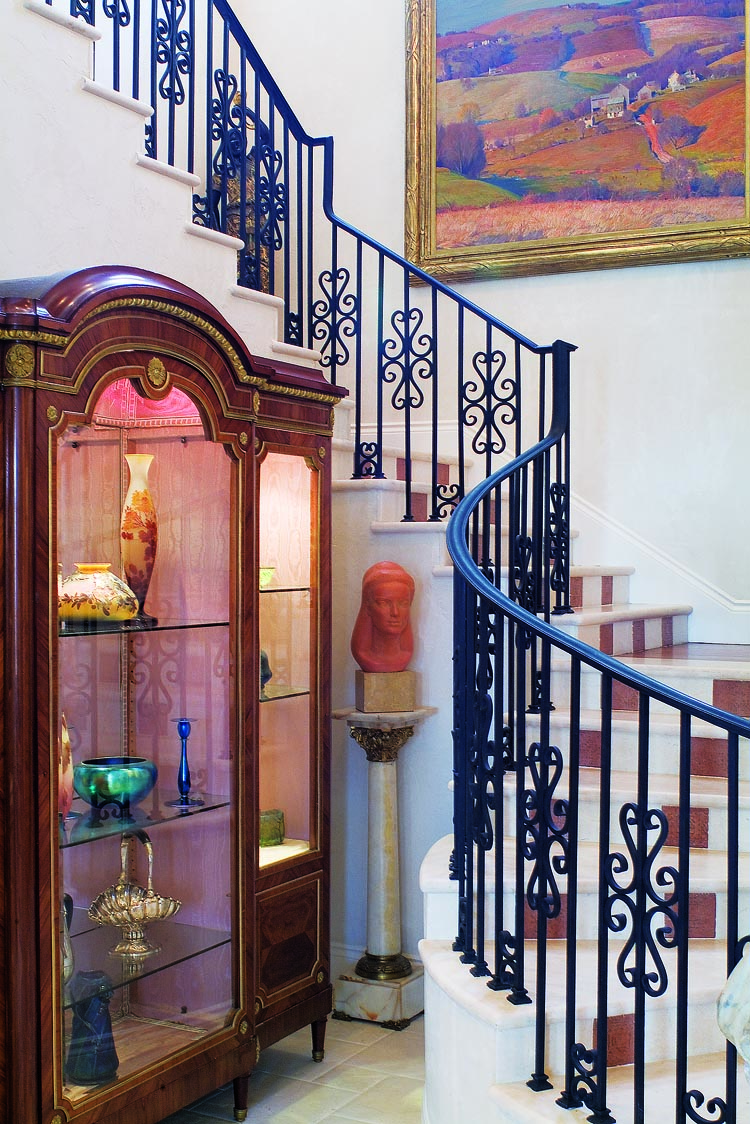
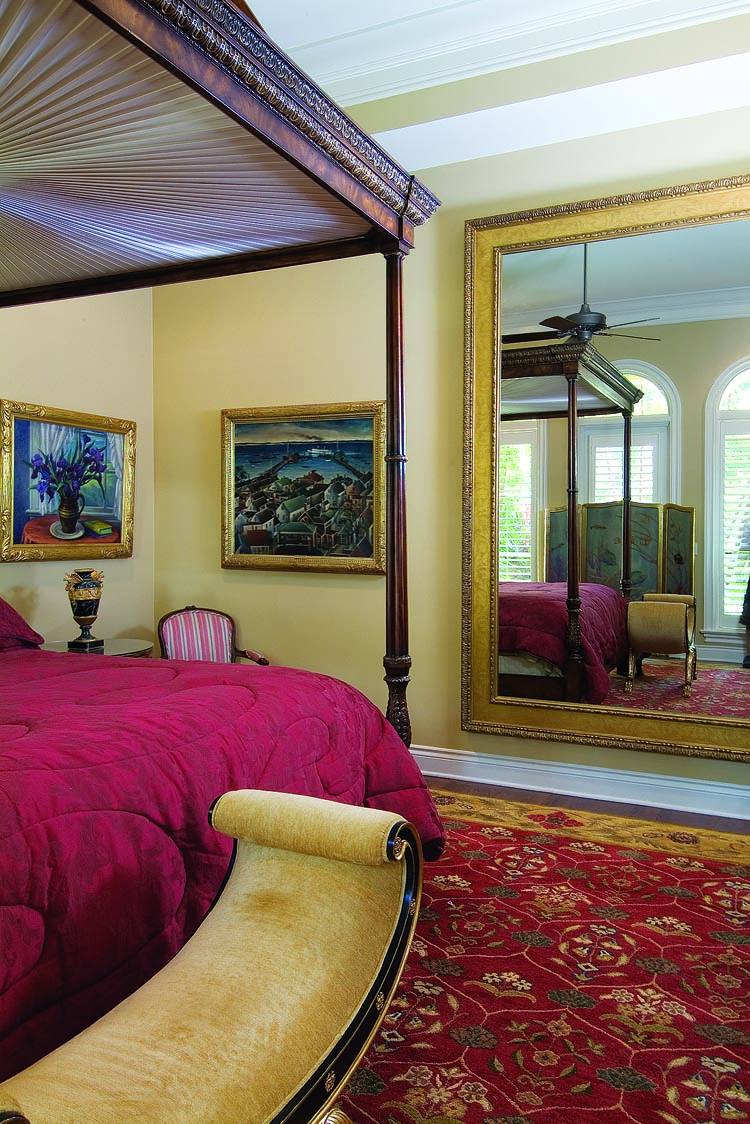
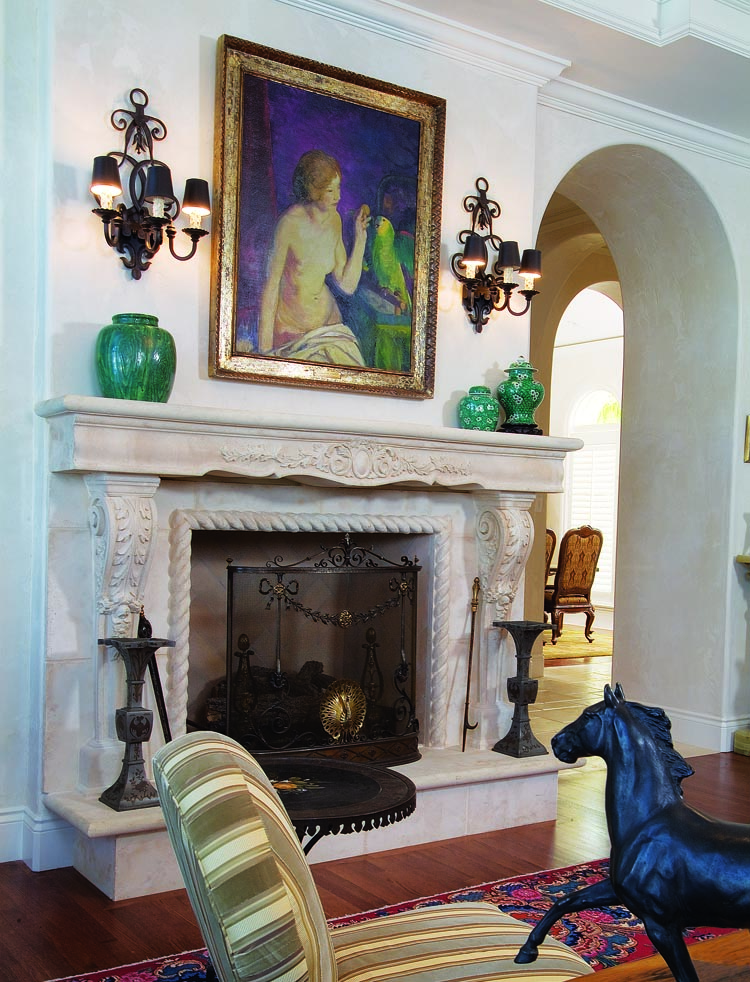
“My tastes are eclectic in that I like the Art Deco and the modern periods, as well as eighteenth- and nineteenth-century European and Asian pieces. I believe these different periods complement each other,” the collector says.
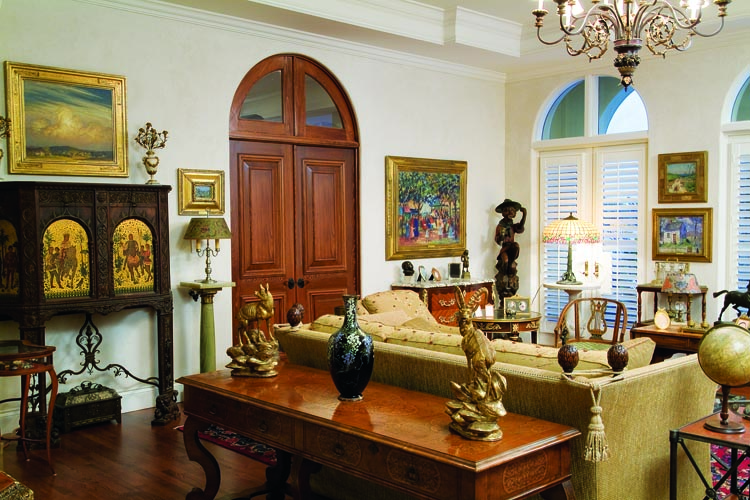
The diverse mix gives the interiors a lively au courant sensibility, while evoking this part of Florida’s heyday in the early twentieth century, when it first became a playground of the elegant and well-to-do. Each room in the house has a distinct personality; the casual great room, club room, and den combine commodious sofas with Art Deco and mid-century Moderne furniture and decorative pieces, while the living room is a mix of rich fabrics, Persian carpets, and European and Asian antiques dating from the seventeenth, eighteenth, and nineteenth centuries. The rooms derive their color from the bright and subtle hues of the paintings and decorative arts. Rather than fixing on a single period or style, the theme that emerges in this collection is a dedication to quality. “I always go after what I consider to be the best,” the collector notes. “It’s my philosophy to always buy the best quality that I can afford.”
|
|
|
|
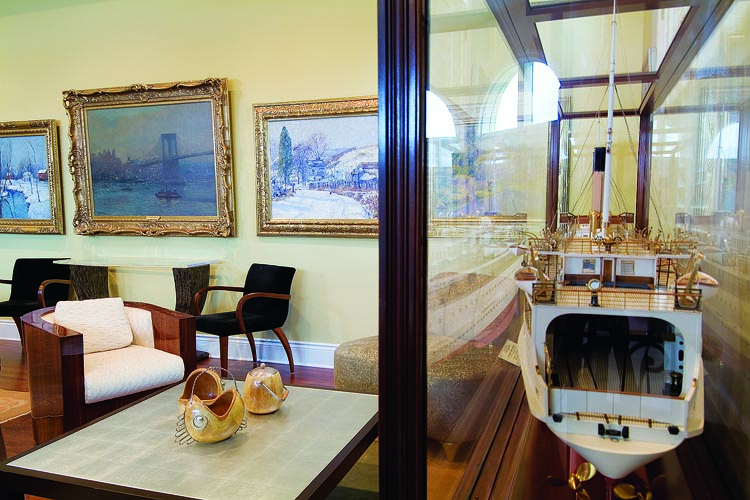
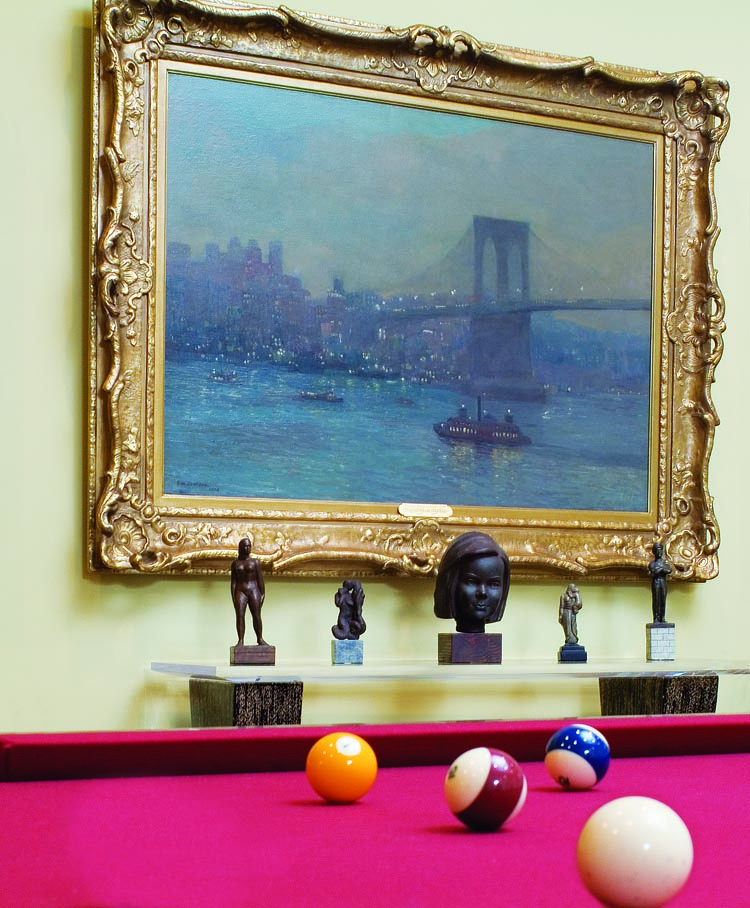
The New Hope painters, though associated with that area of Pennsylvania, painted everywhere they went—New York City, Philadelphia, Gloucester, Massachusetts, Monhegan Island, Maine, Arizona, New Mexico, California, England, and Europe—as well as capturing images of landscapes, farms and towns along the Delaware River, many of which scenes have remained unchanged in the intervening decades.
The collector discusses the myriad approaches these painters took, with their highly individual and often colorful palettes, varied styles and techniques of putting down paint, and modernistic and impressionistic compositions: plein air scenes, abstracts, floral still lives, portraits, and landscapes. Though some clearly shared the artistic sensibilities of their contemporaries, the best, like Edward Redfield (1869–1965), whose resumé of accolades and gold medal awards is second only to that of John Singer Sargent, and Daniel Garber (1880–1958), M. Elizabeth Price (1877–1965), George Sotter (1879–1953), and Robert Spencer (1939–1931) are highly individualistic and important. The collector points out what he most admires in this group: “Redfield for his plein air winter landscapes, Garber for his colorful, delicately handled compositions, Spencer for his broken brush stroke technique depicting mills and the working man, Coppedge as a sublime colorist, Price for her gold leaf background flower pictures, Sotter for his incredible night scenes and beautiful clouds.”
|
|
|
|
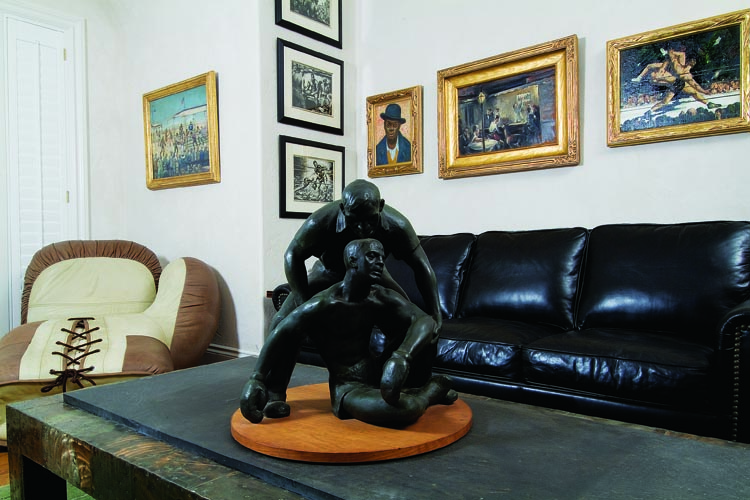
- The collector communicates his sporting interests in the den with Moderne boxing-glove chairs and, atop a 1960s copper and slate table by New Hope artisan Paul Evans (1931–1987), a bronze by Philadelphia sculptor—and onetime Princeton University boxing coach—Joe Brown (1909–1985). Paintings and drawings include (from left) an American boxing genre scene; three pen-and-ink drawings by Robert Riggs (1896–1970) depicting Joe Louis and Max Schmeling; a circa-1935 portrait, Happy Man, by Julius Bloch (1888–1966); The Outdoor Bar at Colligan’s Stockton Inn, circa-1935, by John Folinsbee (1892–1972); and John Grabach’s circa-1930 Wrestlers.
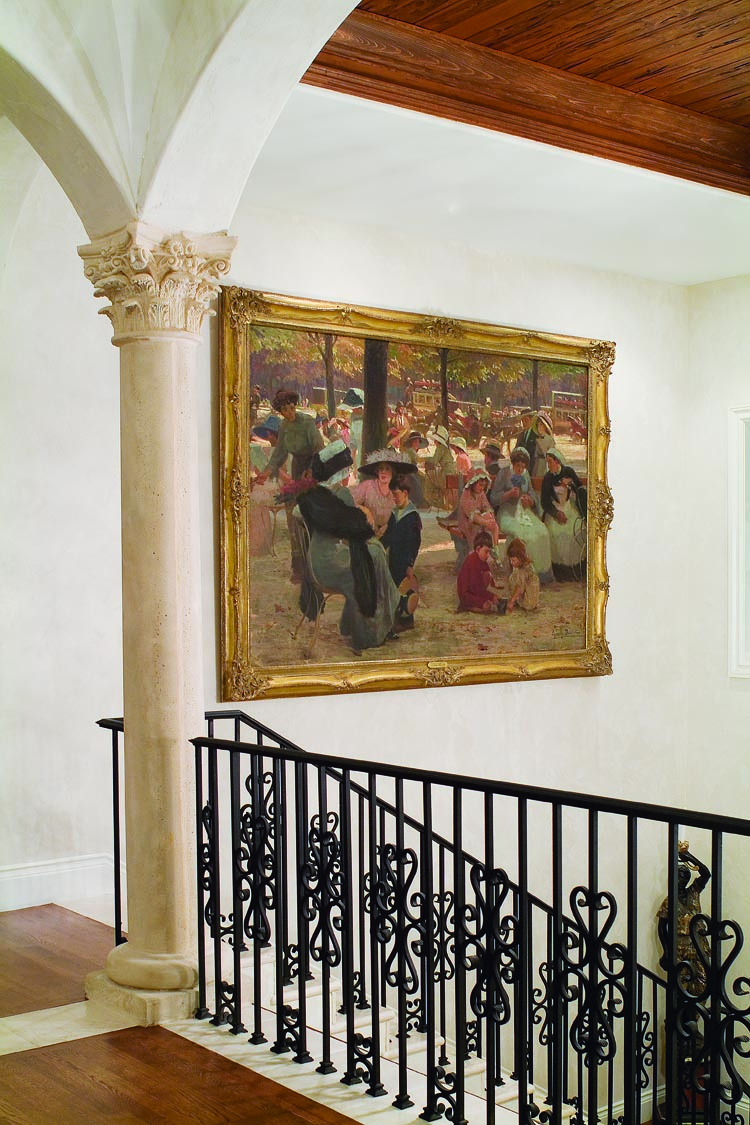
- A circa-1910 painting of the Jardin des Toulleries, Paris, by French artist Cyprien Eugène Boulet (1877–1927) graces the main stair hall.
The women artists represented in this collection are a particular revelation. The best known among them is the colorist Fern Coppedge (1883–1951), a member of the Philadelphia Ten, who lived in Lumberville, Pennsylvania, and captured scenes of that town’s snow laden streets, and those of Gloucester, Massachusetts, conveying the character of those locales with intuitive charm. Another surprise is painter Morgan Colt, who also pursued a career as a craftsman, creating Arts & Crafts furnishings in ironwork, hammered metal and oak.
As he discusses their work, the collector recounts the painters’ personal histories. This includes accolades like winning gold medals in the era’s prestigious academy shows, but is sometimes poignant: Colt, Spencer, and Rae Sloan Bredin (1881–1933) all died before turning 52. It also includes one of the only consortiums in early-twentieth century modernism: Ramstonev—a brief (1937–1939) collaboration among New Hope painters Charles Ramsey (1875–1951), Louis Stone (1902–1984), and Charles Evans (1907– 1992), which produced a small, prized number of abstract works.
A reference this collector cites as his touchstone is New Hope for American Art: A Comprehensive Showing of Important 20th Century Painting From and Surrounding the New Hope Art Colony, self-published in 2005 by James M. Alterman, owner of the Lambertville, New Jersey, art gallery Jim’s of Lambertville. “It is always best to buy a great painting as opposed to a couple of good or several average paintings,” Alterman writes, ”…a great work will always be great, and as a collection develops, the mediocre works won’t hold up to the trained eye.” And, “The most sensible approach to collecting art is to use discretionary funds with the idea of beautifying your home and gaining enjoyment from living with and looking at art. Past history shows that, many times, over the long term fine art outperforms other much less pleasurable investments.” This collector’s enjoyment of his collection and the investment appreciation the works have shown during the years of his stewardship are proof to him of that advice.
This article was originally published in the 7th Anniversary issue of Antiques & Fine Art magazine, a fully digitized version of which is available on afamag.com. AFA is affiliated with Incollect.com