




Thomsen Gallery Inaugurates New Premises with Spectacular Display of Japanese Traditional Arts
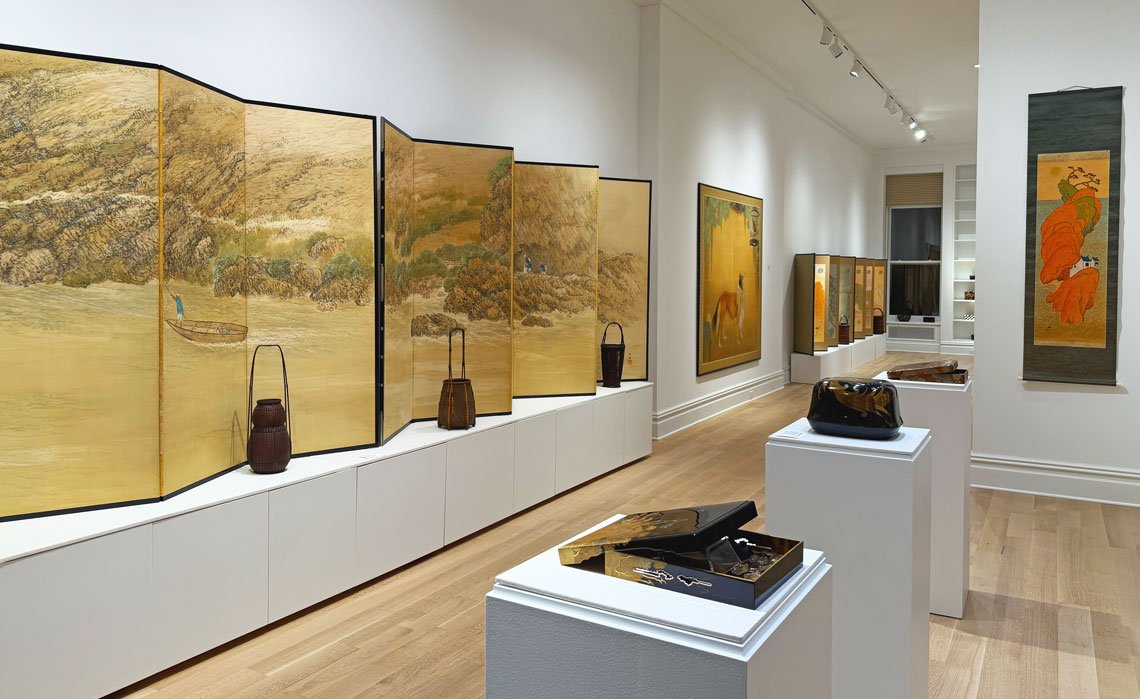 |
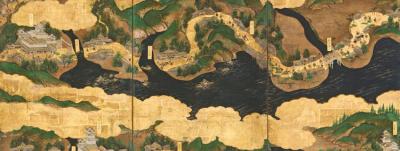
Thomsen Gallery’s inaugural exhibit at the new location in the Lenox Hill neighborhood of Manhattan runs during Asia Week from Thursday, March 19 through Friday, March 27th. Seen here is a wonderful pair of six-panel screens, On the Banks of the Hozu River, 1915, along with masterpieces of ikebana bamboo baskets. |
Thomsen Gallery Inaugurates New Premises with Spectacular Display of Japanese Traditional Arts
Yoshio Okada and Modern Japanese Paintings
Thomsen Gallery
March 19 – 27, 2026
8 East 67th Street, New York, NY 100655
by Benjamin Genocchio
To coincide with the annual Asia Week in New York (March 19 – 27), Thomsen Gallery is exhibiting new gold-lacquer boxes by Yoshio Okada and outstanding Japanese paintings from the early modern era. It is a beautiful show, inaugurating the gallery’s bright, spacious new home on the ground floor of a brownstone on East 67th Street.
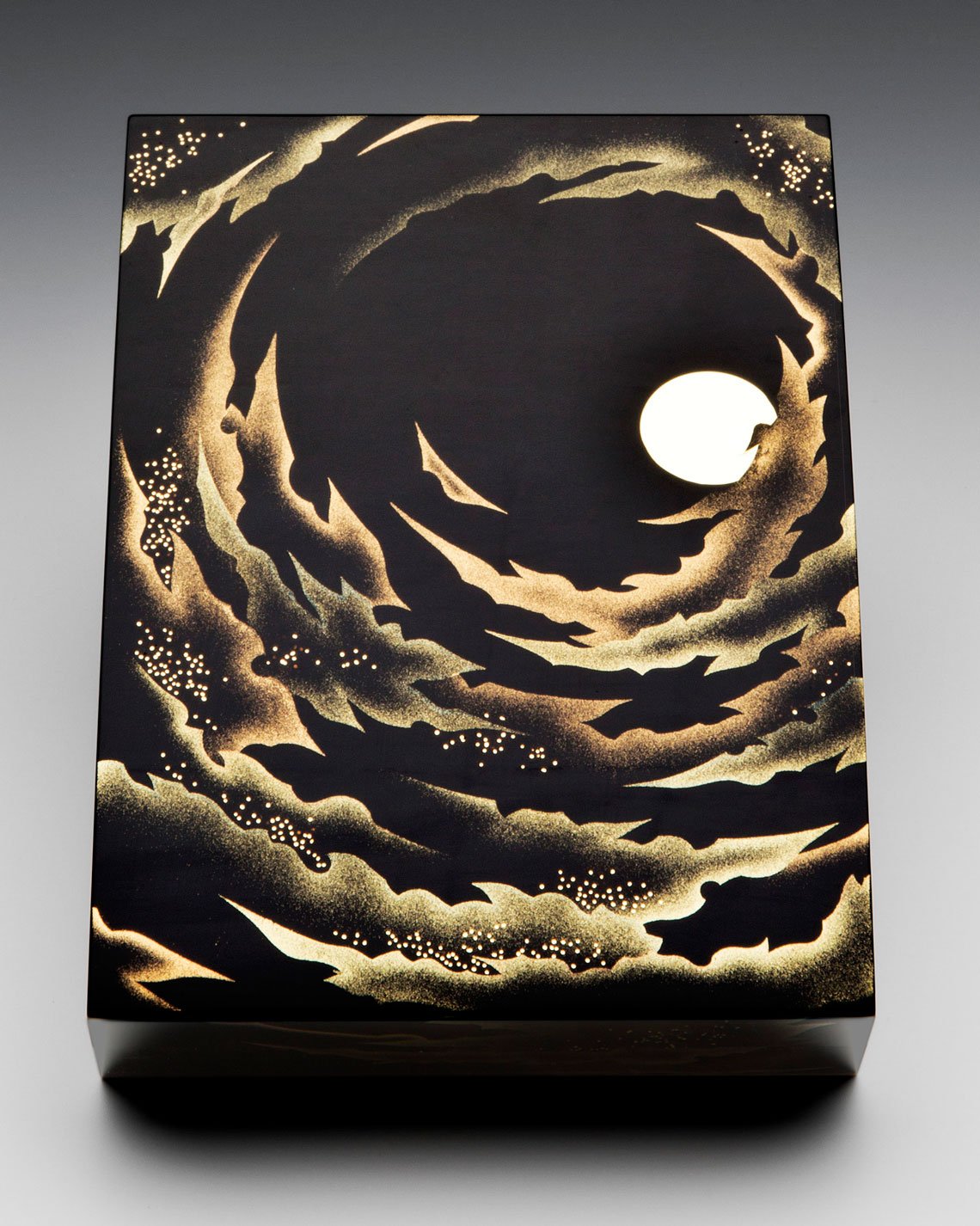 | 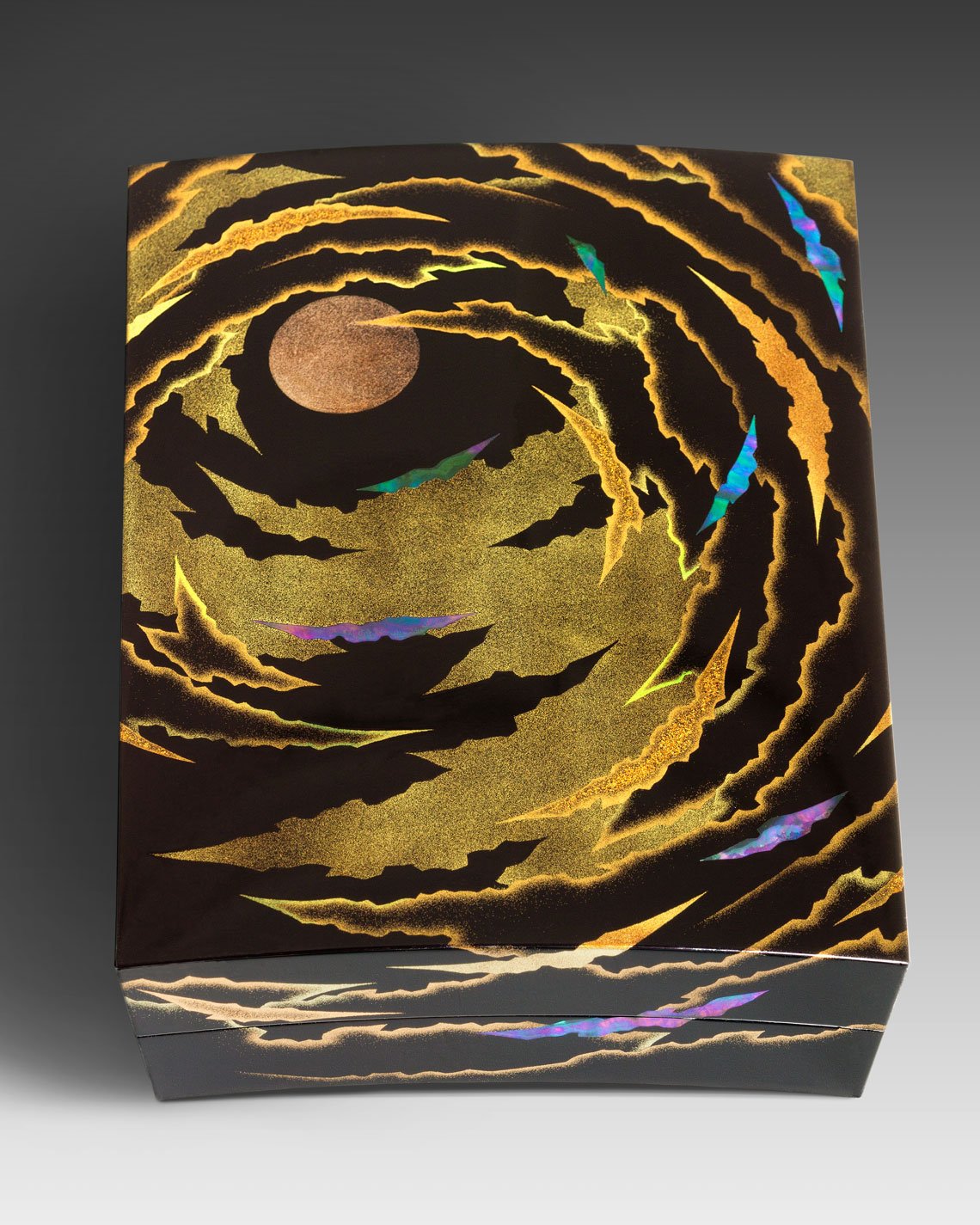 | |
| Left: Yoshio Okada, Night Sky, Glittering Moon, kanshitsu box with sprinkled design of celestial phenomena, 1½ x 6 x 4¼ in. Right: Yoshio Okada Shining Moon, Hazy Clouds, kanshitsu box with sprinkled design of celestial phenomena, 1½ x 5¾ x 4¼ in. | ||
Okada is a perennial favorite with collectors of Japanese lacquer. He is especially admired for the way in which he brings a contemporary sensibility to the time-honored Japanese lacquer arts. The exhibition presents pieces from two of his most innovative series, “Celestial Phenomena” and “Jellyfish.” Thomsen explains: “Each series is inspired by natural phenomena from the universe, and jellyfish.”
The allure of Okada’s jewel-like, mesmerizing artistic objects lies in the painstaking construction and choice of precious materials. The individual boxes are made of rare woods, lacquered at least a dozen times, and then meticulously polished to a gleaming sheen. Into the initial lacquer surfaces, inside and outside the box, the artist inserts lustrous gold, shell, mother-of-pearl, and other precious inlays. Each is signed ‘Yoshio tsukuru’, meaning ‘Made by Yoshio’.
 | 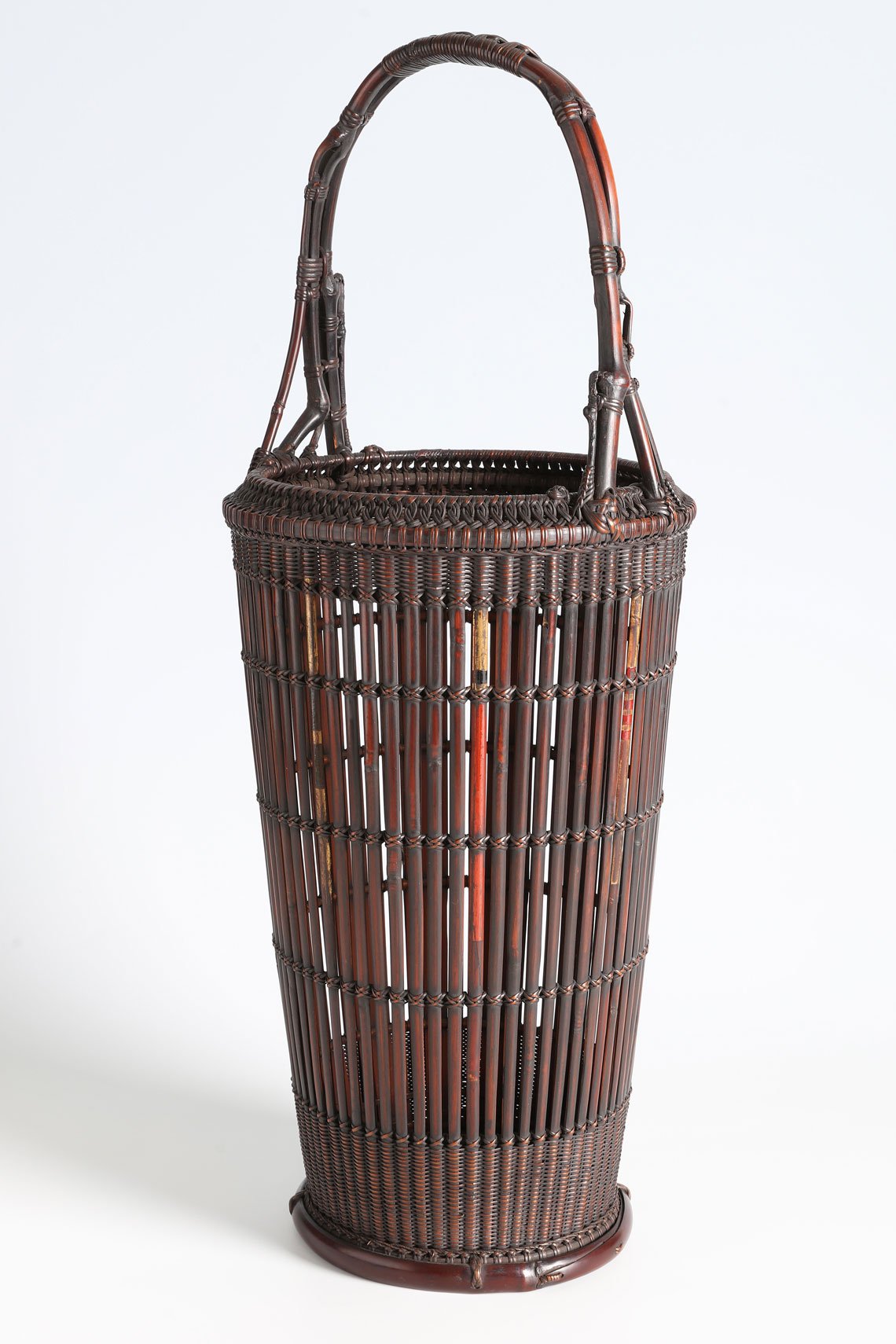 | |
Left: Wada Waichisai III, Handled flower basket named “Well Head,” circa 1930. Bamboo and rattan, 19½ x 9 x 9 in. Right: Maeda Chikubōsai I, Flower basket with natural bamboo handle and antique arrow shafts, circa 1920s–1930s. Bamboo, rattan, lacquer and gold foil, 20 x 8 x 7¾ in. | ||
Around the wall of the gallery are half a dozen folding screens and hanging scroll paintings from the Taisho era (1912–26) and the first two decades of the Shōwa era (1926–1989). Each one is an exquisite, radiant image of simple rural life and the magnificence of the landscape a century ago.
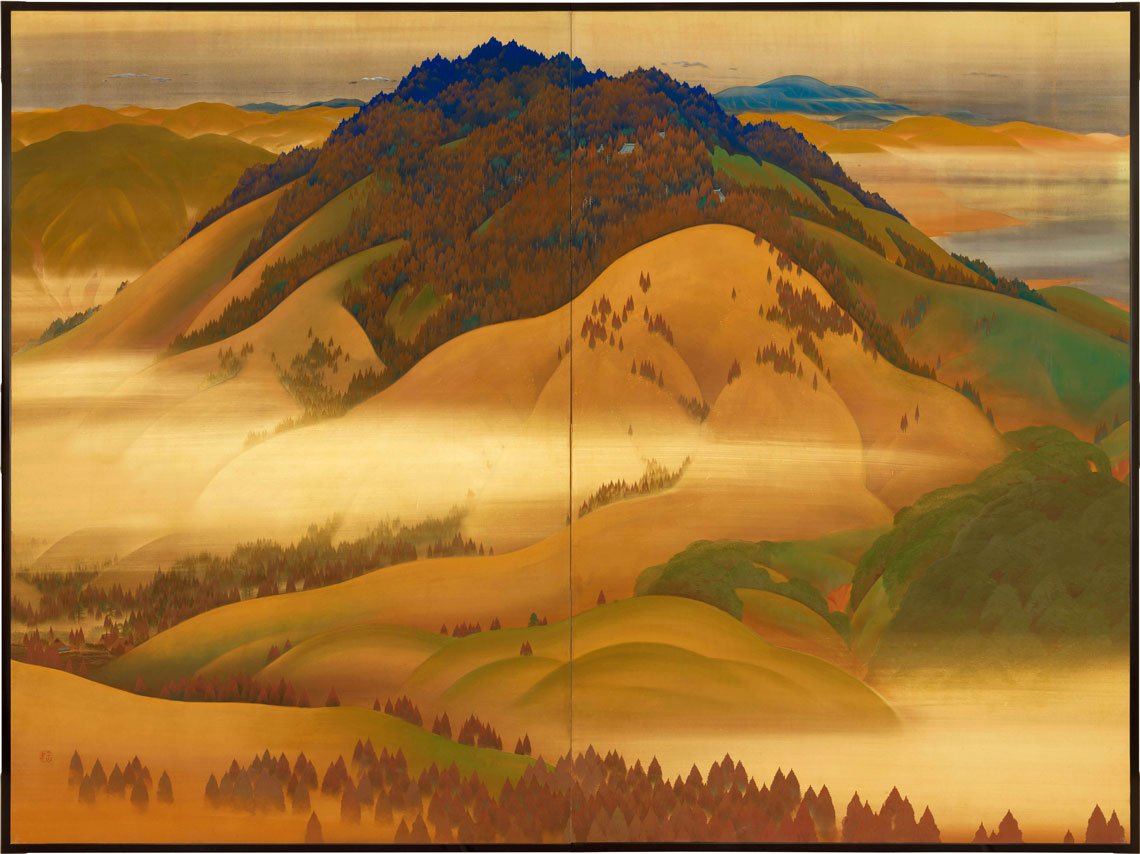 |
Fudo Ritsuzan, Mountain Landscape, circa 1940. Two-panel oversized folding screen, mineral pigments and gold wash on silk, 72¾ x 97¼ in. |
Fudo Ritsuzan’s (1886–1975) Mountain Landscape, circa 1940 is a two-panel oversized folding screen painted on silk in raw pigments and gold wash. This work leaves viewers in awe of nature’s beauty. Equally ravishing, if modern in style, are Ota Shumin’s (1881–1950) Fukakusa no aki (Autumn in the Woods), 1920, and Hirai Baisen’s (1889–1969) Horai Island, circa 1920s, depicting the mythical island of immortality in Japanese and Chinese mythology as an unusually bright orange, worm-like landform lifting out of the ocean.
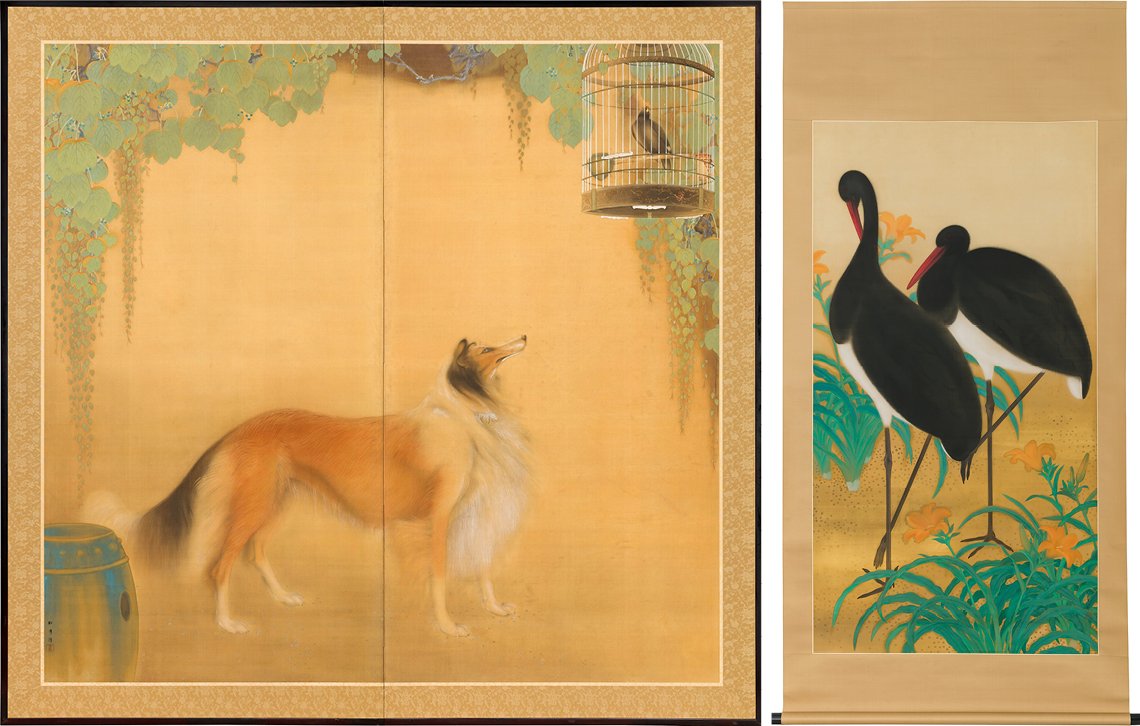 |
| Left: Kahata Tosen, Collie and Myna Bird (In a Peaceful Garden, The First Signs of Autumn), 1926. Two-panel folding screen; ink, mineral colors and shell powder on silk, 77 x 81¼ in. Right: Nagano Sofu, Cranes and Lilies, circa 1920s. Hanging scroll; ink and mineral colors on silk with gold wash, 100¾ x 48¼ in. |
Thomsen has built a reputation for displaying the very best Japanese traditional art. His dedication to quality is laudable and greatly edifying, reminding us of the mastery and broad artistic accomplishments of Japanese artists and designers.
The gallery is hosting a reception for the new exhibition and newly renovated gallery on Tuesday, March 24, from 5:30 to 7 pm, to celebrate Asia Week New York.
 |
Discover More From Thomsen Gallery on Incollect
 |