The Rewards of Discipline
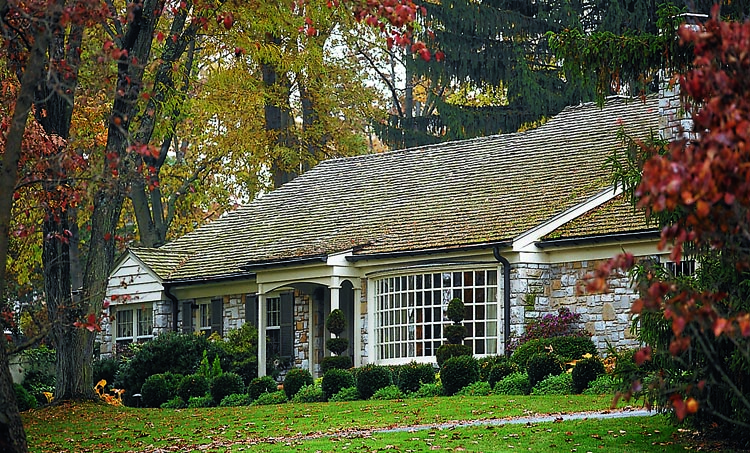
An unassuming stone house belonging to a couple in the Mid-Atlantic region of the country contains a remarkable collection of American furniture, tribal rugs, and arguably the finest private assemblage of pottery from the Shenandoah and Cumberland Valleys. Collecting since the late 1980s, this husband and wife have created a home that is as stunning as it is inviting. Though surrounded by wonderful objects, the two live with and use their furnishings, creating a welcoming, relaxing environment.
“When I first met my husband,” says the wife, “he had a great collection of rugs. As we traveled around, visiting antiques shops looking or more examples, we became aware of other things, particularly Windsors. We were attracted to their wonderful sculptural form, and soon had a house furnished with rugs and Windsors. My husband was interested in learning as much as he could about what we were finding,” says the wife.
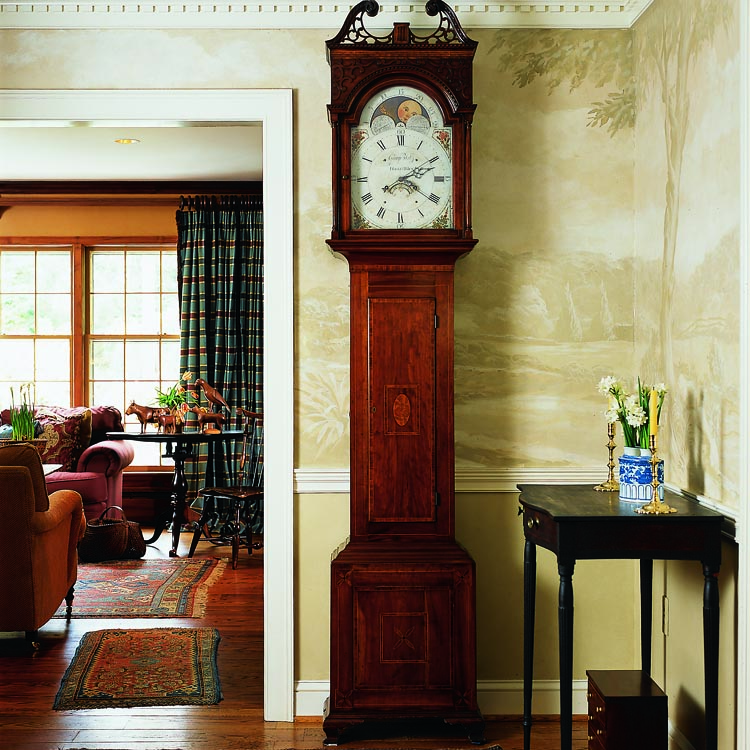 - The spectacular inlaid clock with blind fretwork and moon dial is signed by George Woltz (1744–1812) of Hagerstown, Md. It is illustrated as “Best” in Sack’s Fine Points of Furniture (1950), page 123. The serpentine Essex County dressing table is of wonderful form with an untouched surface. Four carvings from Appalachia or North Carolina sit on the Pennsylvania tilt-top table in the den.
|
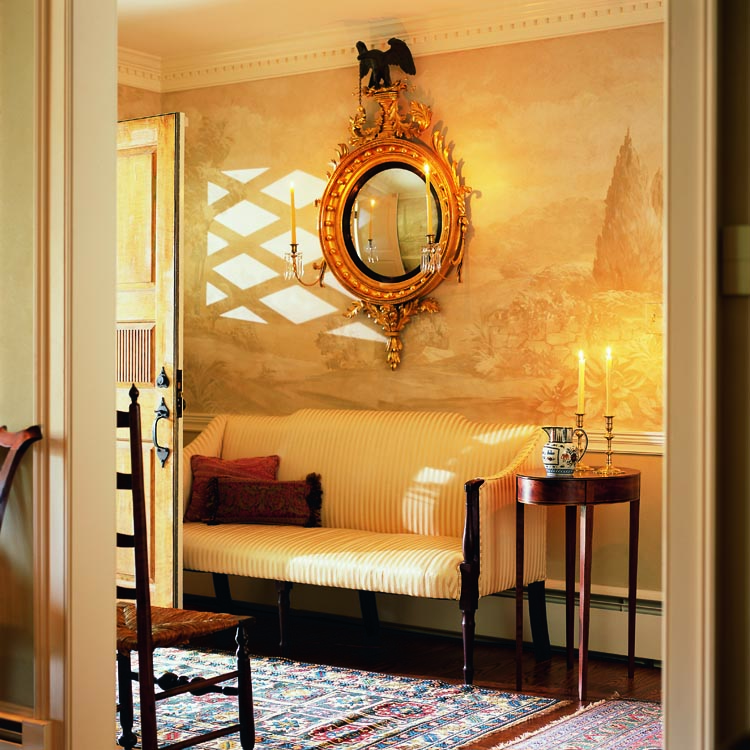 - Federal furniture lines the entrance hall. The small Philadelphia sofa came directly from Wilmington, Delaware, collector Gordon Salter; five generations of Salters proposed on this sofa. The recently purchased Seymour sewing table will soon be placed beside it. The elegant girandole mirror had been in a neighbor’s home for thirty years before being purchased by the couple at a local auction.
|
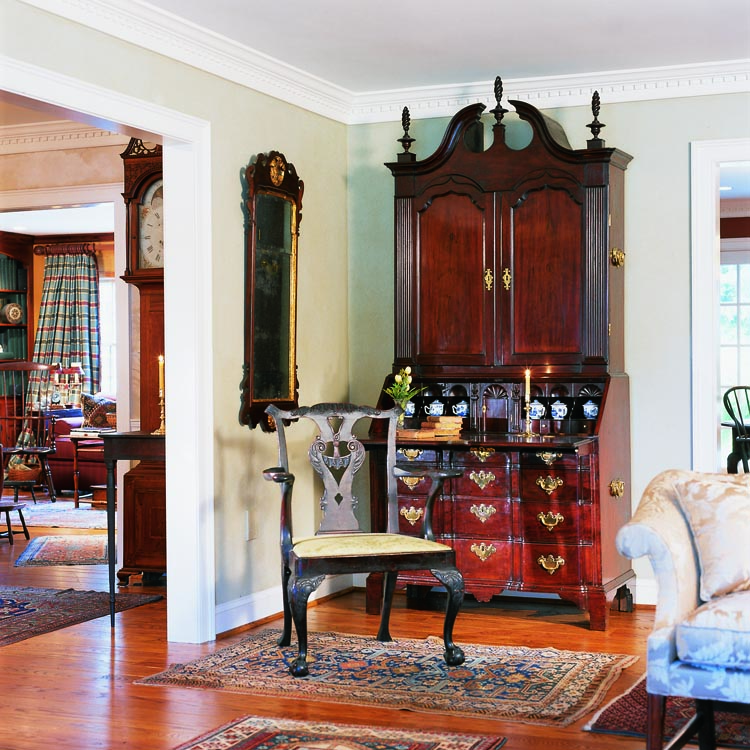 - The iconic block-front secretary bookcase, ca. 1760–1770, is attributed to the Charlestown, Mass., shop of Benjamin Frothingham (1734–1809). It belonged to collector and scholar Ralph Carpenter, and also appears under “Best” in Albert Sack’s Fine Points of Furniture (p. 159). “We tried several secretaries before we purchased this one,” says the wife. “Part of collecting is doing your homework so you know what to look for and know when you have found the right piece.” The armchair, from the Van Rensselaer family of New York, was in instant purchase. “My wife bought this for me,” says the husband. “Honestly, it is probably my favorite piece. I love the carving and the old surface. When the light is on it, it just glows.”
|
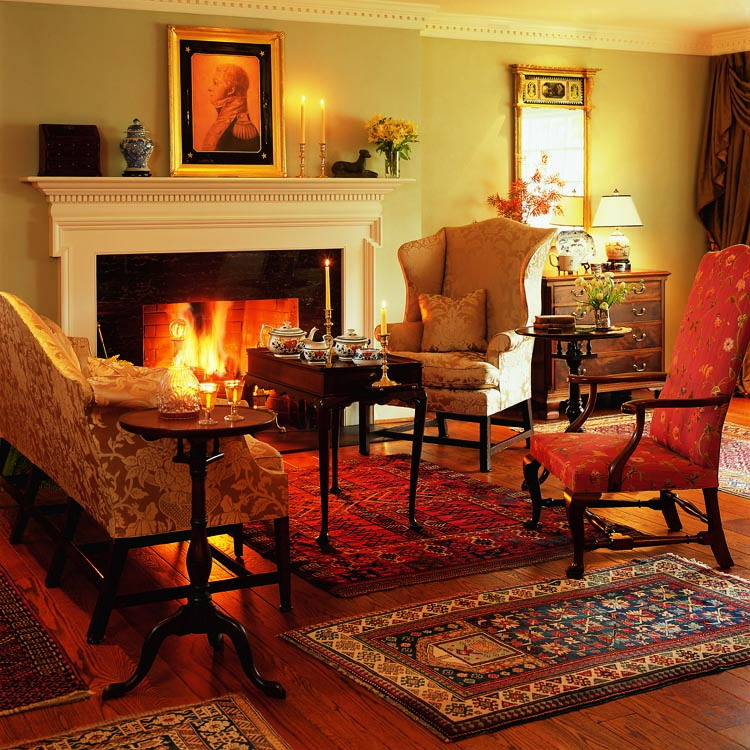 - The husband’s passion for tribal rugs is seen most prominently in the living room, where there are five examples. The Philadelphia camel back, serpentine-front sofa is pictured as “Best” in Sack’s Fine Points of Furniture, page 227. In Sack’s New Fine Points of Furniture (1993), the tea table (purchased from the Eddy Nicholson sale in 1995) is listed as a “Masterpiece” (pages 256, 266). The upholstered lolling chair with cabriole legs is a rare example. A portrait of an unknown gentleman, attributed to St. Memin (1770–1852), rests on the mantel beside a molded figure of a greyhound, signed and dated “Samuel Bell, 1844,” from Strasburg, Va.
|
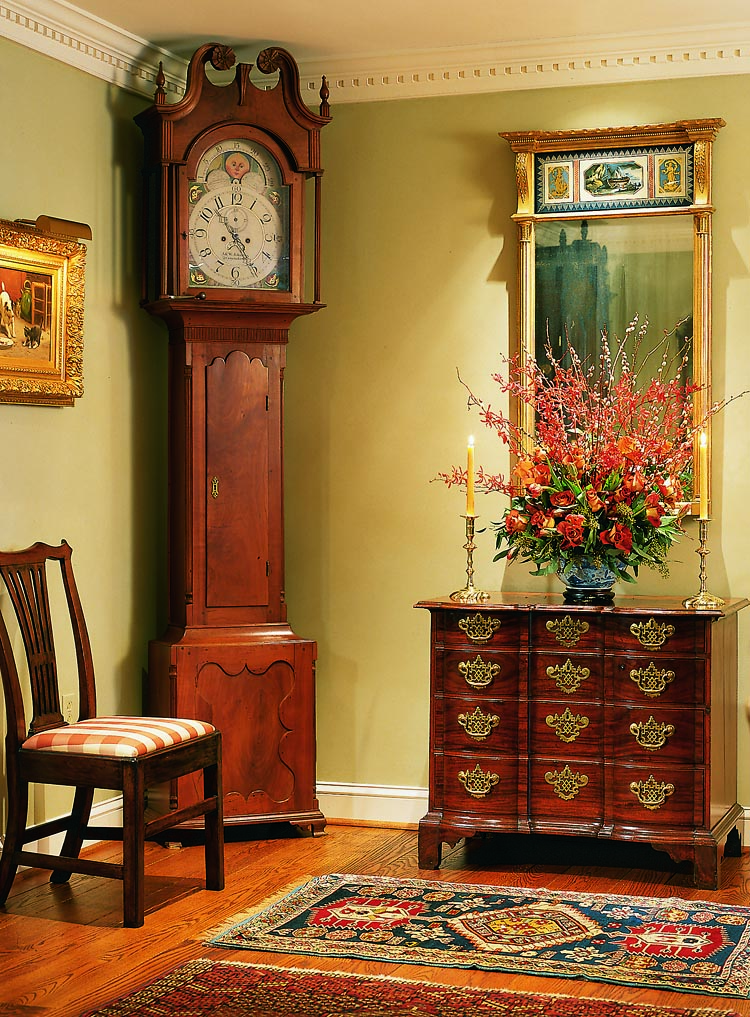 - One of a pair of looking glasses labeled by John Doggett (1780–1857) of Roxbury, Mass., with eglomisé panels signed by artist John Ritto Penniman (1782–1841), hangs over a diminutive block-front chest. The husband describes the figure of the wood as dazzling. The dial of the tall clock is signed by Arthur and William Johnston (w. 1785–1815) of Hagerstown, Md.
|
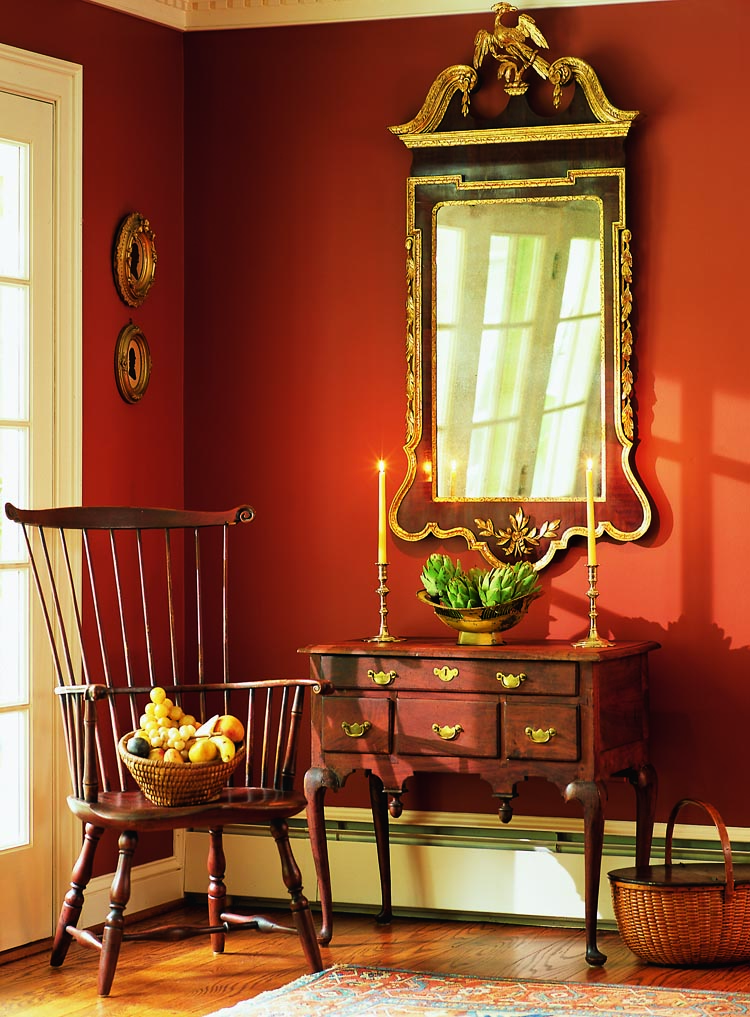 - The grand Chippendale looking glass is a recent purchase. It hangs over a dressing table purchased en suite with the high chest, also seen in the room and originally made for Colonel Thomas Marshall (1719–1800) of Boston, circa 1750. The Nantucket Windsor is one of thirteen Windsors in the couple’s collection.
|
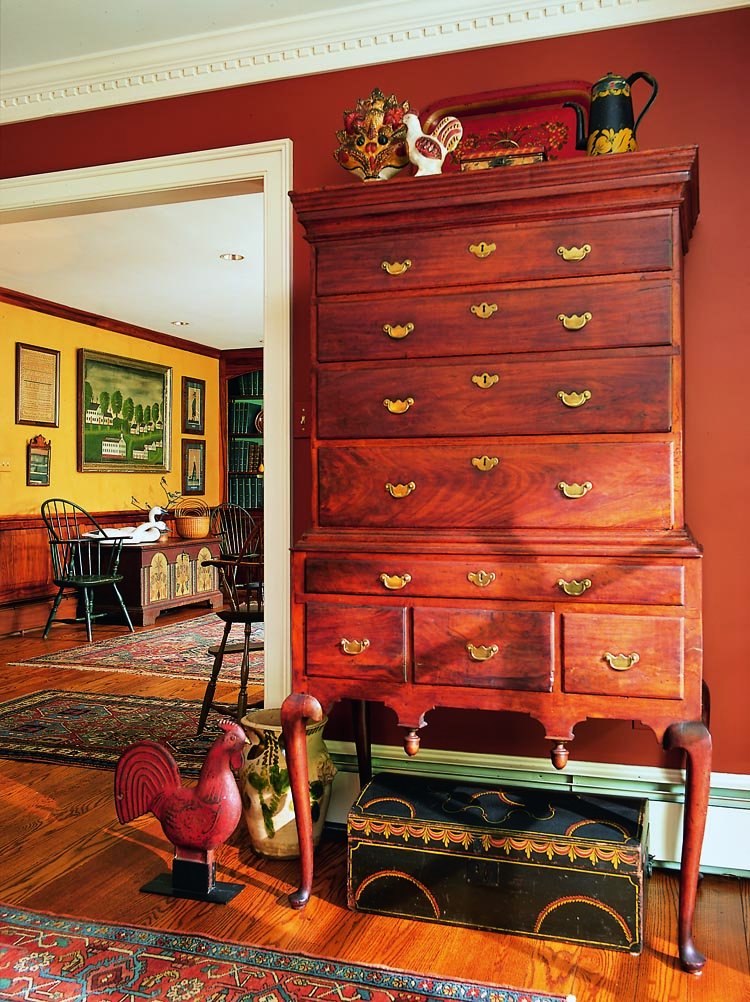
- Below the high chest is a nesting set of three painted boxes from Worcester County, Mass., ca. 1830; chalkware figures and toleware decorate the top. Visible in the den beyond is an architectural Pennsylvania blanket chest dated 1793. Above it hangs an early nineteenth-century over-mantel painting depicting a quaint Massachusetts town; a number of the buildings are still standing. It is flanked by a Montgomery County sampler and a pair of portraits by Jacob Maentel (1763–1863) identified as Henry Welsh and Christiannah Shubbert Welsh.
“He would talk to dealers about pieces, and soon they started bringing things to us.” Adds the husband, “Before we knew it, we had a collection of American furniture and decorative arts.”
“My wife and I have always collected as a team,” says the husband. “I would say our approach is that I research the pieces and she decides where to place them within the home.” She adds, “I have always collected, but I collect for decorating, for a look; it’s what I do professionally. My husband has helped me refine my taste because he is a scholar, a real student of the material.” When considering a purchase, the husband absorbs all the information he can from dealers, books, and the objects themselves. “My mother was a collector of many different things,” he says. “Her strong suit was rugs. It was what we could afford. By being diligent and developing a phenomenal eye, she was able to really beautify the home with some wonderful examples. I guess I inherited her passion—a love for learning and for the hunt.
As with every serious collector, their first major purchase was daunting. Such was the case when they bought the matching high chest and dressing table, now in their dining room, at the Philadelphia Antiques Show many years ago. “My wife was wondering why I seemed so frazzled after we purchased the pair,” says the husband. “She hadn’t realized there was another zero involved.” Though nerve-wracking at the time, today, the couple couldn’t be more pleased with their purchase. “Most recently we took the plunge and purchased the Seymour sewing stand at Christie’s in January. We had been looking at and studying this form for years, but the timing just hadn’t been right. We didn’t think we had a chance at this one because it seemed everyone wanted it. But it was the one for us, so we focused our resources and were fortunate to be the ones to take it home. Timing is everything.”
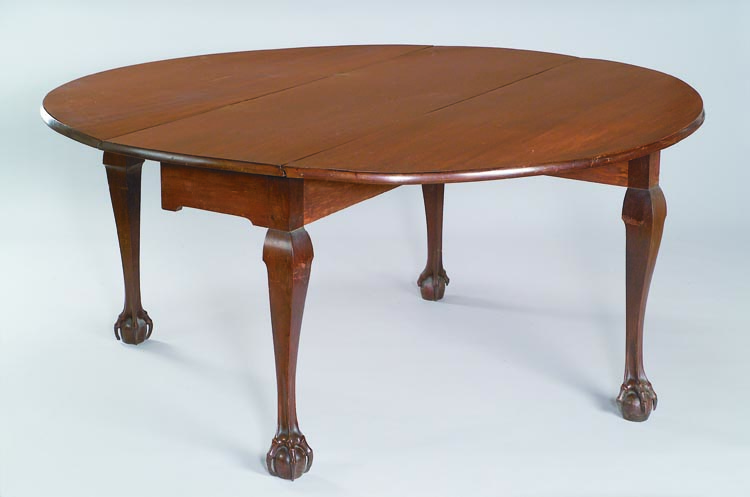 - This Newport pierced-talon drop-leaf table is a recent addition to the collection. At 61 inches in diameter it is likely the largest known circular-form Newport dining table. Attributed to John Townsend, circa 1760s, the table descended directly in the family of the original owner, Jerathmael Bowers (1730s–1799), a prominent Newport Quaker merchant.
|
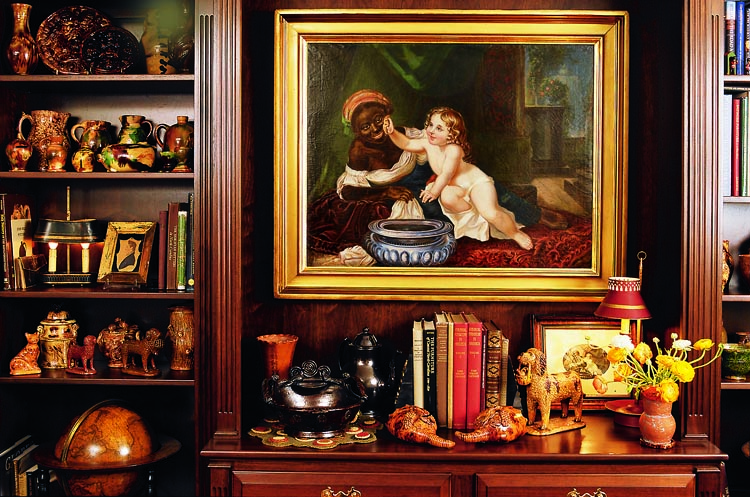 - The shelves in the husband’s office are brimming with Shenandoah and Cumberland County Valley pottery, circa 1820 to 1900. Below the allegorical painting, inspired by a print by William Lechler, ca. 1850, are some of the couple’s prized possessions, a rare pair of wall vases and a manganese glaze wash bowl, both by Anthony W. Bacher (1824–1889), Winchester, Va., and an unusually large pottery figure of a dog attributed to John Bell (1800–1880), Waynesboro, Pa. On the flanking shelves are wares by other Valley potters—Jacob Eberly, J. E. Simons, W. A. Lynn, among many others—and a watercolor profile of John Bell, dated 1823.
|
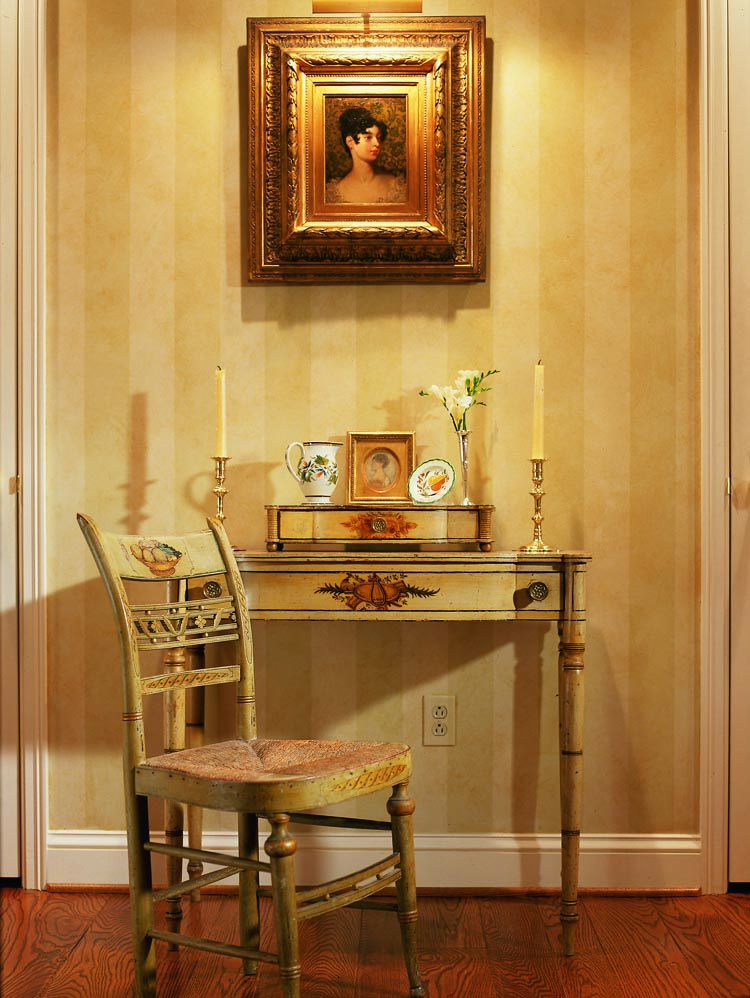 - Recently a master suite was added to provide more room for the growing collection. Among the pieces in the anteroom are a New Hampshire painted dressing table and a fancy chair branded by Amos Denison Allen (1774–1855) and Ebenezer Tracy (1744–1803) of Windham, Conn. The 1881 oil portrait by James E. Maxfield (1848-?) is of an unknown young woman.
|
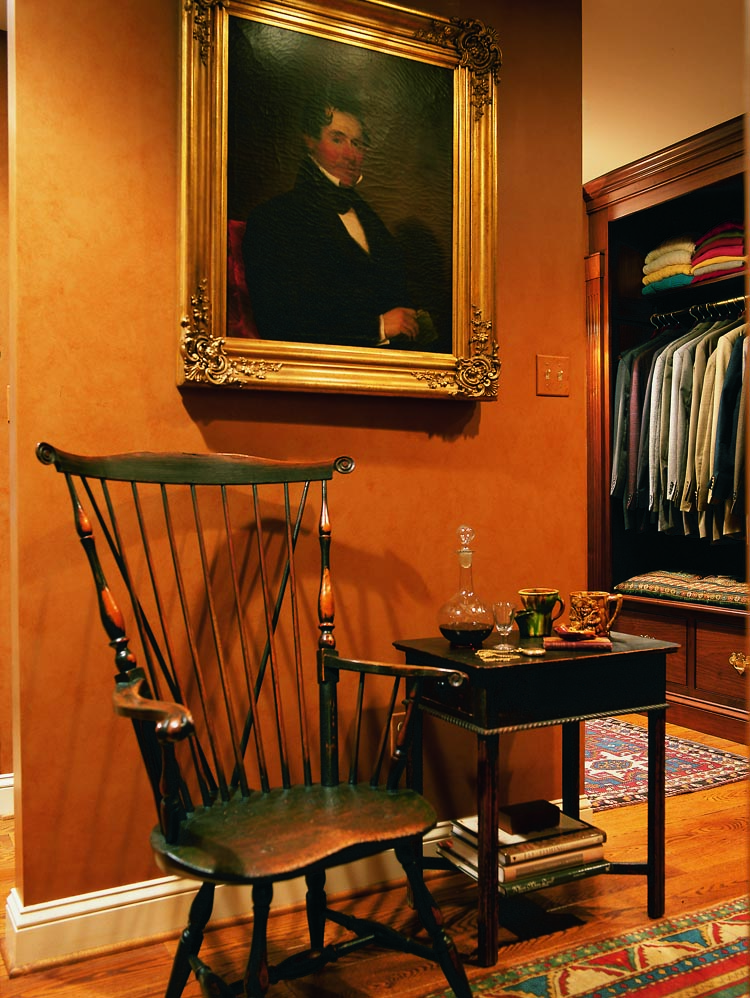 - The architectural fluted pilasters in the husband’s dressing room complement the legs on a rare table attributed to Daniel Clay (1770–1848), Greenfield, Mass. It and the Nantucket brace-back Windsor retain their old surfaces. A portrait of Judge Chambers of Chambersburg, Pa., dates to circa 1840; a portrait of his wife hangs elsewhere in the house.
|
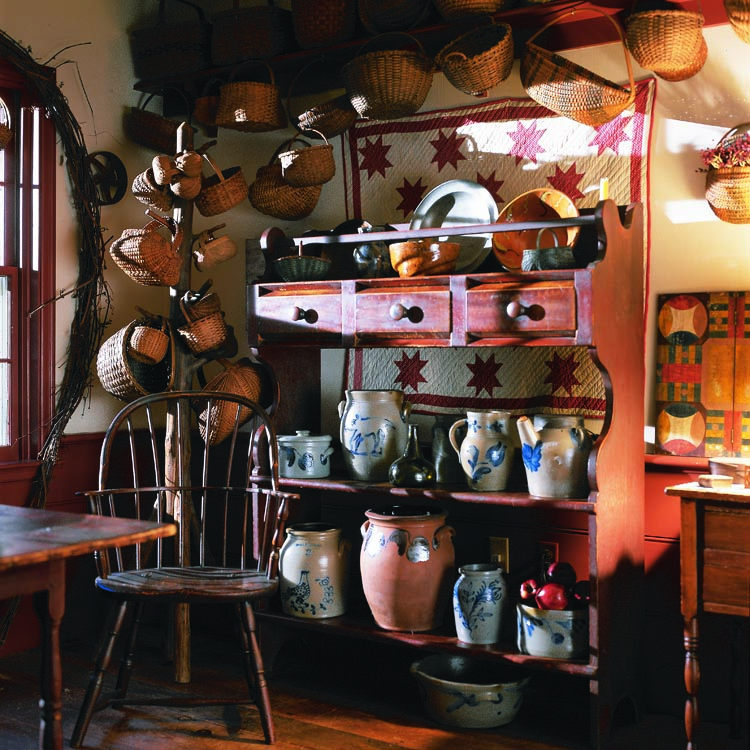 - Sun streams into the wife’s office, which she has filled with a selection of antique baskets and nineteenth-century pottery. The Pennsylvania paint decorated bucket bench with shaped sides and drawers is quite exceptional.
|
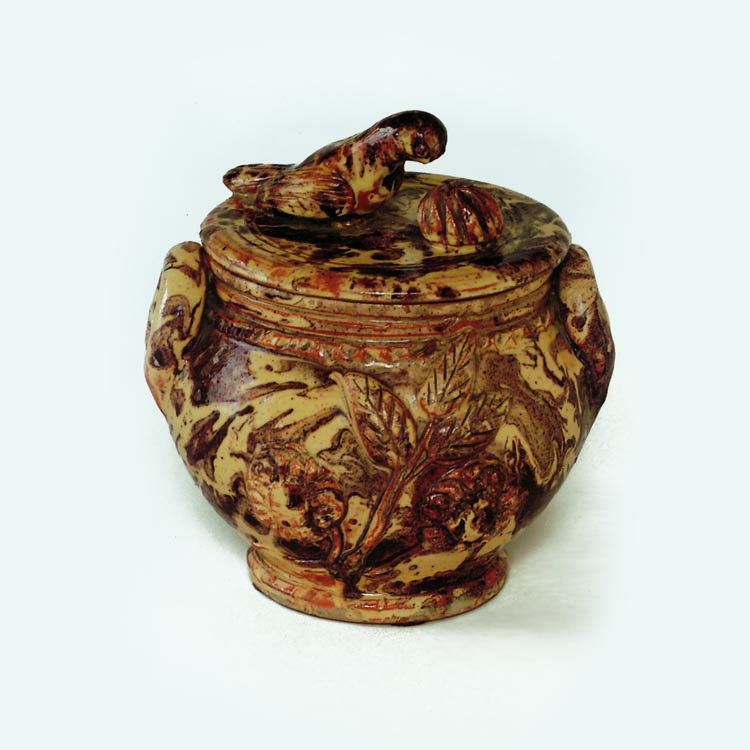 - Covered sugar bowl, attributed to Anthony W. Bacher, J. E. Simons Pottery, Mechanicstown, Maryland, 1881–1883
|
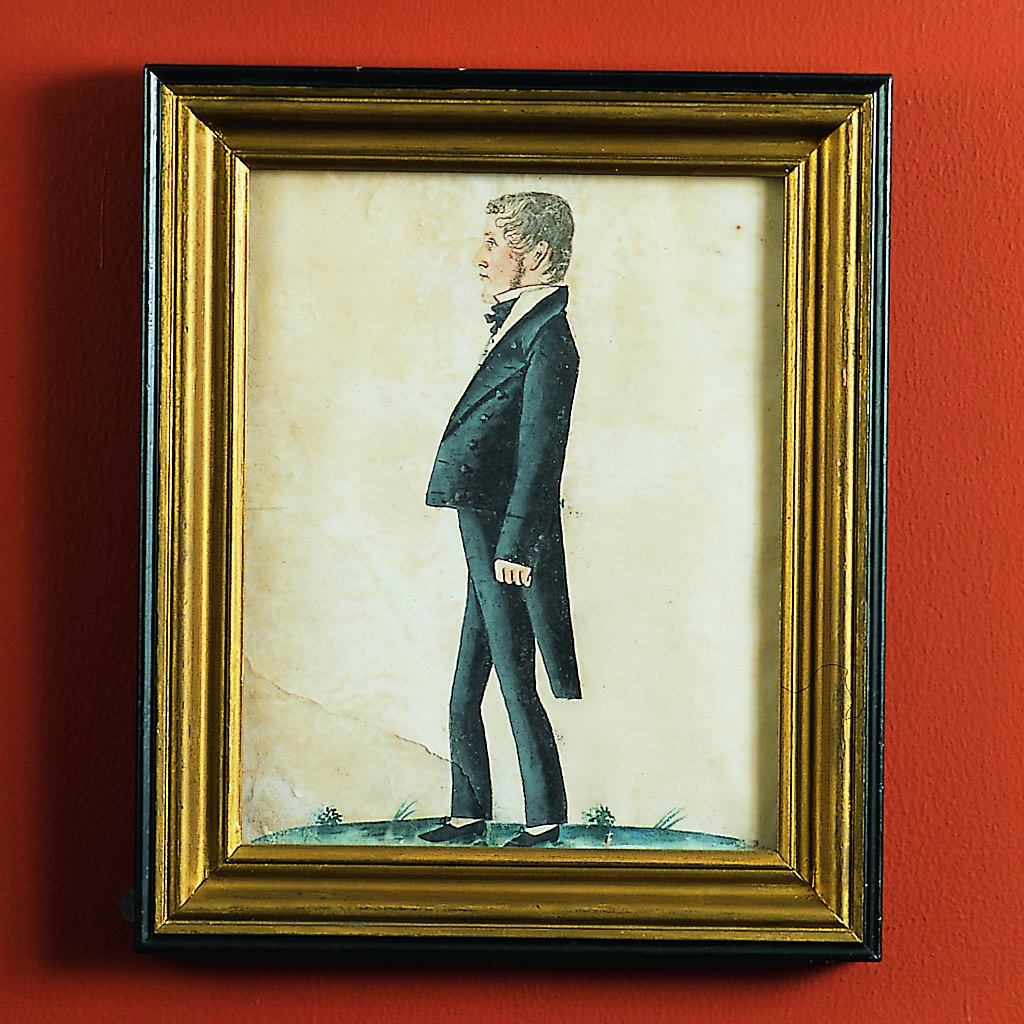 - Husband from a pair of portraits by itinerant artist Jacob Maentel (1763–1863)
|
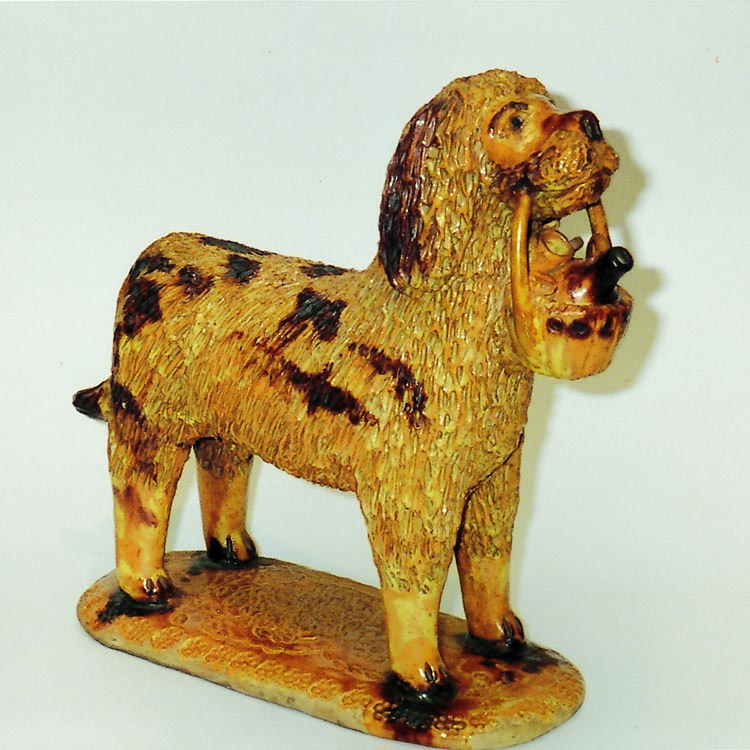 - Figure of a dog, attributed to John Bell, Waynesboro, Pa., 1860–1890.
|
The couple’s furniture collection is comprised of stellar pieces, among them, a rectangular Boston Queen Anne tea table, a Chippendale Boston block-front secretary, and a Philadelphia Chippendale sofa. In addition to the recently purchased sewing table, the couple has acquired a Newport pierced-talon drop-leaf table, which they have since integrated into their living room. A pair of looking glasses labeled by John Doggett (1780–1857) of Roxbury, Massachusetts, features eglomisé panels painted and signed by Boston artist John Ritto Penniman (1782–1841); Penniman is also attributed as the artist of the scene on the top of the newly purchased sewing stand. Though most of their furniture was made in New England, the couple have a number of important pieces from the Mid-Atlantic region, particularly from counties close to their home. “We collect the local pieces because we live here,” says the husband, “though aesthetically we personally prefer objects from New England.”
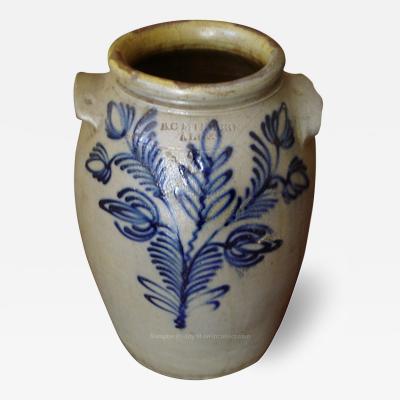
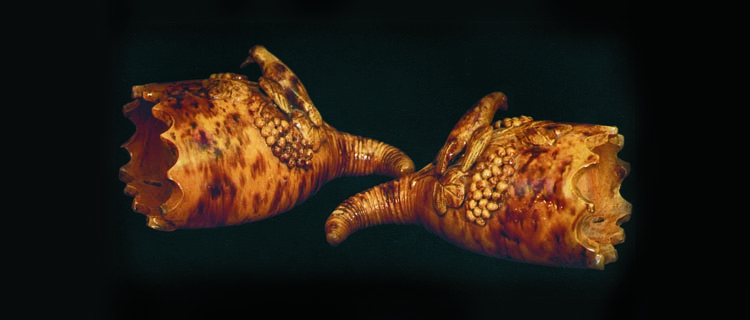
Other furnishings in the house include folk art, painted furniture, and baskets. Their pottery collection is specifically from the Shenandoah and Cumberland Valleys, regions that include areas of Pennsylvania, Maryland, and Virginia. When collecting the pottery, the couple only purchase objects in pristine condition, a challenging task considering the fragility of ceramics. What appeals to them about this material is the variation in form, color palette, and the personal touches. Their first pottery purchase was a canning jar for $35 made by a member of the Bell family of Waynesboro, Pennsylvania. Nearly twenty years later, they have amassed a significant number of pieces by the major potters of the region. Their most prized piece is the large-scale dog attributed to John Bell (1800–1880). Says the husband, “There is not another one of its size. It has wonderful articulation of detail and is in pristine condition.” The pair of wall vases is also spectacular. There is no other known pair, and these two are in untouched condition. “They are a tour de force,” notes the husband. “Just phenomenal. In addition, they are signed and dated by the maker, Anthony W. Bacher, 1878.”
“We continue to be on the lookout for pieces that will enhance not only our collection but our lives,” says the wife. “The wonderful thing about collecting is that we live with and enjoy these objects every day.”
By
John C. Newcomer
Contributors
Photography by Erik Kvalsvik
Nov 6,2013
This article was originally published in the Spring 2005 issue of Antiques & Fine Art magazine (AFA). AFA is affiliated with InCollect.com.