









André-Charles Boulle
French, 1732
André-Charles Boulle (1642-1732) was a French cabinetmaker and ébéniste who is considered one of the most important furniture makers of the Baroque era. He is particularly renowned for his skill in marquetry, or the use of inlaid wood to create intricate designs and patterns.
Boulle was born into a family of cabinetmakers and trained in his father's workshop. He quickly established himself as a master craftsman, and his works were sought after by the French aristocracy, including Louis XIV and his court.
Boulle's signature style was characterized by the use of tortoiseshell and brass inlay, often combined with ebony or other exotic woods. He also created furniture with elaborate bronze mounts and ormolu decorations, which were crafted by his brother-in-law Jean-Pierre Latz.
Boulle's designs were highly influential and were copied by other cabinetmakers throughout Europe. Today, his work is considered a pinnacle of French Baroque design, and examples of his furniture can be found in museums and collections around the world, including the Louvre Museum in Paris and the Metropolitan Museum of Art in New York City.
Boulle's legacy also lives on in the term "Boulle work," which is used to refer to the technique of inlaying wood and other materials to create decorative patterns and designs.
Boulle was born into a family of cabinetmakers and trained in his father's workshop. He quickly established himself as a master craftsman, and his works were sought after by the French aristocracy, including Louis XIV and his court.
Boulle's signature style was characterized by the use of tortoiseshell and brass inlay, often combined with ebony or other exotic woods. He also created furniture with elaborate bronze mounts and ormolu decorations, which were crafted by his brother-in-law Jean-Pierre Latz.
Boulle's designs were highly influential and were copied by other cabinetmakers throughout Europe. Today, his work is considered a pinnacle of French Baroque design, and examples of his furniture can be found in museums and collections around the world, including the Louvre Museum in Paris and the Metropolitan Museum of Art in New York City.
Boulle's legacy also lives on in the term "Boulle work," which is used to refer to the technique of inlaying wood and other materials to create decorative patterns and designs.

André-Charles Boulle
Antique French Napoleon III Black Marble & Inlaid Cabinet - André-Charles Boulle
H 40 in W 40 in D 18 in
$ 4,320

André-Charles Boulle
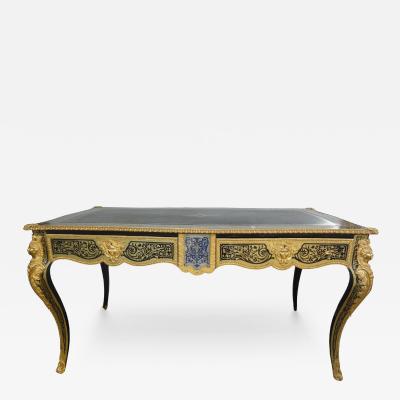
19th Century French Louis XV Style Boulle Bureau Plat
H 29 in W 58 in D 31 in
$ 37,475


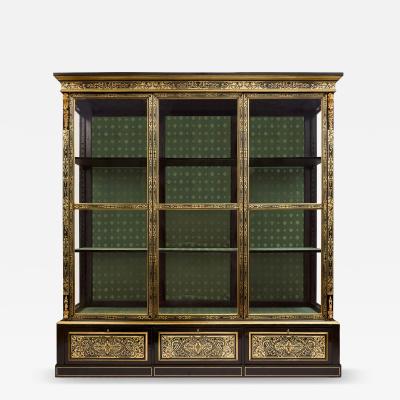

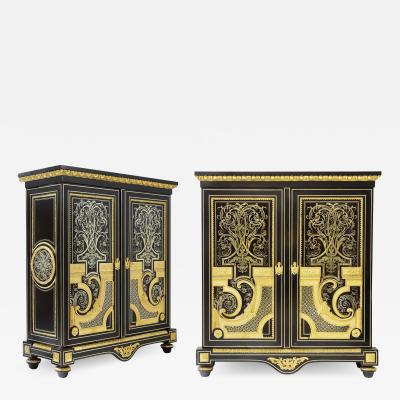
Brass and tortoiseshell inlaid Boulle style ebonised wood cabinets
H 55.91 in W 50 in D 19.29 in
$ 180,000
 Loading...
