












George Benjamin Luks
American, 1867 - 1933
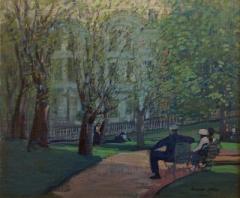
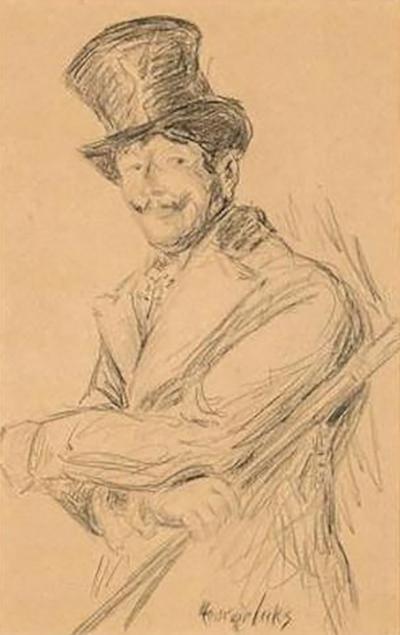
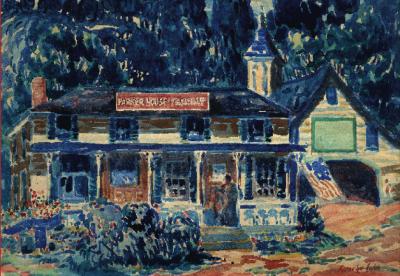
George Luks (1867-1933) was a prominent realist painter and a key figure in the Ashcan School, known for his unflinching portrayal of the raw, often harsh realities of urban life. Born in Williamsport, Pennsylvania, Luks was the son of amateur painters and initially studied at the Pennsylvania Academy of the Fine Arts under Thomas Anshutz. He later expanded his artistic education in Europe, spending time in Düsseldorf, Paris, and London.
In the 1890s, Luks began his career as a newspaper artist, eventually covering the Cuban front as an artist correspondent. During this period, he met fellow artists Everett Shinn, William Glackens, and John Sloan, forming the collective known as "The Eight," which later became synonymous with the Ashcan School due to their focus on gritty urban subjects and a darker palette.
Luks drew inspiration from the works of Frans Hals and Rembrandt, capturing the essence of street life with energy and vigor. His most notable painting, "The Wrestlers" (1905), exemplifies his dynamic style and ability to convey movement and emotion. In 1908, Luks participated in a landmark exhibition at the Macbeth Gallery, which challenged the conservative art establishment and set the stage for the transformative Armory Show of 1913.
As a dedicated educator, Luks taught at the Art Students League and later founded his own school, fostering a new generation of artists. He continued to explore the lives of working-class individuals, capturing their struggles and triumphs until his death in 1933, found on a New York street at the age of 66. Luks's works are housed in numerous public collections, including the Metropolitan Museum of Art and the Whitney Museum of American Art, solidifying his legacy as a powerful realist voice in American art.
In the 1890s, Luks began his career as a newspaper artist, eventually covering the Cuban front as an artist correspondent. During this period, he met fellow artists Everett Shinn, William Glackens, and John Sloan, forming the collective known as "The Eight," which later became synonymous with the Ashcan School due to their focus on gritty urban subjects and a darker palette.
Luks drew inspiration from the works of Frans Hals and Rembrandt, capturing the essence of street life with energy and vigor. His most notable painting, "The Wrestlers" (1905), exemplifies his dynamic style and ability to convey movement and emotion. In 1908, Luks participated in a landmark exhibition at the Macbeth Gallery, which challenged the conservative art establishment and set the stage for the transformative Armory Show of 1913.
As a dedicated educator, Luks taught at the Art Students League and later founded his own school, fostering a new generation of artists. He continued to explore the lives of working-class individuals, capturing their struggles and triumphs until his death in 1933, found on a New York street at the age of 66. Luks's works are housed in numerous public collections, including the Metropolitan Museum of Art and the Whitney Museum of American Art, solidifying his legacy as a powerful realist voice in American art.






 Loading...
