










Johann Mongels Culverhouse
Dutch, 1820 - 1894
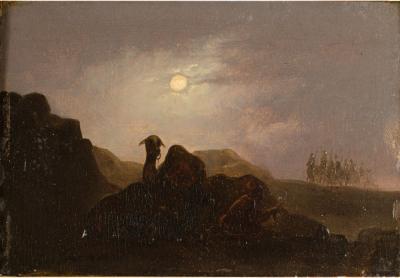
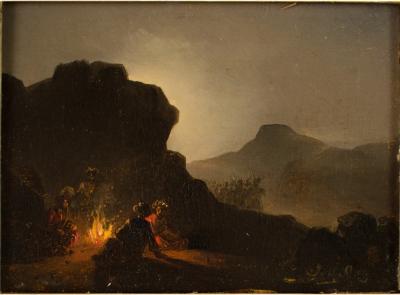
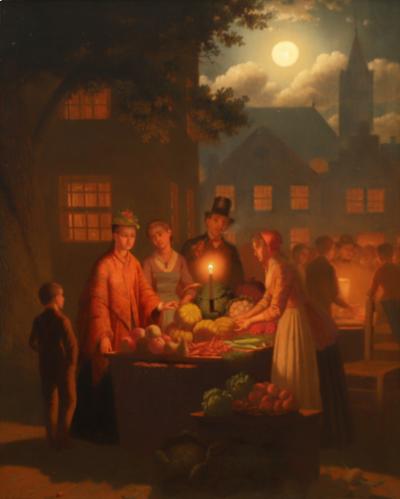
Johan Mongels Culverhouse was born in Rotterdam in 1820 and became known for his evocative candlelight paintings, capturing scenes lit by moonlight or flickering candles. Following the rich tradition of seventeenth-century Dutch masters, he specialized in nocturnal genre scenes portraying lively taverns, bustling markets, and vibrant street life.
Though often rumored to have studied at the Düsseldorf Academy, evidence suggests he primarily lived and worked in Rotterdam and The Hague before moving to the United States in the mid-19th century. Culverhouse established himself in New York City around 1849, gaining recognition through exhibitions at prominent institutions such as the National Academy of Design, the Boston Athenaeum, and the American Art-Union, where his works were well received.
After spending time exhibiting in Europe during the late 1850s and early 1860s, including the Paris Salons and shows in Antwerp and Amsterdam, he returned to America by the mid-1860s. He eventually settled in Syracuse, New York, where he opened a studio and continued painting local scenes that echoed his Dutch roots.
Though details surrounding his later life and death remain unclear, Culverhouse’s art reflects a lifelong dedication to Dutch genre traditions, bringing to life the charm and warmth of everyday moments with a luminous, atmospheric touch. His paintings remain part of major museum collections, including the Metropolitan Museum of Art and the Brooklyn Museum.
Though often rumored to have studied at the Düsseldorf Academy, evidence suggests he primarily lived and worked in Rotterdam and The Hague before moving to the United States in the mid-19th century. Culverhouse established himself in New York City around 1849, gaining recognition through exhibitions at prominent institutions such as the National Academy of Design, the Boston Athenaeum, and the American Art-Union, where his works were well received.
After spending time exhibiting in Europe during the late 1850s and early 1860s, including the Paris Salons and shows in Antwerp and Amsterdam, he returned to America by the mid-1860s. He eventually settled in Syracuse, New York, where he opened a studio and continued painting local scenes that echoed his Dutch roots.
Though details surrounding his later life and death remain unclear, Culverhouse’s art reflects a lifelong dedication to Dutch genre traditions, bringing to life the charm and warmth of everyday moments with a luminous, atmospheric touch. His paintings remain part of major museum collections, including the Metropolitan Museum of Art and the Brooklyn Museum.
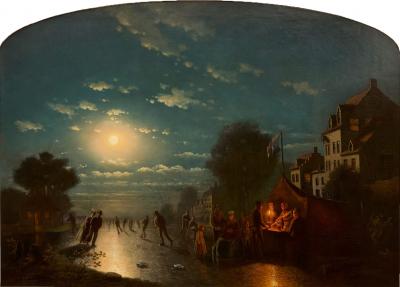
Johann Mongels Culverhouse
Antique Dutch oil painting of an ice skating scene by Culverhouse
H 46.46 in W 60.63 in D 3.94 in
$ 56,250


Sold

 Loading...
