







Showrooms
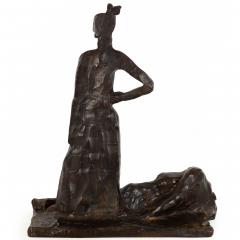
"Amazon and the Hero" | Sava Botzaris
-
Description
SAVA BOTZARIS
Hungarian, 1894-1965
"The Amazon and the Hero"
Patinated bronze | signed BOTZARIS to the base | cold-stamped foundry mark verso "FONDU PAR VERBEYST BRUXELLES" | circa 1920
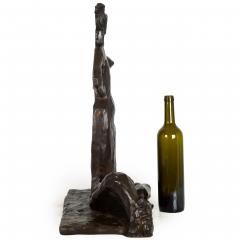
23 5/8" H x 20 1/2" W x 9 5/8" D
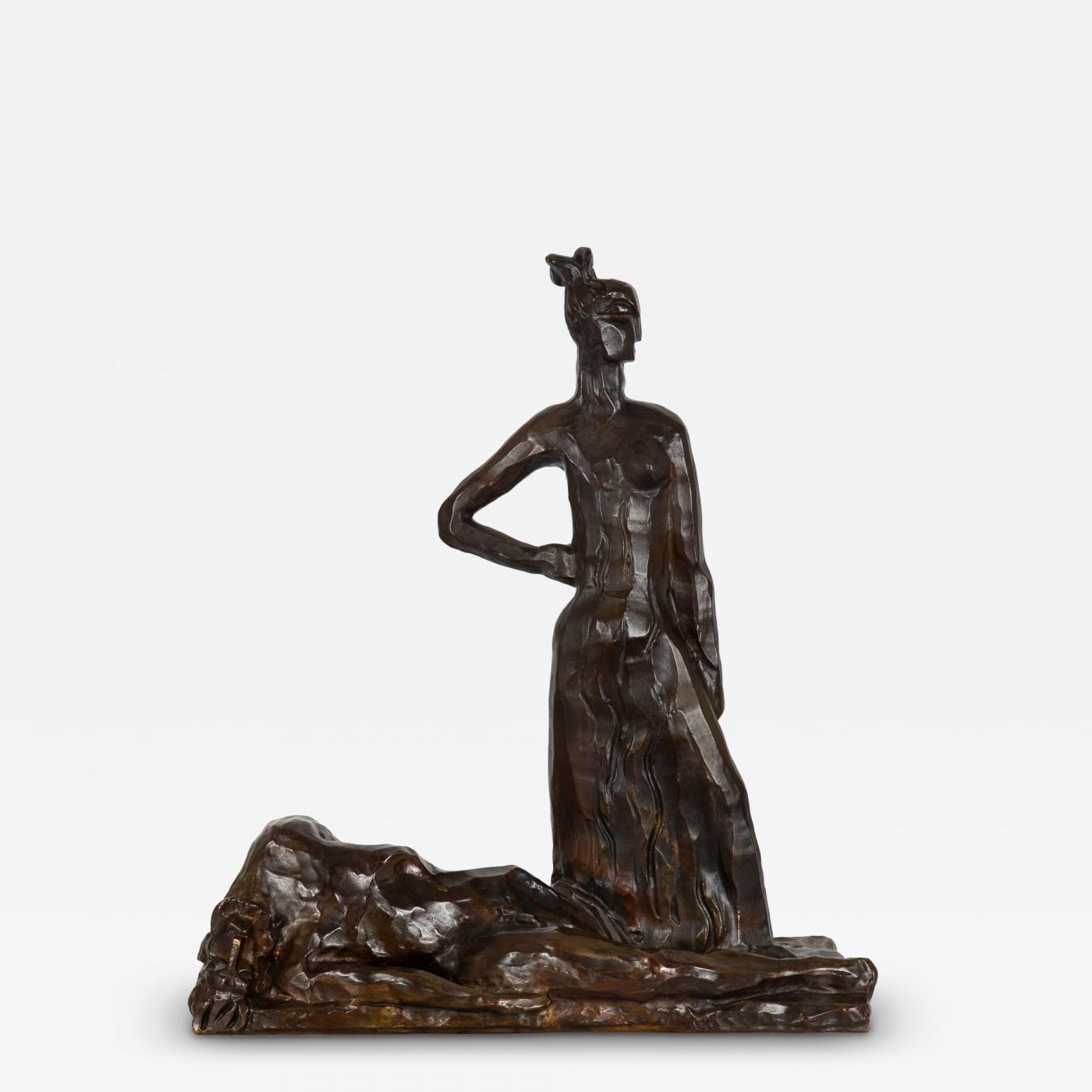
A cast bronze figure depicting a standing female warrior gazing into the distance, her hand on her hip, her angular figure feeling more carved than sculpted with long flowing vertical lines and rough modeling. At her feet lies a defeated warrior in counter-narrative that turns the conventional myth upside down.
In Greek mythology the Amazons were a tribe of warrior women who lived apart from men and whose defiance of traditional order often ended in their defeat. Stories such as the death of Penthesilea at the hands of Achilles served as allegories for the restoration of male power and the fragility of female autonomy. In this bronze, Botzaris reverses that narrative. The Amazon stands victorious over the fallen male figure, her posture calm and resolute. The composition reimagines the myth as a declaration of endurance and self-possession rather than tragedy.
This inversion of the traditional myth is almost certainly tied to the title and spirit of Amazon and Hero: The Drama of the Greek War for Independence, the unfinished novel that Botzaris’s wife, the modernist writer Olive Moore, was developing in 1933. Though no draft of the work is known to survive, accounts suggest it was more than a historical treatment of the Greek struggle against Ottoman rule. Like the sculpture, it seems to have used the language of myth and conflict to probe questions of strength, identity, and creative autonomy. The shared title and theme point to a dialogue between the two artists, each exploring through their own medium the moral and psychological independence that defined the interwar avant-garde.
SAVA BOTZARIS
Sava Botzaris was born in Belgrade in 1894, the son of Anastas Botzaritch, court painter to King Peter I of Serbia and professor at the National Serbian School of High Art. Trained from an early age under his father’s direction, Botzaris received a firm grounding in academic drawing and composition before pursuing studies abroad. At sixteen he moved to Naples to study languages and later took a post at the Serbian Embassy in Rome, where a meeting with the Croatian sculptor Ivan Meštrović proved decisive. Encouraged by Meštrović to dedicate himself wholly to sculpture, Botzaris abandoned diplomatic work to focus on art.
During the First World War he served as an interpreter with the Allied armies in Russia, Constantinople, and the Caucasus. Following the armistice, he resumed study with Meštrović in Agram (Zagreb) and in 1920 presented his first exhibition of busts and portrait sculpture to considerable notice. Extensive travels through Europe followed before Botzaris settled in London in 1922, establishing himself within the city’s artistic community.
Over the ensuing decades he exhibited regularly, including solo shows at the Fine Art Society (1926), the French Gallery (1929), and the Leicester Galleries (1938), where his bronzes and caricature sculptures drew favorable reviews. In 1924 he married the English modernist writer Olive Moore (born Miriam Constance Beaumont Vaughan), whose literary preoccupations with myth and duality parallel Botzaris’s sculptural themes. Her unfinished novel Amazon and Hero: The Drama of the Greek War for Independence is thought to have parallels in Botzaris’s bronze of the same title reportedly completed in the early 1920s.
Botzaris emigrated to Venezuela during the Second World War and was naturalized there in 1947. His later years remain less documented, though works are held in collections such as the Auckland Art Gallery (New Zealand) and the Garrick Club (London). Characterized by expressive modelling and heroic subject matter, his sculpture bridges classical humanism and the stylized modernism of the interwar period.
Condition: Rubbing wear to the patina around the base and to raised elements throughout, including the fallen warrior's nose and wound. Ready to place.
ref. 508TFL30P -
More Information
Documentation: Signed Period: 1920-1949 Styles / Movements: Traditional Dealer Reference #: 508TFL30P Incollect Reference #: 836238 -
Dimensions
W. 20.5 in; H. 23.625 in; D. 9.625 in; W. 52.07 cm; H. 60.01 cm; D. 24.45 cm;
Message from Seller:
Silla, Ltd. is a family-owned antique gallery located at 117 W Burd St., Shippensburg, PA 17257, specializing in 19th and early 20th century bronze sculptures and unique period furniture. For more information or to schedule a visit, contact us at sales@sillafineantiques.com or call 717.708.9017.
More Listings from SILLA View all 375 listings
-
Rare American Federal Mahogany Cylinder Desk, Baltimore or Annapolis ca. 1800
-
A Fine 36” H French Antique Bronze Sculpture “Victory” by Eugene Marioton
-
Fine Maritime Seascape Painting of American Clipper Ships by Henry Scott
-
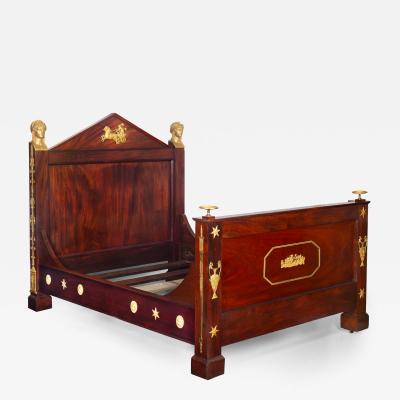
Rare Fine French Empire Mahogany Bed by Jacob-Desmalter ca. 1805-15
-
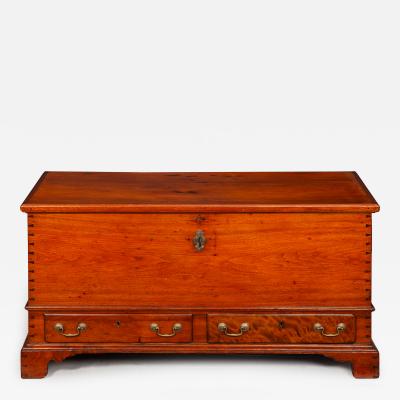
18th Century American Chippendale Walnut Blanket Chest circa 1780s
-
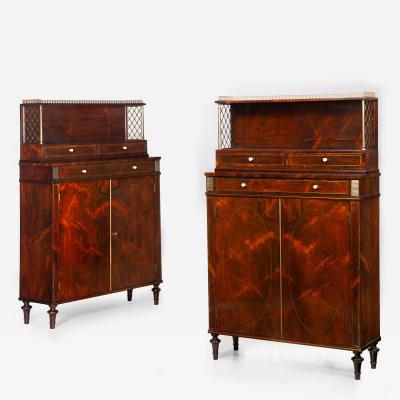
Pair of English Regency Rosewood Bookcase Cabinets att. John McLean c. 1820
-
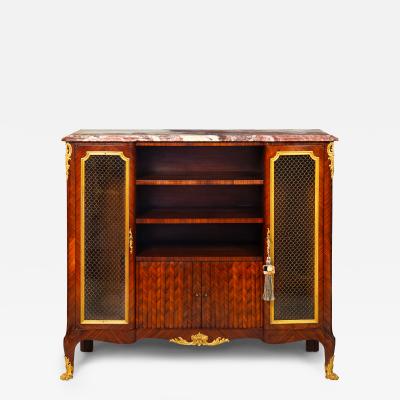
French Louis XV Style Kingwood Marble Top Bibliotheque Cabinet
-
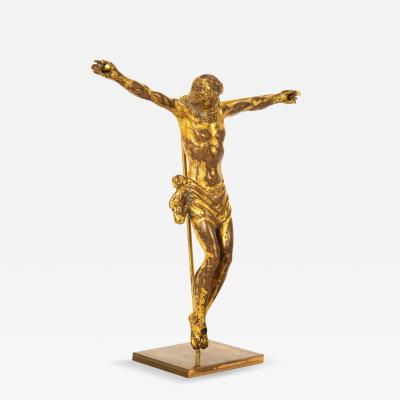
Fine German Renaissance Gilt Bronze Corpus Christi, 17th/18th Century
-
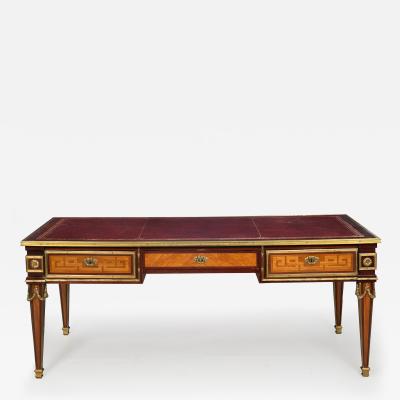
French Louis XVI Style Antique Bureau Plat Writing Desk circa 1880
-
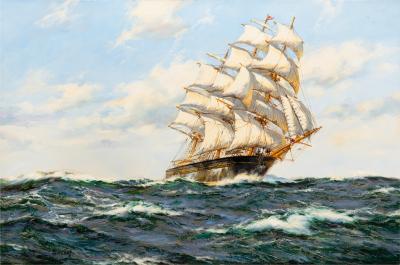
Seascape Painting of American Clipper Ship “Red Cloud” by Henry Scott
-
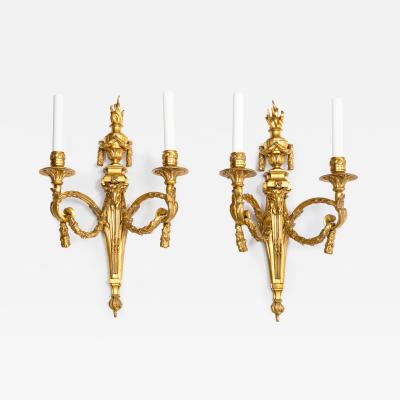
19th Century Pair of French Louis XVI Style Two-Light Wall Sconces Candelabra
-
Spanish Polychromed Carved Head of Christ as Ecce Homo, early 18th century
-
18th Century Finely Carved Boxwood Corpus Christi on Stand
-
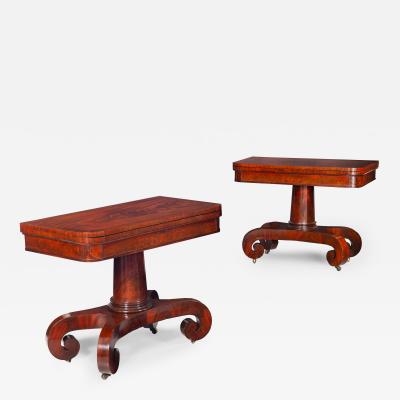
Fine Pair of American Classical Mahogany Card Tables, Massachusetts ca. 1820